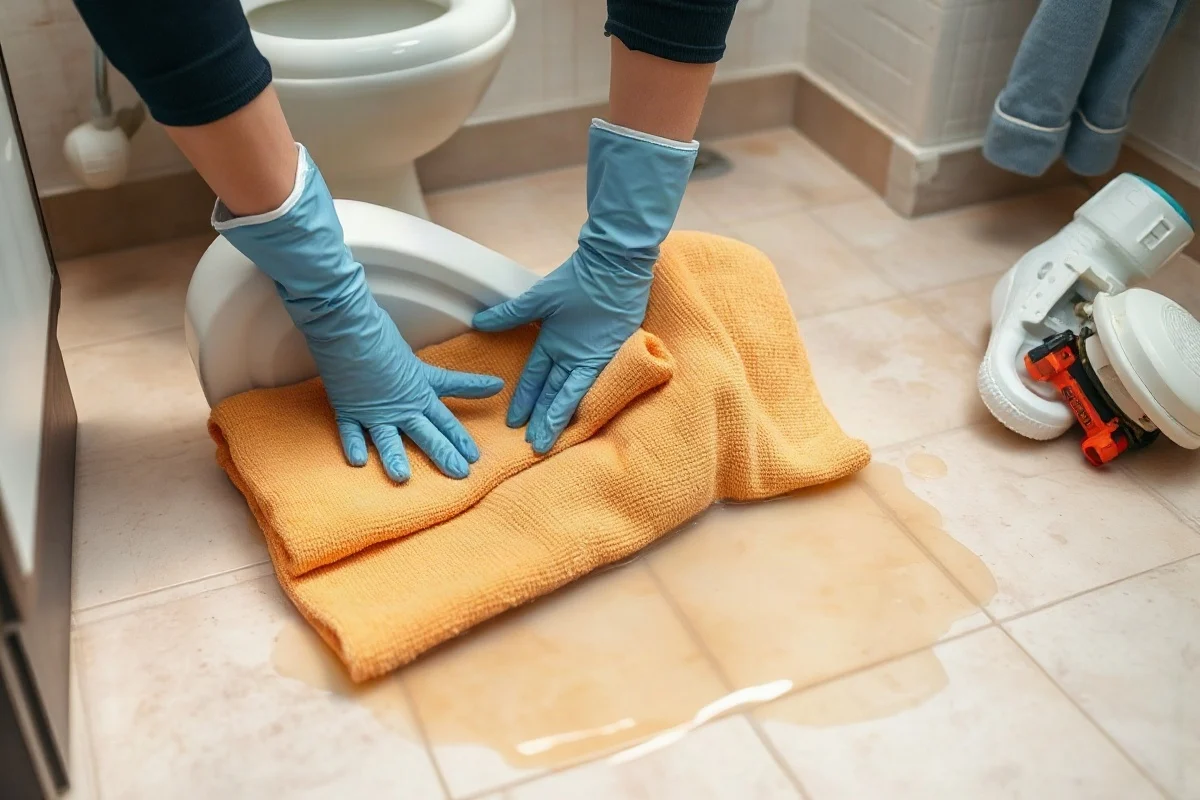
To clean up safely after a toilet overflow, stop the water first, keep people and pets away, remove contaminated water with protective equipment, disinfect the affected area, and dry everything quickly. If the water contains sewage, has spread into walls or flooring, or keeps returning after a basic clog check, contact a qualified local plumber and consider professional cleanup.
Stop the overflow before cleaning
Do not begin wiping up water while the toilet is still filling. The first priority is to prevent more water from reaching the floor.
Close the toilet’s shutoff valve
Look for the small valve on the wall or floor behind the toilet. Turn it clockwise until it stops. Do not force a stiff valve, and do not disconnect the supply line. If the valve will not close or the connection begins leaking, shut off the home’s main water supply if you can do so safely and call a qualified plumber.
If the tank lid is accessible and the toilet is still running, you may also lift the lid and raise the float or close the flapper temporarily. This is only a short-term step. Avoid reaching into contaminated water, and do not rely on internal tank parts if the shutoff valve is working.
Keep electrical hazards in mind
Move cords, power strips, and plugged-in appliances away from the wet area only if you can do so without stepping through water or touching electrical equipment. If water has reached outlets, wiring, baseboard heaters, or other electrical components, stay out of the area and contact a qualified electrician or other appropriate professional. Do not operate wet electrical devices.
Assume overflow water may be contaminated
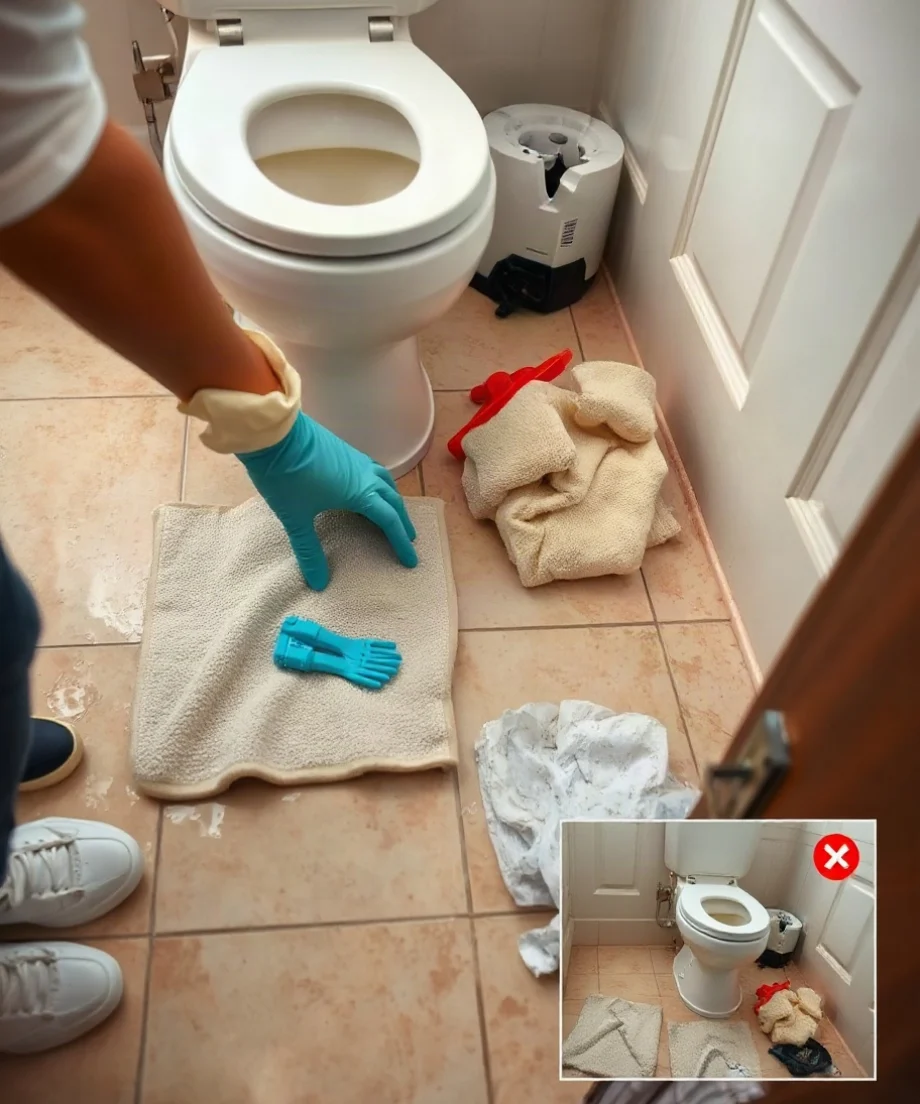
Water from a toilet bowl should be treated as contaminated, even when it looks relatively clean. It may contain bacteria, viruses, cleaning chemicals, or waste from the drain system. Wear disposable gloves, waterproof footwear, and eye protection. Long sleeves and clothing that can be washed separately are also sensible precautions.
Keep children, pets, and anyone with a weakened immune system away from the room during cleanup. Do not eat, drink, smoke, or touch your face while handling wet materials. Wash your hands thoroughly with soap and running water after removing gloves and after finishing the cleanup.
If sewage has backed up from the floor drain, shower, bathtub, or another fixture, the situation is more serious than a single toilet clog. Stop using nearby plumbing fixtures and arrange for qualified local help. For information about severe plumbing situations, see this emergency plumber guide.
Remove standing water carefully
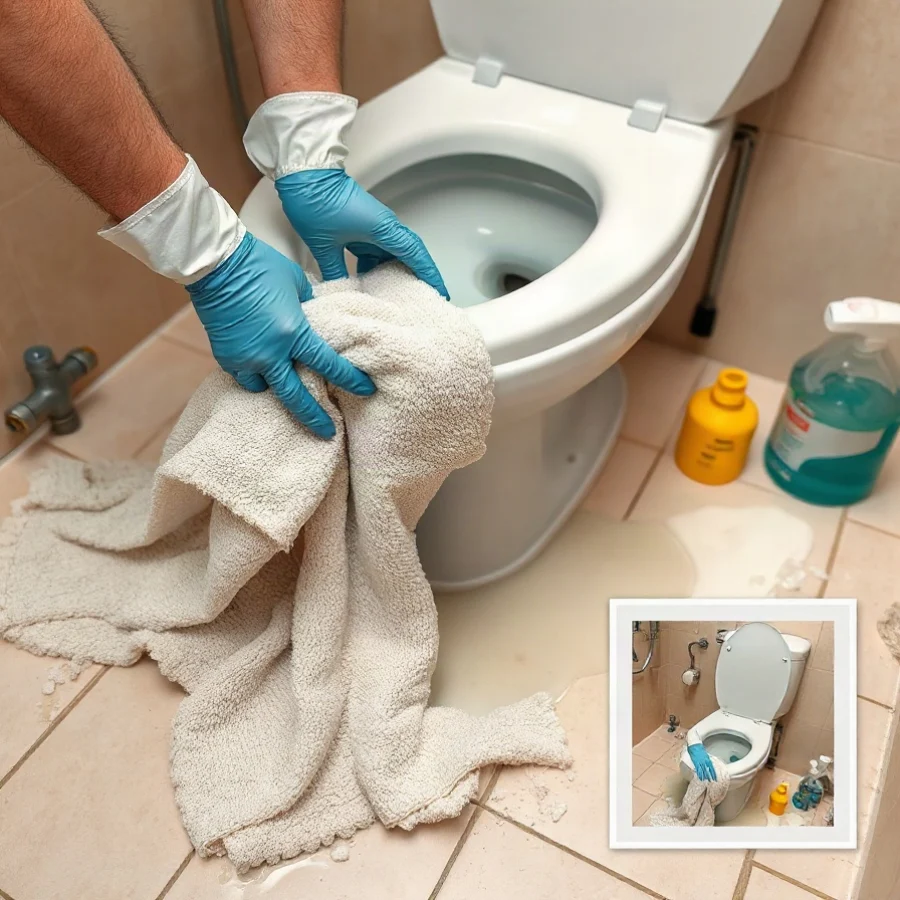
Use disposable towels, rags that can be discarded, a wet/dry vacuum rated for liquid pickup, or a mop reserved for contaminated cleanup. Do not use a regular household vacuum. Place disposable materials in sturdy bags, following local waste-handling guidance, and keep contaminated items away from clean household laundry.
Work from the cleanest edge of the affected area toward the dirtiest area. This helps reduce the chance of spreading contamination. Blot rugs and upholstery rather than scrubbing aggressively, because vigorous scrubbing can push contaminated water deeper into fibers. Remove washable rugs and launder them separately if they can be cleaned safely. Porous items that remain visibly soiled, smell strongly, or cannot be thoroughly cleaned may need to be discarded.
Protect flooring, trim, and drywall
Hard, nonporous flooring such as sealed tile or vinyl can usually be cleaned and disinfected. Pay attention to grout lines, the toilet base, the area around the shutoff valve, and the joint where the floor meets the wall.
Water can soak into unfinished wood, laminate seams, carpet padding, particleboard, baseboards, and drywall. Remove wet rugs and padding promptly. Do not peel back flooring, cut drywall, or remove a toilet unless you understand the risk and can do the work safely. If the subfloor feels soft, the baseboard is swollen, or the wall remains damp, arrange an inspection by a qualified professional or water-damage specialist.
Clean and disinfect the affected surfaces
First remove visible soil with detergent and water. Disinfecting works less effectively when organic material remains on the surface. Follow the product label for the correct application, contact time, ventilation, and surface compatibility. Never mix bleach with ammonia, vinegar, acids, or other cleaners, because dangerous gases can form.
Use ventilation if it can be provided safely, but do not aim fans at contaminated water before it has been removed. Air movement can spread droplets or odors. After the surface has been cleaned and disinfected, use fans or a dehumidifier to dry the area. Keep electrical equipment away from standing water, and use only equipment that is suitable for the conditions.
Do not assume that a strong fragrance means the area is sanitary. The goal is to remove contamination, disinfect according to the product directions, and dry materials thoroughly. If you are unsure whether a porous material can be salvaged, a professional cleanup company can assess it.
Find out why the toilet overflowed
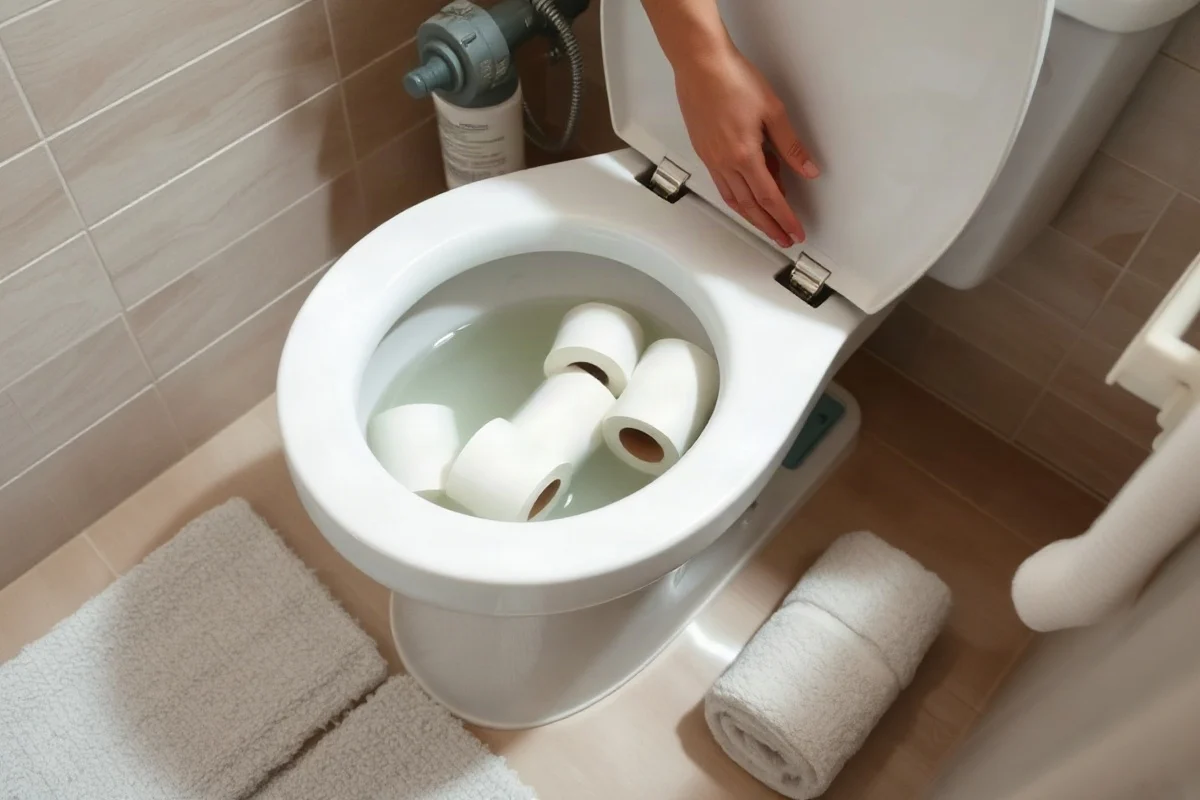
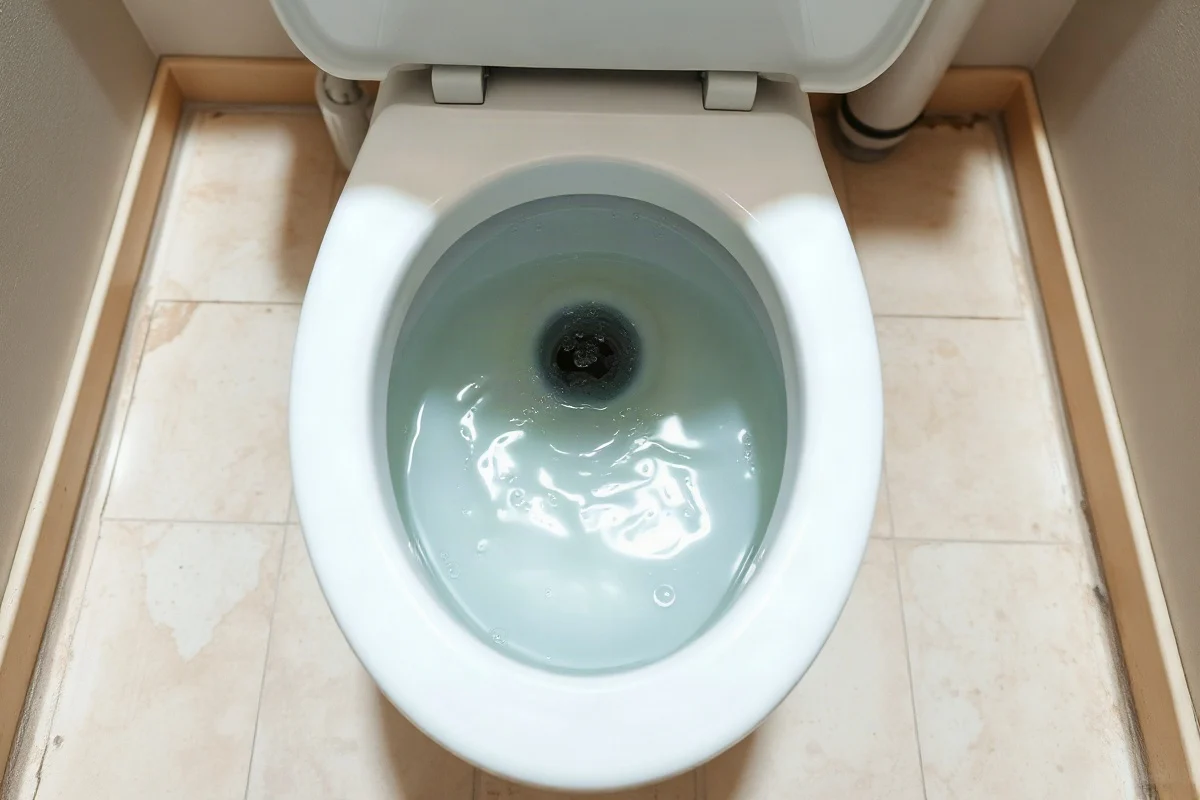
A toilet commonly overflows because the bowl cannot drain as quickly as water enters it. The immediate cause may be a blockage in the toilet trap or nearby drain. In other cases, the problem may involve excessive paper, a nonflushable item, a weak flush, a plumbing vent issue, or a restriction farther down the branch drain.
A safe homeowner check is to look for obvious signs without disassembling plumbing. Ask whether another fixture is draining slowly, whether the toilet gurgles when a sink or bathtub drains, and whether the overflow happened after flushing a large amount of paper or an object. Check whether the shutoff valve works and whether the toilet base or supply connection is leaking separately from the overflow.
Do not repeatedly flush the toilet to test it. Do not use chemical drain cleaner in a toilet. These products may splash back, damage plumbing components, or create a hazard for anyone who later works on the line.
Use a plunger only when conditions are appropriate
If the bowl level has dropped and there is no sewage backup elsewhere, a toilet plunger with a flange may help clear a simple, nearby clog. Keep your face away from the bowl, use controlled strokes, and stop if the water rises again. Do not keep plunging if the blockage does not respond after reasonable attempts.
A closet auger may help with some toilet obstructions, but forcing a tool can scratch the fixture or push an object deeper. If a toy, cleaning product, sanitary item, or other object may be lodged in the trap, call a plumber rather than using improvised tools.
When a plumber should handle the repair
Contact a qualified local plumber when the toilet overflows repeatedly, a plunger does not restore normal drainage, several fixtures are affected, or water rises in another drain when the toilet is flushed. These signs may point to a blockage beyond the toilet or a sewer-line problem rather than a simple bowl clog. A plumber may need to inspect the drain, use specialized equipment, or determine whether the obstruction is on the home’s private plumbing or a larger sewer connection.
Professional help is also appropriate when the toilet rocks, leaks around its base, has a cracked bowl or tank, or continues to leak after the overflow stops. A damaged wax seal or another connection may allow water to reach the subfloor even when no water is visible. For related repair situations, you can review this toilet repair resource.
Call promptly for qualified help if sewage has entered living areas, contaminated a crawl space, reached heating or electrical equipment, or spread beneath flooring. Do not remove a toilet, open a sewer cleanout, or enter contaminated standing water unless you have the proper training and protective equipment.
Repair or replace the toilet?
A repair may be reasonable when the toilet has a serviceable bowl and tank but needs a new flapper, fill valve, handle, supply line, or other replaceable component. A plumber can also correct an installation problem or replace a seal at the base.
Replacement becomes more likely when the porcelain is cracked, the fixture is unstable, repeated repairs have not solved the problem, or the toilet has persistent flushing or drainage issues. Do not use a cracked toilet, even if the crack appears small. Porcelain can fail suddenly and cause injury or substantial water damage.
The right decision depends on the source of the failure, the condition of the fixture, access to the drain, the condition of the floor, and whether other plumbing problems are present. Ask the plumber to explain whether the recommended work addresses the cause of the overflow or only the visible symptom.
What affects cleanup and repair costs?
The total cost can vary widely because cleanup and plumbing repair are separate parts of the problem. Important factors include:
- How much water escaped and how long materials remained wet.
- Whether the water was limited to the bathroom or reached adjacent rooms.
- Whether carpet, padding, drywall, baseboards, cabinets, or subflooring must be removed or replaced.
- Whether the blockage is in the toilet, a branch drain, or the sewer line.
- Whether specialized inspection, drain cleaning, extraction, drying, or odor treatment is needed.
- Whether the toilet, shutoff valve, supply connection, flange, or floor requires repair.
- Whether work must be coordinated with an electrician, restoration company, or other qualified professional.
Before work begins, ask what the service includes, which materials may need removal, whether additional damage could be hidden, and how changes to the initial scope will be communicated. A written description is more useful than a vague promise to “fix the overflow.” You can also review general plumbing cost factors without relying on a single quoted price for every home.
Choose the right local plumber
Look for a plumber who regularly handles toilet blockages, drain backups, leak detection, and water-damage risks. Ask whether the person or company is appropriately qualified for the work in your area, carries suitable insurance, and can explain the planned diagnosis before starting. Local requirements can differ, so verify licensing or other credentials through the relevant state or local authority when applicable.
Describe the event accurately: when the overflow occurred, whether other fixtures are affected, how high the water rose, what was flushed, and what cleanup has already been attempted. Mention any sewage odor, gurgling, wet flooring, or electrical concern. Do not hide the use of chemical cleaners; that information affects safe handling.
A dependable professional should distinguish between clearing the immediate clog and identifying the underlying cause. Be cautious of anyone who recommends major replacement without inspecting the problem, refuses to explain the work, or pressures you to approve unrelated services. For more guidance on evaluating service providers, see this guide to hiring a plumber.
Prevent another toilet overflow
Flush only human waste and toilet paper unless the fixture manufacturer and local wastewater guidance clearly support something else. Keep wipes, paper towels, feminine hygiene products, cotton swabs, dental floss, grease, and cleaning tools out of the toilet. Teach children not to treat the toilet as a toy or trash container.
Know where the toilet shutoff valve is and check it occasionally for signs of corrosion or a slow leak. If flushing causes gurgling, slow drainage, or water movement in another fixture, stop testing the toilet and arrange for an inspection. Early attention may prevent a small drainage restriction from becoming a contaminated bathroom cleanup.
Comments
0No comments yet. Be the first to share a helpful note or question.
Leave a Comment
Your email address will not be published. Comments are reviewed before appearing on the site.