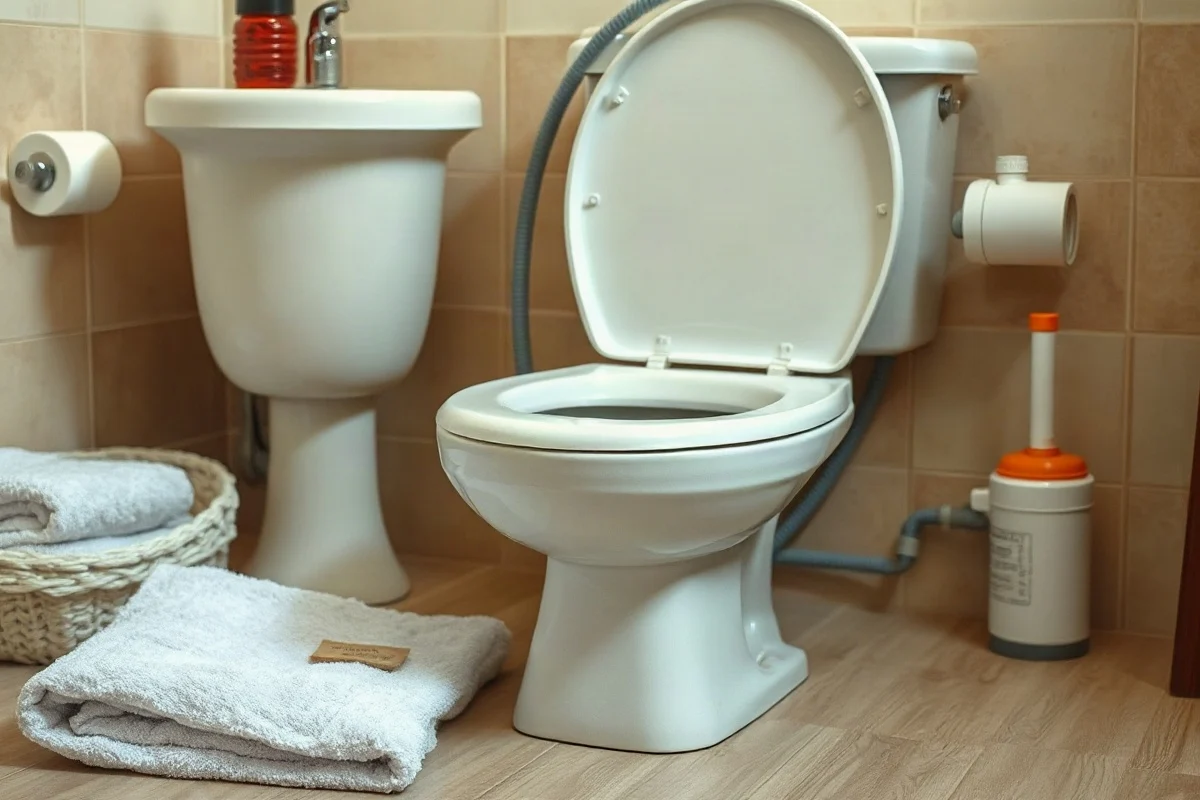
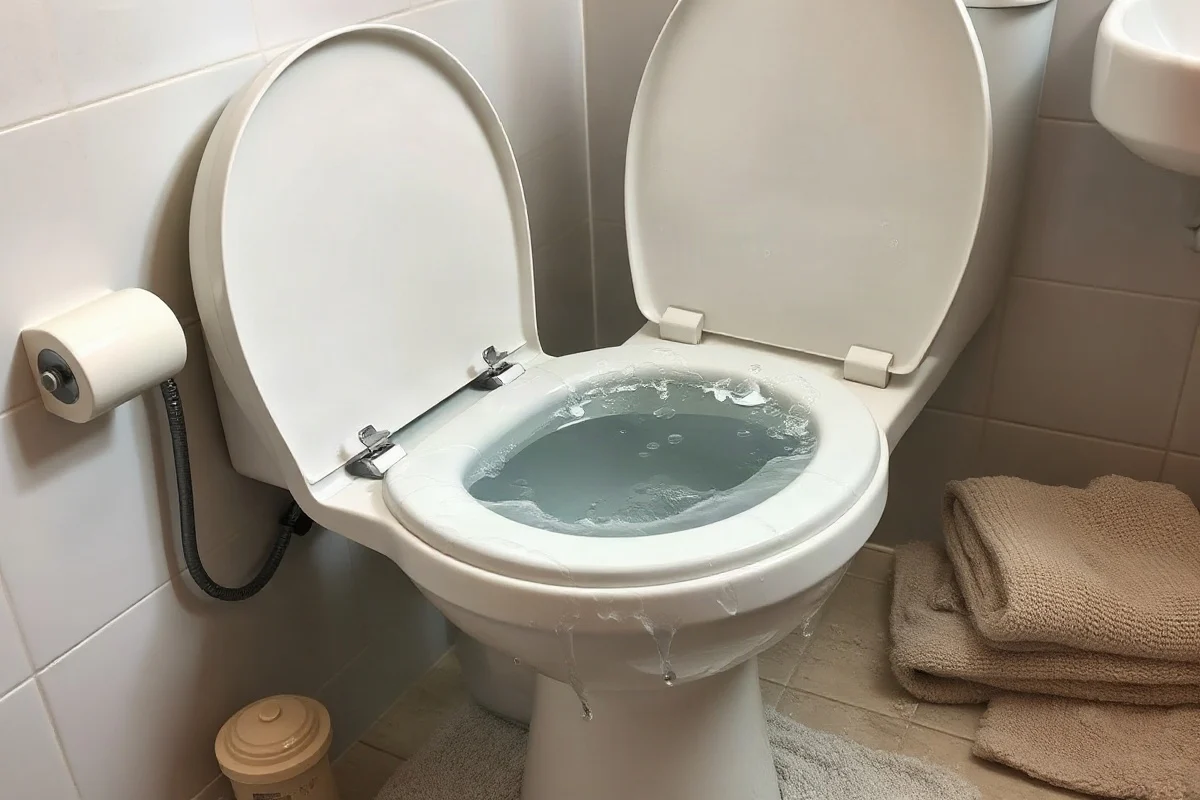
If your toilet overflows every time you flush, stop flushing and close the toilet’s shutoff valve immediately. The most common cause is a blockage in the toilet trap or nearby drain line, although a problem with the tank’s flapper or water level can also contribute. You can try a plunger and a few low-risk checks, but repeated overflows, sewage backup, or a clog that will not clear should be handled by a qualified local plumber.
Stop the Overflow First
Before investigating the cause, prevent more water from entering the bowl. Turn the shutoff valve behind or beside the toilet clockwise until it stops. Do not force a valve that is stuck, corroded, or leaking. If the water continues to rise and the shutoff valve does not work, remove the tank lid and gently lift the float high enough to stop the fill valve. You can also press the rubber flapper at the bottom of the tank closed.
Keep towels or a bucket nearby, and move rugs, toiletries, and other items away from the affected area. Toilet water may contain harmful bacteria, especially if the bowl has overflowed onto the floor. Wear gloves, clean hard surfaces with an appropriate disinfectant, and wash your hands thoroughly afterward. If contaminated water has reached porous flooring, drywall, or other difficult-to-clean materials, consider professional cleanup as well as plumbing service.
Why a Toilet Overflows When You Flush
A flush sends water from the tank into the bowl and then through the toilet’s internal trapway and the drainpipe. If water cannot move through that path quickly enough, the bowl fills faster than it can empty. Several problems can create this pattern.

A clogged toilet trap
The curved passage inside the toilet is called the trapway, or toilet trap. It can become blocked by too much toilet paper, wipes, paper towels, hygiene products, small objects, or buildup. Even products labeled flushable may contribute to clogs because they may not break apart as readily as toilet paper.
A trap blockage often causes the water level to rise immediately after flushing and then drain slowly. The toilet may gurgle, and plunging may improve the problem temporarily without fully removing the obstruction.
A blocked drain line
If the clog is farther down the branch drain, a standard plunger may not clear it. You may notice water backing up into a nearby tub or shower, several slow drains, sewer odors, or gurgling from other fixtures. These signs can point to a larger drainage problem rather than an isolated toilet clog.
When more than one fixture is affected, stop using nearby water fixtures until the cause is identified. Continued use could push more water into a backed-up line. A plumber may need to inspect or clear the drain with professional equipment. If the issue involves a main sewer line, use a qualified professional rather than repeatedly flushing or pouring chemicals into the toilet.
A flapper that stays open
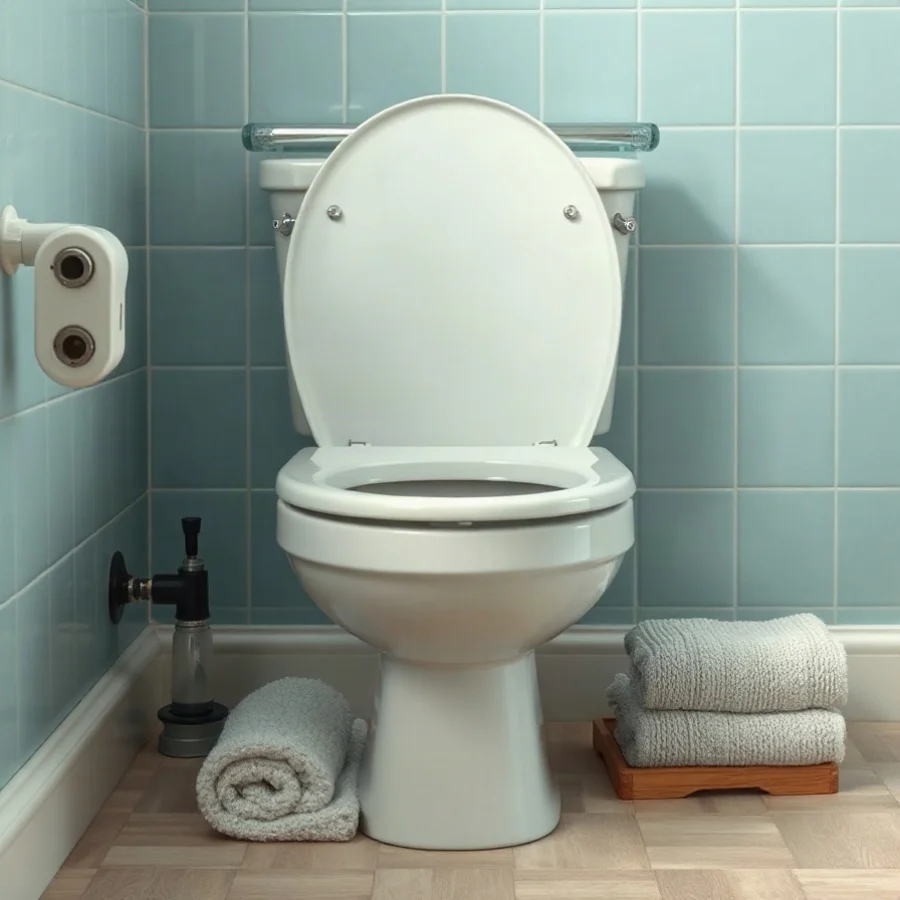
The flapper is the rubber or plastic valve inside the tank that lifts during a flush and then closes to hold water in the tank. If it remains open, the toilet may continue sending water into the bowl. This usually causes a continuously running toilet rather than a complete drain blockage, but an already restricted drain can overflow when excess water keeps entering.
An incorrect tank water level
If the tank water is set too high, the toilet can deliver more water than necessary during a flush. The correct level depends on the toilet’s design and the markings or instructions for that fixture. If the water rises above the marked fill line or enters the overflow tube continuously, the fill valve or float may need adjustment or replacement.
An object stuck in the toilet
Children’s toys, bathroom items, and other objects can become lodged in the trapway. A plunger may not remove a solid object and can sometimes push it farther into the drain. Avoid forcing tools into the bowl if you suspect an item is stuck. A plumber can use the appropriate method to retrieve it while reducing the risk of damaging the toilet.
Safe Homeowner Checks
After shutting off the water, you can try a few low-risk steps. These checks are appropriate for a simple, localized clog and do not require removing the toilet or working on electrical, gas, or sewer equipment.
Use a toilet plunger correctly
Use a flange-style toilet plunger rather than a flat cup plunger intended for sinks. Make sure there is enough water in the bowl to cover the rubber flange, but do not add water if the bowl is already close to overflowing.
Place the flange over the drain opening and press down gently at first to create a seal. Then use controlled, firm strokes without splashing. Pull upward on some strokes as well as pushing downward, because the changing pressure can help loosen the blockage. After several strokes, pause and see whether the water drains. Do not flush to test it until the bowl empties and the blockage appears to be cleared. Turn the shutoff valve back on slowly and test with a small amount of water if appropriate.
Check the tank and flapper
With the tank lid removed, observe what happens during a flush. The flapper should lift and then close when the tank has released enough water. The fill valve should stop supplying water when the tank reaches its normal level. Look for a chain that is too tight, a flapper that is warped or damaged, or a float that is stuck against the tank wall.
Do not force plastic or brittle parts. A basic adjustment may be reasonable if the problem is obvious and the components are accessible, but replaceable parts should match the toilet’s design. If you are unsure which part is causing the issue, a plumber can diagnose it without guesswork.
What Not to Do
Do not keep flushing a toilet that is already rising. Each flush adds more water and increases the chance of floor damage. Avoid chemical drain cleaners in toilets. They may fail to dissolve the obstruction, create dangerous splashes, damage plumbing components, or expose you and a plumber to caustic chemicals later.
Do not use excessive force with a closet auger or attempt to remove the toilet unless you understand how to protect the fixture, floor, and drain connection. Removing a toilet can expose you to sewage and may create a leak if the connection is not reassembled correctly. Work involving a concealed drain, sewer backup, damaged flooring, or suspected structural leaks should be left to a qualified local professional.
When a Plumber Should Handle the Problem
Call a plumber if plunging does not clear the blockage, the toilet overflows again shortly after draining, or multiple fixtures are backing up. Professional help is also appropriate when you suspect a solid object, the toilet rocks or leaks at its base, or you need the toilet removed for access.
Seek prompt assistance if wastewater has overflowed onto the floor, the blockage is affecting a basement or lower-level fixture, or you cannot stop the water supply. If sewage is backing up, keep people and pets away from the contaminated area. A qualified plumber can determine whether the problem is limited to the toilet or involves the building drain or sewer line.
For related guidance, see our resources on toilet repair, clogged drains, and sewer line problems.
Repair or Replace: Which Makes Sense?
A localized clog, worn flapper, faulty fill valve, or loose tank component can often be repaired without replacing the entire toilet. Repair is usually the practical choice when the bowl and tank are intact, the fixture is stable, and the problem is limited to a replaceable part or blockage.
Replacement may be worth discussing if the toilet is cracked, repeatedly clogs because of a damaged trapway, leaks at the base, or has internal parts that are difficult to source. A cracked bowl or tank should not be patched as a permanent solution because it can fail without much warning. A plumber can inspect the fixture, identify the failure, and explain whether a repair or replacement is more appropriate.
What Affects the Cost of Service?
The final cost depends on the actual cause and the work required, not simply on the fact that the toilet overflowed. Factors may include whether the clog is in the toilet or farther down the drain, how difficult the blockage is to access, whether the toilet must be removed, whether contaminated water requires additional cleanup, and whether damaged parts or flooring need attention.
Service timing, access conditions, equipment, replacement components, and the scope of any sewer or drain work can also affect an estimate. Because local rates and service conditions vary, ask the plumber to explain the diagnosis, recommended repair, labor, materials, and any possible additional charges before work begins. Avoid choosing a provider based only on the lowest advertised price when the cause has not yet been identified.
How to Choose the Right Plumber
Look for a local plumbing professional with experience in toilet clogs, drain blockages, and sewage backups. Ask what they believe is causing the overflow and what diagnostic steps they recommend. A dependable provider should be willing to explain the repair in plain language and distinguish a simple toilet problem from a larger drain or sewer issue.
Before authorizing work, confirm the business name, contact information, service scope, and written estimate or pricing explanation. Ask whether the technician will protect the surrounding floor and how contaminated water will be handled if an overflow has occurred. For work that may involve concealed piping, sewer lines, structural damage, or local code requirements, use a qualified professional familiar with the property’s area.
Preventing Future Toilet Overflows
Flush only toilet paper and human waste unless the toilet manufacturer or local professional provides different guidance. Keep wipes, paper towels, cleaning pads, cotton products, diapers, and hygiene products out of the toilet. If young children use the bathroom, store small objects where they cannot fall into the bowl.
Pay attention to early warning signs such as slow draining, bubbling, gurgling, a rising water level, or frequent need to plunge. Addressing these symptoms early may prevent a full overflow and can help reveal whether the issue is inside the toilet or farther along the drain. If the same toilet repeatedly backs up despite proper use and plunging, arrange a professional inspection instead of treating each incident as a separate clog.
The safest approach is simple: shut off the water, avoid repeated flushing, try a toilet plunger for a localized clog, and stop if the problem returns or affects other fixtures. Repeated overflows are a sign that the underlying restriction or failed component needs a proper diagnosis.
Comments
0No comments yet. Be the first to share a helpful note or question.
Leave a Comment
Your email address will not be published. Comments are reviewed before appearing on the site.