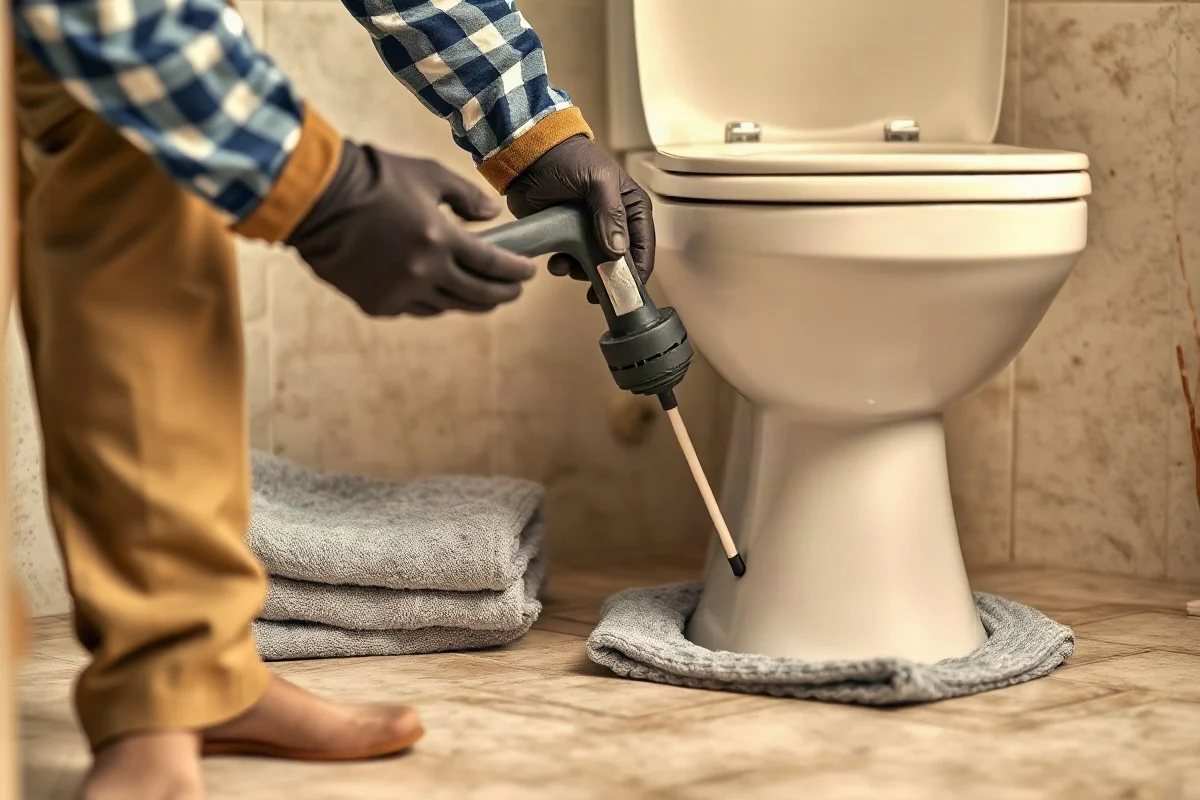
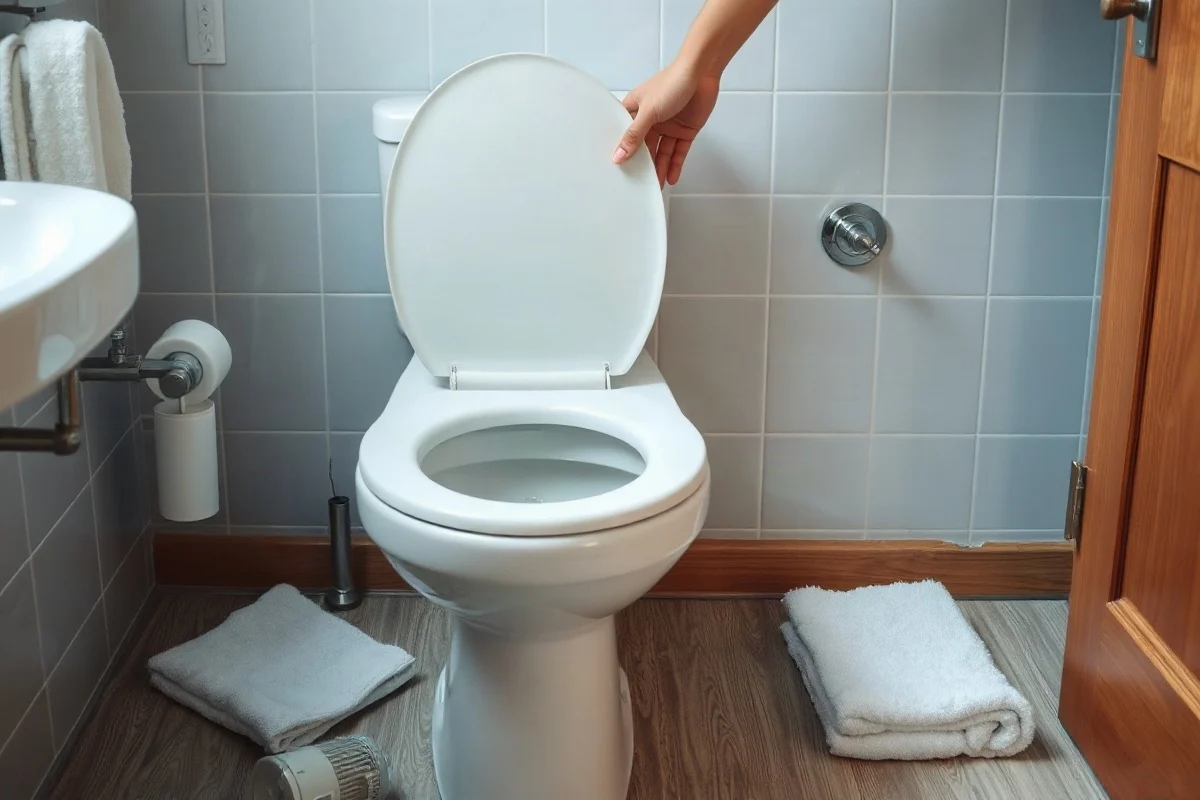
If a toilet is overflowing, stop the water before trying to clear the clog. Push the toilet’s flapper closed if water is still running into the bowl, then turn the shutoff valve behind or beside the toilet clockwise. If the valve is stuck or the toilet has no accessible shutoff, carefully lift the tank lid and raise the float or close the flapper by hand. Once the water level stops rising, protect the floor with towels and use a flange plunger with slow, controlled strokes. Do not flush again until the bowl drains normally.
First, Stop the Overflow
An overflowing toilet can spread contaminated water across the bathroom floor in seconds. Your first goal is not to diagnose the clog; it is to stop additional water from entering the bowl.
Close the toilet shutoff valve
Look for a small valve on the wall or floor behind the toilet. Turn it clockwise until it stops. Do not force it if it is corroded, leaking, or difficult to turn. Older valves can fail when handled aggressively, which may create a second leak.
Use the tank controls if necessary
If the shutoff valve will not work, remove the tank lid carefully and lift the float high enough to stop the fill valve from adding water. You can also press the rubber flapper at the bottom of the tank closed. Keep your fingers clear of any cracked or sharp components, and avoid reaching into a tank if the water appears contaminated.
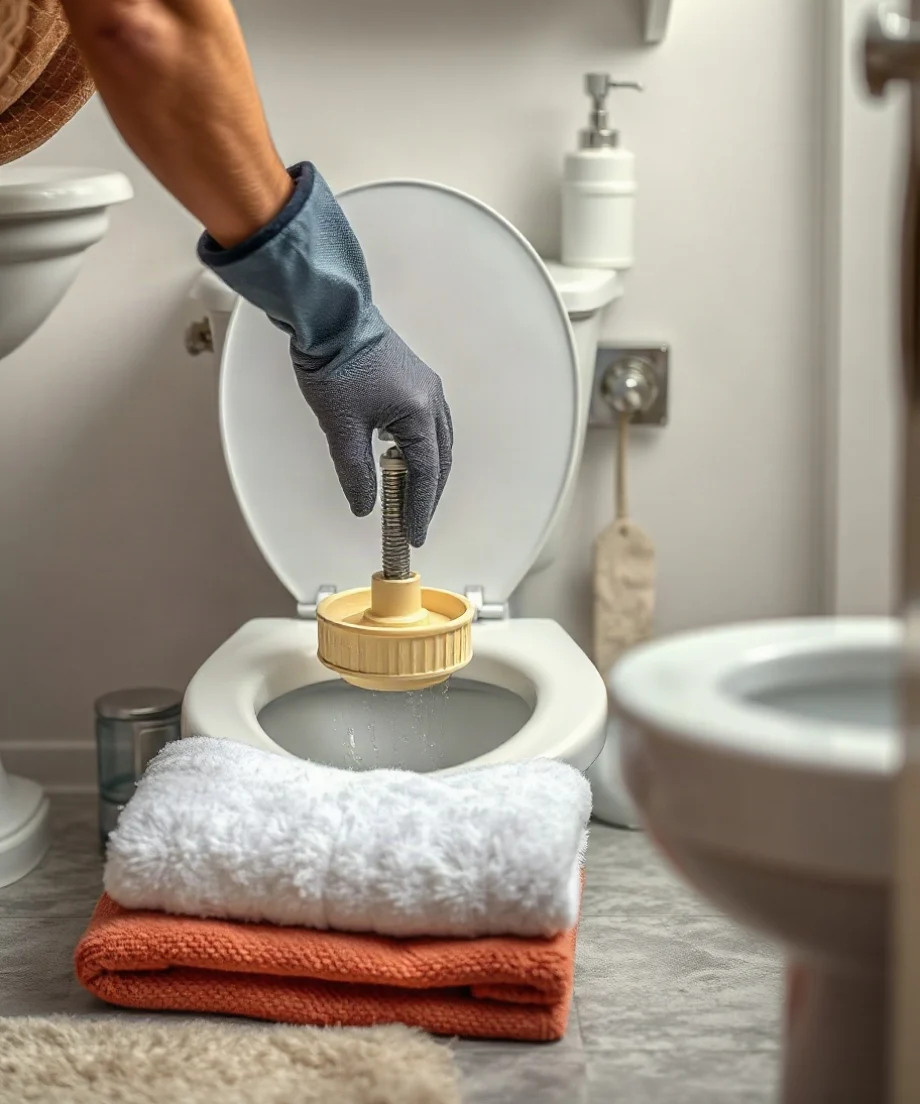
Do not flush the toilet again to “see if it clears.” A second flush can send more water over the rim, especially when the drain is completely blocked.
Protect the Bathroom Before You Plunge
Put on waterproof gloves and move rugs, baskets, toilet paper, and other items away from the toilet. Place old towels around the base, but do not use towels as a substitute for stopping the water. If wastewater has reached electrical equipment, an adjoining room, or a ceiling below, keep people away from the area and contact a qualified local professional.
Toilet overflow water may contain harmful bacteria. Avoid touching your face while cleaning, wash your hands thoroughly afterward, and disinfect hard surfaces according to the cleaner’s label. Do not mix bleach with ammonia, acids, or other household cleaners.
Use the Right Plunger
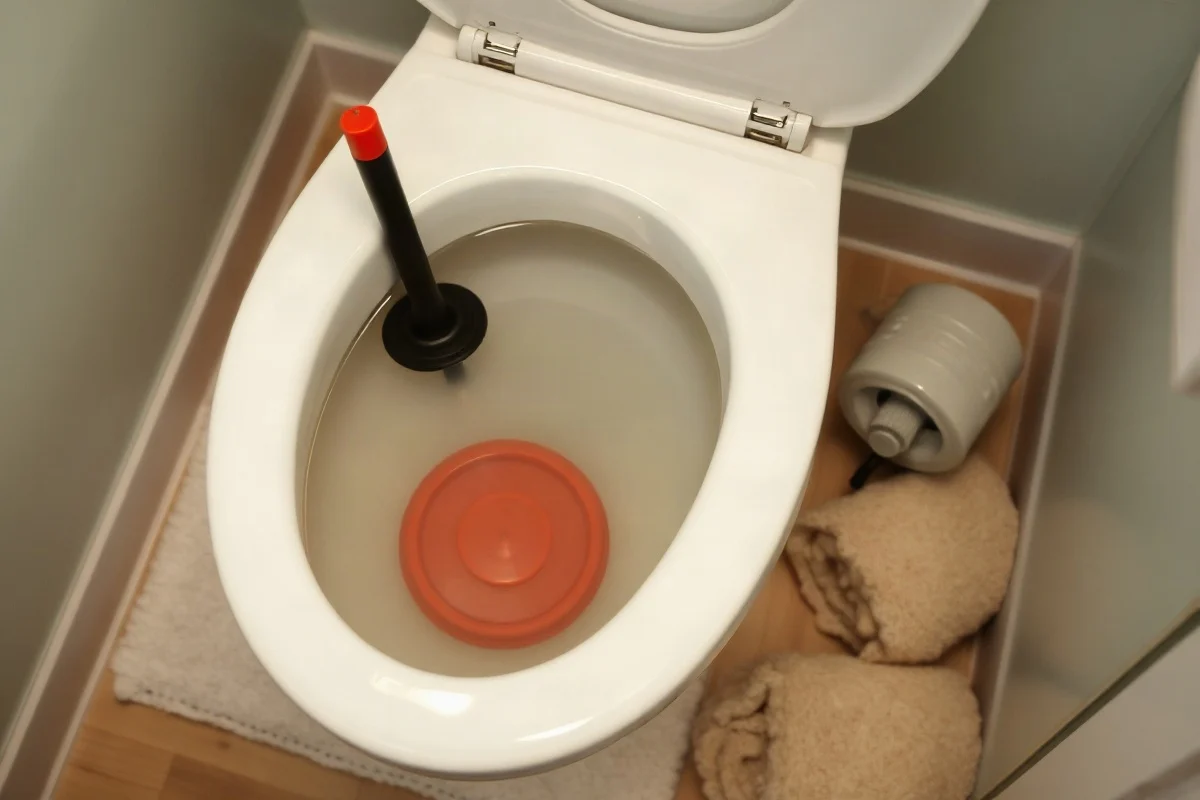
A flat cup sink plunger is less effective on a toilet because it may not seal around the curved drain opening. A toilet flange plunger has an extended rubber flange designed to fit inside the toilet outlet. Keep a dedicated toilet plunger separate from plungers used for sinks or tubs.
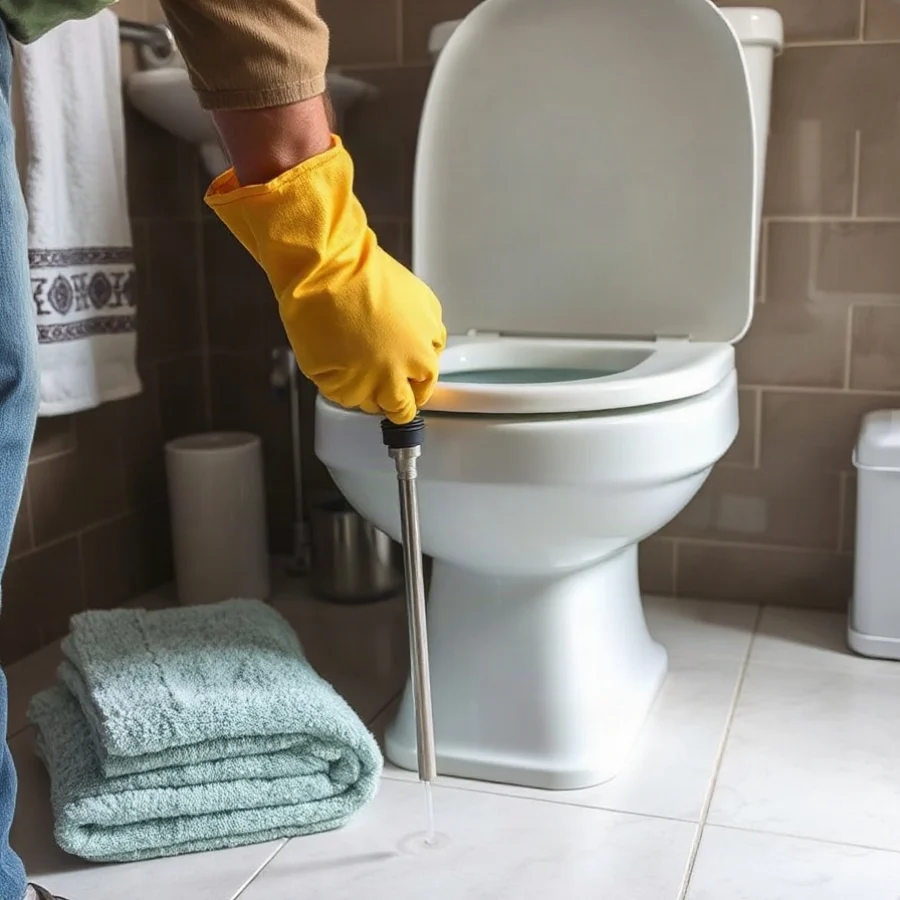
How to plunge a clogged toilet
- Make sure the bowl contains enough water to cover the plunger’s rubber cup. If the bowl is nearly empty, add a small amount of water from a bucket only after confirming that the water level will not rise above the rim.
- Place the flange directly over the drain opening and press down gently to create a seal.
- Start with a slow push to avoid splashing and to keep air from escaping around the seal.
- Pull up firmly without breaking the seal, then repeat with controlled strokes.
- After several strokes, lift the plunger slightly and watch whether the water begins to drain.
Do not plunge violently. Forceful movement can splash contaminated water, damage a fragile toilet, or push a blockage deeper into the drain. If the water level rises toward the rim, stop immediately and wait for it to settle.
What Not to Pour Into an Overflowing Toilet
Avoid chemical drain cleaners in a clogged toilet. They may not dissolve the material causing the blockage, and they can leave caustic liquid in the bowl or drain. That creates a burn and splash hazard for anyone who later plunges, snakes, or disassembles the toilet.
Do not pour boiling water into the bowl. Sudden heat can damage porcelain, and hot water does not reliably clear a solid obstruction. Dish soap and warm water are sometimes suggested for minor paper clogs, but they are not a dependable solution for an actively overflowing toilet. Stabilize the water level first and use mechanical methods instead.
Try a Toilet Auger for a Stubborn Clog
If careful plunging does not work, a toilet auger, also called a closet auger, may reach a blockage that is lodged inside the toilet’s built-in trap. Feed the protected cable into the bowl opening, turn the handle gently, and follow the tool manufacturer’s instructions. Do not use a bare metal drain snake that can scratch the porcelain.
Stop if the cable will not advance, the handle binds, or the toilet moves at its base. Forcing the tool can damage the fixture or leave part of the cable stuck. If a toy, cleaning product, tool, or other hard object may have fallen into the toilet, professional removal is usually safer than repeatedly pushing it farther into the drain.
Common Causes of an Overflowing Toilet
The immediate symptom is usually a bowl that drains too slowly or not at all, but several problems can produce it.
Too much toilet paper or waste
A large amount of paper can temporarily block the toilet trap. This is the type of obstruction most likely to respond to a flange plunger, provided no other fixtures are backing up.
A foreign object
Children’s toys, wipes, sanitary products, paper towels, and small bathroom items can become lodged in the trap. Many products labeled “flushable” do not break apart as readily as toilet paper and may contribute to blockages. Do not flush wipes, paper towels, or other non-toilet paper items just because they can physically fit.
A failing toilet component
A worn flapper or malfunctioning fill valve can cause the toilet to keep filling, but that problem is different from a blocked drain. If the bowl drains normally but the tank continues sending water into it, the issue may be a running toilet rather than a clog. Guidance on that separate problem is available in our running toilet guide.
A blocked branch drain or sewer line
If the bathtub, shower, or sink also drains slowly, or if water rises in another fixture when the toilet is flushed, the blockage may be farther down the drain system. Multiple affected fixtures are a reason to stop using nearby plumbing and arrange qualified local help. You can learn more about warning signs in our sewer line guide.
When a Plumber Should Handle the Problem
Call a qualified local plumber if plunging and a toilet auger do not restore normal drainage, if the toilet repeatedly clogs, or if more than one fixture is affected. Repeated blockages can indicate a deeper drain obstruction, damaged pipe, tree-root intrusion, or a problem with the sewer connection. A professional may need to inspect the line rather than continue forcing tools through the toilet.
Professional help is especially important when sewage backs up, contaminated water spreads beyond the bathroom, the toilet rocks at its base, the floor feels soft, or water appears around the toilet’s connection. A loose or damaged base can allow hidden leakage even when the bowl is not overflowing.
Do not remove a toilet, cut into a wall or floor, enter a crawl space with sewage, or work near exposed electrical equipment as a first-time emergency response. These situations can involve contamination, concealed water damage, structural concerns, or other hazards. Use qualified local help for dangerous or hidden conditions.
Repair or Replace the Toilet?
A simple clog usually does not mean the toilet needs replacement. Repair may be appropriate when the fixture is stable, the porcelain is intact, and the problem is limited to a blockage, flapper, fill valve, handle, or other replaceable part.
Replacement may deserve consideration when the toilet has a visible crack, rocks because the mounting area is damaged, clogs repeatedly without an obvious user-related cause, or has internal damage that makes repair impractical. A plumber can help separate a fixture problem from a drain-line problem before you spend money on a new toilet. Replacing the toilet will not solve a blockage located farther down the drain.
What Affects the Cost of Clearing an Overflowing Toilet?
The final cost depends on the actual cause and the work required. Relevant factors can include whether the blockage is in the toilet trap or a deeper drain, whether the toilet must be removed, the condition of the shutoff valve and flange, the need for specialized inspection equipment, cleanup requirements, and the time of service. Travel, access, and local labor conditions can also affect a written estimate.
Ask the plumber to explain the likely cause, the proposed diagnostic steps, what is included in the estimate, and whether cleanup or fixture replacement would be separate. Avoid choosing a service based only on the lowest initial number if the scope of work is unclear. Our plumbing cost guide provides broader advice on comparing estimates without relying on a one-size-fits-all price.
How to Choose the Right Local Plumber
Look for a plumbing professional with experience handling toilet blockages, drain backups, and sewer-related problems. Before work begins, describe exactly what happened: when the overflow started, whether the shutoff worked, which fixtures are affected, what you tried, and whether any object may have been flushed.
Ask for a clear explanation of the recommended repair and an estimate that identifies major charges. Confirm who will perform the work and request documentation of qualifications, insurance, or other information that is relevant in your area. Local licensing and permit requirements vary, so check with the appropriate local authority when the job may involve structural changes, sewer work, or code-related work.
Prevent the Next Overflow
- Flush only human waste and toilet paper.
- Keep wipes, paper towels, cotton products, and hygiene products out of the toilet.
- Teach children not to put toys or objects in the bowl.
- Respond to slow flushing, bubbling, or repeated clogs before the toilet overflows.
- Know where the toilet shutoff valve is and keep access clear.
- Have recurring or multi-fixture drainage problems evaluated instead of relying on repeated plunging.
The safest sequence is simple: stop the water, protect the room, plunge gently with the correct tool, and stop when the blockage does not respond. If sewage, multiple fixtures, hidden leakage, or a damaged toilet is involved, contact a qualified local plumber rather than turning a manageable clog into a larger plumbing or water-damage problem. For related fixture issues, see our toilet repair resources.
Comments
0No comments yet. Be the first to share a helpful note or question.
Leave a Comment
Your email address will not be published. Comments are reviewed before appearing on the site.