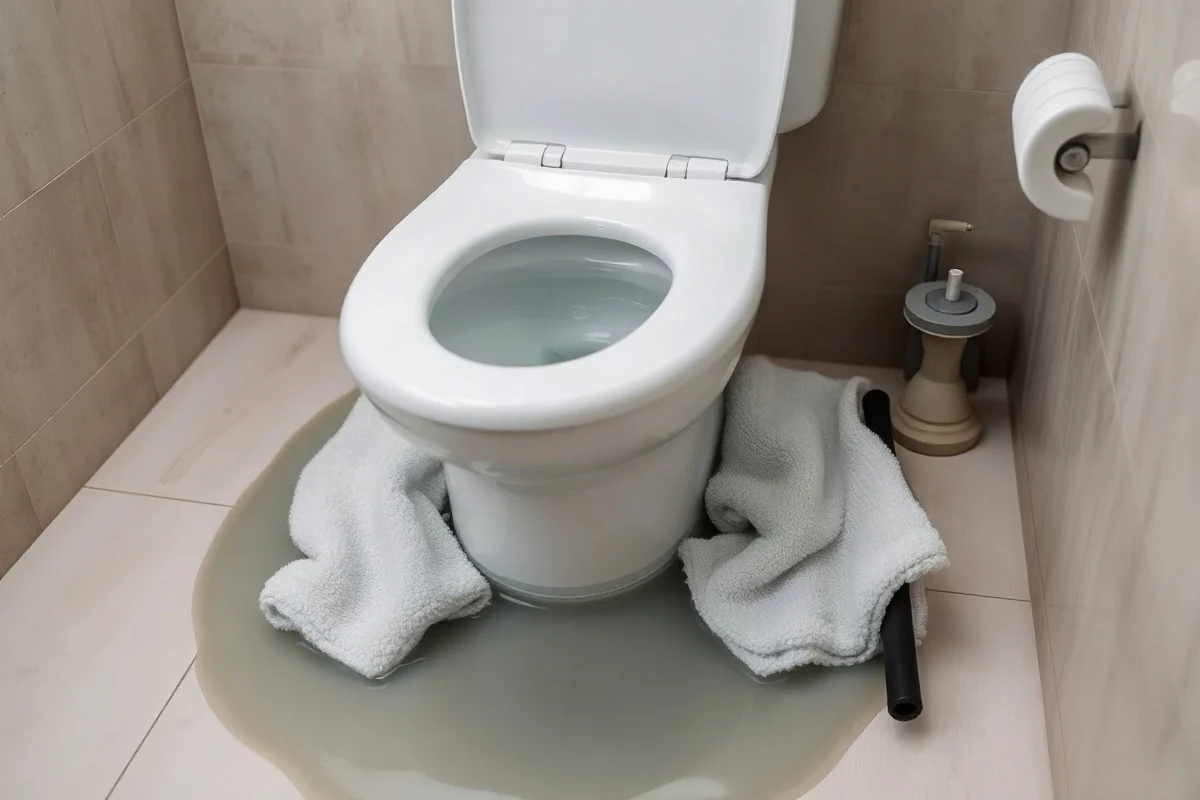
If your toilet overflowed onto the floor, stop the water immediately, keep anyone away from the contaminated area, and do not flush again. Turn the shutoff valve behind or beside the toilet clockwise until it stops, or lift the tank lid and raise the float if the valve will not close. Then remove standing water, protect yourself with gloves, and determine whether the problem is a simple clog or a sign of a larger drain or sewer issue.
First, stop the overflow
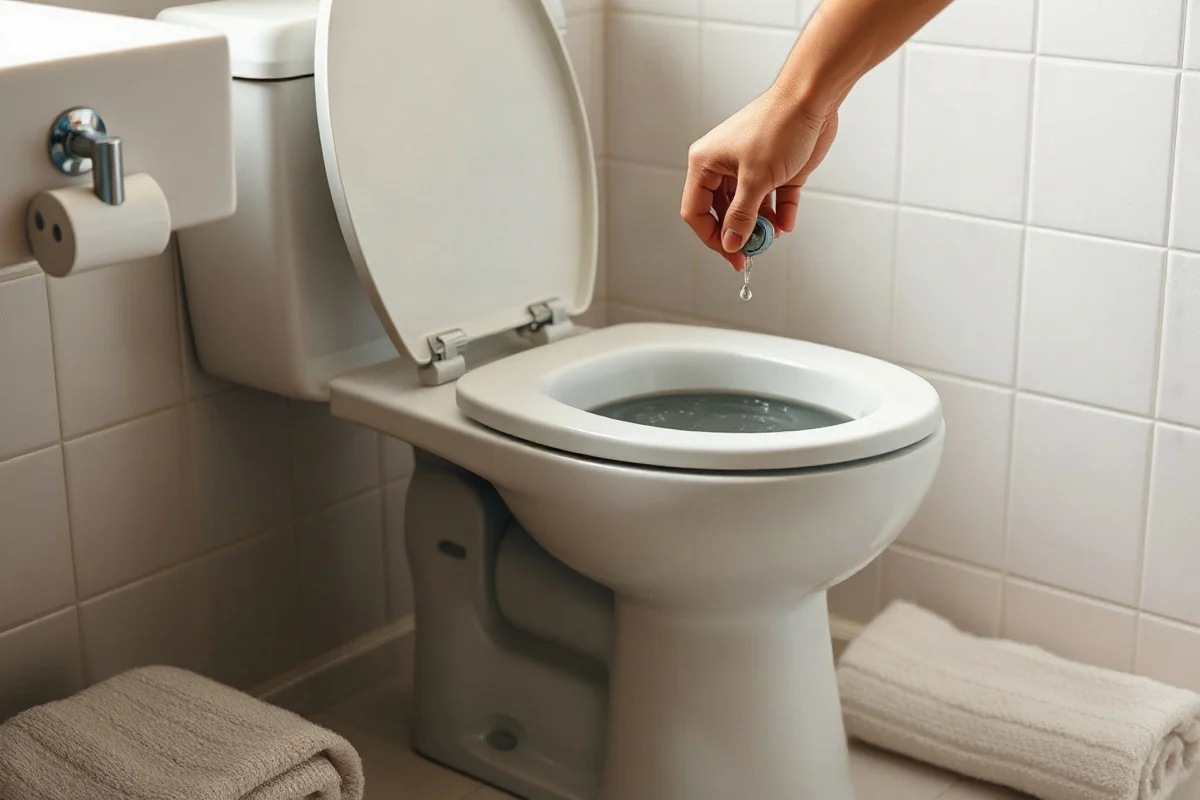
The first priority is preventing more water from reaching the floor. Most toilets have a small shutoff valve on the supply pipe near the wall. Turn it slowly clockwise. Avoid forcing a stiff or corroded valve, because an old valve can leak or break when disturbed.
If the toilet is still filling and the shutoff valve does not work, remove the tank lid carefully. Inside the tank, lift the float high enough to stop the fill valve from adding water. On some toilets, pressing the rubber flapper closed can also slow the flow temporarily. These are short-term actions, not repairs.
Do not flush the toilet again to “test” it. If the bowl or drain line is blocked, another flush can send additional water onto the floor.
Protect yourself and the room
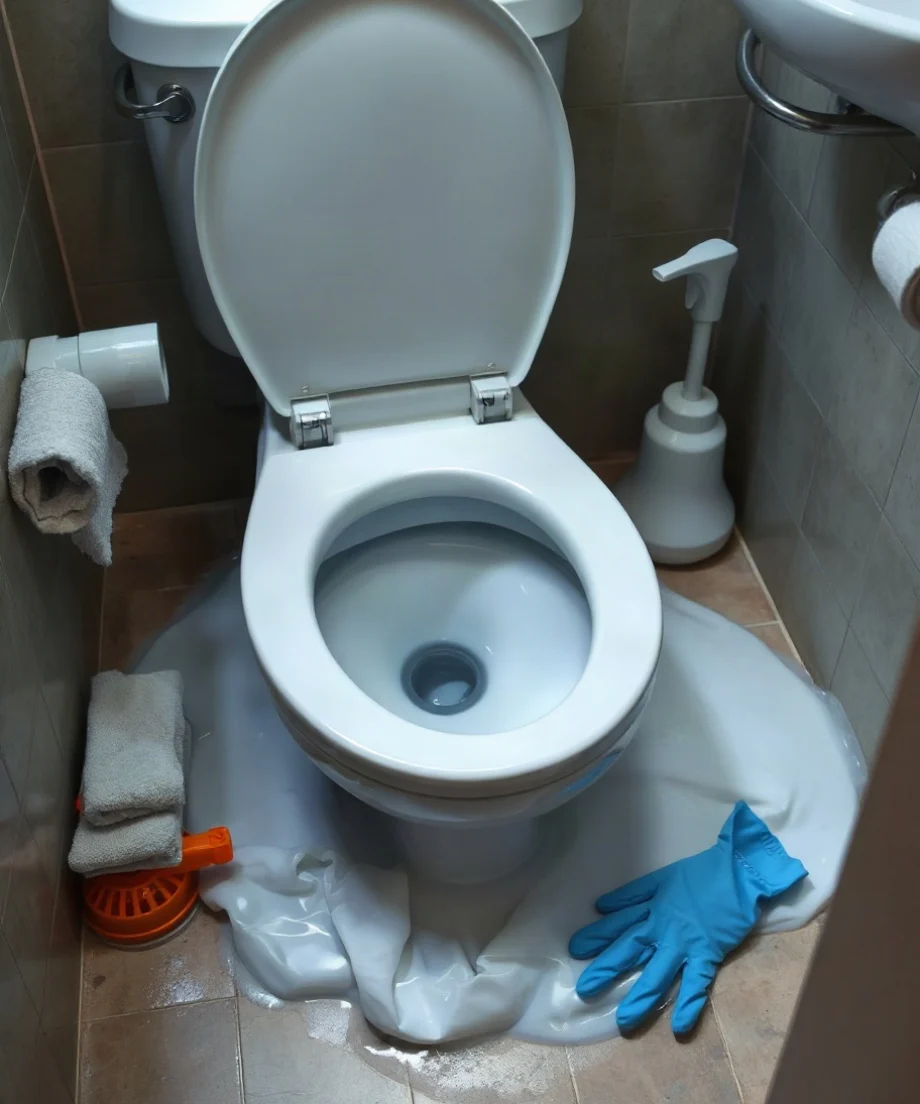
Overflow water from a toilet may contain bacteria and other contaminants, especially if the bowl has backed up from the drain. Wear waterproof gloves and shoes that can be disinfected or discarded. Keep children and pets away from the area, and avoid touching your face while cleaning.
Move rugs, bath mats, baskets, and other porous items away from the water. If water has reached an electrical outlet, power strip, appliance, or extension cord, do not step into the water to unplug anything. Leave the area and contact a qualified professional if there is a risk of electrical contact.
Use towels, a wet-dry vacuum designed for the situation, or a mop to remove standing water. Do not use a regular household vacuum on water. Place wet porous materials in a safe area until they can be cleaned or discarded. Ventilate the room if possible, but do not spread contaminated droplets with a fan before the visible water has been removed.
Check whether the toilet is clogged
Once the water has stopped, look at the bowl. A high water level that slowly falls often points to a partial clog in the toilet trap or nearby drain. A bowl that stays full may indicate a more complete blockage. If other bathroom fixtures are draining normally, the obstruction may be limited to this toilet.
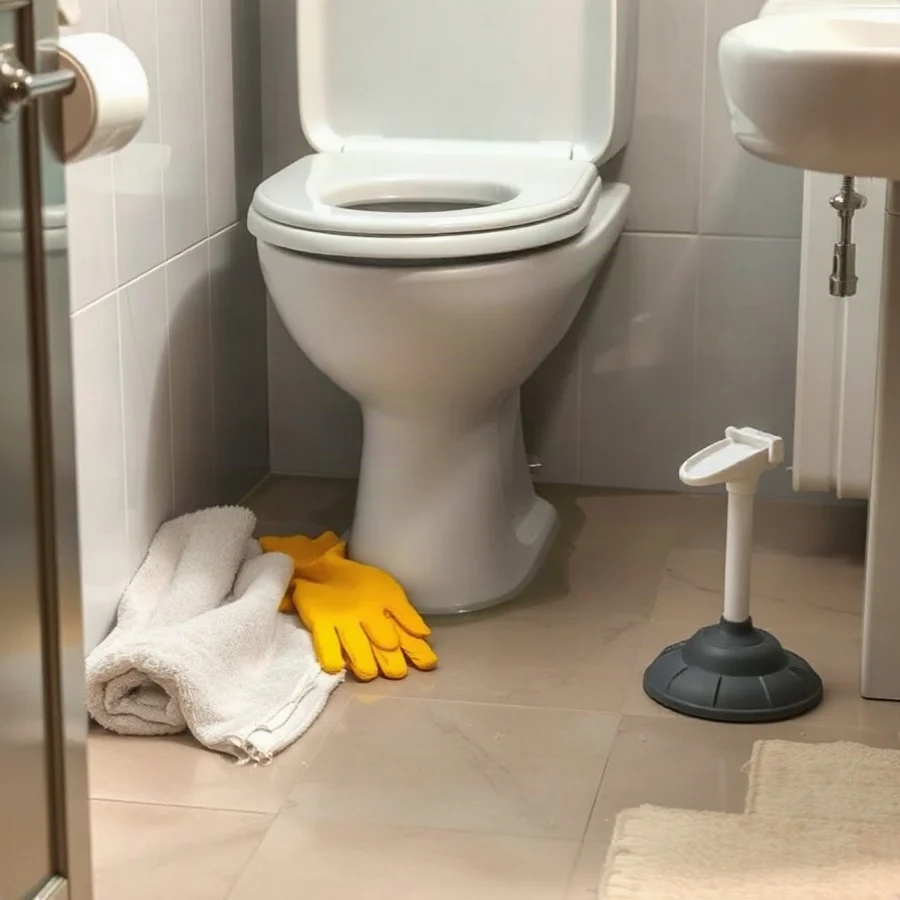
A flange-style toilet plunger is the safest first tool for many ordinary clogs. Make sure there is enough water in the bowl to cover the plunger cup, but do not add water if the bowl is already near the rim. Place the flange directly over the drain opening and press down gently at first to create a seal. Then use controlled, firm strokes without splashing. If the water level rises, stop and wait for it to fall before continuing.
Do not use repeated flushes to see whether plunging worked. Instead, remove some water if needed and observe whether the bowl drains. If the plunger does not clear the blockage after a reasonable attempt, stop rather than forcing the problem deeper into the line.
Be careful with chemical drain cleaners
Chemical drain cleaners are generally a poor choice for an overflowing toilet. They may splash back, damage some components, create hazardous fumes, or leave caustic liquid in the bowl for anyone who later uses a plunger or auger. Never mix drain chemicals with bleach, toilet cleaner, or another product.
If a chemical product has already been added, tell the plumber before service and keep people away from the toilet. A professional needs to know about possible chemical exposure before attempting a repair.
Look for clues about the cause
A toilet can overflow for several reasons, and the right repair depends on where the restriction or failure is located.
- Excessive paper or a foreign object: Too much paper, wipes, a child’s toy, or another object can block the toilet trap. Even products labeled flushable may contribute to clogs.
- A failed flapper or fill valve: If the tank keeps sending water into the bowl even when the drain is open, the flush mechanism may be malfunctioning. This can cause a bowl to overflow when combined with a slow drain.
- A blocked branch drain: If the toilet and nearby tub or sink drain slowly, the obstruction may be farther down the bathroom drain line.
- A main sewer line problem: Toilets that back up along with several sinks, tubs, or floor drains can indicate a larger blockage or sewer issue.
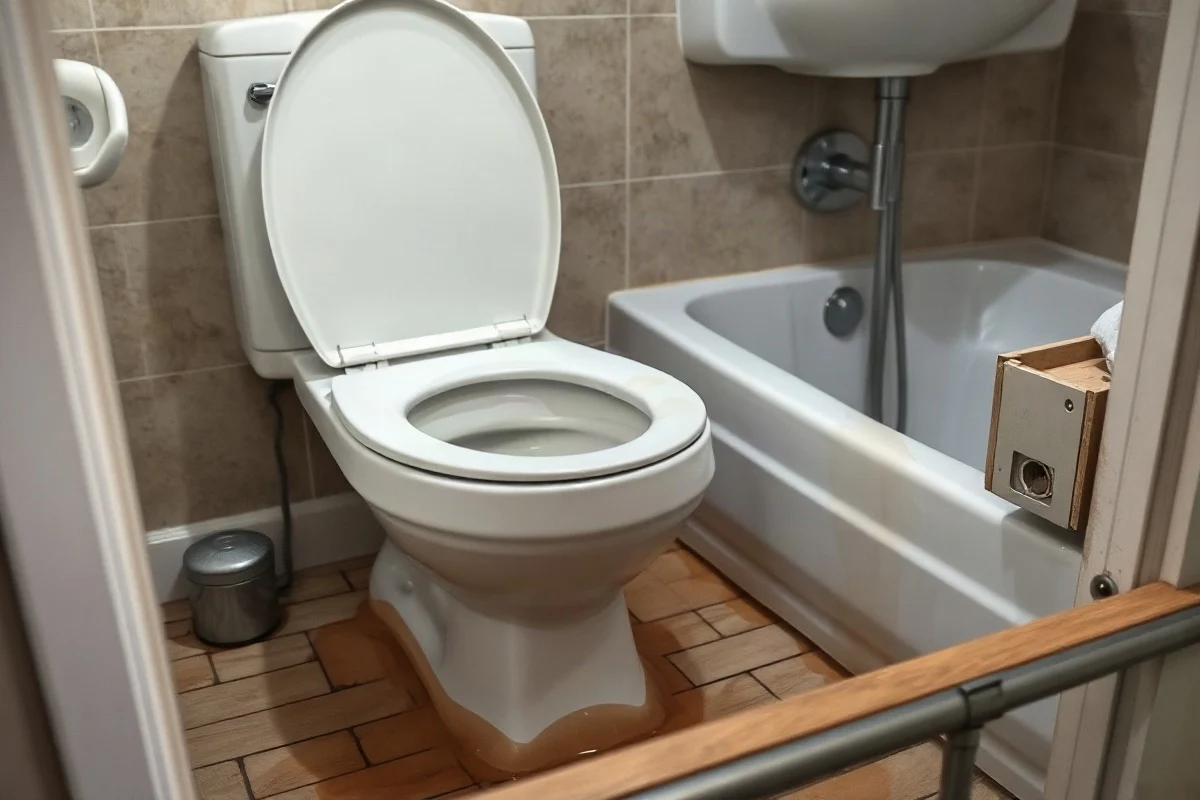
- A damaged toilet or drain connection: Water appearing around the base during or after a flush may come from a failed seal, a cracked fixture, or movement at the connection.
Do not assume the visible water identifies the source. Water from a blocked toilet can spread across the floor and make a leak at the base difficult to identify.
When to stop DIY work and call a plumber
Some basic checks are reasonable for a homeowner, but certain conditions call for qualified local help. Contact a plumber if plunging does not clear the toilet, the blockage returns quickly, or the bowl overflows even without a flush.
Call promptly when multiple fixtures back up, wastewater appears in a tub or shower, a floor drain is involved, or you hear unusual bubbling from several drains. These signs can point to a shared drain or sewer problem rather than an isolated toilet clog. You can learn more about possible next steps through this sewer line repair resource.
Professional help is also appropriate when the toilet rocks, leaks around its base, has a cracked porcelain tank or bowl, or may have an object lodged inside. Avoid removing the toilet unless you have the tools, experience, and a clear plan for protecting the exposed drain and reinstalling the fixture correctly.
If sewage has spread over a large area, entered porous flooring or drywall, or remained wet long enough to create a sanitation concern, contact a qualified plumber and a suitable water-damage or environmental cleanup professional. Do not handle sewage-contaminated materials without proper protective equipment.
Repair or replace the toilet?
Many overflowing-toilet problems can be repaired without replacing the fixture. A plumber may clear the trap, repair the fill valve or flapper, adjust the flush mechanism, or replace a worn seal at the base. The exact repair depends on the failed component and the condition of the toilet.
Replacement may make more sense when the bowl or tank is cracked, the porcelain is unstable, the fixture has been damaged by repeated impacts, or repairs have become unreliable. A toilet that rocks should not simply be tightened aggressively; overtightening can crack porcelain. The underlying floor, mounting hardware, and seal may need inspection.
If the toilet itself is in good condition but the drain keeps blocking, replacing the fixture may not solve the problem. Ask the plumber to identify the location and cause of the restriction before approving a replacement.
What affects the cost of the repair?
The final charge can vary significantly because an overflowing toilet may involve a simple fixture repair, a difficult drain obstruction, water damage, or a larger sewer issue. Common cost factors include:
- Whether the problem is in the toilet trap, a nearby branch drain, or the main sewer line
- How difficult the blockage is to access and remove
- Whether a toilet must be removed and reinstalled
- Replacement parts such as a fill valve, flapper, shutoff valve, or seal
- Damage to flooring, baseboards, drywall, or other materials
- After-hours availability and the service area
- Whether diagnostic equipment or a camera inspection is needed
For general background on plumbing estimates and billing variables, review this guide to plumbing costs. A reputable provider should explain the suspected cause, recommended repair, and any separate cleanup or diagnostic charges before work begins.
How to choose the right plumber
When calling for help, describe exactly what happened: when the toilet overflowed, whether it was flushed recently, how high the water rose, whether other fixtures are affected, and what you tried. Tell the plumber if chemical drain cleaner was used or if sewage reached the floor.
Choose a qualified local professional who can explain the repair clearly and provide written details for the recommended work. Ask whether the service includes only clearing the toilet or also checking nearby drains, the base connection, and visible water damage. Do not accept a vague replacement recommendation without asking why repair is not appropriate.
You can use this guide to hiring a plumber to prepare questions before scheduling service. For an active overflow, wastewater backup, or rapidly spreading damage, an emergency plumbing service may be appropriate.
Prevent another toilet overflow
Only flush human waste and toilet paper. Keep wipes, paper towels, feminine hygiene products, cotton swabs, dental floss, diapers, and cleaning products out of the toilet. Teach children not to flush toys or other objects.
Pay attention to warning signs such as slow flushing, rising water, gurgling, recurring clogs, or water around the base. Addressing these symptoms early may prevent a larger overflow. Know where the toilet shutoff valve is located, and periodically check that it can turn without excessive force. Do not wait until an emergency to discover that the valve is seized.
The safest first response is simple: stop the water, avoid another flush, protect yourself, remove standing water carefully, and use only a controlled plunger attempt when the problem appears to be an isolated clog. If the toilet continues to overflow, several fixtures are affected, sewage is present, or the fixture leaks at its base, stop DIY work and contact a qualified local plumber.
Comments
0No comments yet. Be the first to share a helpful note or question.
Leave a Comment
Your email address will not be published. Comments are reviewed before appearing on the site.