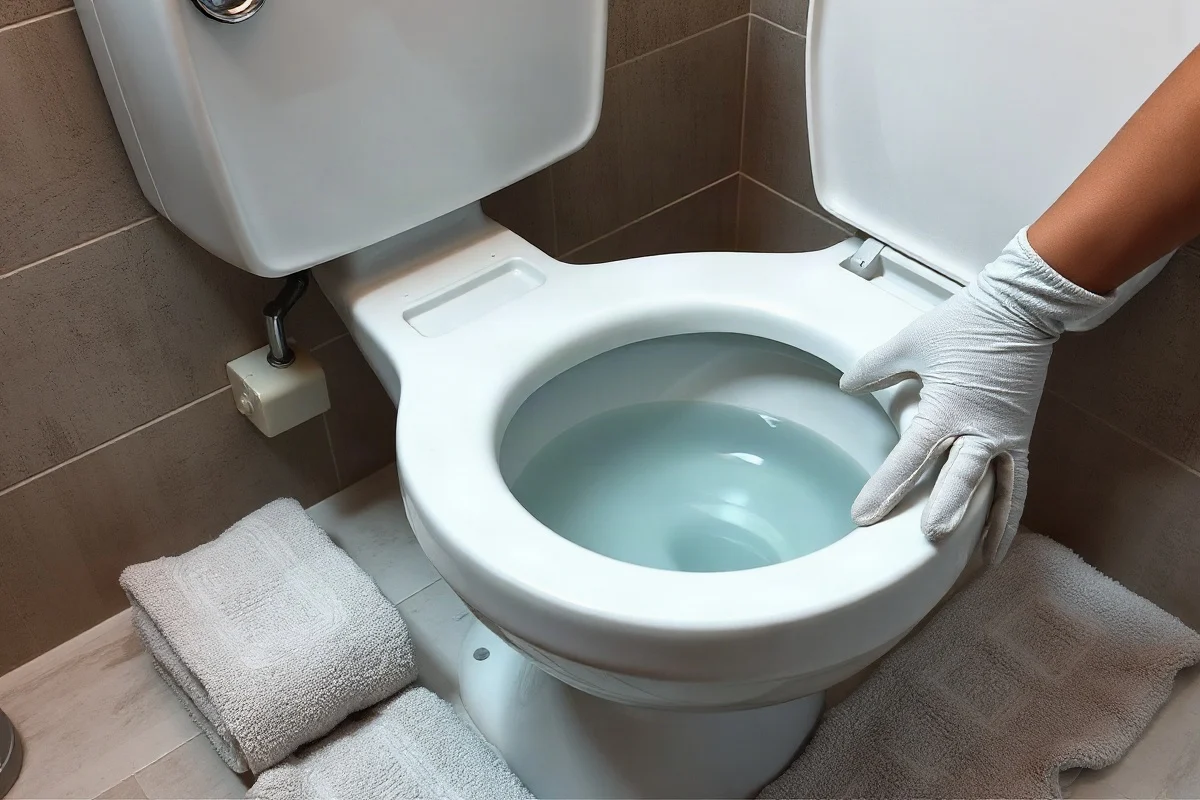
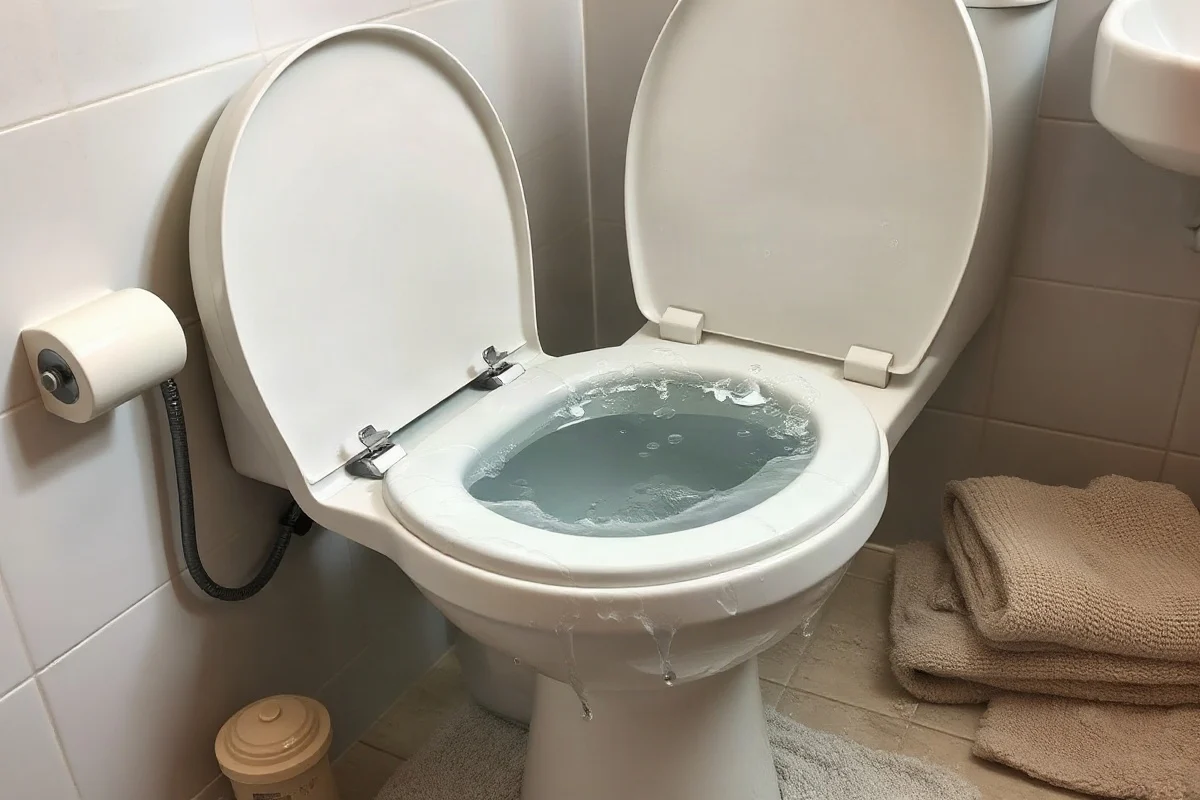
A toilet overflows from the bowl when water enters faster than it can drain away. The most common cause is a clog in the toilet trap or nearby drain, but a blocked vent, faulty tank parts, a sewer-line problem, or a toilet that cannot flush properly can also be responsible. Stop the flow first, avoid flushing again, and then use safe checks to identify whether the problem is limited to one toilet or affects the home’s drainage system.
What to Do Immediately When the Bowl Is Overflowing
Quick action can prevent contaminated water from spreading across the bathroom floor.
- Do not flush again. A second flush can add more water to a bowl that is already near the rim.
- Stop the water supply. Turn the shutoff valve behind or beside the toilet clockwise. If the valve is stuck, do not force it aggressively; a damaged valve can begin leaking.
- Stop tank water if necessary. Remove the tank lid and lift the float or close the flapper to stop water from continuing into the bowl. Keep fingers away from moving parts if the mechanism is damaged.
- Protect yourself. Wear waterproof gloves, keep children and pets away, and avoid contact with the water. Toilet overflow water may contain harmful contaminants.
- Protect the floor. Move rugs and nearby items away from the spill, then contain the water with towels. Do not use electrical appliances near standing water.
If sewage is backing up from several fixtures, water is spreading into walls or flooring, or the overflow cannot be controlled, contact a qualified local plumber. For urgent situations, the emergency plumber category can help you find appropriate local assistance.
Common Causes of an Overflowing Toilet
A clog in the toilet trap
The toilet trap is the curved passage inside the fixture that holds water and helps block sewer gases. It can become clogged by too much toilet paper, wipes, paper towels, hygiene products, toys, or other objects. Even products labeled flushable may contribute to blockages, especially in older or poorly draining systems.
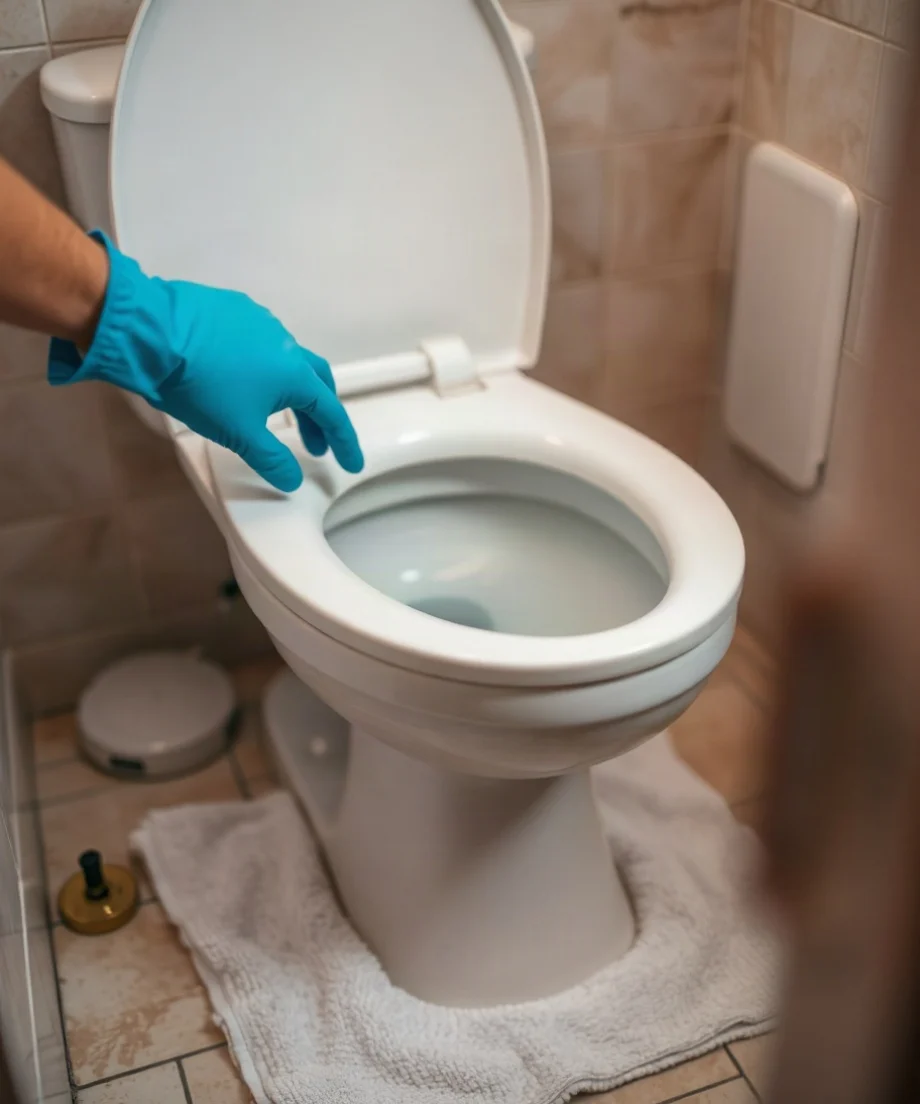
A partial clog may allow water to drain slowly while causing the toilet to rise close to the rim during a flush. A complete clog prevents the bowl from draining and usually produces an immediate overflow when someone flushes.
A blockage farther down the drain
Sometimes the toilet itself is clear, but a branch drain serving the bathroom is restricted. This may cause water to drain slowly from the toilet, tub, or sink. If more than one nearby fixture backs up at the same time, the problem may be in a shared drain rather than inside the toilet.
Recurring blockages can result from buildup, damaged piping, roots, or an object lodged farther along the line. Repeatedly plunging without finding the cause may provide only temporary relief. A plumber may need to inspect or clear the line using suitable equipment. Learn more about related service options through drain cleaning.
A blocked plumbing vent
Plumbing vents allow air into the drainage system and help wastewater move smoothly. A vent opening can become obstructed by leaves, debris, ice, or an animal nest, depending on the home and weather. When venting is restricted, toilets may drain slowly, gurgle, or lose water from the bowl trap.
Roof access is dangerous, and vent work may involve hidden piping or code-related concerns. Do not climb onto a roof or dismantle vent piping as a first step. A qualified professional can determine whether venting is contributing to the overflow.
A problem with the fill valve or float
The fill valve controls the water entering the tank after a flush. If it fails to shut off, the tank can continue filling. In many toilets, excess water eventually flows through the overflow tube and into the bowl. This usually causes a running toilet rather than a sudden drain clog, but a bowl may overflow if the drain is also restricted.
A float that is stuck, misadjusted, or rubbing against the tank wall can produce similar symptoms. A homeowner may be able to observe whether the water stops when the float is gently raised, but do not force the mechanism or make adjustments if the parts are brittle or unfamiliar.
A failed flapper or flush valve
The flapper seals the tank after flushing. If it remains open, is damaged, or does not seat correctly, water continuously enters the bowl. A worn flush valve can create the same type of leak. If the drain is working normally, this issue usually appears as a constantly running toilet rather than water rising immediately during a flush.
Replacing a simple flapper can be a reasonable low-risk repair for a comfortable homeowner. Turn off the supply first, use the correct replacement part, and confirm that the new seal does not leak. If the tank has cracked parts, corroded fasteners, or an unusual flush assembly, professional help is safer.
A sewer-line restriction
A blockage in the main sewer line can cause multiple fixtures to back up. You may notice the toilet gurgling when a sink, washing machine, or bathtub drains. Wastewater may also appear in a shower or floor drain, particularly in a lower-level bathroom.
Sewer-line problems can involve contaminated water, buried piping, roots, structural damage, or other conditions that require specialized diagnosis. Stop using affected fixtures and contact a qualified local plumber. Do not use chemical drain cleaners in an attempt to solve a suspected sewer-line blockage.
Safe Homeowner Checks
After stopping the water, you can perform a few low-risk observations. These checks can help a plumber understand the problem, but they do not replace professional diagnosis when the blockage is severe or recurring.
- Check whether the shutoff valve stops water from entering the tank.
- Look for obvious objects in the bowl, but do not reach into contaminated water with bare hands.
- Notice whether the bowl drains slowly or not at all.
- Check whether the sink, tub, shower, or another toilet is also backing up.
- Listen for gurgling from nearby drains when water is used elsewhere.
- Observe whether the tank continues filling after the float should have stopped it.
- Record what happened before the overflow, such as excessive paper, a dropped object, or several slow drains.
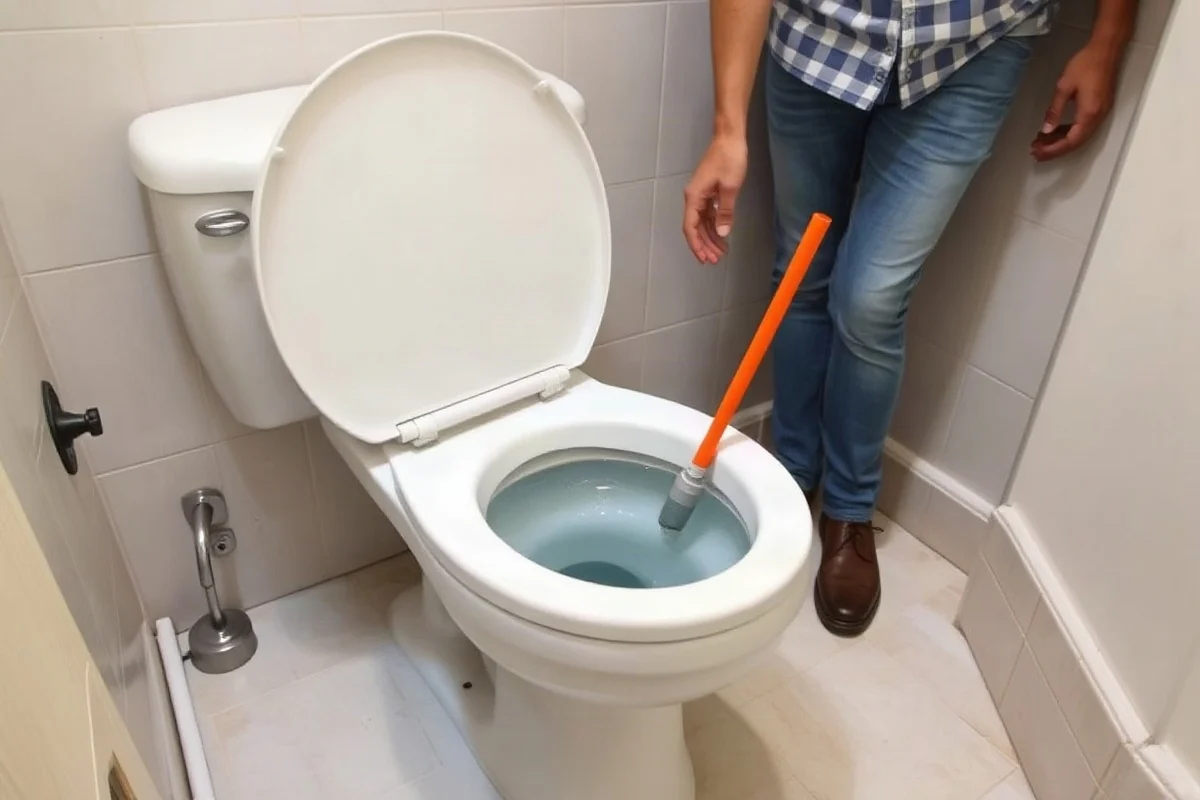
For a simple bowl clog, use a toilet plunger with a flange that fits the drain opening. Add enough water to cover the plunger cup if the bowl is low, but remove some water first if it is close to overflowing. Press down gently to create a seal, then use controlled strokes rather than violent force. Stop if water rises, the toilet rocks, or the plunger does not improve drainage after several careful attempts.
What Not to Do
Do not keep flushing to see whether the obstruction clears. Do not pour boiling water into the bowl; sudden heat can damage porcelain. Avoid chemical drain cleaners because they may splash back, damage plumbing components, or create a hazard for anyone who later opens the toilet or drain.
Do not use a regular sink plunger if it cannot seal the toilet opening, and do not force a drain snake into the fixture without knowing how to operate it. An unsuitable tool can scratch porcelain, damage the trap, or push an object farther into the drain.
Repair or Replace the Toilet?
An isolated clog, worn flapper, faulty fill valve, or loose handle is often repairable. Replacing a small internal part may make sense when the bowl and tank are in good condition and the fixture flushes normally after the repair.
Replacement may be more practical when the porcelain is cracked, the toilet rocks because the mounting area is damaged, the fixture repeatedly clogs despite a clear drain, or several internal components are failing. A cracked bowl or tank can release water without warning and should not be used until evaluated. A plumber can check the fixture, connection, floor area, and drain before recommending repair or replacement. See toilet repair for related guidance.
When an Overflow Requires a Professional
Call a qualified local plumber when the toilet continues to overflow after the supply is shut off, a plunger does not clear the problem, the blockage returns, or multiple fixtures are affected. Professional help is also appropriate when the toilet is leaking at its base, the floor is soft, the porcelain is cracked, or the drain may contain a foreign object.
Use extra caution when sewage has entered the room, when a major amount of water has reached flooring or walls, or when water is near electrical equipment. Keep people away from the area and arrange qualified cleanup and plumbing assistance. Hidden moisture can damage building materials, and sewage exposure may require specialized sanitation.
What Affects the Repair Cost?
The final cost depends on the cause and the work needed, not simply on the fact that a toilet overflowed. Important factors can include:
- Whether the blockage is in the toilet, a branch drain, or the main sewer line
- How difficult the affected pipe or fixture is to access
- Whether a basic internal part, the toilet, or damaged piping needs replacement
- Whether diagnostic equipment is needed to locate a recurring or hidden obstruction
- Whether water damage or sewage cleanup is required in addition to plumbing work
- The plumber’s service area, scheduling conditions, and applicable labor policies
Ask for a clear explanation of the suspected cause, the proposed repair, parts and labor, and any additional work that may be recommended before authorizing non-emergency services. Local charges vary, so avoid relying on a generic price as a guarantee.
How to Choose the Right Plumber
Look for a local professional with experience diagnosing toilet, drain, and sewer problems—not just replacing visible toilet parts. Ask whether the plumber can determine whether the issue is isolated to the fixture or connected to a larger drainage problem.
Before work begins, confirm the company’s contact information, service scope, and written estimate or explanation of charges. Ask what happens if the clog returns and whether any parts or labor are covered under the company’s stated terms. For sewage backups, concealed leaks, structural pipe problems, or work that may involve local requirements, choose a qualified professional familiar with the conditions in your area. More practical guidance is available in hiring a plumber.
Preventing Future Toilet Overflows
Flush only human waste and toilet paper, and keep wipes, paper towels, hygiene products, toys, and cleaning materials out of the bowl. Teach children not to use the toilet as a disposal bin. Fix a toilet that runs continuously, flushes weakly, or drains slowly before the condition becomes an overflow.
If the same toilet repeatedly backs up, do not treat each episode as an unrelated clog. The pattern may point to a partial drain blockage, venting issue, damaged pipe, or sewer-line restriction. Keeping notes about which fixtures are affected and when the problem occurs can help a plumber diagnose the underlying cause more efficiently.
Comments
0No comments yet. Be the first to share a helpful note or question.
Leave a Comment
Your email address will not be published. Comments are reviewed before appearing on the site.