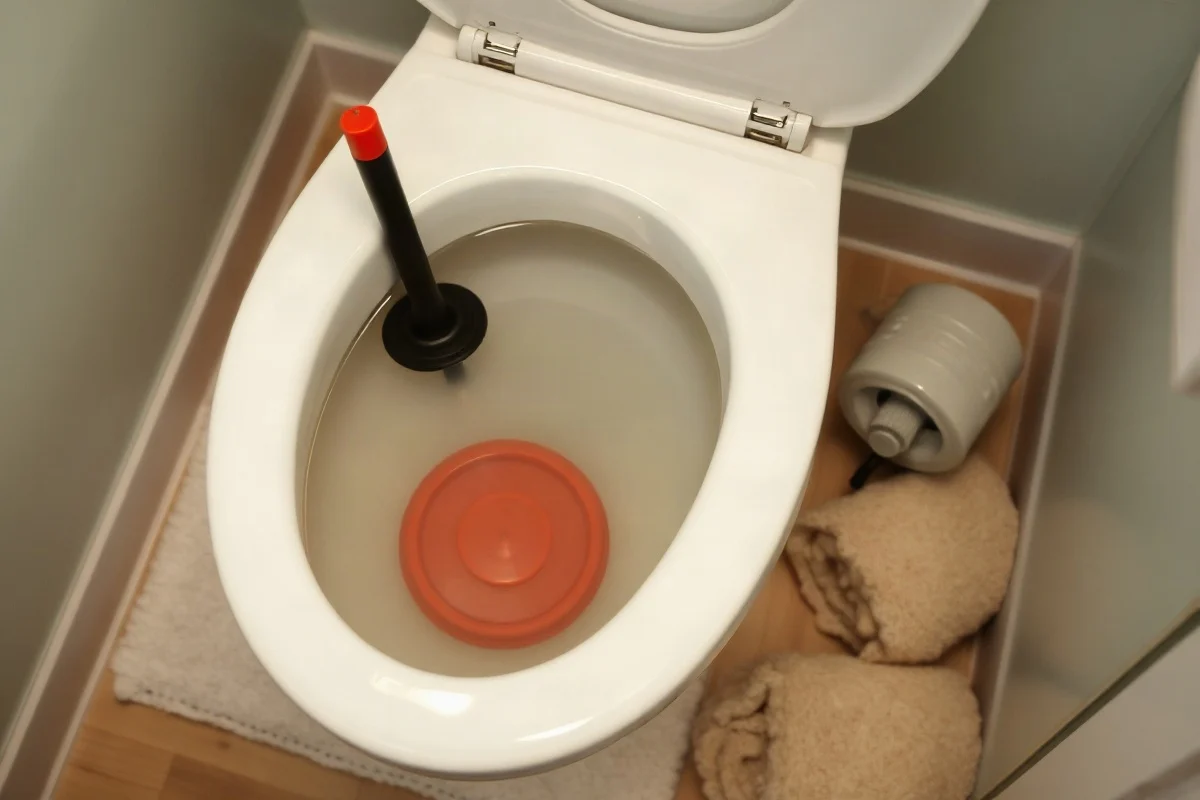
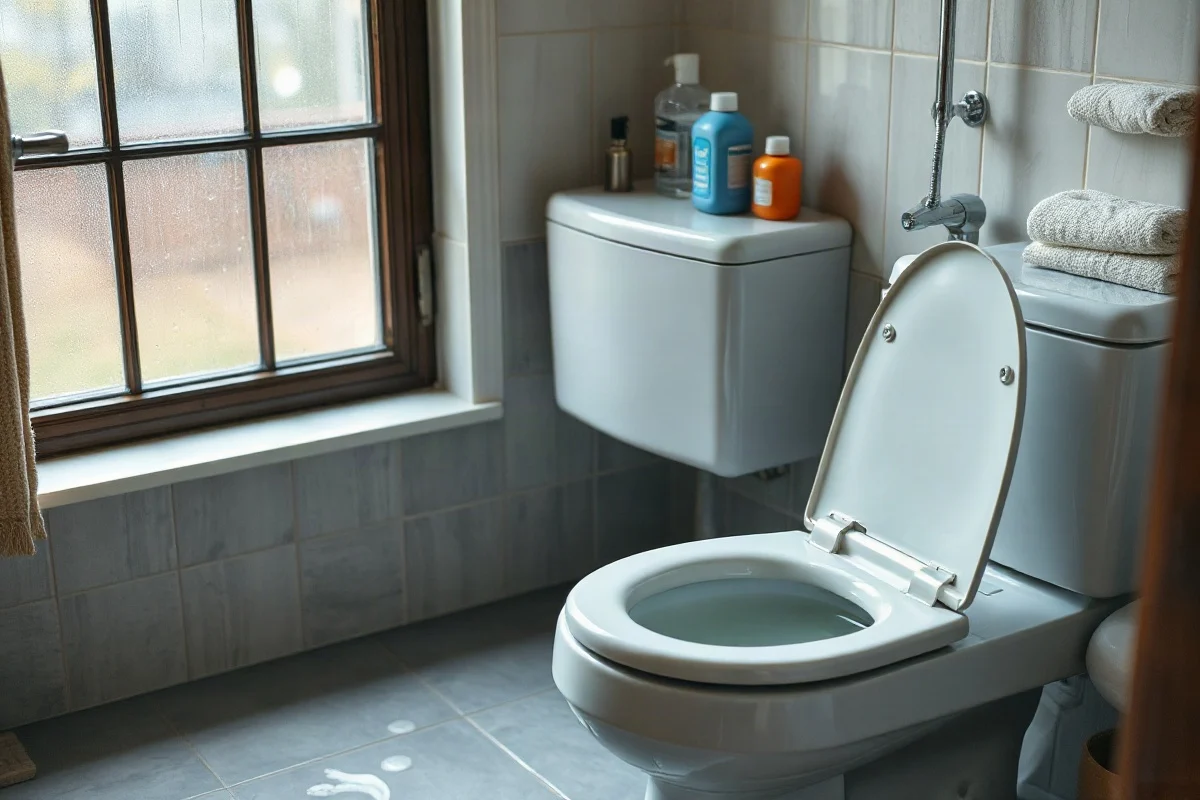
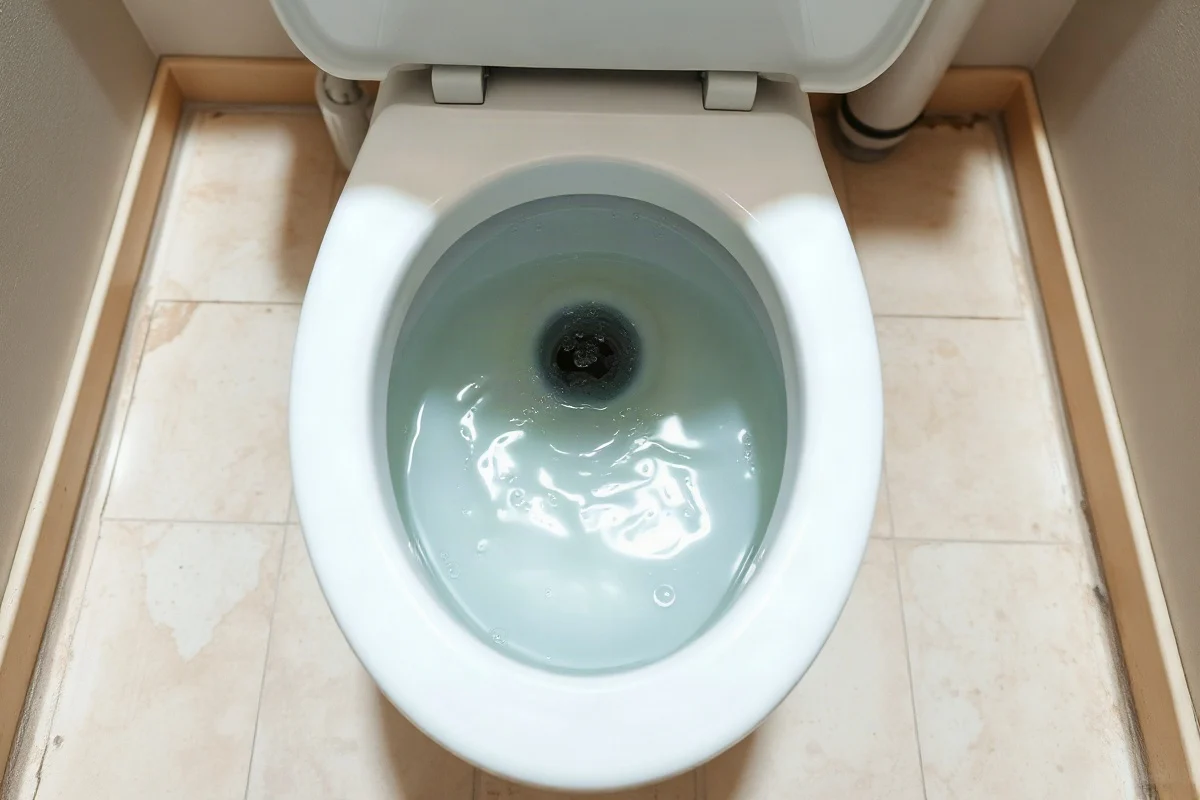
If the toilet overflows after using a plunger, stop plunging and do not flush again. Turn the shutoff valve behind or beside the toilet clockwise, lift the tank lid and raise the float or close the flapper if water is still entering the bowl, then protect the floor with towels. Once the water level has stopped rising, remove standing water carefully and determine whether the blockage is limited to the toilet or affects other drains. A toilet that remains blocked after proper plunging may need a toilet auger or professional drain service.
Stop the Overflow First
An overflowing toilet can spread contaminated wastewater across the bathroom floor within seconds. The immediate goal is to stop new water from entering the bowl, not to force the clog deeper.
Close the toilet shutoff valve
Look for a small valve on the wall or floor behind the toilet. Turn it clockwise until it stops without forcing it. If the valve is difficult to turn, damaged, or begins leaking when you touch it, stop and arrange for qualified local help rather than applying excessive force.
Stop water from the tank
If water is still flowing, remove the tank lid carefully. You may be able to stop the flow by lifting the float, or by pressing the rubber flapper closed at the bottom of the tank. Keep your hands away from electrical equipment and avoid touching the water if sewage has entered the bowl or floor area.
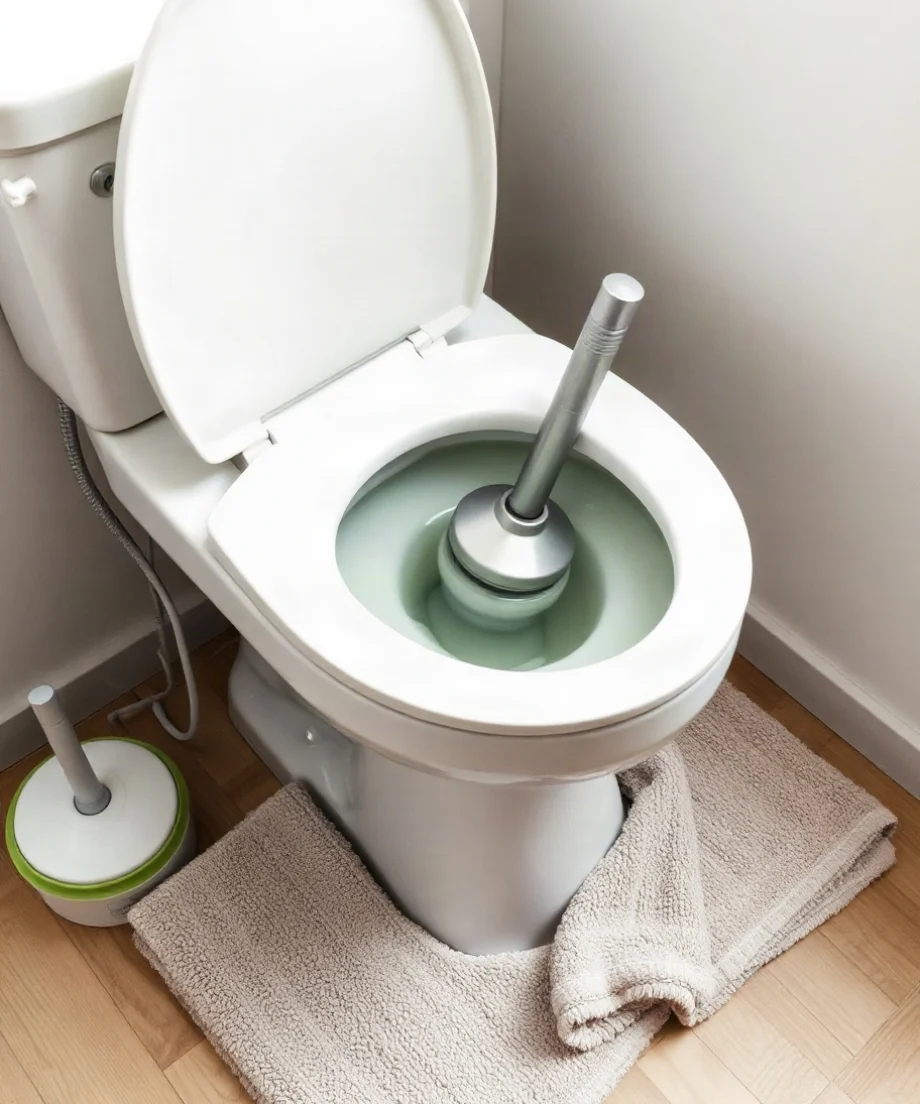
If the shutoff valve does not stop the flow, the toilet is cracked, or water is spreading beyond the bathroom, treat the situation as urgent. A qualified emergency plumber can help isolate the problem and reduce the risk of additional water damage.
Why Plunging Can Make the Toilet Overflow
Plunging works by creating pressure and suction that can move an obstruction through the trap or drain. If the clog is only partly dislodged, however, the bowl may fill faster than it can drain. Repeated plunging can also push water into a blockage without opening a clear path, causing the level to rise with each attempt.
Several problems can produce this result:
- A stubborn trap blockage: Excess paper, wipes, a hygiene product, or a small object may be lodged in the toilet’s built-in trap.
- An unsuitable plunger: A flat sink plunger may not seal well around a toilet outlet. A toilet plunger with an extension flange generally fits the opening more effectively.
- A downstream drain clog: The obstruction may be farther along the branch drain serving the toilet, so plunging cannot clear it.
- A blocked main sewer line: If several fixtures drain slowly or back up, the issue may be beyond the toilet itself.
- An object stuck in the toilet: Toys, cleaning products, and other solid items may resist plunging and require removal with an auger or toilet replacement.
Safe Checks You Can Make
After the water has stopped rising, wait for the bowl level to fall as much as it can. Do not test the toilet by flushing immediately. First, look for clues that help identify the extent of the blockage.
Check nearby fixtures
Run a small amount of water in a nearby sink only if there is no sewage backup and the toilet bowl is stable. Watch for gurgling, rising water in the toilet, or slow drainage. Do not continue testing if the toilet reacts or wastewater appears in a tub, shower, floor drain, or sink.
Ask whether other fixtures in the home are affected. A single toilet that is blocked while sinks and showers work normally is more likely to have a local toilet or branch-drain problem. Multiple backups, foul odors from several drains, or wastewater returning through a low fixture may indicate a larger sewer-line issue. That situation should be assessed by a qualified professional; you can learn more about the warning signs on our sewer line service page.
Look for an obvious cause
Only inspect the bowl or trap area if doing so will not expose you to contaminated water. Never reach into sewage with bare hands. If you suspect a solid object was flushed, do not add chemicals or keep plunging. A chemical drain opener can splash during later plunging, damage some plumbing components, and create a hazard for anyone working on the toilet.
Clean up cautiously
Wear waterproof gloves and shoes when handling contaminated water. Keep children and pets away from the area, absorb the spill with disposable materials, and clean hard surfaces with a suitable disinfecting product according to its label. Do not mix cleaning chemicals. Porous materials such as rugs or unfinished flooring may need special attention if sewage has soaked into them.
Should You Try Plunging Again?
It may be reasonable to try one careful, controlled attempt if the bowl is not close to overflowing, the water is clean, and you have a toilet plunger that fits the opening. Add enough water to cover the plunger cup if the bowl is low, create a seal, and use steady strokes rather than violent pumping. Stop immediately if the water rises quickly.
Do not keep plunging an already full bowl. Do not use boiling water, which can damage porcelain through thermal shock, and do not combine household chemicals. If a few controlled attempts do not restore drainage, further force is unlikely to solve the underlying problem and may increase the mess.
When a Toilet Auger or Plumber Is Needed
A toilet auger is designed to reach through the toilet trap and may remove or break up a blockage that a plunger cannot handle. It requires careful use to avoid scratching the porcelain or pushing an object farther into the drain. Homeowners who are comfortable following the tool’s instructions may use one when the problem appears limited to a single toilet and there is no sewage exposure.
Call a qualified local plumber instead of continuing DIY work when:
- The toilet overflows again after the water supply is shut off.
- The bowl remains full and does not drain gradually.
- More than one fixture is backing up or draining slowly.
- Wastewater is coming through a tub, shower, floor drain, or another toilet.
- You believe a hard object is lodged in the toilet or drain.
- The toilet rocks, has a cracked base, or leaks around its floor connection.
- The shutoff valve will not close or starts leaking.
- Sewage has caused substantial flooding or entered wall, ceiling, or finished-floor materials.
For a local blockage, a plumber may use a closet auger, inspect the drain, or remove the toilet if access is needed. For recurring or widespread backups, the plumber may recommend a drain camera inspection or other diagnostic work before choosing a repair. Do not assume that replacing the toilet will fix a clogged building drain; the correct remedy depends on where the obstruction is located.
Repair or Replace the Toilet?
An overflow by itself does not mean the toilet must be replaced. If the porcelain is intact and the blockage is caused by paper or a temporary obstruction, clearing the drain and checking the flushing components may be enough. A toilet may need repair when the tank mechanism is not working correctly, the flapper leaks, the fill valve keeps running, or the handle and lift chain fail.
Replacement becomes more likely when the bowl or tank is cracked, the base leaks after the blockage is cleared, the toilet is unstable because of a damaged floor connection, or a solid object cannot be removed without damaging the fixture. A plumber should evaluate any leak at the base because water can travel beneath flooring where damage is not immediately visible. Our toilet repair guide covers common repair decisions without assuming that every overflow requires a new fixture.
What Affects the Cost of the Repair?
Plumbing prices vary by location, timing, access, and the actual cause, so a reliable estimate requires an inspection or clear information from the plumber. Factors that commonly affect the total include:
- Whether the blockage is in the toilet trap, a nearby branch drain, or the main sewer line.
- Whether the plumber can clear the obstruction without removing the toilet.
- The need for an auger, camera inspection, extraction of a foreign object, or additional drain cleaning.
- Water damage cleanup, flooring repairs, or replacement of materials contaminated by sewage.
- Repair or replacement of a shutoff valve, fill valve, flapper, wax or sealing components, or the toilet itself.
- The timing and accessibility of the service, including whether the problem requires urgent attention.
Before work begins, ask what the diagnostic charge covers, which repair options are available, whether cleanup is included, and what circumstances could change the estimate. Avoid choosing a provider solely on the lowest advertised price. A clear explanation of the cause and scope of work is more useful than an unexplained promise of a quick fix.
How to Choose the Right Plumber
Look for a plumbing professional who regularly handles toilet blockages, drain backups, and sewer-related problems. Ask whether the person who will perform the work is qualified for the job in your area, and request written information about the recommended repair. Local licensing and insurance requirements vary, so verify applicable credentials through appropriate local or state resources rather than relying on a vague online claim.
Describe what happened accurately: when the toilet overflowed, how many times it was plunged, whether the water level changes, and whether other fixtures are affected. Tell the plumber if wipes, cleaning products, toys, or other objects may have been flushed. This information can help the professional bring the right equipment and avoid unnecessary repeated testing.
Preventing Another Overflow
Flush only waste and toilet paper, and follow the product label before disposing of anything that claims to be flushable. Even products marketed as flushable may contribute to clogs in some plumbing systems. Keep small objects, wipes, paper towels, and personal-care products out of the toilet.
Learn where the toilet shutoff valve is located before an emergency occurs. If the toilet frequently clogs despite normal use, drains slowly, gurgles, or backs up in more than one location, schedule an evaluation instead of repeatedly relying on a plunger. Repeated overflows are a symptom that deserves diagnosis, not just another temporary clearing attempt.
The safest response is simple: stop the water, prevent contact with sewage, avoid chemicals and repeated plunging, and call a qualified local professional when the blockage does not clear quickly or affects other fixtures. For more practical guidance about plumbing emergencies and repairs, visit Plumber Near Me Service.
Comments
0No comments yet. Be the first to share a helpful note or question.
Leave a Comment
Your email address will not be published. Comments are reviewed before appearing on the site.