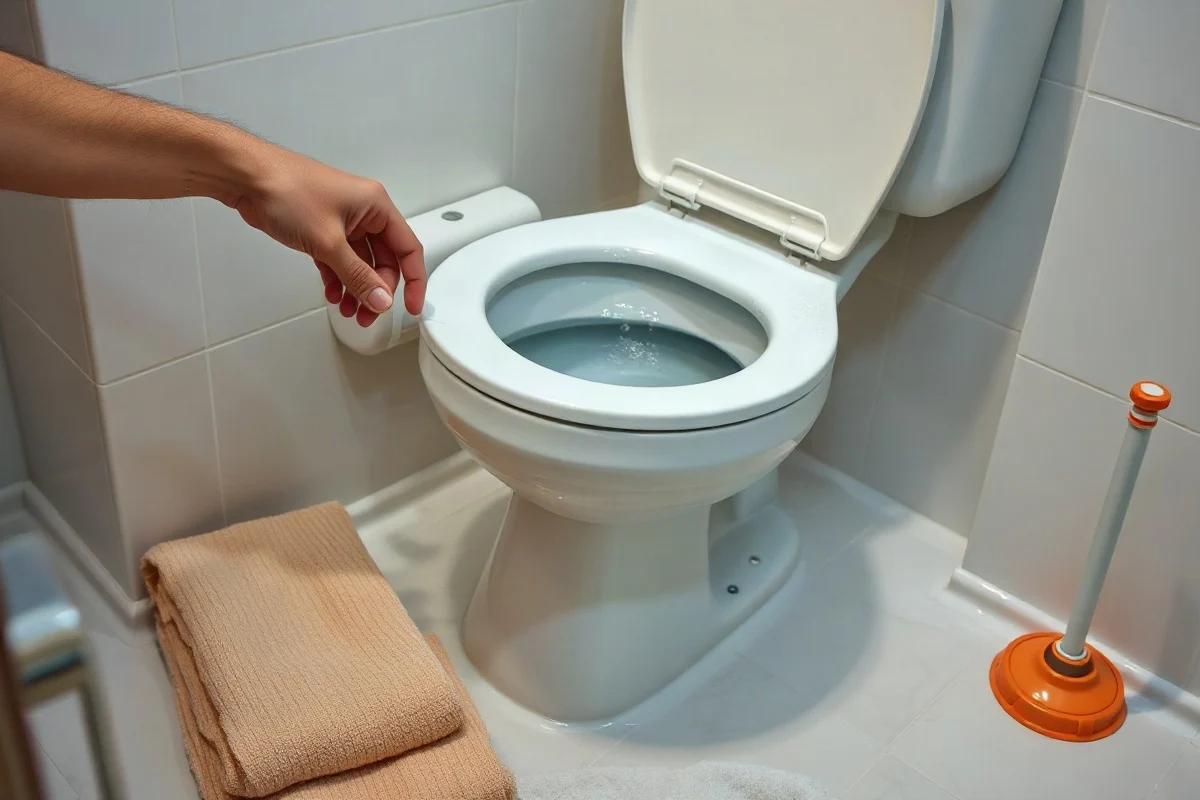
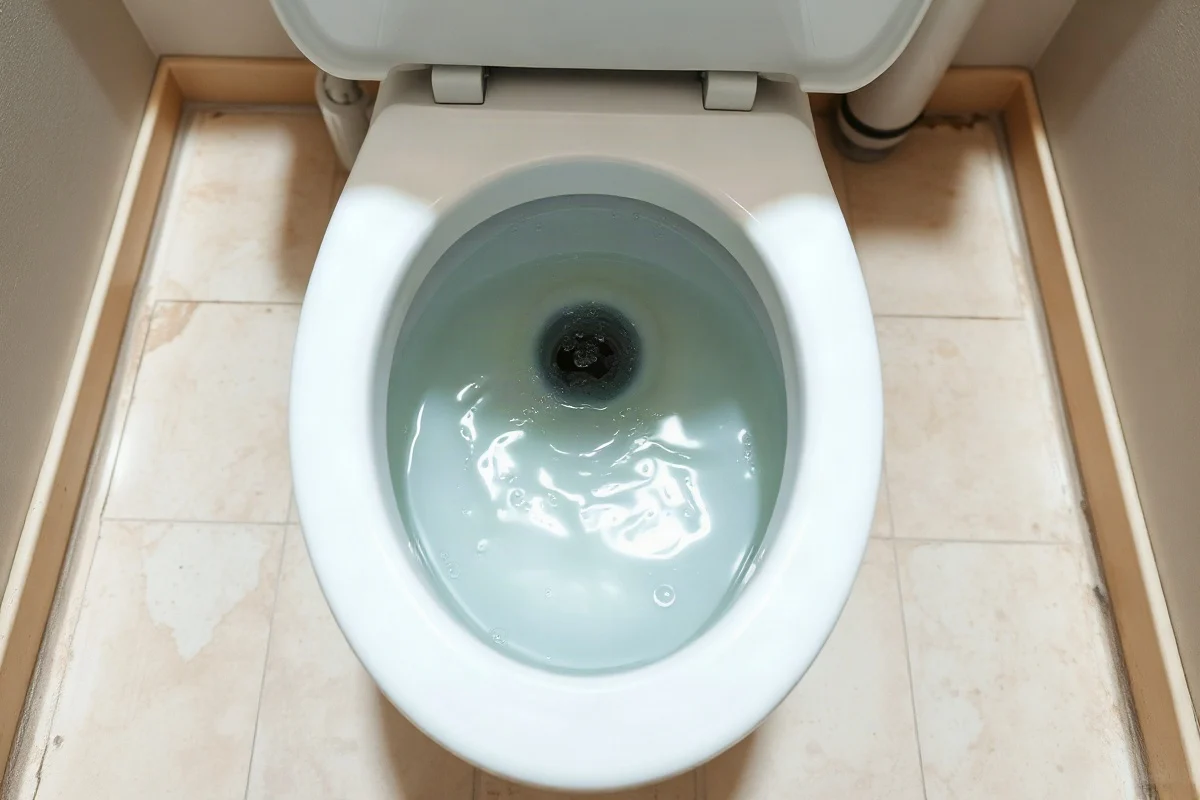
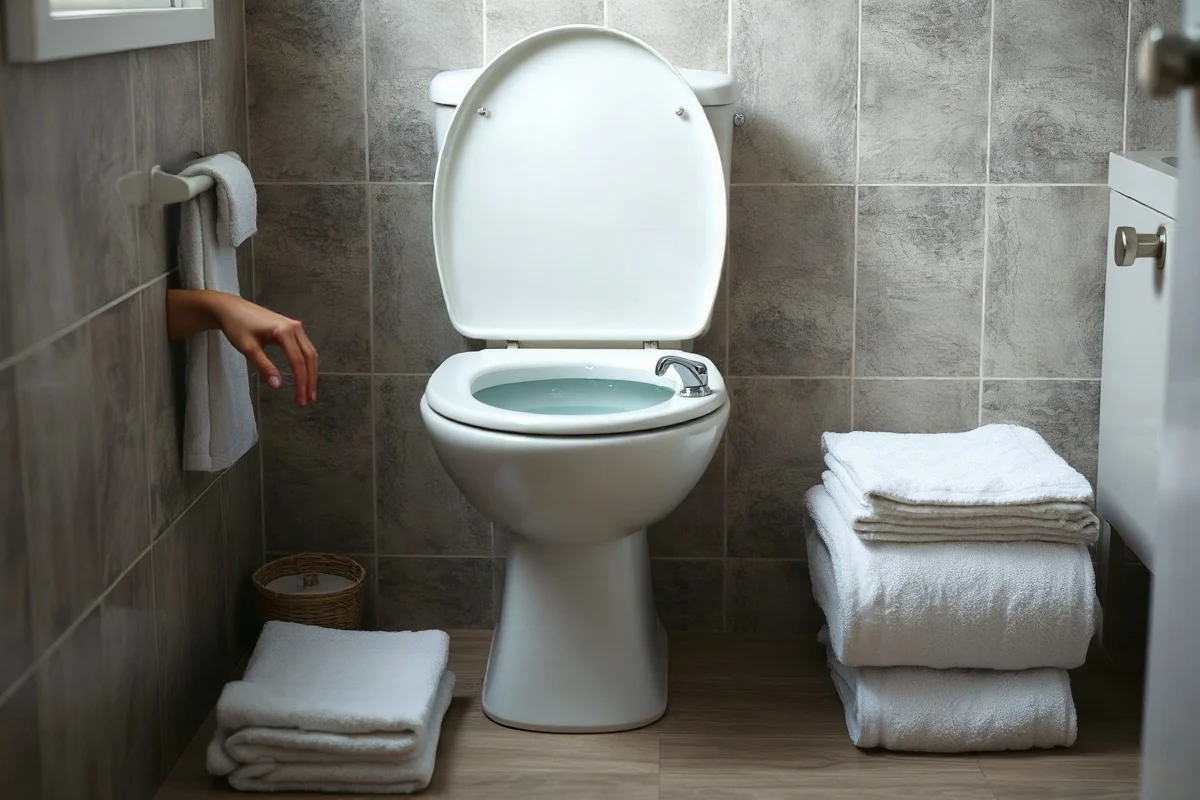
When a toilet starts overflowing, stop the water immediately by turning the shutoff valve behind or beside the toilet clockwise. If the valve is stuck, lift the tank lid and raise the float or close the flapper to stop the tank from refilling. Do not flush again. Move towels and nearby items away from the water, then use a plunger only if the bowl is not contaminated by sewage and the blockage appears limited to the toilet.
First, stop the overflow
An overflowing toilet can damage flooring, baseboards, cabinets, and the ceiling below. Acting quickly is more important than diagnosing the problem in the first few seconds.
Use the shutoff valve
Look for a small valve on the wall or floor behind the toilet. Turn it clockwise until it stops. Do not force a corroded or fragile valve, because breaking it can create a larger leak. If the valve will not close, use the tank controls while someone contacts a qualified plumber.
Stop water from entering the bowl through the tank
Remove the tank lid carefully and lift the float. Depending on the toilet design, the float may be a ball attached to an arm or a cup that moves along a vertical fill valve. Raising it should signal the fill valve to stop adding water. You can also press the rubber flapper down over the opening at the bottom of the tank. Keep your hands away from sharp, damaged, or heavily corroded parts.
Protect the room
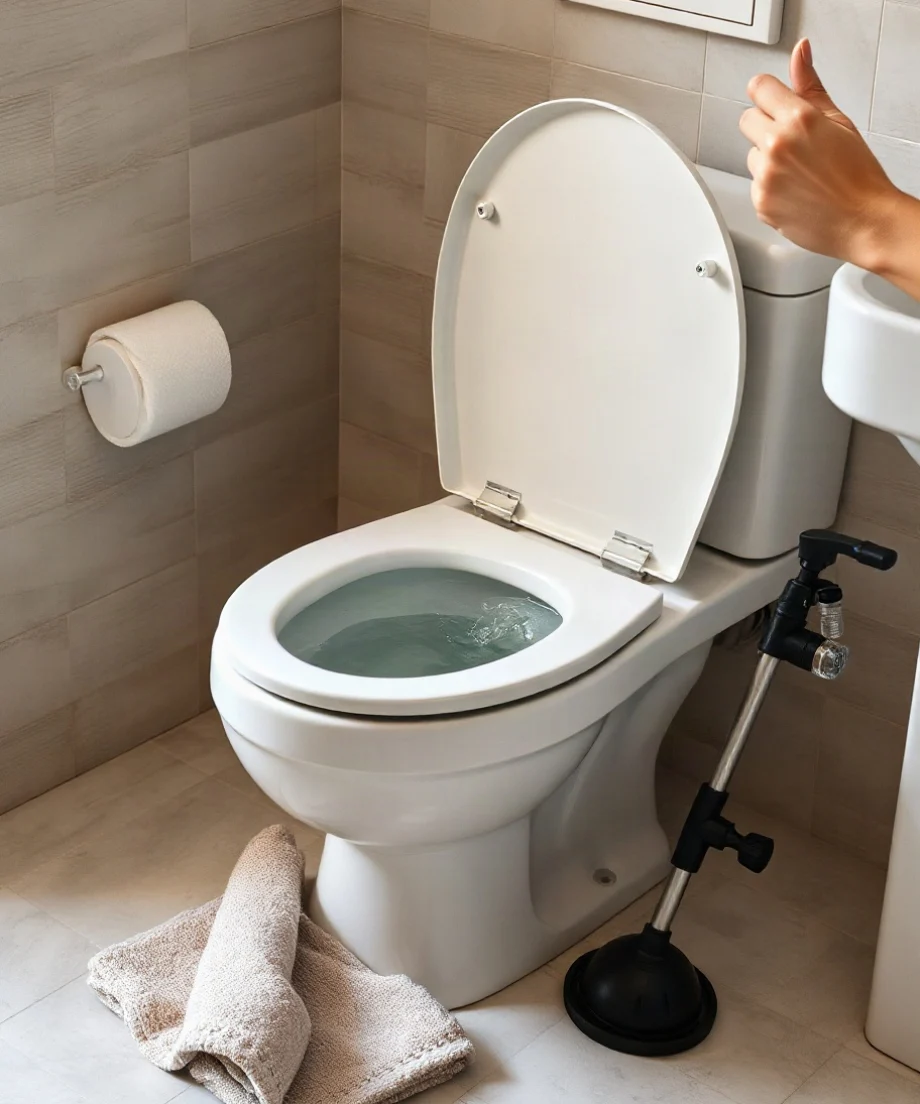
Keep people and pets away from the water. Wear waterproof gloves when handling contaminated water, and wash your hands thoroughly afterward. Use towels or a wet vacuum to limit the spread if the water is clean enough to handle. Do not use a household vacuum that is not designed for liquids.
If sewage has backed up, the water has reached electrical equipment, or flooding is spreading beyond the bathroom, stop cleanup and contact a qualified local professional. Sewage exposure and water near electrical outlets or wiring can create health and safety hazards.
Why a toilet overflows
Most overflowing toilets have one of two basic problems: water is entering faster than it should, or wastewater cannot leave the bowl. Finding the pattern helps determine whether a simple, low-risk step may help or whether the problem is farther down the drain system.
A clogged toilet trap
A blockage in the toilet’s internal trap is a common cause. Excess toilet paper, wipes, paper towels, hygiene products, toys, and other objects can restrict the passage. Even products labeled flushable may contribute to blockages, especially in older or vulnerable drain systems.
A blocked drain line
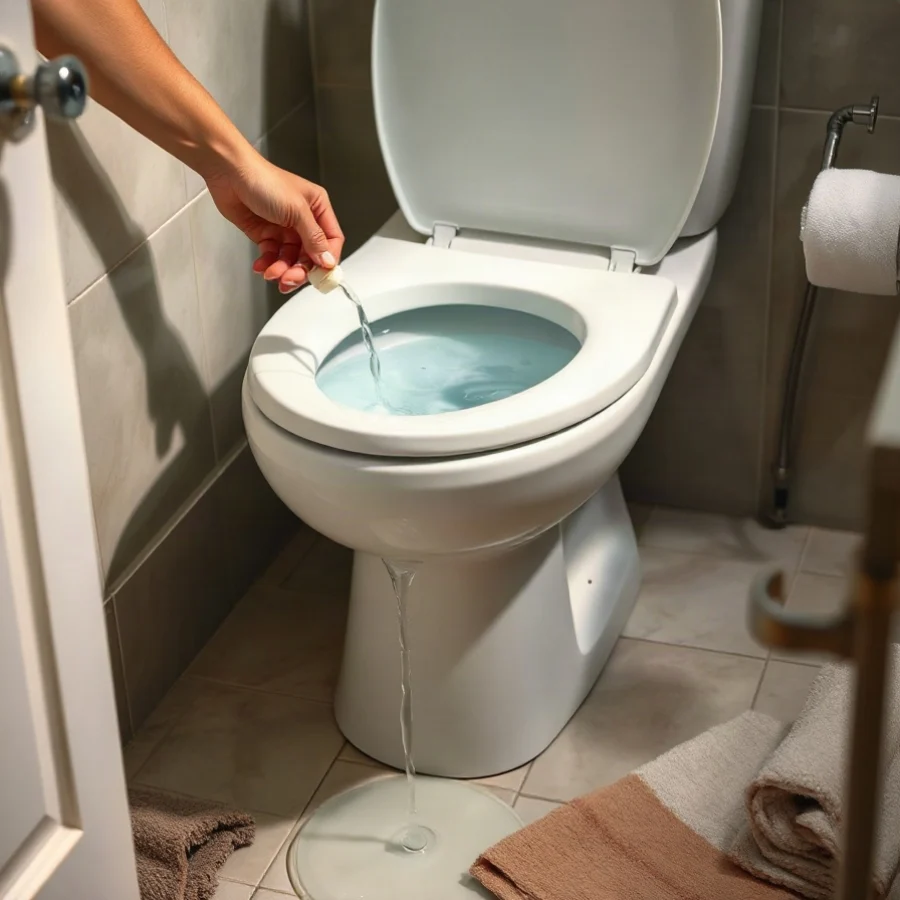
If plunging does not clear the toilet, or if multiple fixtures drain slowly or back up at the same time, the obstruction may be in a branch drain or the main sewer line. Gurgling sounds, sewage odors, and water rising in a shower or tub when the toilet flushes are important warning signs. A larger blockage usually requires professional diagnosis and equipment.
A failed flapper or fill valve
If the bowl is not blocked but the tank continues sending water into it, the flapper may be warped, dirty, or unable to seal. A faulty fill valve can also keep running after the tank reaches its normal level. These problems often cause a running toilet, but a continuous flow can lead to an overflow if the drain is partly blocked.
A problem with the float or flush handle
A tangled chain, a stuck float, or a broken handle can prevent the flapper from closing. These components may be inexpensive to replace, but the correct part depends on the toilet’s design. Avoid forcing the handle or adjusting parts while the bowl is actively rising.
Safe homeowner checks
After the water is stopped, you can perform a few low-risk checks. These steps are appropriate only when the water is contained, there is no sewage exposure, and the toilet or surrounding plumbing is not cracked.
Try a toilet plunger
Use a flange-style toilet plunger rather than a flat sink plunger. Make sure there is enough water in the bowl to cover the rubber flange, but remove some water first if the bowl is too full. Set the flange over the drain opening, create a seal, and push and pull firmly several times without splashing. Start gently so you do not force water onto the floor.
Stop if the water level rises, the plunger cannot form a seal, or the toilet begins leaking around its base. Do not keep flushing to test it. If the blockage remains, a professional may need to use a toilet auger or inspect the drain farther downstream.
Check the tank without dismantling the plumbing
Look for a chain caught under the flapper, a float that is stuck against the tank wall, or a handle that does not return to its normal position. You can gently reposition a loose chain or float, but do not remove the fill valve, tank bolts, or supply connection while the bathroom is wet.
If the toilet repeatedly runs or overflows, a toilet repair professional can determine whether a component should be adjusted, repaired, or replaced.
What not to do
- Do not flush again while the bowl is high or slow to drain.
- Do not pour boiling water into the toilet. Sudden heat can damage porcelain, and it may not clear the obstruction.
- Do not mix chemical drain cleaners. These products can splash back, damage plumbing components, and create hazardous fumes.
- Do not use a sink plunger with aggressive force if it cannot seal the toilet opening.
- Do not take apart the toilet or disconnect the water line while water is on the floor.
- Do not assume that a toilet will clear itself if other fixtures are also backing up.
When a professional is needed
Contact a qualified local plumber when the shutoff valve will not work, the overflow returns after plunging, or the blockage may be in a shared drain or sewer line. Professional help is especially important when several fixtures are affected, sewage is present, the toilet is leaking at its base, or water has entered flooring, walls, or the ceiling below.
A plumber may inspect the toilet trap, use an auger, check the drain line, or recommend a camera inspection when the location of the blockage is unclear. If the issue appears to involve the building sewer, a sewer line specialist may be appropriate. Repeated backups should not be treated as isolated toilet clogs without investigating the underlying drainage problem.
Call for prompt help when the overflow involves sewage, a major water release, a cracked toilet, a damaged supply line, or an unsafe electrical condition. For urgent flooding or a rapidly worsening backup, use a local emergency plumbing service such as the resources listed under emergency plumber services.
Repair or replacement: how to decide
A toilet may only need a new flapper, fill valve, handle, or chain when the porcelain is intact and the problem is limited to the tank. A clogged trap may be resolved with proper mechanical clearing. Replacement becomes more reasonable when the bowl or tank is cracked, the base leaks after tightening or resealing, internal parts fail repeatedly, or the toilet has persistent flushing problems that repairs do not solve.
Do not tighten the base bolts excessively. Porcelain can crack, turning a small leak into a larger repair. A toilet that rocks may need professional evaluation because the cause could involve the mounting surface, the flange, or the seal beneath the fixture.
What affects the cost of an overflowing toilet repair?
The final cost depends on the actual cause and the amount of work required. Relevant factors may include:
- Whether the issue is a simple tank component, a toilet-trap blockage, or a larger drain obstruction.
- How easy it is to access the toilet, cleanout, or affected pipe.
- Whether a plumber needs an auger, camera inspection, water removal, or additional diagnostic work.
- Whether the toilet, shutoff valve, supply line, flange, or drain connection also needs repair.
- The time and conditions of the service visit, including work required after water damage or sewage exposure.
Ask for a clear explanation of the diagnosis, the recommended repair, what is included, and whether additional work would require your approval. Avoid choosing solely on the lowest initial quote when the cause has not been identified.
How to choose the right plumber
Look for a plumber who regularly handles toilet blockages, drain backups, leak repairs, and sewer-related problems. Ask whether the service includes diagnosis before replacement is recommended. You should also confirm the company’s current qualifications, insurance, service terms, and any applicable local requirements directly with the provider or the appropriate local authority, since these details vary by location.
Describe exactly what happened: when the overflow began, whether the toilet was flushed, what was flushed, whether plunging changed the water level, and whether sinks, showers, or other toilets are affected. Photos of the tank, shutoff valve, water damage, or visible leak can also help a plumber prepare. For additional guidance on comparing providers, see this resource on hiring a plumber.
Preventing another overflow
Flush only human waste and toilet paper. Keep wipes, paper towels, dental floss, feminine hygiene products, grease, and other debris out of the toilet. Teach children not to treat the bowl as a disposal bin, and keep small objects away from the bathroom.
Pay attention to warning signs such as a weak flush, slow draining, bubbling, frequent plunging, a rising water level, or a toilet that runs between flushes. These symptoms can appear before a complete overflow. Have recurring problems evaluated instead of repeatedly forcing water through a partially blocked drain.
Knowing where the toilet shutoff valve is located can reduce damage during the next incident. Check it occasionally for accessibility, but do not force it if it is stiff or corroded. A quick response, cautious cleanup, and timely professional diagnosis are the safest ways to protect your bathroom when a toilet starts overflowing.
Comments
0No comments yet. Be the first to share a helpful note or question.
Leave a Comment
Your email address will not be published. Comments are reviewed before appearing on the site.