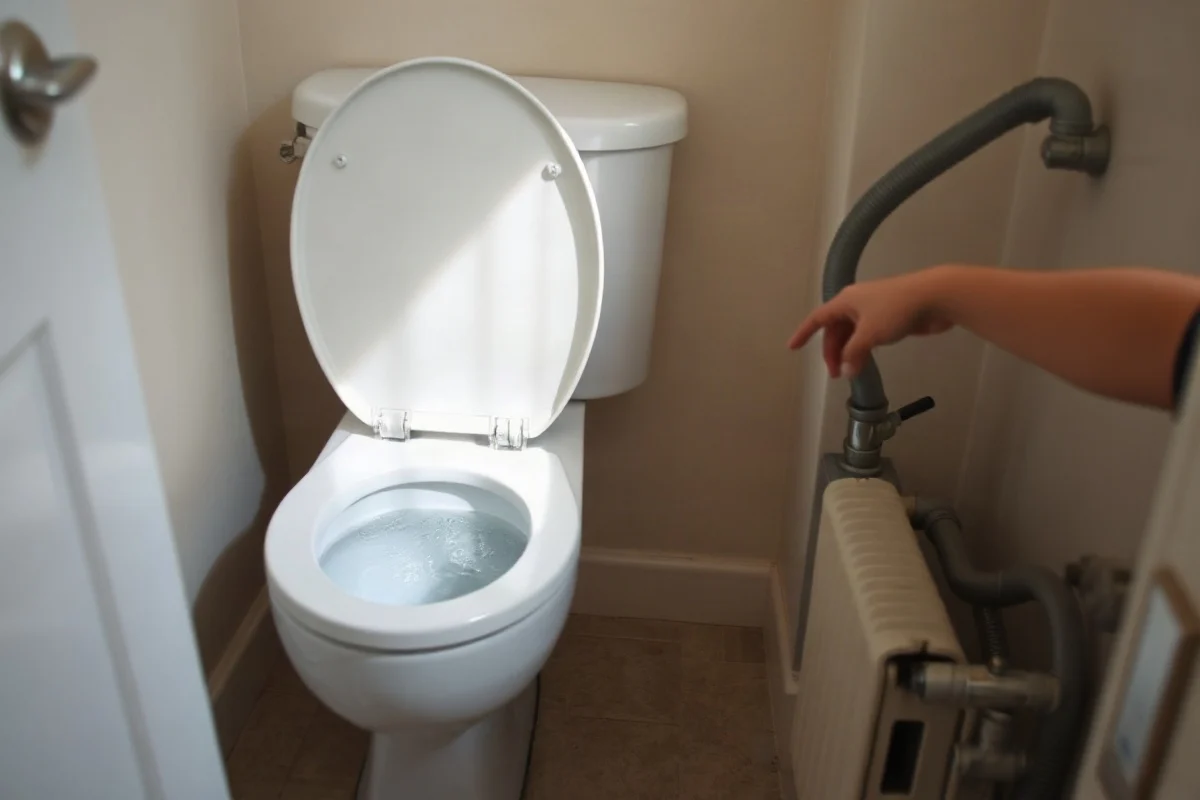
A toilet that randomly fills up and overflows usually has a partial blockage, a problem with the tank’s flapper or fill valve, or a restriction farther down the drain line. The immediate priority is to stop the water, protect the floor, and avoid flushing again until you know whether the bowl or drain can clear safely. Simple tank and shutoff checks are reasonable for most homeowners, but sewage backups, hidden leaks, repeated overflows, and major water damage should be handled by a qualified local plumber.
What to Do When the Toilet Starts Overflowing
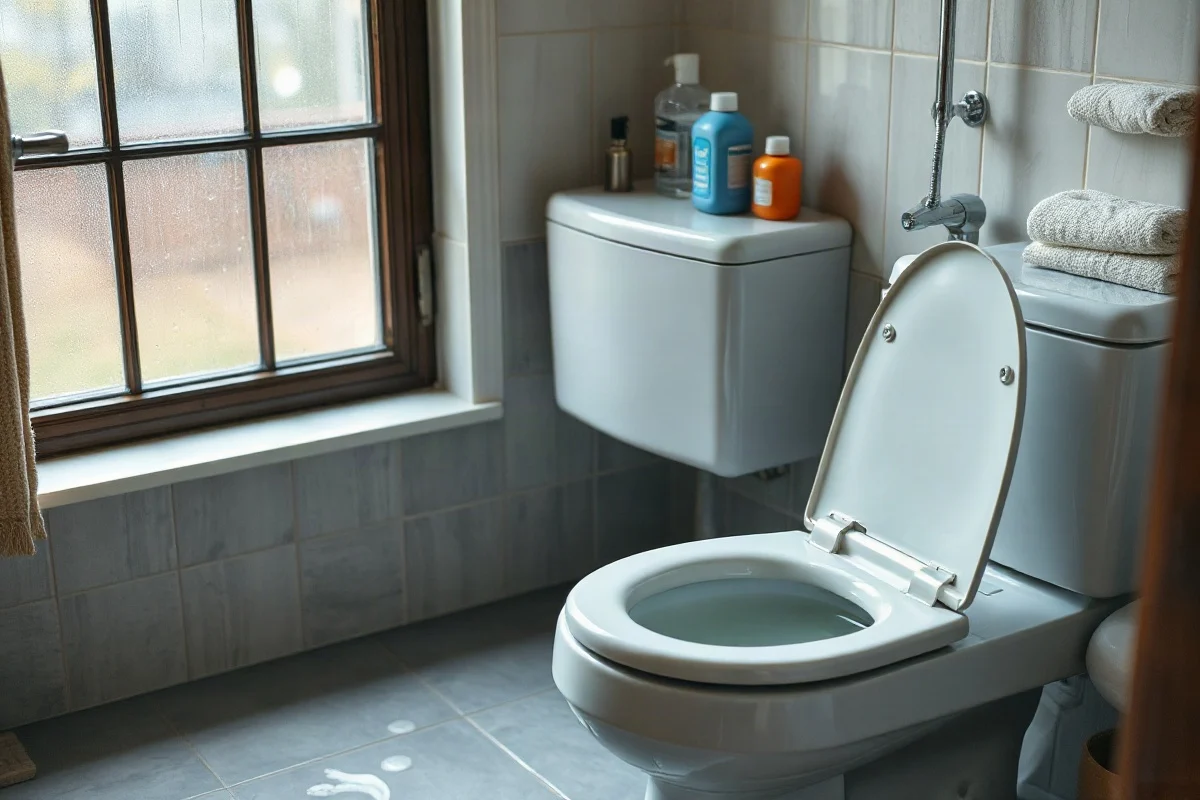
Act quickly, but do not reach into contaminated water with bare hands. If the bowl is rising, turn the toilet’s shutoff valve clockwise. The valve is usually located on the wall or floor behind the toilet, near the bottom of the tank. Turn it gently; do not force a stuck valve.
If the bowl continues to fill after the supply valve is closed, remove the tank lid and lift the float high enough to stop the fill valve from admitting more water. On some toilets, the float is a ball attached to an arm. On others, it is a cup that slides along the fill valve. Hold it up only as a temporary measure, and keep your fingers away from damaged or sharp components.
Do not flush again to “see if it clears.” Move rugs, baskets, and other items away from the water. If wastewater has reached the floor, keep children and pets away from the area and use appropriate gloves for cleanup. Sewage-contaminated water can present health risks, especially if it has spread into porous flooring, drywall, or cabinets.
Common Reasons a Toilet Randomly Fills and Overflows
A partial toilet clog
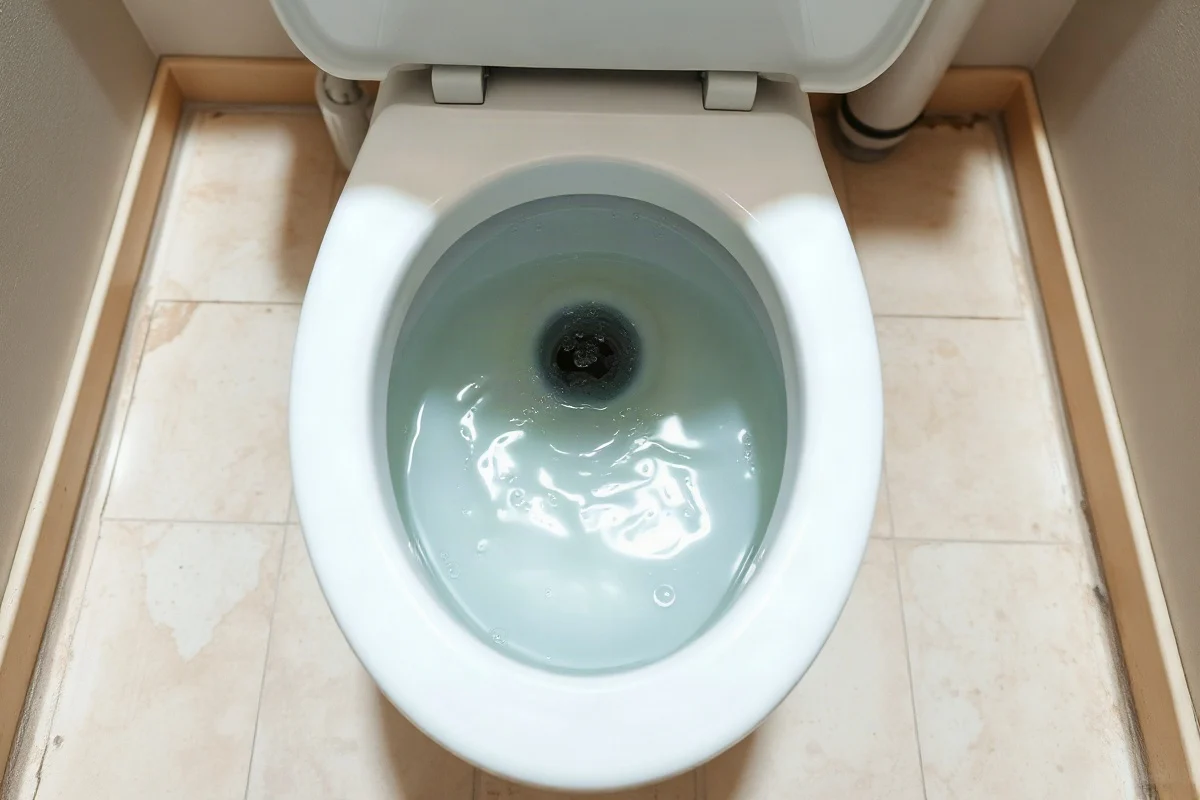
A partial clog is one of the most common explanations. A restricted trapway or drain may allow one flush to pass, then cause the next flush to rise slowly. Toilet paper, excessive waste, wipes, paper towels, hygiene products, small objects, and mineral buildup can all contribute. Items marketed as flushable may still create trouble because they do not break apart as readily as ordinary toilet paper.
Warning signs include a weak flush, bubbling in the bowl, water that drains slowly, or a bowl level that rises and then gradually falls. A clog may also cause the toilet to overflow when a nearby fixture is used if the restriction is located farther along a shared drain.
A blocked or restricted drain line
If the toilet overflows when a shower, bathtub, sink, or washing machine drains, the problem may not be limited to the toilet. A shared branch drain or the main sewer line could be partially blocked. Multiple slow fixtures, gurgling drains, sewage odors, or wastewater appearing in a tub or floor drain are especially important clues.
A main-line restriction can worsen quickly and may affect several fixtures at once. Stop using water throughout the home until a professional evaluates the situation. If sewage is backing up or the affected area is large, contact a qualified local plumber rather than repeatedly plunging or running more water.
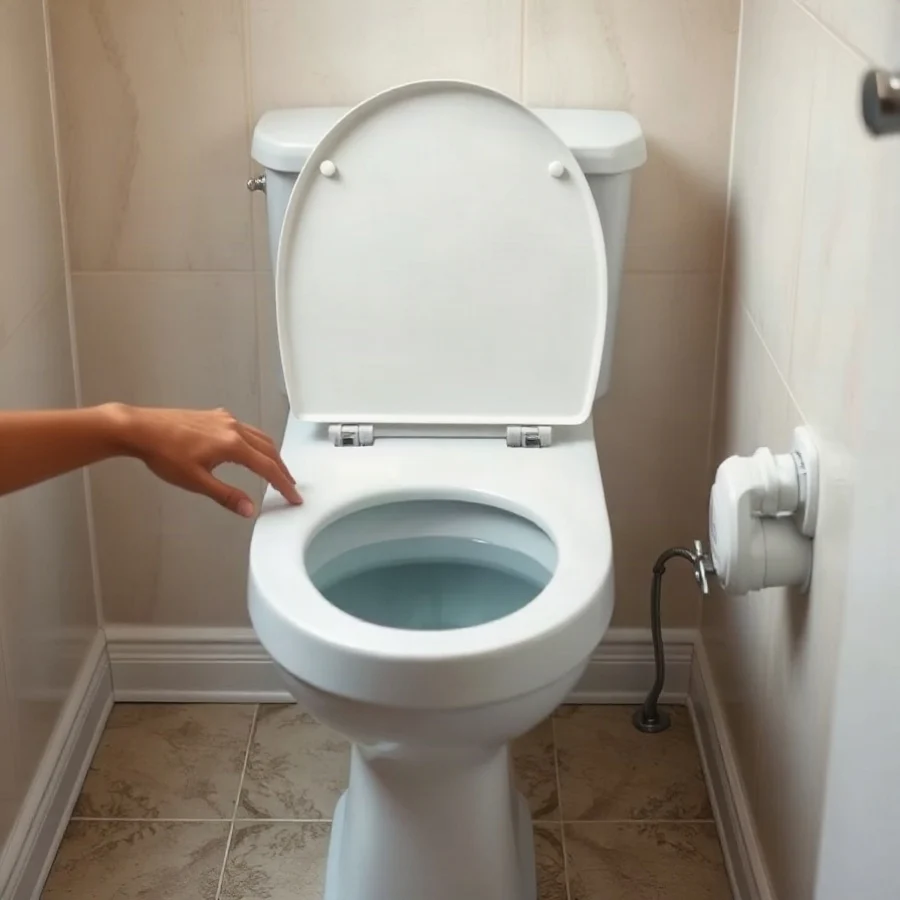
A defective flapper or flush valve
The flapper is the rubber or plastic seal inside the tank that lifts when you flush and closes afterward. If it sticks open, the toilet may run continuously. In some cases, the running water can eventually raise the bowl level, particularly if the toilet cannot drain properly. A warped, deteriorated, or poorly fitted flapper may also allow the tank to refill repeatedly.
With the tank lid removed, observe the flapper after the toilet finishes filling. It should settle into place and seal the opening. If lightly pressing it down stops the running, the flapper may be worn or misaligned. Avoid adding heavy objects to the tank to force a seal, since they can damage the mechanism or interfere with flushing.
A faulty fill valve or float
The fill valve controls incoming water after a flush. A worn valve may fail to shut off, while a float that is set incorrectly or rubbing against the tank wall may not signal the valve to close. This can cause the tank to overfill. Most tanks have an overflow tube designed to accept excess water, but a malfunctioning system can still waste water and create a risk of flooding around the toilet.
Listen for water entering the tank when nobody has flushed. Check whether the water level is approaching the top of the overflow tube. You can sometimes adjust a float or replace a standard fill valve, but stop if the connection is corroded, the shutoff valve will not operate, or the tank begins leaking.
A blocked vent or poor drain flow
Plumbing vents help stabilize air pressure in the drainage system. A vent problem can contribute to gurgling, slow drainage, sewer odors, or unusual changes in toilet water levels. Vent work often involves roof access and may expose you to fall hazards, contaminated materials, or unclear plumbing conditions. It is not a good do-it-yourself project for most homeowners.
An object trapped in the toilet
Small objects such as toys, bottle caps, cleaning products, or personal items can become lodged in the toilet’s internal passage. A plunger may move the object without removing it, allowing the toilet to work temporarily before it clogs again. Repeated attempts to force the item farther down can make the problem harder to diagnose.
Safe Checks You Can Perform at Home
After the water is off, inspect the area around the base of the toilet for active leaks. Check the tank, supply connection, shutoff valve, and the seam where the toilet meets the floor. Do not tighten fittings aggressively, since porcelain can crack and old valves can break.
If the bowl is not full of contaminated water and you are comfortable doing so, use a flange-style toilet plunger. A flange creates a better seal than a flat sink plunger. Add enough water to cover the plunger cup, position it over the drain opening, and use controlled pushes rather than violent pumping. Stop if water begins leaking from the base or if the bowl level rises toward the rim.
Do not use chemical drain cleaners in an overflowing toilet. They may not clear the obstruction and can leave caustic liquid in the bowl or drain, creating a hazard for anyone who later works on the toilet. Do not insert coat hangers, rigid rods, or other improvised tools that could scratch the porcelain or push a blockage deeper.
For a running toilet, observe the tank mechanism and confirm whether the flapper closes and the fill valve shuts off. A small adjustment or replacement of an accessible tank component may be reasonable if the parts are easy to reach and the shutoff works properly. If water is leaking from the tank, supply line, or toilet base, stop and arrange professional service.
When a Plumber Should Diagnose the Problem
Call a qualified local plumber when the toilet overflows repeatedly, the clog returns after plunging, several fixtures drain slowly, or wastewater backs up into another fixture. Professional diagnosis may include removing the toilet, using a drain machine, checking the branch line, or inspecting a sewer line. Those steps require the right equipment and judgment to avoid damaging the plumbing.
Get prompt help for a cracked toilet, a loose or leaking base, a failed shutoff valve, water damage to floors or walls, or an overflow that cannot be stopped. Use a professional for suspected sewage exposure, concealed leaks, major flooding, or any situation involving electrical equipment near water. If water has reached outlets, appliances, or electrical wiring, keep clear and contact qualified help rather than entering the affected area.
For related guidance, see this toilet repair resource. If multiple drains are affected, information about sewer line problems may help you describe the symptoms to a plumber.
Repair or Replace the Toilet?
Replacing a flapper, fill valve, flush handle, or other tank component is often more practical than replacing the entire toilet when the porcelain is sound and the problem is isolated. A repair may also be appropriate when the toilet flushes well, sits firmly, and has no cracks or persistent leaks.
Replacement becomes more reasonable when the bowl or tank is cracked, the toilet rocks because the base is damaged, the internal passages are heavily deteriorated, or repeated repairs have not solved recurring clogs. A professional can also check whether the toilet itself is the problem or whether a restriction exists in the drain behind it. Do not assume a new toilet will fix a blocked line.
What Affects the Cost of Service?
The final cost depends on the actual cause and the amount of work required. Common factors include whether the issue is a simple tank-part replacement, how difficult the clog is to reach, whether the toilet must be removed, the condition of the shutoff valve and supply connection, and whether other fixtures are involved.
Service may require additional diagnostic work when symptoms point to a branch drain, vent, or sewer line. Access, water damage, cleanup, replacement materials, and work performed outside normal business hours can also affect the total. Ask for a clear explanation of the diagnosis, recommended repair, labor and material charges, and any conditions that could change the estimate before authorizing non-emergency work.
How to Choose the Right Plumber
Look for a plumber who regularly handles toilet clogs, drain backups, leak repairs, and sewer-line diagnostics. Describe exactly what happens: whether the bowl rises during a flush, whether it overflows without anyone using it, whether other fixtures gurgle, and how quickly the water level changes. Photos or a short video of the tank behavior may also help if the issue is intermittent.
Ask who will perform the work, what diagnostic method is recommended, and whether the quoted service includes cleanup or only the repair itself. Confirm that the company is properly qualified for the work in your area and request documentation of any applicable insurance or professional credentials when appropriate. Be cautious of anyone who recommends replacing the entire toilet or opening a sewer line without first explaining the evidence behind that recommendation.
How to Prevent Another Overflow
Flush only waste and toilet paper, and keep wipes, paper towels, hygiene products, toys, and cleaning items out of the toilet. Do not ignore a weak flush, repeated gurgling, or a toilet that needs plunging regularly. These are early signs of a developing restriction.
Periodically check that the tank fill valve shuts off and that the water level remains stable. Know where the toilet’s shutoff valve is located, and make sure household members know not to flush repeatedly when the bowl begins rising. A quick response can prevent a localized toilet problem from becoming a larger flooring, sewage, or water-damage emergency.
Comments
0No comments yet. Be the first to share a helpful note or question.
Leave a Comment
Your email address will not be published. Comments are reviewed before appearing on the site.