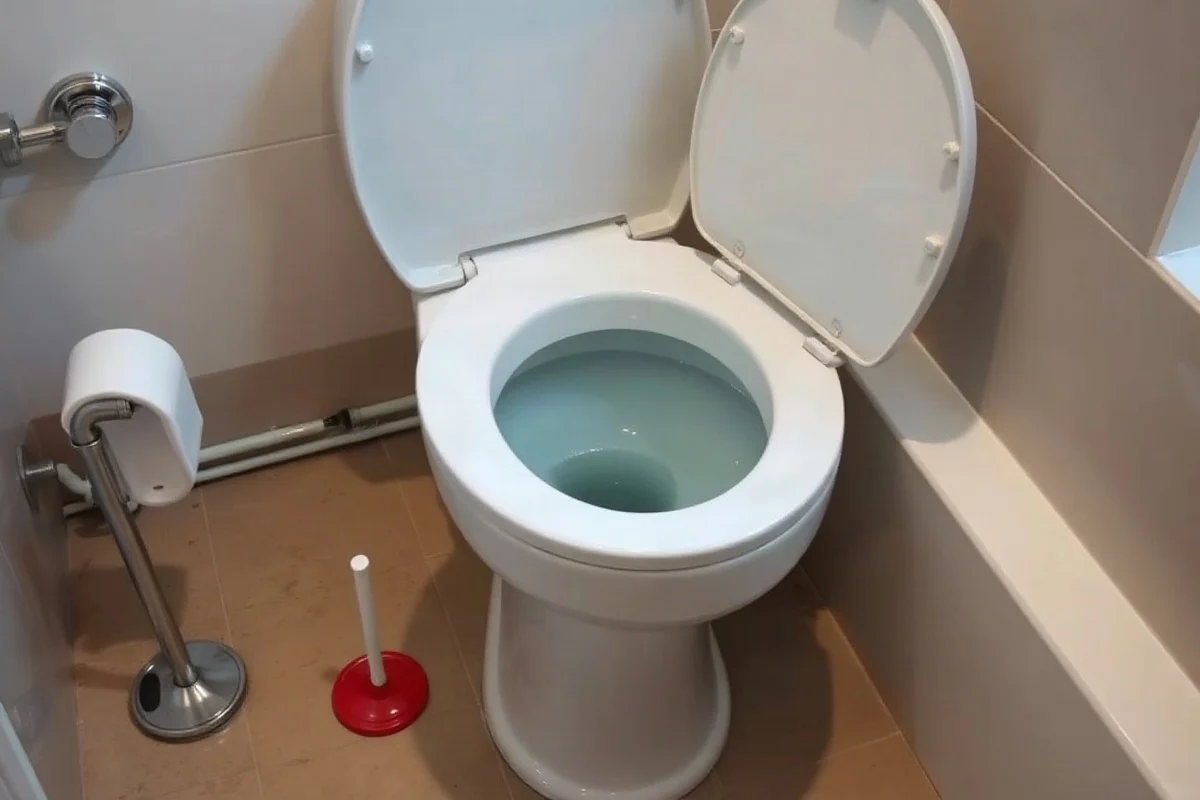
If your toilet is overflowing but does not seem clogged, the problem is usually a blocked or restricted drain farther along the waste line, a faulty toilet tank component, or a problem with the sewer system. Water may rise in the bowl because it cannot leave fast enough, even when you do not see an obstruction inside the toilet trap. The first priority is to stop more water from entering the bowl, then determine whether the problem affects only one toilet or several fixtures.
Stop the overflow first
Do not flush the toilet again while the water level is high. Remove the tank lid and lift the float or close the flapper if water is still running into the bowl. You can also turn the shutoff valve on the wall or floor behind the toilet clockwise until it stops. Turn it gently; forcing an old valve can cause it to leak or fail.
If the bowl is close to overflowing, keep children and pets away from the area and move items that could be damaged by contaminated water. Wear disposable gloves when cleaning up. Toilet overflow water may contain harmful bacteria, especially if it has backed up from a drain or sewer line. If sewage has spread across flooring, into walls, or into other rooms, use a qualified local professional for cleanup and plumbing evaluation rather than relying only on household disinfectant.
Why a toilet can overflow without an obvious clog
A partial blockage is hidden in the toilet trap
A toilet can have a partial obstruction that is not visible from above. Excess paper, a small object, or buildup in the internal trap may allow some water to pass but not enough to handle a normal flush. The bowl may drain slowly, rise unusually high, or overflow several seconds after flushing.
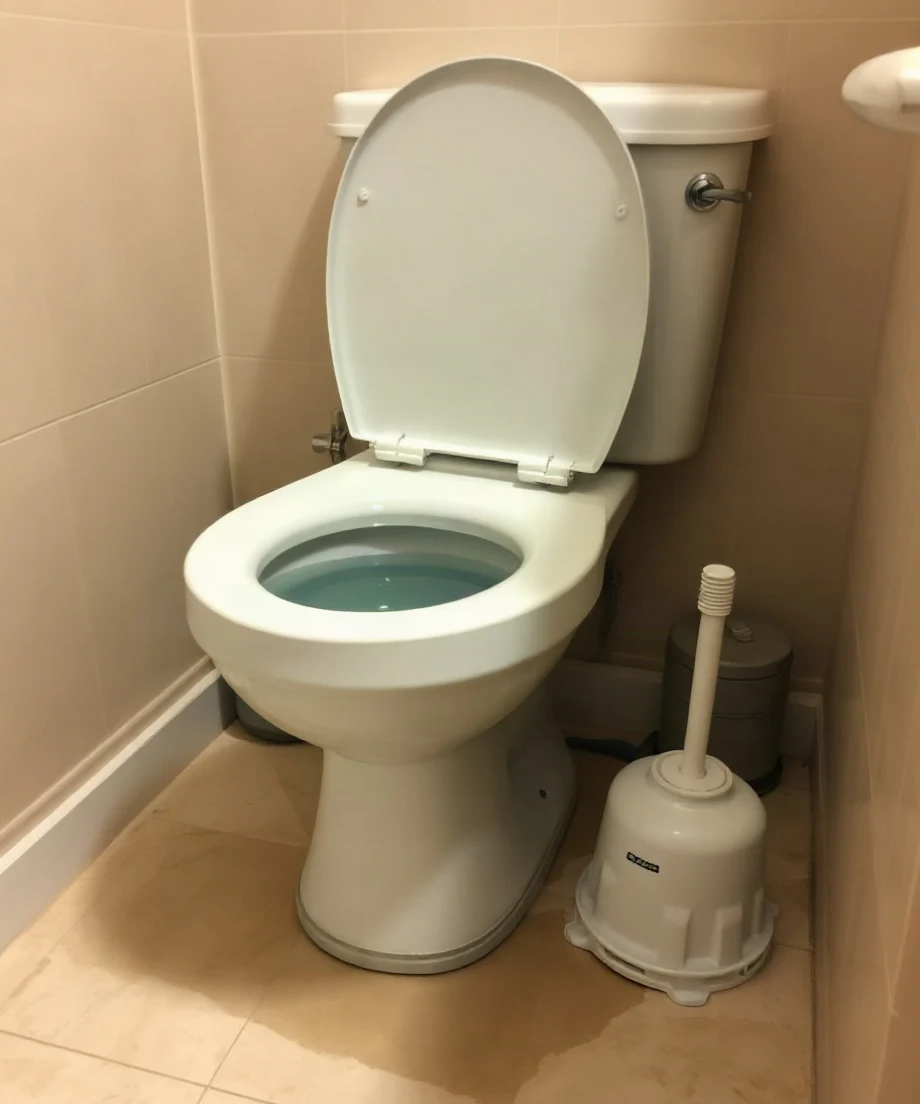
Partial blockages can be difficult to identify because the toilet may appear to work normally between flushes. A plunging attempt may temporarily improve the symptoms without removing the underlying obstruction. If the toilet repeatedly overflows after plunging, stop using it until the cause is found.
The branch drain is restricted
The toilet may be clear while the drainpipe serving that bathroom is partially blocked. In this situation, water leaves the toilet but encounters resistance farther downstream. You may notice a gurgling sound, slow drainage in a nearby sink or tub, or water rising in another fixture when the toilet is flushed.
Multiple affected fixtures are an important warning sign. If the toilet, bathtub, shower, or sink backs up at the same time, the issue is more likely to involve a shared drain or building sewer line than the toilet itself. A plumber may need to use professional drain equipment or a camera inspection to locate the restriction.
The main sewer line may be backing up
A blockage or damage in the main sewer line can cause wastewater to return through the lowest fixtures in the home. Toilets may overflow even though the bowl and toilet trap are not clogged. Other signs can include several slow drains, sewage odors, bubbling sounds, or wastewater appearing in a shower or floor drain.
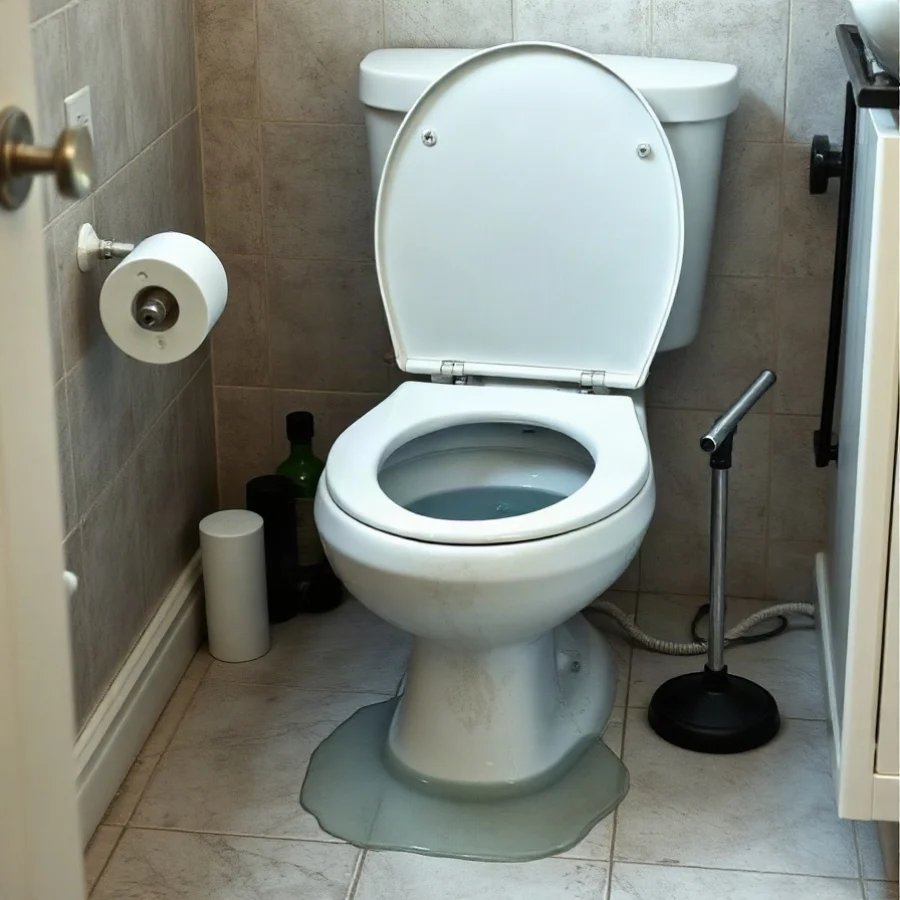
Sewer-line concerns should be handled by a qualified local plumber. Do not repeatedly flush the toilet or run large amounts of water through sinks, showers, washing machines, or other fixtures. If sewage is entering the home, keep people away from the affected area and arrange professional service.
The toilet tank is sending too much water
Sometimes the drain is open, but the tank does not stop filling correctly. A misadjusted float, damaged fill valve, or disconnected overflow tube can allow water to keep entering the bowl. This usually causes the bowl to rise gradually while the toilet continues running, rather than producing a sudden backup caused by wastewater.
Look inside the tank after removing the lid. The water level should remain below the top of the overflow tube. The float should move freely, and the fill valve should shut off when the tank reaches its normal level. Do not adjust or replace parts if the mechanism is cracked, stuck, or difficult to identify. Many replacement parts are manageable for a careful homeowner, but a professional can prevent incorrect adjustments that lead to continued running or leaks.
The toilet may be installed incorrectly
A toilet that was recently installed, replaced, or moved may overflow because of an installation problem. The waste outlet may not be aligned correctly, the seal may be damaged, or an object may have entered the drain during the work. A toilet that has overflowed since installation should be inspected rather than repeatedly treated with a plunger.
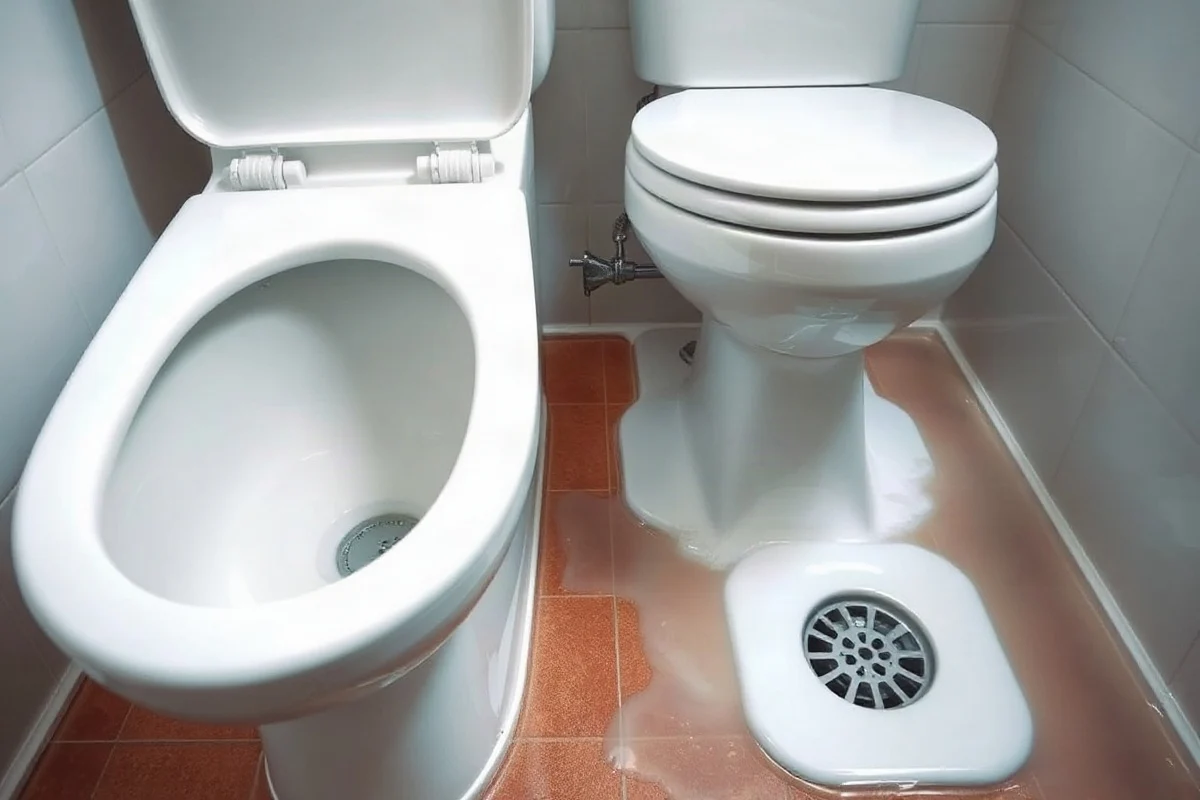
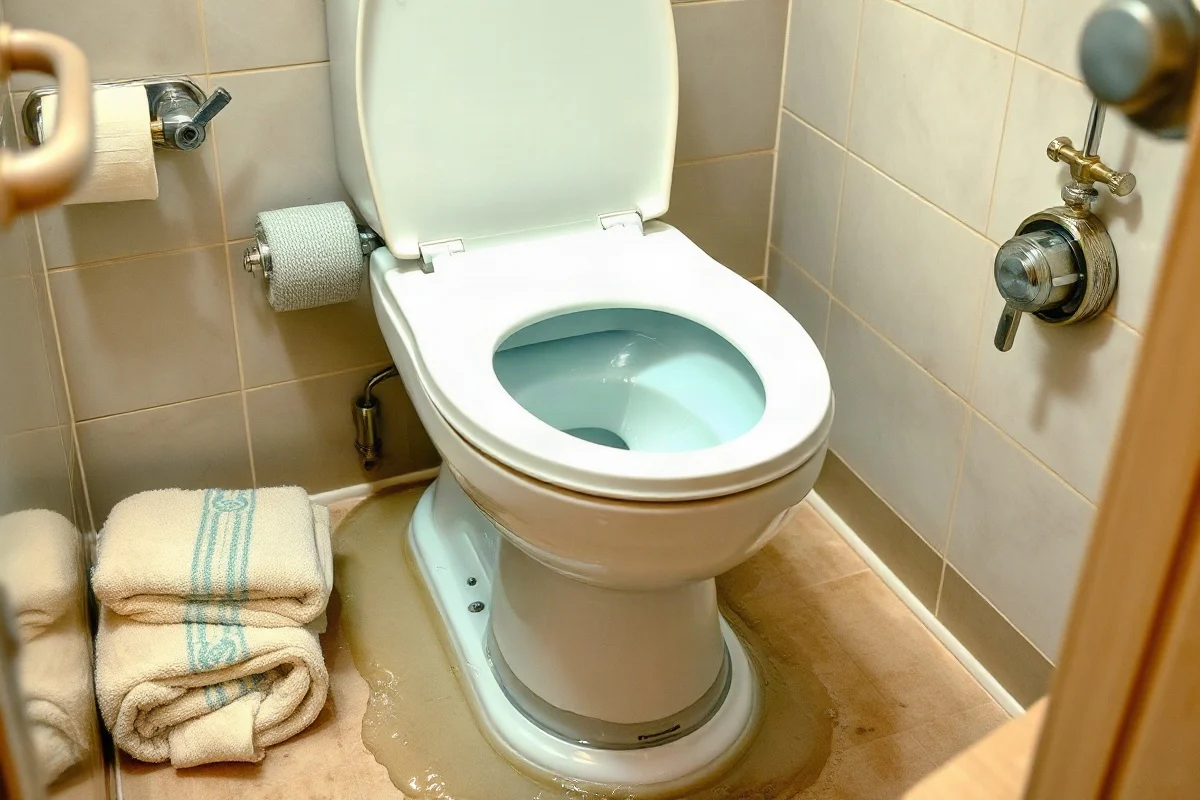
Water leaking around the base of the toilet is especially important. It may indicate a failed seal, a loose connection, damage around the flange, or a larger drainage problem. Avoid using the toilet until the source is confirmed, because repeated use can damage flooring or allow water to reach the subfloor.
Safe checks a homeowner can make
After stopping the water, make a few low-risk observations:
- Check whether the bowl level falls on its own after several minutes.
- Look for water continuing to enter the bowl from the tank.
- Notice whether the toilet makes gurgling or bubbling sounds.
- Check nearby sinks, tubs, and showers for slow drainage or standing water.
- Look for water around the toilet base, supply line, shutoff valve, or floor.
- Ask whether other toilets or fixtures are experiencing the same issue.
A toilet plunger with a flange can be appropriate for a suspected toilet-level blockage. Add enough water to cover the rubber cup, place it over the drain opening, and use controlled pushes rather than violent force. If the water does not move, if the bowl is full of contaminated water, or if plunging causes another fixture to back up, stop and call a professional.
Do not pour chemical drain cleaner into an overflowing toilet. These products may not clear the obstruction and can leave caustic liquid in the bowl or drain, creating a burn and splash hazard for anyone who works on it later. Avoid inserting improvised objects that could damage the porcelain or become lodged in the trap.
When professional help is needed
Contact a qualified local plumber when the toilet overflows repeatedly, when plunging does not solve the problem, or when more than one fixture is affected. Professional service is also appropriate if you suspect a sewer-line problem, hidden leak, damaged flange, concealed pipe, or a failed installation.
Call for prompt help when water is spreading quickly, sewage has entered living areas, the shutoff valve will not stop the flow, or the overflow is near electrical equipment. Do not attempt electrical work in a wet area. Gas lines, electrical connections, sewage exposure, major flooding, concealed leaks, and code-related work should be handled by qualified local professionals.
A plumber may inspect the toilet trap, test the branch drain, clear the line with suitable equipment, or use a drain camera when the location of the blockage is uncertain. If a main sewer line is involved, the plumber can explain whether cleaning, repair, excavation, or another approach is appropriate based on the inspection findings.
Repair or replacement: what makes sense?
Repair is often reasonable when the toilet itself is in good condition and the problem comes from a worn fill valve, flapper, float, supply connection, or isolated blockage. Replacing a small tank component may restore normal operation without replacing the bowl or tank.
Replacement may be more practical when the toilet has a cracked tank or bowl, recurring internal failures, severe mineral damage, an unstable base, or a history of repeated blockages caused by a damaged trap. A plumber should evaluate the flange, drain connection, and flooring before installing a new toilet if there is leakage around the base. Installing a new fixture will not solve a blocked branch drain or sewer line.
For more information about fixture-related problems, see this guide to toilet repair. If the symptoms point to a larger drainage problem, a professional drain camera inspection may help identify the location and condition of the obstruction.
What affects the cost of service?
The total cost depends on the actual cause, not simply on the fact that the toilet overflowed. Important factors can include whether the issue is limited to the toilet, how far the blockage is from the fixture, the equipment needed to reach it, the condition of the drain or sewer line, access to the plumbing, and whether damaged flooring or contaminated materials also require attention.
Ask the plumber to explain the suspected cause, the proposed diagnostic steps, the work included, and any separate charges before authorizing non-emergency work. Because pricing varies by location, access, timing, and repair complexity, avoid relying on a generic estimate that does not describe your specific situation. You can review general information about plumbing costs, but a local evaluation is needed for an accurate quote.
How to choose the right plumber
Look for a local plumbing professional with relevant experience in toilet backups, drain blockages, and sewer-line diagnosis. Ask whether the person who will perform the work is qualified for the task and whether the company can provide a written description of the recommended repair. You can also ask what testing will be performed before replacement or excavation is suggested.
Be cautious of anyone who immediately recommends replacing the toilet without checking the drain, or who proposes chemical treatment without identifying the cause. A good diagnosis should distinguish between a tank problem, a toilet trap obstruction, a branch drain restriction, and a main sewer-line backup.
An overflowing toilet that appears unclogged is still a drainage warning, not a mystery to ignore. Stop the water, limit use of nearby fixtures, make only low-risk checks, and arrange qualified help when the problem repeats or affects multiple drains. Acting early can reduce water damage and provide a clearer path to the right repair.
Comments
0No comments yet. Be the first to share a helpful note or question.
Leave a Comment
Your email address will not be published. Comments are reviewed before appearing on the site.