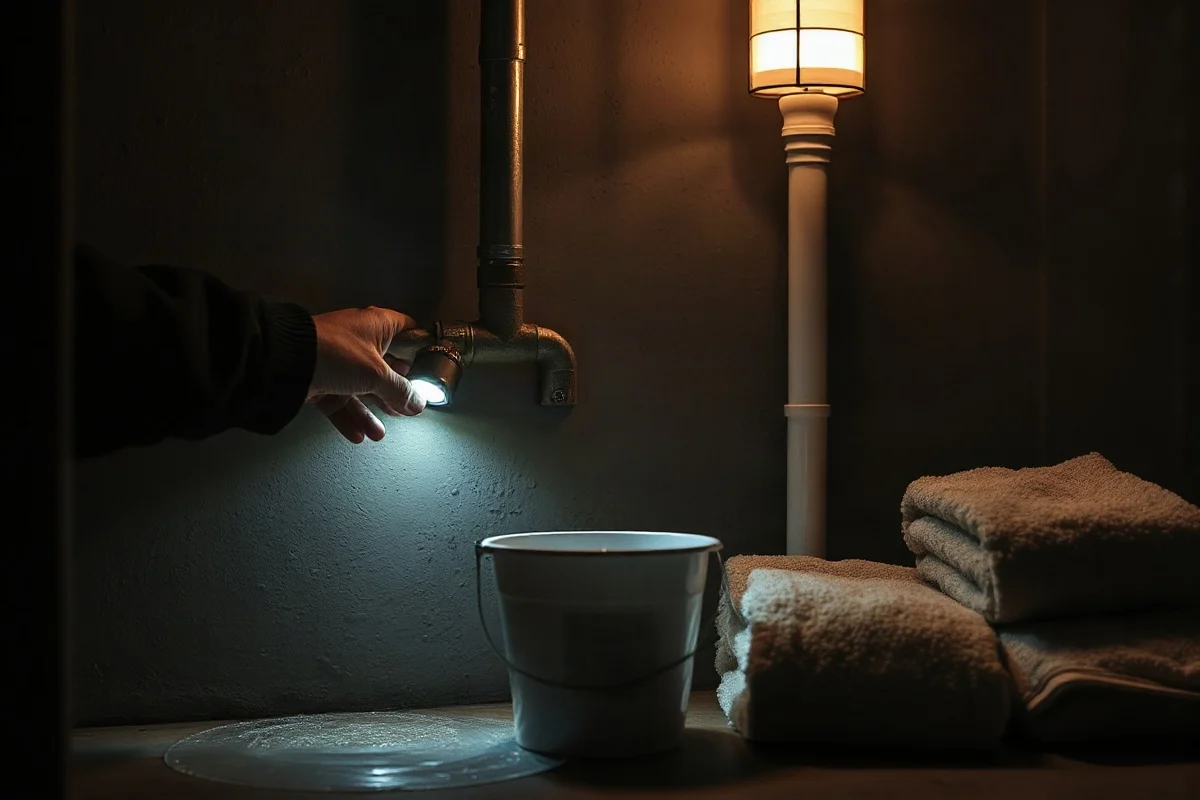
To shut off your home’s main water supply, find the main shutoff valve where the water line enters the house and turn the valve clockwise until it stops. If it is a lever-style valve, turn the handle a quarter turn so it is perpendicular to the pipe. Then open a nearby faucet briefly to release pressure and confirm that the water has stopped. If you cannot locate or operate the valve safely, call a qualified local plumber rather than forcing it.
Why shutting off the water matters
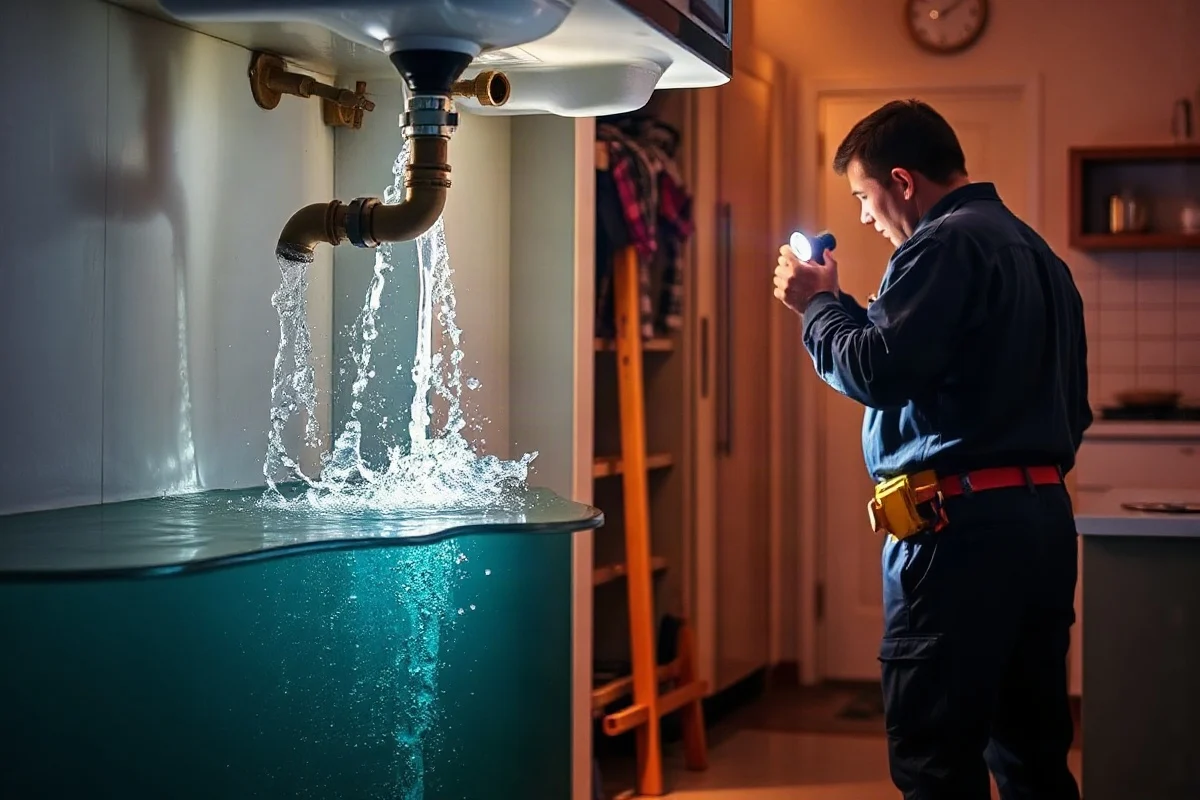
A burst supply line, failed water heater connection, broken toilet valve, or rapidly leaking pipe can release a surprising amount of water in a short time. Stopping the flow is usually the most important first step because it limits damage while you arrange repairs. Water can quickly affect flooring, cabinets, drywall, insulation, electrical components, and personal belongings.
The main shutoff stops water entering most or all of the home from the supply line. It may not stop every source of water immediately. Water can remain inside pipes, tanks, fixtures, and water heaters, and some properties have separate shutoffs for outdoor faucets, irrigation systems, wells, or individual fixtures.
Where to look for the main shutoff valve
The valve is usually installed near the point where the incoming water service enters the building. Its exact location varies with the home’s age, layout, climate, and plumbing arrangement.
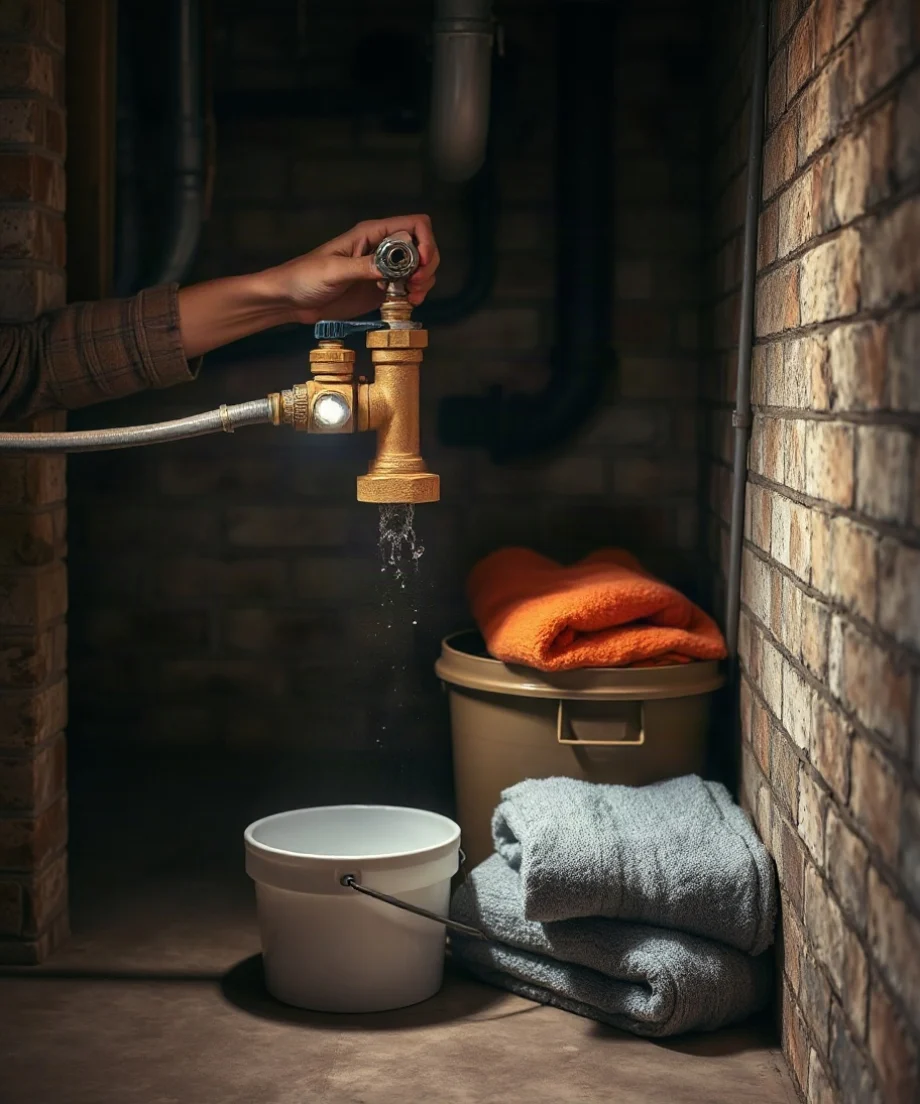
- Check the basement or crawl space along the wall facing the street.
- Look near the utility room, mechanical room, or water heater.
- Inspect the garage, especially near an exterior wall.
- In homes built on slabs, check a utility closet, garage, or wall near the front of the property.
- Look outside near the property line or sidewalk for a separate customer-side shutoff, but do not open utility-owned covers or operate equipment you are not sure you control.
The valve may have a round wheel handle or a straight lever. Some homes have more than one valve on the incoming line. If you are unsure which valve controls the home, ask a plumber to identify it during a routine visit and label it for future emergencies.
How to close the main water valve safely
1. Protect yourself before approaching the valve
Wear shoes with good traction if the floor is wet, and use a flashlight if the area is dark. Do not step into standing water near outlets, appliances, extension cords, or electrical panels. If water may have reached electrical equipment, keep away and contact a qualified professional. Electrical hazards can remain even after the water supply is shut off.
2. Turn the valve without forcing it
For a wheel-style valve, turn it clockwise, or to the right, until it stops. For a lever-style ball valve, rotate the handle one-quarter turn so it crosses the pipe instead of lining up with it. Move slowly and use only moderate hand pressure. An old valve may be stiff, corroded, or damaged. Do not use a wrench or pipe tool to force it unless a qualified professional has instructed you and the valve is designed for that operation. Forcing a stuck valve can cause it to break or create another leak.
3. Release pressure carefully
Open a cold-water faucet at a sink or tub after closing the valve. This can relieve pressure in the plumbing and help you verify that the supply has stopped. Be cautious if the leaking fixture is producing hot water or if the water is discolored. Do not open a faucet located in an unsafe area.
4. Control remaining water
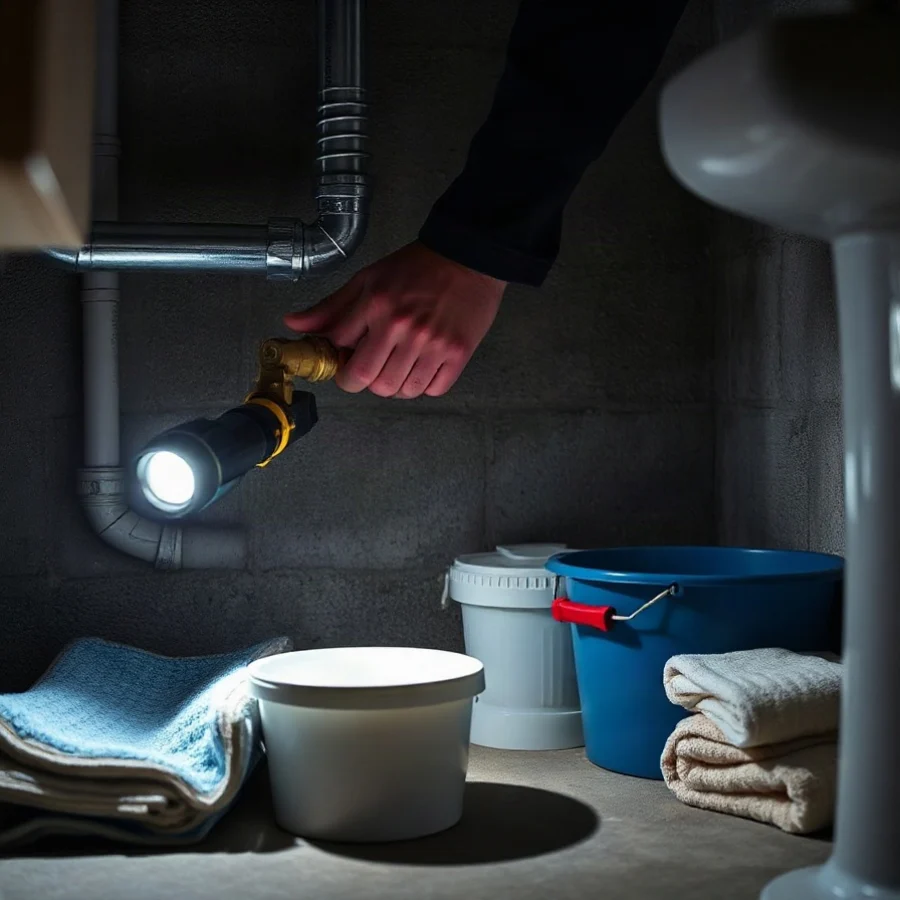
Use towels, buckets, or a wet/dry vacuum only when doing so is safe. Move furniture, boxes, and other belongings away from the affected area. Avoid using household vacuum cleaners to pick up water. If the leak is extensive, contact an emergency plumber and your insurer as appropriate. Photographs taken before cleanup may help document the damage, but do not delay urgent safety measures to take pictures.
Use a local fixture shutoff when appropriate
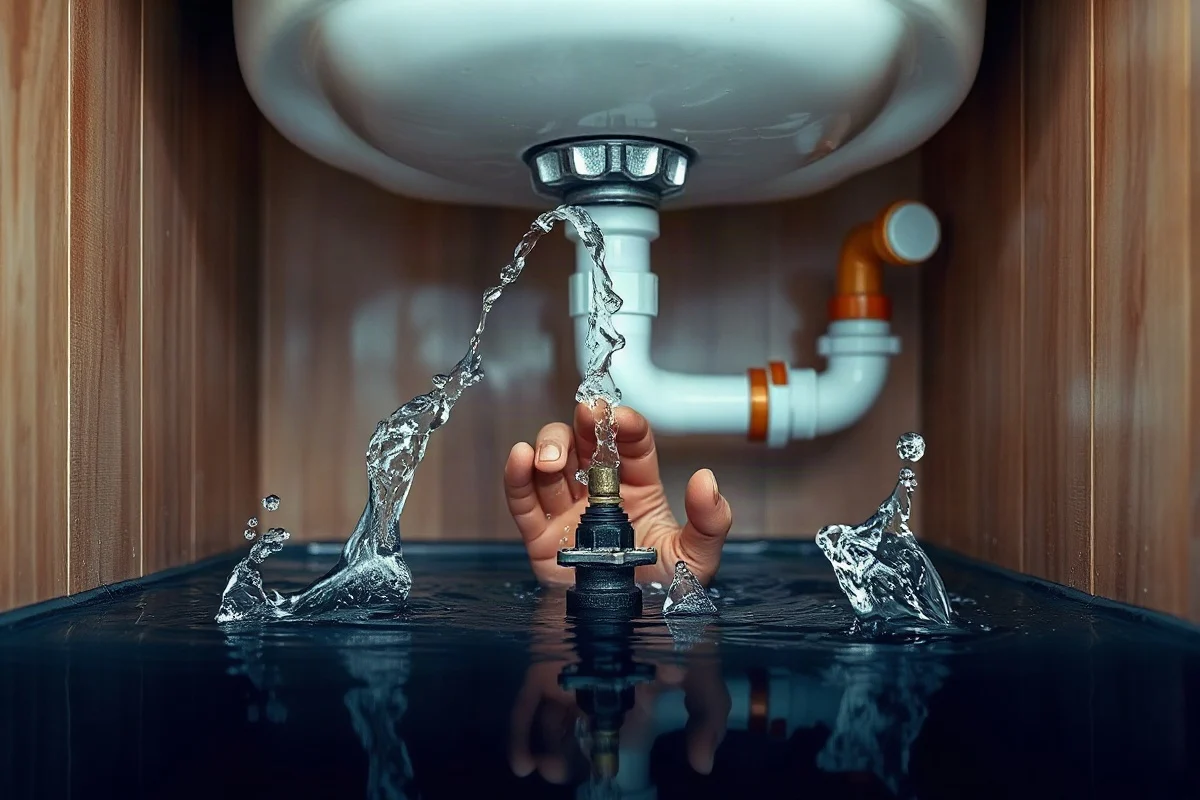
A fixture shutoff can be faster than closing the main valve when the problem is limited to one appliance or fixture. Small valves are often located on the water line below a sink, behind a toilet, near a washing machine, or on the supply lines serving a faucet. Turn the handle clockwise, or rotate a lever so it is perpendicular to the pipe.
For a toilet that is overflowing, close the toilet’s supply valve first if it is accessible. You can also remove the tank lid and lift the float temporarily while you locate the shutoff. Do not keep flushing the toilet. For a leaking faucet or sink supply line, close the nearby hot or cold valve, depending on which line is leaking.
If a fixture valve will not close, leaks around its stem, or appears damaged, shut off the main supply if safe and arrange professional service. More guidance on fixture problems is available through faucet and sink repair resources.
Common emergency situations and the right response
Burst or split pipe
Close the main valve immediately if a pipe is spraying, splitting, or releasing water behind a wall, ceiling, or cabinet. A concealed leak can cause damage before it becomes visible, so avoid opening walls or ceilings unless necessary for immediate safety. Contact a qualified plumber for diagnosis and repair. More information is available in this guide to pipe repair.
Water heater leak
For a leaking water heater, close the cold-water supply valve above or near the tank if it is clearly accessible. If you cannot stop the leak that way, close the home’s main water valve. Do not touch electrical connections, wiring, or controls in a wet area. If the heater uses gas, do not adjust gas controls or disconnect gas piping. Leave gas and electrical work to a qualified professional.
Major flooding or sewage backup
For substantial flooding, sewage exposure, or contaminated water, keep people and pets away from the area. Do not handle sewage without appropriate protective equipment and cleanup procedures. If water has reached electrical systems, do not enter the area until it has been assessed. A qualified plumber, restoration contractor, or other appropriate professional can determine the safest next step. Sewer problems may require specialized evaluation, especially when several drains back up at once.
Outdoor or irrigation leak
An outdoor spigot or irrigation leak may have its own shutoff. If you cannot identify the correct valve, closing the home’s main valve may be the safest temporary measure. Underground leaks, damaged service lines, and irrigation problems can require specialized tools and professional diagnosis.
What to do after the water is off
Do not turn the main supply back on simply to see whether the leak has stopped if the cause has not been identified. A small test can quickly become another flood. Keep the affected area accessible for the plumber, and note which fixtures or rooms were affected.
Once repairs are complete, the water should generally be restored slowly. Open a faucet slightly while the system refills to reduce sudden pressure changes and allow trapped air to escape. Watch exposed connections for signs of leakage. If you hear unusual sounds, see continued leaking, or notice pressure problems, shut the water off again and contact the plumber who performed the work.
If the water was off for an extended period, check faucets and appliances gradually rather than opening every fixture at once. Do not operate a water heater that may have been drained or left without an adequate water supply; follow the manufacturer’s instructions or ask a qualified professional before restarting it.
When a homeowner check is not enough
Finding and closing an accessible shutoff valve is usually a reasonable emergency step. Repairing the underlying problem may not be. Professional help is especially important for gas lines, electrical connections, sewage, major flooding, hidden leaks, damaged service lines, frozen or burst pipes, water heater connections, and work that may involve local code requirements.
Stop and call for help if the valve is stuck, the pipe moves when you touch the valve, water is near electrical equipment, the leak is inside a wall or ceiling, or you cannot tell whether the valve controls your home. Never cut a pipe, remove a water meter, excavate a buried line, or alter gas or electrical components as a quick fix.
Repair or replacement: what determines the decision?
A plumber will consider the location and cause of the failure, the condition of nearby piping, the type of valve or connection, accessibility, water pressure, and the risk of repeated failure. A failed washer or accessible valve component may be repairable. Severe corrosion, damaged threads, repeated leaks, brittle piping, or a valve that cannot reliably close may make replacement the more practical option.
The right solution also depends on whether the problem is isolated or part of a broader plumbing issue. A single leaking connection may need a focused repair, while recurring leaks, poor water pressure, or widespread corrosion may justify a more complete evaluation.
What affects plumbing emergency costs?
Emergency pricing varies by location and by the conditions at the property, so a reliable estimate requires an inspection or clear description of the problem. Cost factors can include the time of day, travel, access to the failed component, the amount of water damage, parts and materials, the need to open finished surfaces, cleanup, and whether additional specialists are needed.
Ask the plumber what the initial service charge covers, whether diagnosis and repair are billed separately, which parts are expected, and what work would require additional approval. Request a written estimate or clear scope before non-emergency work begins when practical. For broader information, see plumbing cost factors.
How to choose the right local plumber
Look for a qualified local professional with experience handling the type of emergency you have. Ask how the company evaluates water damage, whether the technician is prepared for the suspected repair, and what information they need before arriving. Confirm the business identity and contact details, and ask for documentation relevant to your area when applicable rather than assuming every plumber has the same credentials or service scope.
Be cautious of anyone who pressures you to approve extensive work without explaining the cause, refuses to describe the proposed repair, or asks you to perform unsafe electrical, gas, sewage, or structural work. A dependable plumber should explain the immediate risk, the temporary steps you can take, the recommended repair, and any reasonable alternatives. You can also use the plumber hiring guide when comparing local service providers.
Prepare before the next leak
Locate the main shutoff during a dry, calm day. Test it gently, label it, and make sure adult household members know where it is and how it operates. Keep a flashlight nearby, store basic cleanup supplies where they will remain accessible, and learn the locations of shutoffs for toilets, sinks, appliances, and outdoor fixtures.
Knowing how to stop the water does not replace professional diagnosis, but it can reduce the time a leak continues. When the situation involves danger, contamination, concealed damage, or a valve you cannot safely operate, protect people first and contact a qualified local plumber.
Comments
0No comments yet. Be the first to share a helpful note or question.
Leave a Comment
Your email address will not be published. Comments are reviewed before appearing on the site.