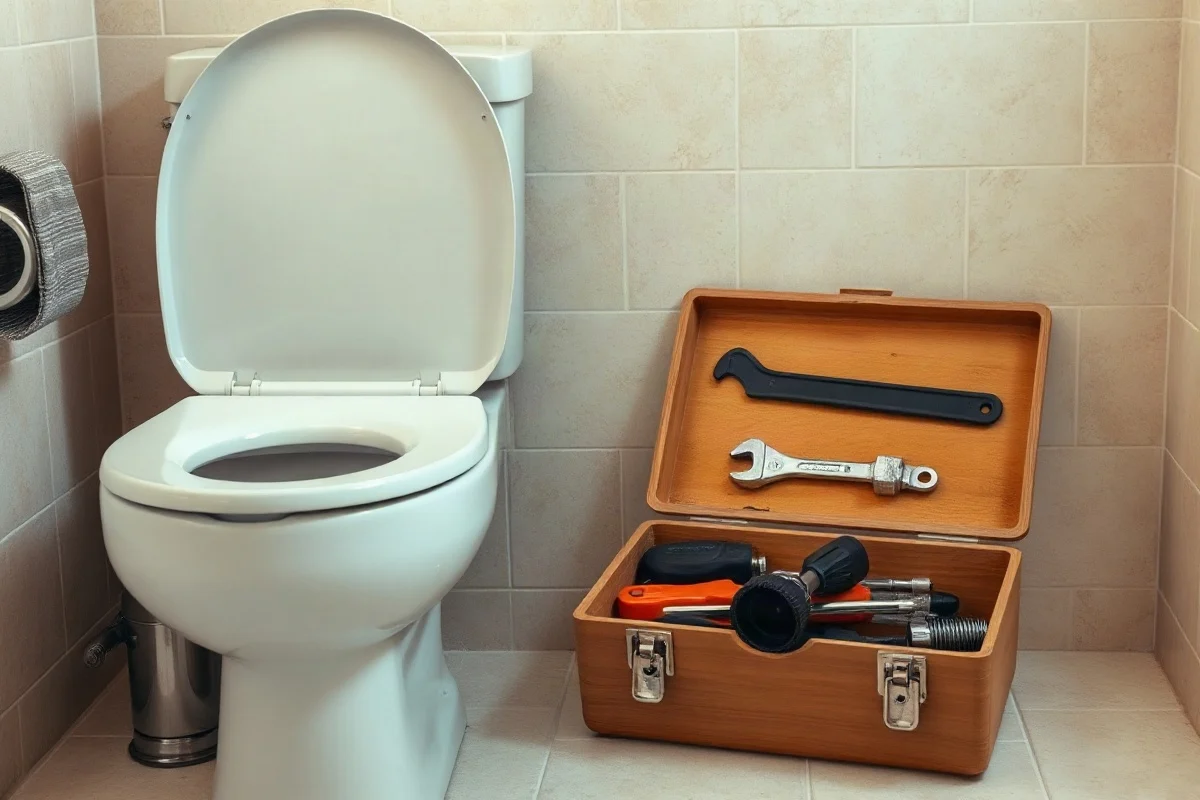
Most toilets last about 10 to 30 years, although the bowl and tank can sometimes remain usable longer when they are made well, installed correctly, and maintained. The parts that control flushing and prevent leaks—such as the flapper, fill valve, flush valve, handle, bolts, and wax or rubber seal—usually wear out sooner. A toilet’s age matters, but its condition, water usage, repair history, and the availability of replacement parts matter just as much.
A toilet that runs occasionally may need only a simple component replacement. A toilet with a cracked tank, an unstable base, repeated leaks, or frequent clogs may be a poor candidate for continued repairs. This guide explains the signs of normal wear, the checks a homeowner can safely perform, and the situations that call for a qualified local plumber.
How long do the main toilet parts last?
A toilet is a group of separate components rather than one single appliance. The porcelain bowl and tank can remain in service for decades if they are not cracked or damaged. Internal parts have a shorter working life because they are exposed to water, mineral deposits, cleaning chemicals, and repeated movement.
Porcelain bowl and tank
The ceramic bowl and tank are typically the longest-lasting parts. Their service life can be shortened by impact, freezing temperatures, overtightened bolts, shifting floors, or stress caused by an uneven installation. Even a small crack can become a serious leak, especially if it appears below the waterline or near the tank connection.
Do not try to repair a cracked porcelain tank or bowl with household glue or sealant. These products may not withstand water pressure or the weight placed on the fixture. A qualified plumber can determine whether the damaged section requires replacement and can check for related damage around the floor and supply connection.
Flapper, fill valve, and flush valve
The flapper and fill valve are common wear items. A deteriorated flapper may allow water to leak from the tank into the bowl, while a failing fill valve may cause the toilet to refill continuously, shut off slowly, or make unusual noises. Mineral buildup can also interfere with the flush valve or other moving parts.
These parts are often repairable without replacing the entire toilet. However, the correct replacement depends on the toilet’s design and the condition of the surrounding components. If a replacement part does not fit properly, the toilet may continue to leak or flush poorly.
Bolts, supply line, and floor seal
The tank bolts, closet bolts, supply line, and floor seal can all develop problems before the porcelain does. Water around the base may come from condensation, a loose supply connection, a tank leak, or a failed seal. Finding the source is important because wiping up visible water does not solve a leak hidden under the toilet.
A damaged floor seal can allow water to reach the subfloor. If the toilet rocks, the floor feels soft, or water appears after every flush, stop using the fixture if practical and arrange for a professional inspection.
Signs that a toilet may be nearing the end of its useful life
Age alone is not a reason to replace a toilet. These symptoms are more useful indicators:
- Repeated clogs: Frequent blockages may result from a weak flush, an obstruction, a drain problem, or a damaged toilet trap.
- Persistent running: A toilet that runs after every flush may need a flapper, fill valve, or flush-valve repair, but repeated failures can make replacement more practical.
- Cracks: Cracks in the tank, bowl, or around the base create a risk of sudden leakage and require prompt attention.
- Water around the base: This can indicate a failed seal, loose connections, condensation, or a damaged bowl. The source should be identified rather than covered with caulk.
- Rocking: Movement can damage the floor seal and place stress on the supply connection. It may also indicate an uneven floor or an installation problem.
- Weak or incomplete flushing: The cause may be a blocked rim passage, low tank water, a worn mechanism, or a drainage issue.
- Hard-to-find replacement parts: Older or unusual toilet designs may be more expensive or inconvenient to maintain when compatible parts are no longer readily available.
If the problem is limited to a running toilet or a minor flush issue, see this guide to toilet repair for a practical overview of common service needs.
Safe checks homeowners can perform
Several low-risk checks can help you understand the problem before calling a plumber. First, look at the floor, wall, and supply connection for visible water. Dry the area and check again after flushing. Do not place your hand inside standing water if sewage may be present, and wash your hands after handling toilet components.
Next, remove the tank lid carefully and observe the toilet during a flush. The water should stop filling once the tank reaches its normal level. If water continues flowing into the overflow tube, the fill valve or its adjustment may need attention. If water moves from the tank into the bowl when the toilet is not being used, the flapper or flush-valve seal may be worn.
You can also check whether the toilet rocks by applying very light pressure from different sides. Do not tighten tank or floor bolts aggressively. Porcelain can crack when bolts are overtightened. Avoid using chemical drain cleaners in a toilet; they can damage components, create splash hazards, and expose anyone performing later repairs to caustic chemicals.
These checks are appropriate for observation and basic troubleshooting. Stop and call a qualified local professional if you see a porcelain crack, active leakage into the floor, sewage contamination, a damaged shutoff valve, a hidden leak, or a toilet that cannot be safely isolated from the water supply.
When repair is better than replacement
Repair often makes sense when the porcelain is intact, the toilet is stable, the flush is effective, and the problem is limited to a replaceable component. A new flapper, fill valve, handle, supply line, or seal may restore normal operation. Repair can also preserve a toilet that fits a difficult space or matches an older bathroom layout.
Before repairing, consider whether the same toilet has needed several repairs recently. Replacing one part may be reasonable, but repeated service calls for separate failures can eventually cost more in labor and inconvenience than installing a new fixture. A plumber can inspect the entire toilet and explain whether the underlying porcelain and connections are sound.
When replacement is usually the better choice
Replacement deserves serious consideration when the tank or bowl is cracked, the base repeatedly leaks, the toilet rocks because of a damaged floor or mounting area, or the fixture clogs despite proper repairs. Replacement may also be sensible when the toilet has multiple worn components and its flush performance remains poor.
Do not assume that a newer toilet will solve a drainage problem. If several fixtures drain slowly, gurgle, or back up, the cause may be in the building drain or sewer line rather than in the toilet itself. Sewage backups and suspected sewer problems require qualified local help. You can learn more about warning signs through this sewer line resource.
A replacement also needs to fit the bathroom correctly. The plumber may need to evaluate the existing drain location, supply connection, floor condition, toilet footprint, and clearance. If the old toilet has leaked for a long time, the subfloor may need inspection before a new fixture is secured.
What affects the cost of repair or replacement?
There is no single price that applies to every toilet project. The total cost depends on the problem and the work required. Important factors include:
- Whether the issue involves one inexpensive component or several parts
- Access to the shutoff valve, supply connection, and floor bolts
- Whether the toilet can be removed without damaging the floor or surrounding finishes
- The condition of the floor, flange, drain connection, and subfloor
- Whether a hidden leak has caused water damage
- Whether the replacement toilet requires changes to the connection or layout
- Disposal of the old fixture and cleanup of contaminated materials
- Local labor rates, scheduling, and the plumber’s diagnostic process
Ask for a written description of the recommended work. It should distinguish the fixture, parts, labor, removal, disposal, and any additional repairs that may be discovered after removal. For broader planning information, review this guide to plumbing costs, while remembering that actual estimates vary by location and job conditions.
How to choose the right plumber
Choose a qualified local plumber who regularly handles toilet repairs and installations. Ask what they found, what options are available, and whether the estimate covers only the visible symptom or also includes inspection of the connection and floor area. A good professional should be willing to explain why repair or replacement is recommended rather than pushing one option without examining the fixture.
Before work begins, confirm the scope of service, expected payment terms, and any applicable local requirements with the plumber or local authority. Do not rely on an online article to determine licensing, permits, or plumbing-code obligations because those requirements can vary by location and project.
For urgent water loss, an overflowing toilet, sewage exposure, or water entering the floor or walls, shut off the toilet’s supply valve if it turns easily and safely, keep people away from contaminated water, and contact qualified local help. If the shutoff valve is stuck or damaged, do not force it.
Keeping a toilet in service longer
Routine care can extend the useful life of a toilet. Avoid flushing wipes, paper towels, hygiene products, and other items that can cause blockages. Do not use the toilet as a step or place heavy objects on the tank. Clean with products appropriate for bathroom fixtures, and avoid aggressive tools that can scratch porcelain or damage seals.
Occasionally check for silent running by listening when the bathroom is quiet. Look around the base and supply connection for moisture, and respond promptly to a loose handle, slow refill, weak flush, or small leak. Early attention may allow a simple repair before water reaches the floor or surrounding materials.
The practical answer is that a toilet may last roughly 10 to 30 years, but the replaceable parts usually determine how long it performs reliably. If the porcelain is intact and the problem is isolated, repair is often reasonable. If there are cracks, recurring leaks, instability, repeated clogs, or extensive damage around the base, professional evaluation and replacement may be the safer long-term choice. For installation planning, consult a qualified plumber or review the toilet installation service information.
Comments
0No comments yet. Be the first to share a helpful note or question.
Leave a Comment
Your email address will not be published. Comments are reviewed before appearing on the site.