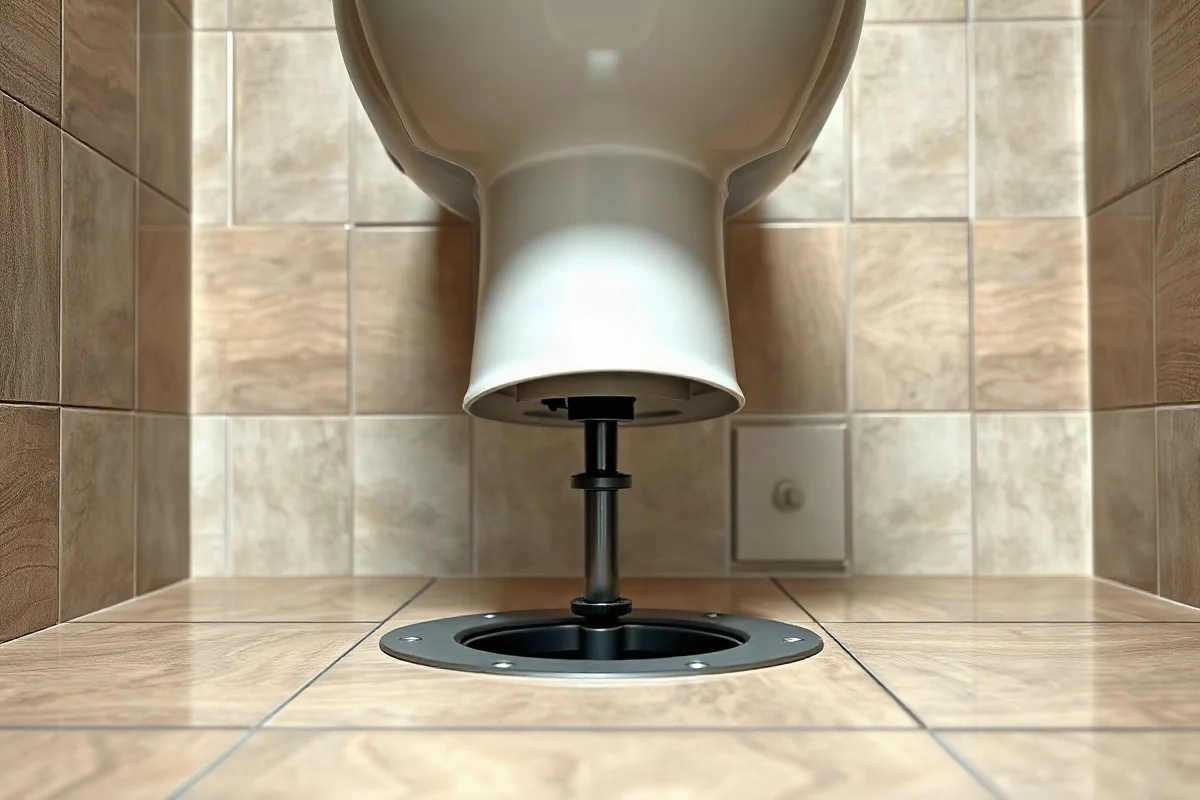
The toilet is held to the floor by two closet bolts that fasten the toilet base to a closet flange, also called a toilet flange. A wax ring or wax-free seal sits between the toilet and the flange to keep wastewater and sewer gases from escaping. The bolts provide the mechanical hold, while the seal creates the watertight connection. If a toilet rocks, leaks at its base, or shifts when someone sits down, the problem may involve loose bolts, a damaged flange, an uneven floor, a deteriorated seal, or more than one issue.
How the toilet-to-floor connection works
A toilet is not normally screwed directly into the finished flooring. Instead, the drain opening in the floor is fitted with a closet flange. This fitting connects the toilet outlet to the drainpipe and provides mounting slots or bolt channels for the closet bolts.
During installation, the bolts are placed in the flange and positioned so they line up with the openings in the toilet base. The toilet is then lowered over the bolts onto the sealing ring. Nuts and washers are tightened over the bolts to clamp the toilet against the floor. Decorative caps may cover the nuts afterward.
The seal is just as important as the bolts. A wax ring is common, but some installations use a wax-free gasket. The seal is compressed between the bottom of the toilet and the flange. It does not usually hold the toilet in place by itself. Its primary purpose is to prevent water and sewer gases from passing through the joint.
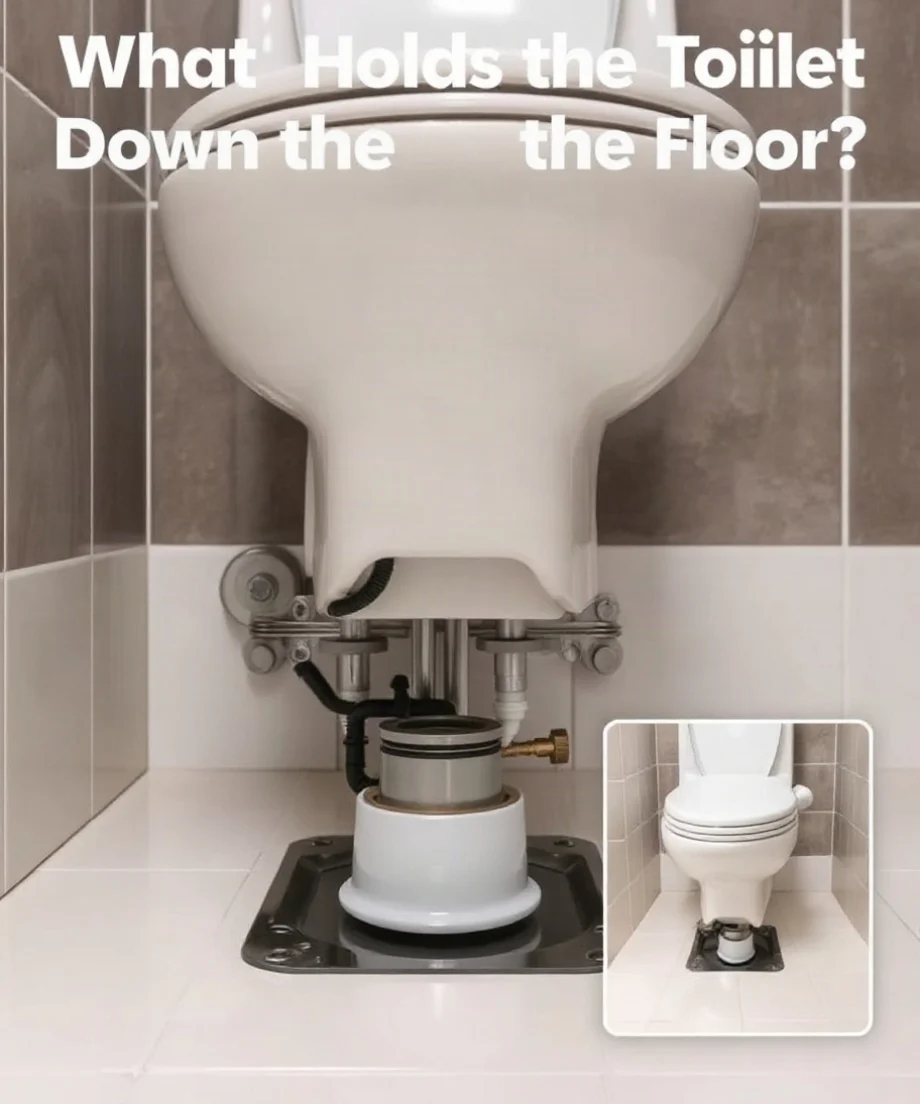
The parts that secure and seal a toilet
Closet bolts
Closet bolts are threaded fasteners designed for toilet installation. The heads fit into the flange, and the threaded ends extend upward through holes in the toilet base. Washers and nuts secure the toilet to the flange.
Loose nuts can allow the toilet to rock. However, tightening the nuts is not always the complete solution. If the flange is cracked, poorly supported, too low, or detached from the drainpipe, tightening the nuts can fail to stabilize the toilet or can damage the porcelain base.
The closet flange
The closet flange connects the toilet drain opening to the building drain and provides the mounting point for the bolts. Depending on the installation, it may be made from plastic, metal, or a combination of materials.
A flange can become damaged by corrosion, repeated movement, improper installation, or flooring work. A flange that sits too low relative to the finished floor may also make it difficult for the seal to compress properly. Determining whether the flange is sound usually requires removing the toilet, which is more involved than a basic homeowner check.
The wax ring or wax-free seal
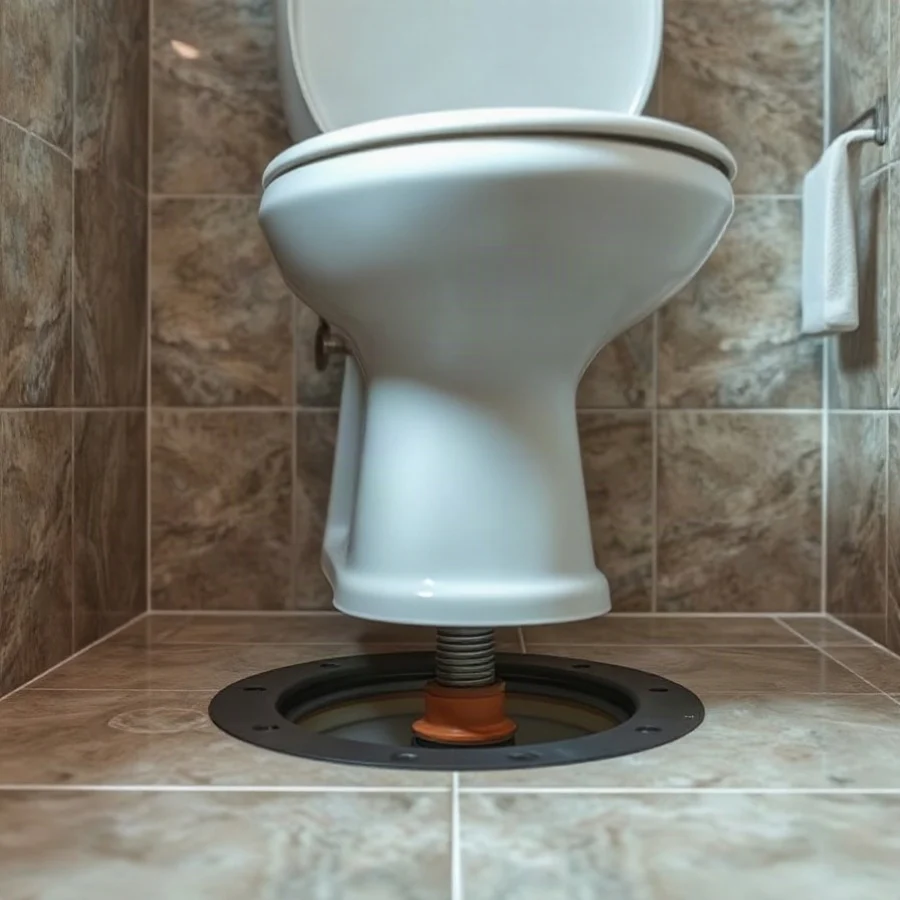
The seal closes the gap between the toilet outlet and the flange. A damaged or displaced seal can cause water to appear around the base after flushing. It can also allow sewer odors into the bathroom.
A seal may fail because the toilet has rocked, the toilet was lifted and reset, the flange or floor is uneven, or the seal was not compressed correctly during installation. Replacing a seal requires removing the toilet and cleaning the mating surfaces. A new seal is generally needed whenever the toilet is removed, because the original seal may not reseal reliably.
The floor and subfloor
The flooring does not normally provide the main fastening point, but it must support the toilet and flange. A soft, swollen, or deteriorated subfloor can let the toilet move even when the bolts are tight. Movement can then place stress on the seal and flange.
If the floor feels soft, shows staining, or has visible damage around the toilet, the issue may extend below the fixture. Repairs may involve flooring or structural work in addition to plumbing work.
Why a toilet may wobble
A small amount of movement should not be ignored. Common causes include loose closet nuts, an uneven bathroom floor, a flange that is not properly supported, a damaged flange, or a toilet base that does not sit flat.
Sometimes the toilet was installed correctly but the floor is slightly uneven. In that situation, a plumber may stabilize the base with suitable shims and seal the perimeter appropriately. Shims should not be used to hide a leaking seal, a broken flange, or a soft subfloor. Stabilizing the toilet without correcting the underlying problem can allow damage to continue.
Porcelain can crack if the mounting nuts are overtightened. A cracked toilet base can leak or become unsafe to use, so tightening should be gentle and even rather than forceful.
Safe checks a homeowner can perform
Some basic observations are low risk if you avoid forcing the fixture or opening the drain connection.
- Place both hands on the toilet bowl and gently check for movement. Do not rock it aggressively.
- Look around the base after several flushes for fresh water, staining, or damp flooring.
- Check whether the toilet moves at the base or whether the floor itself feels soft.
- Look for missing decorative caps, visibly loose nuts, cracked porcelain, or a gap between the toilet and floor.
- Notice whether sewer odors are present, especially when the bathroom is not being used.
- If water is actively leaking, close the toilet's shutoff valve and limit use until the source is identified.
Do not use caulk to conceal an active leak or simply tighten the mounting nuts as hard as possible. Do not pry up the toilet, cut the floor, or remove the flange unless you understand how to protect the drain opening and manage the fixture safely.
When a professional should inspect the toilet
A qualified local plumber should inspect the installation when the toilet continues to wobble, leaks after flushing, smells like sewage, or has been reset previously without solving the problem. Professional help is also appropriate when the flange appears broken, the floor is soft, the toilet rocks significantly, or the drain connection may be damaged.
Removing a toilet exposes the drain opening and can reveal a damaged flange, deteriorated flooring, or a seal that has failed beneath the fixture. The toilet is also heavy and awkward to handle. If wastewater has contaminated the floor, use appropriate precautions and arrange qualified help rather than spreading contaminated water through the room.
If a leak has caused major flooding, affected electrical equipment, entered walls or ceilings, or reached another level of the home, address the immediate water hazard and contact qualified local professionals. For broader toilet problems, you can review toilet repair services and determine what type of inspection may be appropriate.
Repair or replacement: what usually makes sense?
The correct repair depends on which part has failed. Loose hardware may be a relatively limited repair if the flange, floor, porcelain, and seal are all sound. An uneven toilet may need careful stabilization. A failed seal generally requires toilet removal and replacement of the sealing component.
A damaged flange may need repair or replacement, but the best approach depends on its material, condition, support, and connection to the drainpipe. A plumber may also need to check whether the finished floor has been built up, leaving the flange too low for a reliable seal.
Replacing the entire toilet may make sense when the porcelain is cracked, the fixture is damaged during removal, the toilet has recurring problems, or the cost and labor of correcting the fixture exceed the practical value of keeping it. A toilet should not be reused if its base is cracked or if its mounting area cannot hold the fixture securely.
What affects the cost of the repair?
There is no single price for fixing a loose or leaking toilet because the visible symptom may come from different parts of the installation. Important cost factors include:
- Whether the issue is a loose fastener, failed seal, uneven floor, or damaged flange.
- How difficult it is to remove and handle the toilet.
- Whether flooring, subflooring, or trim has water damage.
- Whether the flange is accessible and connected properly to the drainpipe.
- Whether replacement parts or a new toilet are needed.
- Whether the work requires cleanup of contaminated water or additional repairs.
- Local labor rates, scheduling, and the plumber's assessment of the installation.
Ask for a written description of the diagnosed problem, the planned repair, parts and labor included, and any conditions that could change the estimate. Avoid choosing a contractor based only on the lowest initial number if the scope is unclear. More general guidance is available in this plumbing costs guide.
How to choose the right plumber
Look for a qualified local plumber who regularly handles toilet installation, flange repairs, leaks, and bathroom flooring-related plumbing issues. Ask whether the plumber will inspect the flange and floor rather than simply tighten the nuts or apply sealant around the base.
Before work begins, explain the symptoms clearly: when the toilet started moving, whether water appears after flushing, whether there is a sewer odor, and whether the floor feels soft. Request a clear scope of work and ask what happens if hidden damage is found after the toilet is removed.
For work that may involve concealed leaks, structural damage, contaminated wastewater, or code-related changes, use a qualified professional familiar with local requirements. Do not assume that a quick cosmetic fix has corrected the drain connection.
Keeping the connection in good condition
Use the toilet normally, but avoid leaning heavily on the bowl or treating it as a support. Respond promptly if the fixture begins to rock, because movement can damage the seal and flange over time. Check for moisture after repairs and report recurring movement or odors rather than repeatedly tightening the hardware.
The key point is simple: closet bolts hold the toilet to the closet flange, and a wax or wax-free seal keeps the drain connection watertight. The floor, flange, hardware, and porcelain must all work together. When the toilet moves or leaks, identify the cause instead of covering the symptom, and use professional help when the flange, drain, flooring, sewage, or hidden damage is involved.
Comments
0No comments yet. Be the first to share a helpful note or question.
Leave a Comment
Your email address will not be published. Comments are reviewed before appearing on the site.