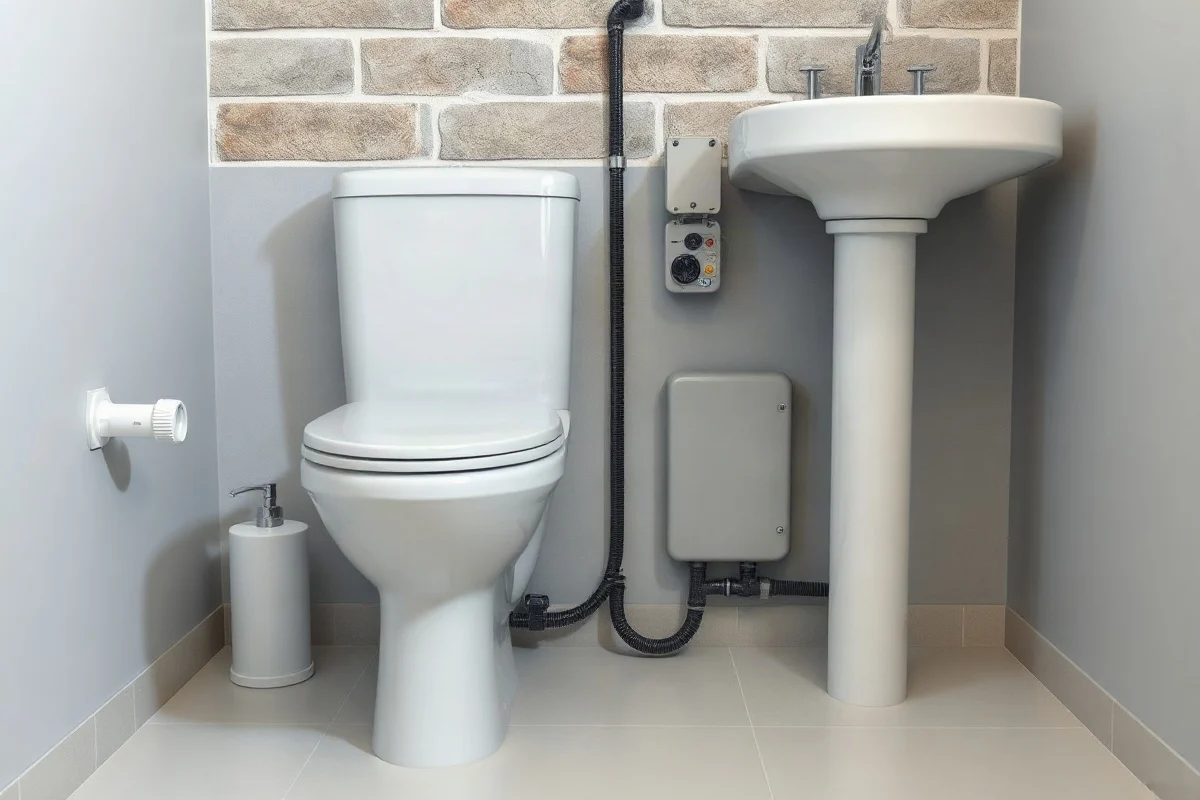
A basement bathroom usually needs a sewage ejector pump when its toilet, sink, or shower drains sit below the level where household wastewater can flow by gravity. The pump collects wastewater in a sealed basin and lifts it through a discharge pipe to the building’s drain system. If the pump stops working, the safest first steps are to stop using the basement bathroom, keep people away from any sewage, and check only visible, accessible components. Electrical troubleshooting, sewage exposure, basin work, discharge-pipe repairs, and replacement should generally be handled by a qualified local plumber.
How a basement bathroom ejector system works
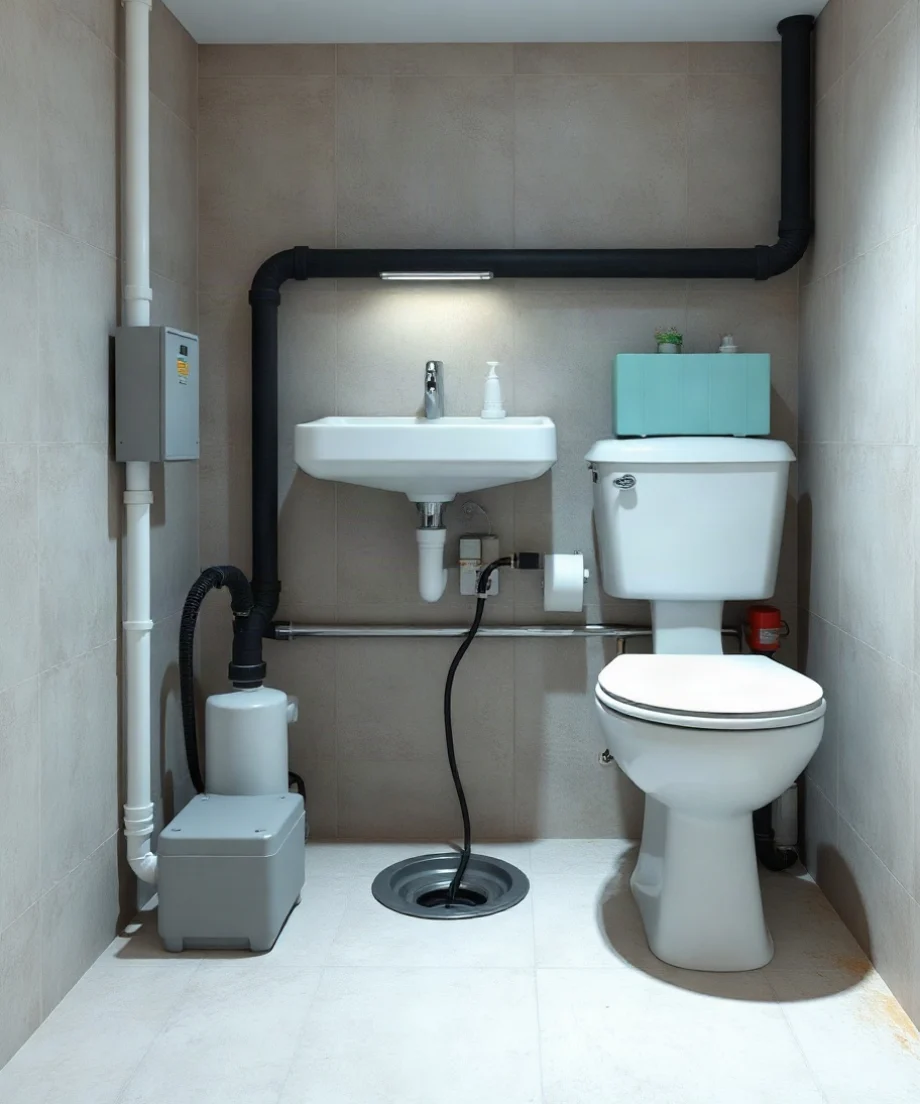
A typical basement bathroom ejector system has several connected parts:
- Fixture drains: The toilet, sink, shower, or floor drain carries wastewater toward the basin.
- Sealed ejector basin: This underground or floor-level tank stores wastewater until the pump starts.
- Pump and float switch: As the liquid level rises, a float activates the pump. The pump pushes wastewater upward and toward the main drain.
- Discharge pipe: This pressurized pipe carries waste away from the basin.
- Check valve: The valve helps prevent wastewater from flowing backward into the basin after the pump shuts off.
- Vent connection: The basin normally needs proper venting to control pressure and odors. Vent problems can affect drainage and should be evaluated by a professional.
Because the system handles wastewater from a toilet, it is different from a small gray-water pump used for a sink or shower. The pump must be suitable for solids, and the basin must remain sealed. Opening the lid or altering the discharge and vent connections can expose you to contaminated water and may create serious drainage problems.
Common signs of an ejector pump problem
The symptoms often point toward a few broad causes, although a plumber may need to inspect the system to identify the exact fault.
The pump does not run
If the basement toilet or sink is filling but the pump is silent, the system may have lost power, the float may be stuck, or the pump motor or control component may have failed. A tripped circuit can also stop operation. Do not repeatedly reset a breaker if it trips again. Repeated tripping may indicate an electrical fault, a locked motor, water intrusion, or another unsafe condition.
The pump runs but does not remove wastewater
A running motor does not prove that the system is working correctly. A clogged pump, blocked discharge pipe, closed valve, damaged impeller, failed check valve, or inadequate pump performance can leave the basin full. A blockage in the building drain can also cause backups farther downstream.
The pump cycles frequently
Frequent starts may result from a leaking check valve, an incorrectly positioned float, inflow from a leaking fixture, or a discharge problem that sends wastewater back into the basin. Frequent cycling increases motor wear and should not be ignored, especially if the basin level continues to rise.
Bad odors come from the bathroom or basin area
Odors can occur when a trap dries out, the basin cover is not sealing, a vent is obstructed, or the system has a leak. A sewage odor around the basin, visible moisture, or staining near the lid deserves prompt professional attention. Do not pour drain chemicals into the basin to mask the smell.
Gurgling, slow drains, or toilet bubbling
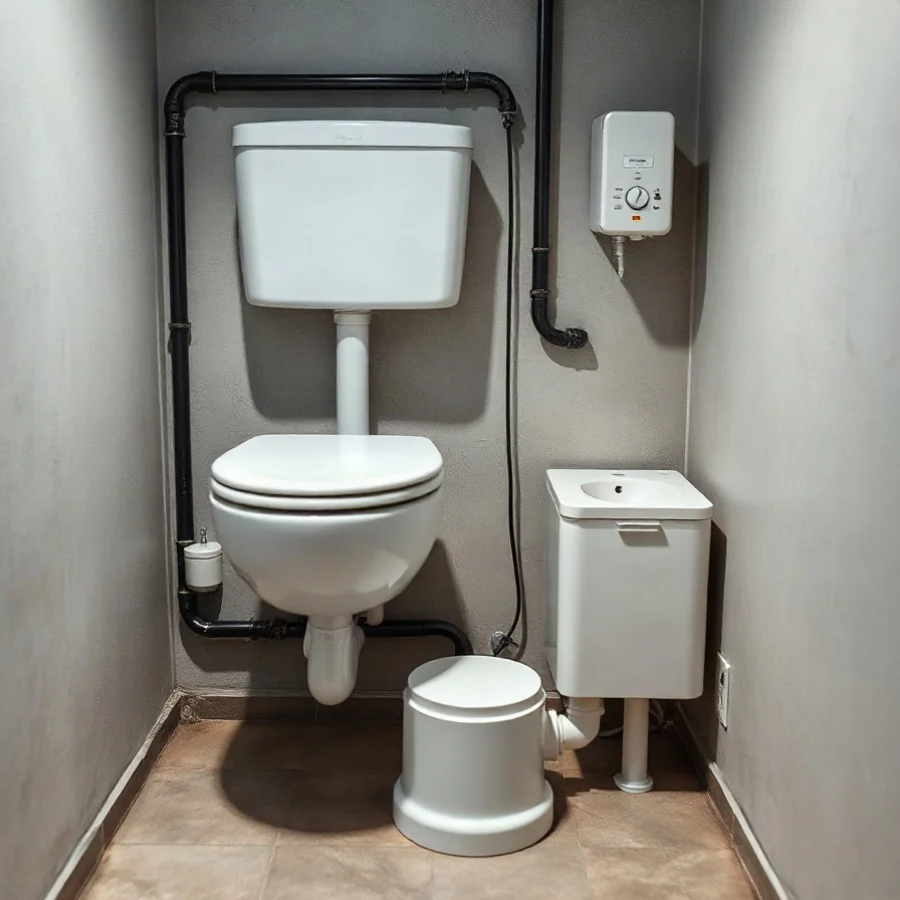
These signs may indicate a venting issue, a partial blockage, a failing pump, or a problem in the shared drain line. If more than one basement fixture is affected, stop using the bathroom until the cause is known. A drain camera inspection may be useful when a concealed blockage or damaged pipe is suspected.
Safe checks a homeowner can make
Homeowners can perform a limited visual check without opening the basin or handling wastewater.
Stop water use first
Do not flush the basement toilet, run the shower, or use the sink while the pump is not removing water. Ask household members to avoid the fixtures until the system is operating or a plumber has assessed it. Continued use can turn a slow drainage problem into an overflow.
Look for obvious water or sewage around the area
From a safe distance, check the floor around the basin, nearby walls, and visible piping. If you see sewage, keep children and pets away, avoid touching the liquid, and ventilate the area only if you can do so safely. Do not use a household vacuum or ordinary mop on sewage-contaminated water. A qualified professional should manage cleanup and repair.
Check the accessible electrical supply without opening anything
You may look at an accessible breaker or a clearly visible plug, but do not remove electrical covers, reach into a wet area, or handle a plug near standing water. If the circuit has tripped, you can note that for the plumber. Resetting it once may be reasonable only when the area is completely dry and there are no signs of damage; if it trips again, leave it off and call a qualified professional.
Listen for normal or abnormal operation
When a fixture is used, the pump may start after the basin level rises. Note whether you hear no sound, a humming sound, a grinding sound, or repeated short cycles. This information can help a plumber, but do not remove the lid to watch the float or inspect the pump.
Work that should be left to a professional
Call a qualified local plumber when the pump is inaccessible, the basin is full, sewage has backed up, or the system requires electrical or mechanical testing. Professional work may include testing the float switch, isolating power safely, inspecting the pump, checking the check valve, clearing the discharge line, evaluating venting, and verifying that the connected fixtures drain properly.
Sewage exposure, major flooding, concealed leaks, damaged wiring, and any work involving an electrical connection require extra caution. If wastewater has reached finished walls, electrical equipment, or other rooms, arrange qualified plumbing and cleanup assistance promptly. For an active backup or serious overflow, an emergency plumber may be appropriate.
Repair or replace the ejector pump?
The right decision depends on the failed component, the pump’s condition, access to the basin, and the history of the system. A float switch, check valve, wiring connection, or discharge fitting may be serviceable without replacing the pump itself. In other cases, a motor that has seized, overheated, or lost pumping capacity may make replacement more practical.
A plumber should also look for the reason the original component failed. Replacing a pump without addressing a blocked discharge line, faulty check valve, improper float movement, or recurring power problem can lead to another failure. The replacement must be suitable for the wastewater and solids expected from the fixtures. The plumber should confirm the discharge route, basin connections, venting, and controls rather than choosing a pump based only on appearance or motor size.
Do not open the basin merely to compare parts or remove a suspected blockage. The lid may be sealed, fasteners may be difficult to restore correctly, and the basin can contain contaminated water and sewer gases. A poor seal can also allow odors into the home.
What affects basement bathroom plumbing costs?
There is no reliable single price for ejector pump service because the scope can vary substantially from one home to another. Ask the plumber to separate the inspection, repair, replacement, cleanup, and any additional work in the estimate. Important cost factors can include:
- Whether the issue is a simple accessible control problem or a failed pump
- How difficult it is to reach the basin, pump, discharge pipe, or electrical supply
- Whether sewage has overflowed and requires specialized cleanup
- Whether the discharge pipe, check valve, vent, or building drain is blocked or damaged
- Whether fixtures need to be disconnected or the basin area opened
- The pump type and compatibility with the existing system
- Additional drainage, electrical, structural, or finish repairs
- The urgency and timing of the service call
For broader budgeting guidance, you can review the site’s information about plumbing costs, but an on-site assessment is necessary for a dependable estimate.
How to choose the right plumber
Look for a plumber or plumbing company that regularly handles basement bathrooms, sewage ejector pumps, drain blockages, and wastewater backups. Before work begins, describe the fixtures connected to the system, the symptoms, whether the pump runs, and whether any sewage has escaped the basin.
Ask practical questions:
- Will the technician inspect the pump, float, check valve, discharge line, and venting?
- Will the estimate identify the repair and any recommended replacement separately?
- How will sewage exposure or contaminated materials be handled?
- What access will be needed, and how will the basin be resealed?
- Are additional electrical, drain, or structural specialists needed?
Use a qualified local professional for work involving sewage, electrical components, concealed piping, or changes to the bathroom drainage system. A dependable assessment should explain the likely cause, the available repair options, and the risks of postponing the work rather than recommending a replacement without inspection.
Preventing future ejector pump problems
Keep wipes, paper towels, feminine hygiene products, grease, solvents, and other non-flushable materials out of the basement toilet and drains. Avoid connecting new fixtures to the system without professional planning. Keep the basin area accessible, and pay attention to changes in pump noise, cycling frequency, odors, slow drainage, or toilet bubbling.
If the bathroom will be unused for an extended period, ask a plumber how to protect the traps and pump system safely. Do not pour harsh chemicals into the fixtures as a substitute for maintenance. When the pump repeatedly cycles, backs up, or smells, address the symptom early. Prompt service can help distinguish a manageable component failure from a larger discharge or drain problem before wastewater reaches the basement floor.
Comments
0No comments yet. Be the first to share a helpful note or question.
Leave a Comment
Your email address will not be published. Comments are reviewed before appearing on the site.