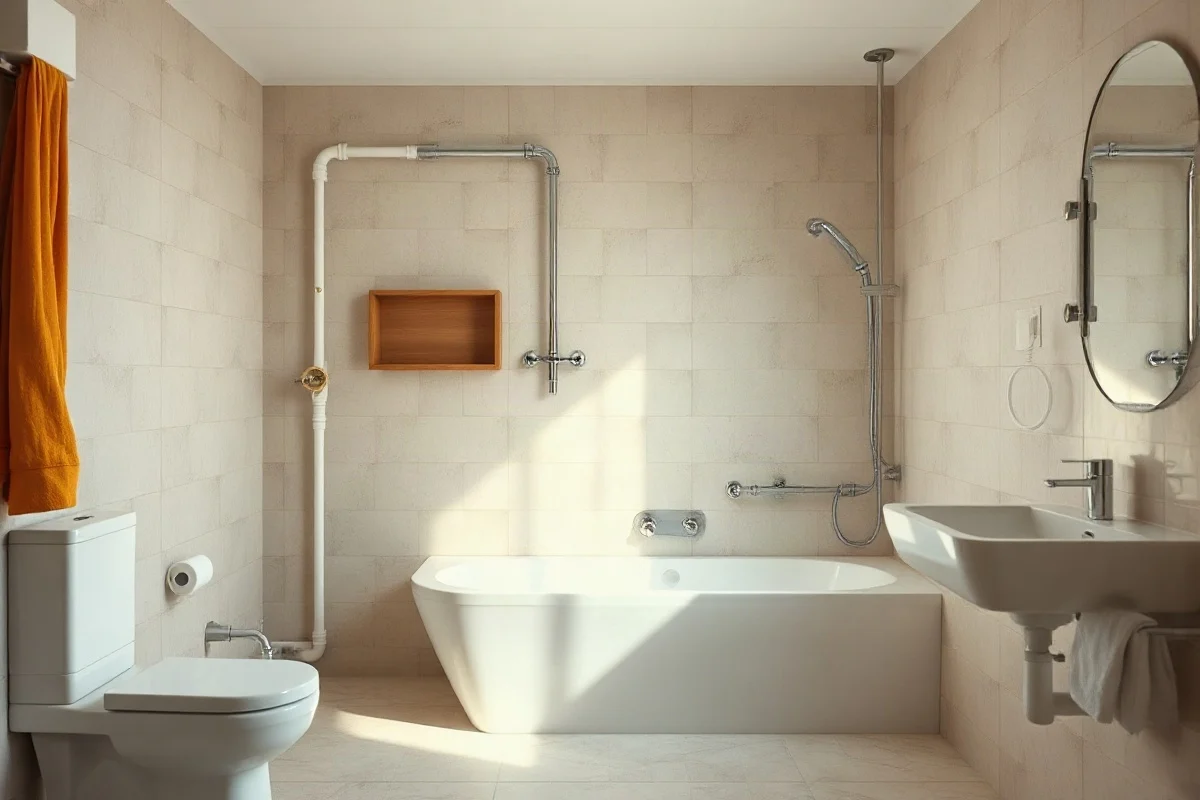
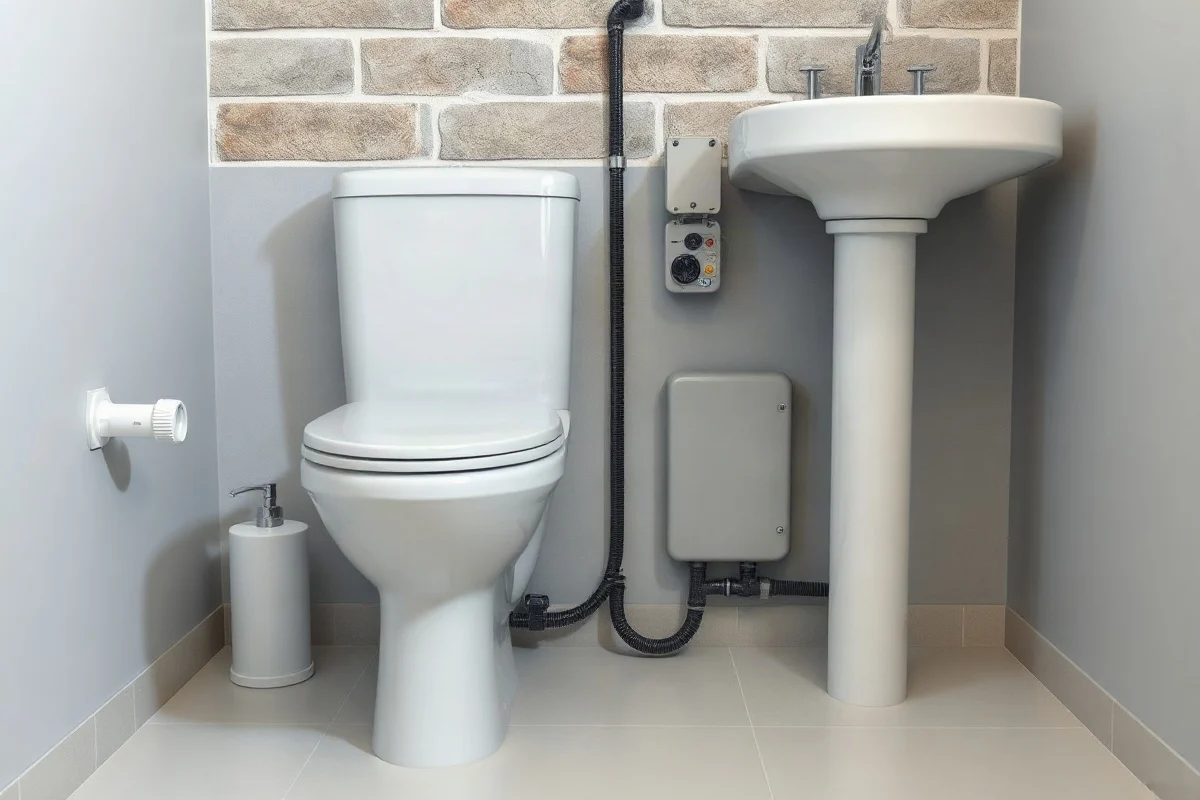
A bathroom typically needs hot and cold water supply lines, drainpipes, fixture shutoff valves, traps, and a properly designed vent system. The plumbing must serve each fixture—including the toilet, sink, tub, and shower—while directing wastewater safely into the home's drainage system. A bathroom may also need a water heater connection, an exhaust fan circuit, or new branch piping when it is being built or remodeled. Because concealed pipes, sewer connections, electrical wiring, and structural openings can create serious risks, a qualified local plumber should handle new installations, major alterations, and work that must comply with local requirements.
Basic plumbing components in a bathroom
Although bathrooms look simple, several plumbing systems work together behind the walls and under the floor. Each fixture needs a reliable water supply, a drain, and protection against sewer gases. The exact arrangement depends on the home's layout, the fixture locations, and the existing supply and drainage systems.
Water supply lines
The sink, toilet, shower, and bathtub all receive water through supply pipes. Most fixtures use both hot and cold water, but a toilet normally needs only a cold-water connection. A sink typically has separate hot and cold supply lines, while a shower or tub may use a mixing valve to combine the two temperatures.
Each fixture should have an accessible shutoff valve. These valves allow a homeowner or plumber to stop water to one fixture without shutting down the entire house. If a valve is corroded, difficult to turn, or leaking around its stem, it may need professional service rather than force. Trying to turn a seized valve can damage the connection or cause a sudden leak.
Drainpipes and traps
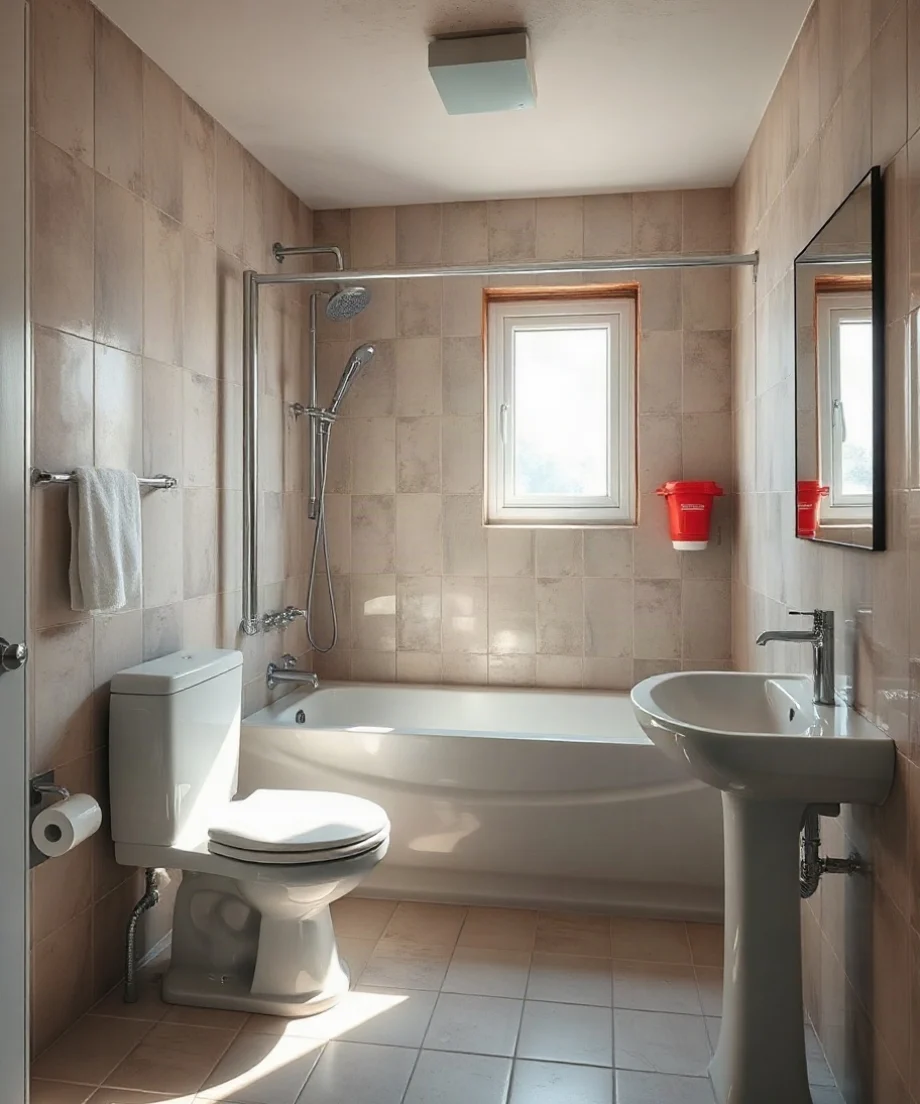
Fixtures discharge wastewater through drainpipes. The sink has a trap beneath the basin, and tubs and showers have traps that are usually hidden below the floor or behind an access panel. A toilet has an integrated trapway and connects to a drain through its base.
A trap holds a small amount of water that helps block sewer gases from entering the room. If a bathroom drain smells like sewage, the cause could be a dry trap, a damaged seal, poor venting, or a larger drainage problem. A homeowner can run water into an infrequently used sink, tub, or shower to restore a dry trap. Persistent odors, bubbling drains, or multiple affected fixtures should be evaluated by a professional.
Vent piping
Drain vents allow air into the plumbing system so wastewater can flow without pulling water out of fixture traps. They also help balance pressure in the drain system. Vent piping commonly connects to the plumbing vent system and may extend through the roof, although the configuration varies by building.
Vent problems can cause slow drainage, gurgling, sewer odors, or a trap that repeatedly loses water. Because vents may be concealed in walls or located on the roof, diagnosing and repairing them is generally professional work. Do not climb onto a roof or open walls simply to investigate a suspected vent issue.
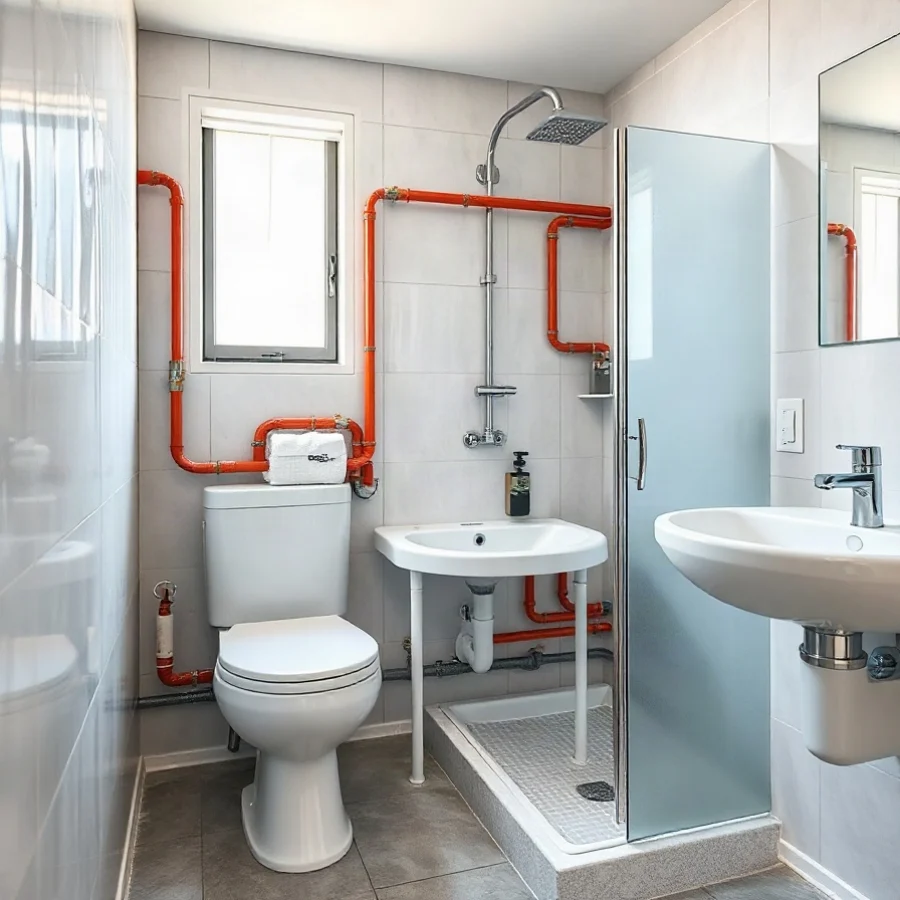
Plumbing needed for each bathroom fixture
Toilet
A toilet needs a cold-water supply line, a shutoff valve, a connector, and a drain connection with a secure seal at the floor. The drain must be positioned correctly for the toilet's location, and the finished floor must support the fixture evenly. A toilet that rocks, leaks at the base, refills continuously, or backs up may have a worn internal part, a damaged seal, a blocked drain, or an installation problem.
You can safely check whether the supply valve is open, inspect the connection for visible moisture, and remove the tank lid to see whether water continues running after a flush. Avoid repeatedly flushing an overflowing toilet. Turn off the supply valve and seek help if plunging does not resolve the problem or if water is leaking onto the floor. For related guidance, see this resource on toilet repair.
Bathroom sink
A sink needs hot and cold supply lines, shutoff valves, a faucet connection, a drain opening, and a trap. The drain assembly may include a stopper mechanism and an overflow opening, depending on the sink design. The trap should remain accessible so it can be serviced without removing a wall or cabinet.
A slow sink drain is often caused by hair, soap residue, or buildup near the stopper. A homeowner can remove and clean the stopper and try a plunger designed for sinks, while protecting the overflow opening. Chemical drain cleaners can damage some plumbing components and create a hazard for anyone who later opens the trap. If the blockage returns, affects other fixtures, or causes leaking under the cabinet, use a qualified professional. You can also review information about faucet and sink repair.
Shower and bathtub
A shower or bathtub usually needs hot and cold supply piping, a control valve or tub faucet, a showerhead or tub spout, and a drain with a trap. A tub may also need an overflow drain. The valve must be installed at the correct depth for the trim selected, and the wall must be sealed carefully around penetrations.
Water coming from behind a shower wall, staining the ceiling below, or appearing around the tub may indicate a failed seal, supply connection, drain connection, or hidden pipe. A homeowner can inspect visible caulk and grout, check for dampness after use, and look for movement in the faucet or trim. Replacing caulk may help with a minor surface gap, but it will not repair a leaking pipe or a failed waterproofing system. Stop using the fixture and arrange an inspection if moisture is entering the wall or floor.
Other plumbing and building needs to plan for
A bathroom remodel may require more than connecting fixtures. The project can involve moving drain lines, extending supply pipes, opening finished walls, replacing old valves, or modifying the main drainage route. Changes to a toilet location are especially significant because the drain must align with the new position and maintain suitable flow through the system.
Water pressure and available flow can also affect fixture performance. A shower with weak flow may have a clogged showerhead, a partially closed valve, a pressure problem, or restrictions elsewhere in the home. If several fixtures lose pressure at the same time, the issue may involve the main supply, a shutoff valve, or a larger plumbing fault. A plumber can test the system rather than replacing parts at random.
Bathrooms also need ventilation to control humidity, but an exhaust fan is an electrical and building component rather than a plumbing fixture. Do not work on electrical wiring in a damp area unless you are qualified to do so. Have a licensed or otherwise qualified professional evaluate wiring, switches, outlets, and fan connections when they are part of the project.
Safe homeowner checks versus professional work
Low-risk checks include looking for visible drips, confirming that a fixture shutoff valve is open, cleaning a sink stopper, checking whether a toilet continues to run, and noting when a drain slows or backs up. Keep a bucket and towels ready when inspecting a cabinet, and stop if water is near electrical equipment.
Professional work includes installing or relocating supply and drain piping, connecting a toilet drain, repairing concealed leaks, replacing shower valves behind finished walls, correcting vent problems, working on sewer lines, and making changes that may involve local code requirements. Gas water heaters, electrical connections, sewage exposure, major flooding, and unsafe structural conditions require qualified local help. If wastewater has entered the room, keep people and pets away from it and arrange appropriate cleanup and plumbing service.
Repair or replacement: how to decide
A repair may be reasonable when the fixture body is sound and the problem is limited to a replaceable part, such as a faucet cartridge, toilet fill valve, supply connector, stopper, or accessible trap. Replacement may make more sense when the fixture is cracked, badly corroded, repeatedly failing, difficult to obtain parts for, or incompatible with the planned remodel.
Do not judge a hidden leak by the size of the visible stain. A small stain can result from an ongoing leak inside a wall or floor, while a large wet area may come from a single overflow. Turn off the nearest shutoff valve when possible, limit water use in the area, and document the location and timing of the moisture. A professional can test the system and identify whether the source is a supply line, drain, fixture seal, or waterproofing failure.
What affects bathroom plumbing costs?
The cost of bathroom plumbing depends on the work required, not simply on the number of fixtures. Important factors include whether pipes are accessible, whether walls or floors must be opened, the distance to existing supply and drain lines, the condition of old piping, the type of fixture, the extent of water damage, and whether more than one system is involved.
Replacing a visible faucet or toilet component is usually a different type of project from relocating a drain, repairing a concealed leak, or rebuilding a shower valve connection. Ask for a written description of the diagnosis, the recommended repair, materials, labor, cleanup, and any conditions that could change the scope. Avoid choosing a contractor solely on the lowest initial number when the cause of the problem has not been clearly identified. More practical information is available in this guide to plumbing costs.
How to choose the right plumber
For a new bathroom, major remodel, hidden leak, sewer issue, or emergency, contact a qualified local plumber with experience in the specific type of work. Ask how the plumber will diagnose the issue, which portions of the system will be opened, how the area will be protected, and what the plan is if additional damage is discovered.
Before work begins, confirm the business name, contact information, written scope, payment expectations, and any applicable licensing or insurance information for your location. A reputable professional should be willing to explain the proposed repair in clear language rather than pressuring you into unnecessary replacement. For a bathroom project that combines plumbing with electrical, structural, or waterproofing work, make sure each specialty is handled by an appropriately qualified professional.
Plan the bathroom plumbing before installation
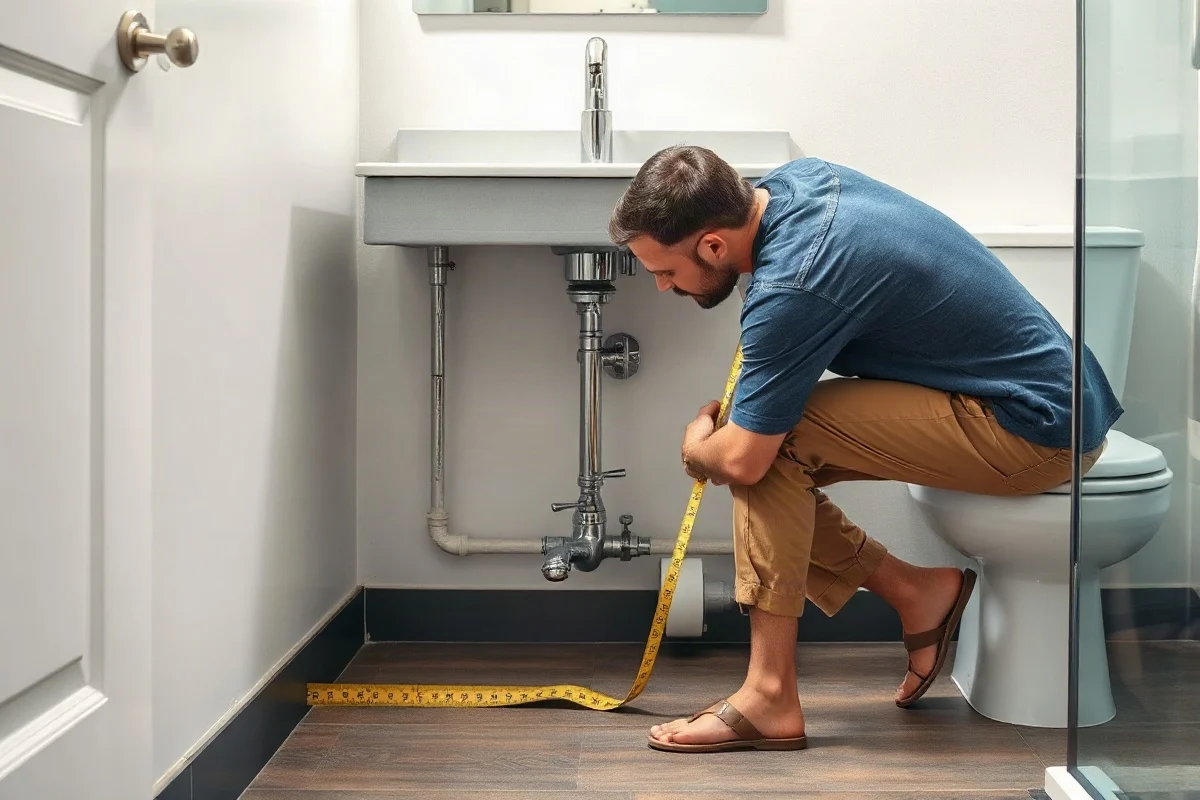
The best time to identify plumbing needs is before tile, cabinets, drywall, and flooring are installed. Map the location of every fixture, confirm access to shutoff valves and traps, and discuss supply, drain, vent, waterproofing, and electrical requirements with the professionals involved. Early planning can reduce unnecessary wall openings and help expose compatibility problems before they become expensive damage.
When a bathroom already has slow drains, recurring odors, visible leaks, low pressure, or a toilet that frequently backs up, resolve the underlying problem before adding new fixtures. A careful assessment of the existing system is safer than connecting new plumbing to a damaged or undersized section of pipe.
Comments
0No comments yet. Be the first to share a helpful note or question.
Leave a Comment
Your email address will not be published. Comments are reviewed before appearing on the site.