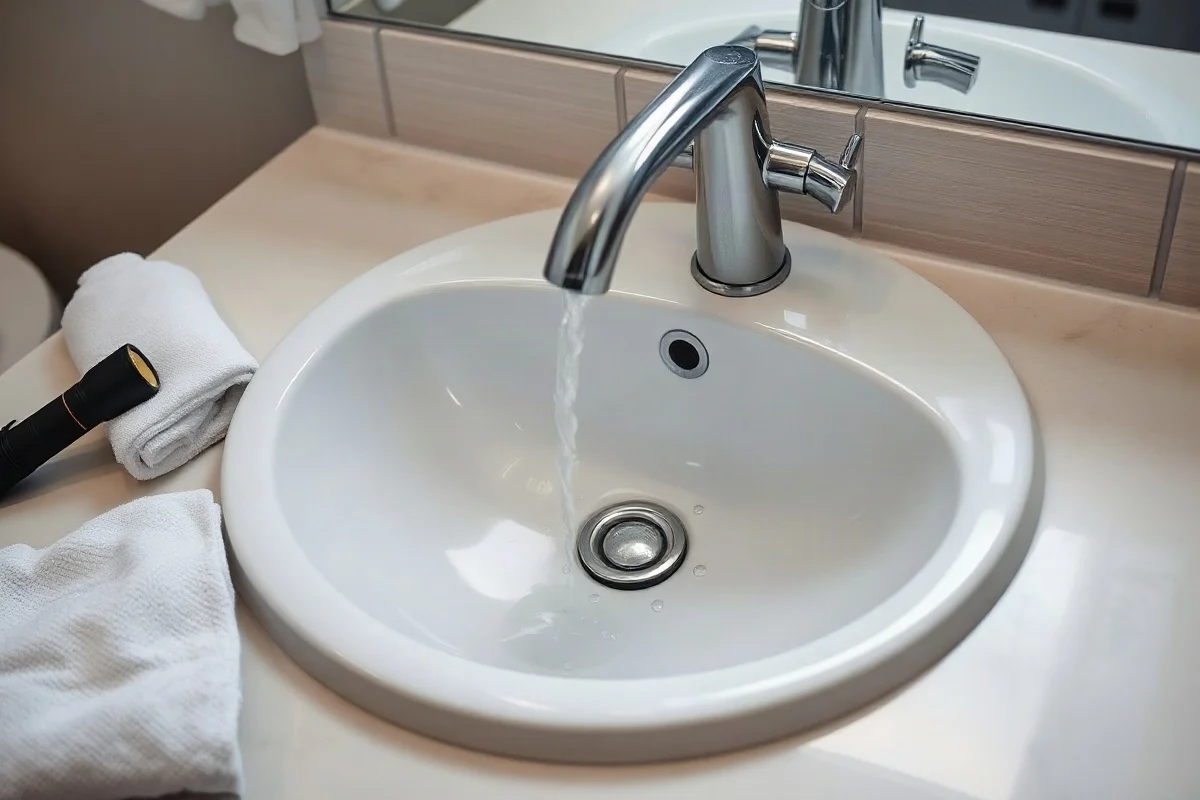
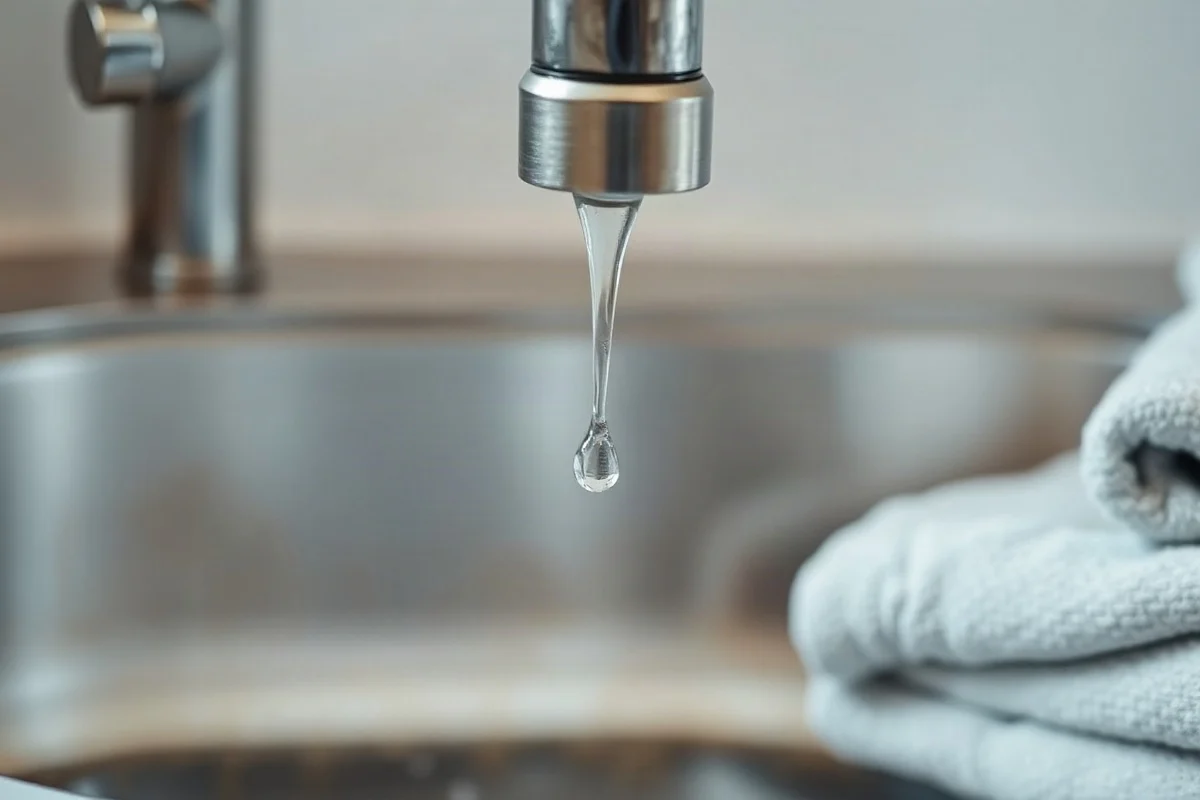
If your bathroom faucet is leaking at the base, first dry the area and determine whether water appears only when the faucet is running or continues when it is turned off. Water that leaks only during use often points to a worn spout seal, loose connection, or damaged faucet body. Water that appears even when the faucet is off may come from the supply lines, shutoff valves, or an internal valve problem. Some homeowners can safely tighten an accessible connection or replace a simple seal, but concealed leaks, corroded parts, cabinet water damage, and repairs involving difficult shutoff valves are better handled by a qualified local plumber.
What a Leak at the Faucet Base Usually Means
The faucet base is the area where the fixture meets the sink deck or countertop. Water can collect there because the faucet is not sealed properly, but the visible puddle does not always identify the actual source. Water may run along the faucet body from a higher point, travel beneath the escutcheon, or drip from a supply connection below the sink before appearing around the base.
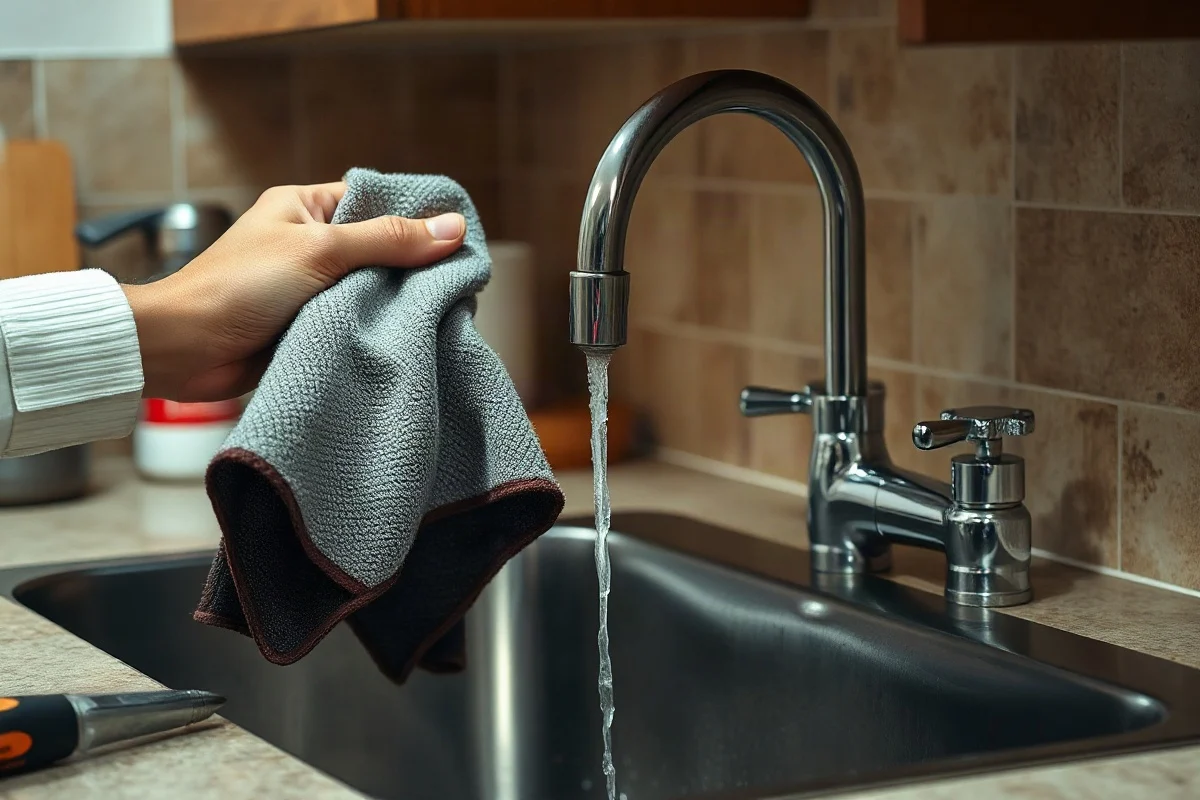
Before taking anything apart, wipe the faucet, sink deck, and plumbing beneath the sink completely dry. Place a dry paper towel around each accessible connection. Turn the faucet on and off while watching for the first spot that becomes wet. This simple test can help separate a faucet-body leak from a supply-line or drain-related leak.
Common Causes of a Bathroom Faucet Leaking at the Base
Worn O-ring or internal seal
Many single-handle faucets use one or more O-rings to seal the rotating spout or cartridge area. Over time, these rubber seals can flatten, crack, or lose flexibility. A worn O-ring may allow water to escape around the faucet body when the handle is operated or when the spout is turned from side to side.
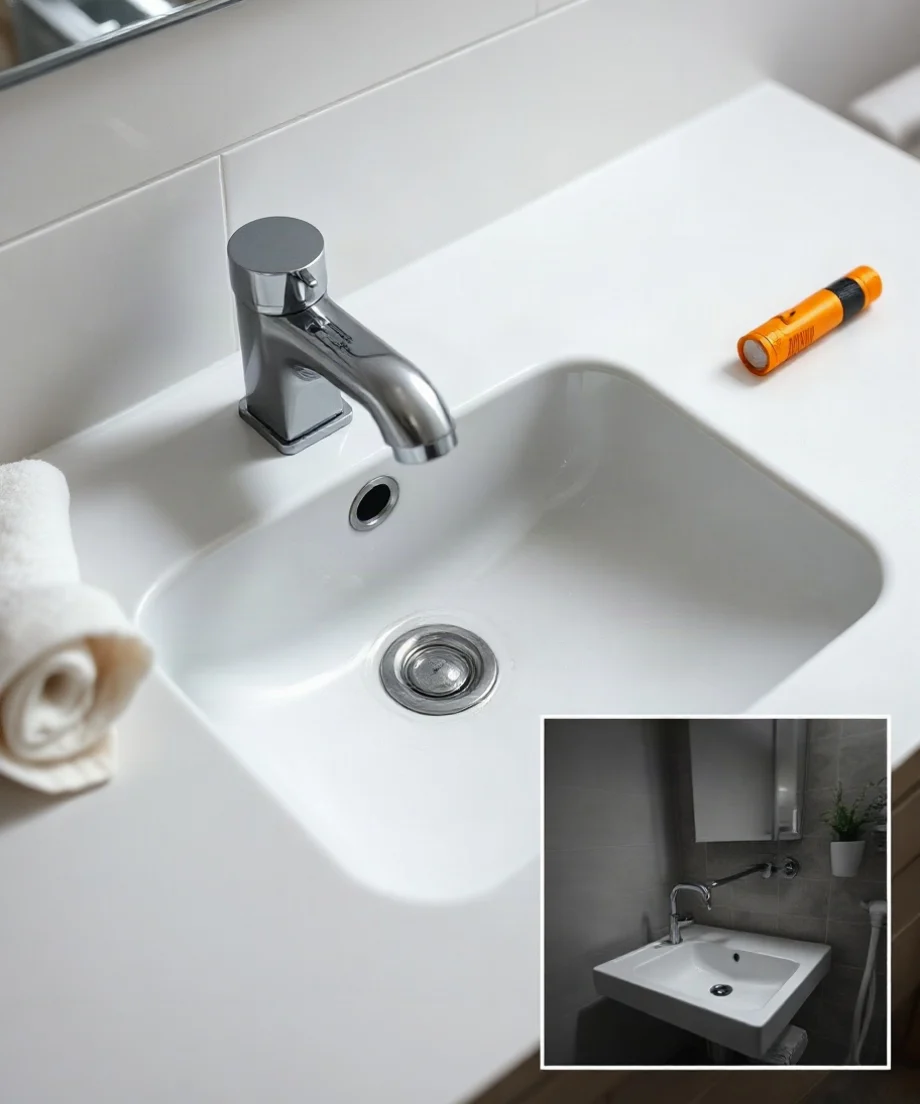
Mineral buildup can also damage the seal or prevent two surfaces from fitting together correctly. Cleaning visible buildup may help temporarily, but a seal that is cracked or permanently compressed generally needs replacement. The correct part depends on the faucet design and model, so do not assume every faucet uses the same O-ring.
Loose mounting hardware
A faucet is normally secured beneath the sink with a mounting nut, bracket, or similar hardware. If that hardware loosens, the faucet can move slightly and the seal between the fixture and sink deck may fail. Water can then seep beneath the faucet base during normal use.
A loose faucet may also be caused by a deteriorated gasket, an uneven sink surface, or corrosion on the mounting hardware. Tightening the nut may reduce movement, but excessive force can damage the fixture, sink, or mounting assembly. If the mounting hardware is rusted, difficult to reach, or turning without tightening, professional service is safer than forcing it.
Damaged faucet body or spout seal
Some leaks originate from a crack in the faucet body, a damaged spout seal, or a failed internal valve. Plated finishes can hide small cracks, especially around seams and joints. A leak that returns after replacing an accessible seal may indicate that the faucet body or cartridge is worn beyond a practical repair.
Loose or deteriorated supply connection
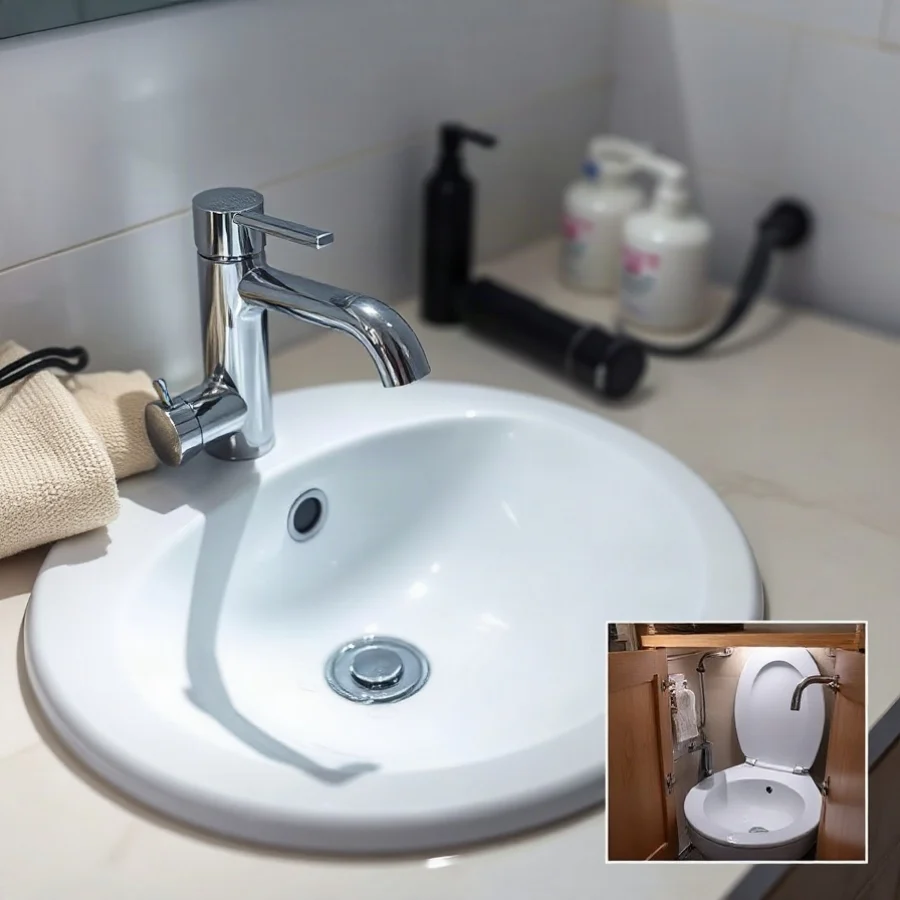
Flexible supply lines connect the faucet to the hot and cold shutoff valves below the sink. A connection may leak because it is loose, cross-threaded, corroded, or fitted with a damaged seal. The leak can travel upward or along the underside of the sink and make it appear that the faucet base is leaking.
Never tighten a supply-line connection without first confirming that the shutoff valve works. If the valve will not close, leaks around its stem, or the tubing is badly corroded, stop and call a qualified local professional. A failed shutoff can make a small repair turn into uncontrolled water flow.
Water collecting from the sink or countertop
The faucet may not be the source at all. Water can splash behind the sink, leak through a failed sink rim seal, or collect around a soap dispenser or other accessory. A wet vanity top can then run toward the faucet base.
Dry the entire sink deck and place separate paper towels around the faucet, handles, dispenser, and sink rim. Run a small amount of water at a time and watch where the first moisture appears. If the leak is coming from the sink rim, countertop, wall, or cabinet, it is not a faucet-seal repair.
Safe Checks Homeowners Can Perform
Low-risk inspection is appropriate when the area is accessible, the water is controlled, and no electrical equipment or sewage is involved. Follow these steps:
- Remove items from under the sink so you can see the supply lines and shutoff valves.
- Dry the faucet, sink surface, cabinet floor, and visible plumbing.
- Use a flashlight to inspect the faucet base, mounting area, supply connections, and shutoff valves.
- Run the faucet briefly while watching the dry paper towels for the first sign of moisture.
- Check whether the leak occurs with cold water, hot water, or both.
- Confirm that the handles close fully and that the faucet does not wobble excessively.
- If the leak is active, place a container or towel beneath it and close the local shutoff only if the valve operates normally.
Do not use excessive force on a small faucet handle, mounting nut, or shutoff valve. Avoid cutting tubing, removing corroded parts, or opening the faucet cartridge unless you have identified the model and understand how the fixture is assembled. Keep electrical appliances and power strips away from any water under the vanity.
When to Stop and Call a Professional
Contact a qualified local plumber when the source is unclear, the leak continues after a basic adjustment, or the repair requires removing corroded or inaccessible components. Professional help is especially important when:
- The shutoff valve does not stop the water or begins leaking when operated.
- A supply line, valve, or faucet body is cracked or badly corroded.
- Water has entered the wall, floor, cabinet, or adjacent room.
- The leak is beneath the sink and you cannot identify its source.
- The sink or countertop must be removed to reach the plumbing.
- You suspect a hidden leak, mold growth, or substantial cabinet damage.
- The bathroom has flooding, exposed wiring, or another unsafe condition.
For a leak that is rapidly spreading or cannot be controlled, shut off the home’s main water supply if it is safe to do so and seek urgent local assistance. If water is near electrical equipment, avoid contact with the equipment and use qualified help.
For related guidance, see our faucet and sink repair information and our practical overview of water leak repair.
Repair or Replace the Faucet?
A repair may make sense when the faucet is otherwise in good condition, replacement parts are available, and the problem is limited to a seal, cartridge, aerator, or mounting gasket. Repairing one component can preserve a faucet that matches the sink and bathroom design.
Replacement is often more practical when the faucet has multiple leaks, a cracked body, heavy corrosion, damaged threads, a failing finish, or hard-to-find parts. A very old or repeatedly repaired faucet may continue to develop problems even after one seal is replaced. The plumber can compare the condition of the fixture, the cost and availability of parts, and the labor involved in removing the old faucet.
Do not choose a replacement based only on appearance. The new faucet must be compatible with the sink’s mounting-hole arrangement, available clearance beneath the counter, supply connections, and the way the existing shutoff valves are configured. A professional can also identify whether the sink deck or countertop needs a separate plate or seal.
What Affects the Cost of Repair?
The total cost depends on the diagnosis and the condition of the plumbing, not simply on the fact that the faucet is leaking. Important factors include:
- Whether the problem is a seal, cartridge, mounting gasket, supply line, shutoff valve, or faucet body.
- How easy it is to reach the plumbing beneath the sink.
- Whether fasteners and connections are clean, seized, or corroded.
- Whether replacement parts are available for the existing model.
- Whether the faucet can be repaired or must be removed and replaced.
- Any water damage to the vanity, flooring, wall, or cabinet interior.
- The plumber’s service, diagnostic, labor, and material policies.
Ask for a clear explanation of the diagnosis and whether the recommendation is repair or replacement. Before work begins, confirm what the estimate includes, whether additional damage could change the scope, and whether the plumber will test the faucet and connections after completing the work. Local rates and service practices vary, so avoid relying on a generic price promise.
How to Choose the Right Plumber
Look for a plumber who regularly handles bathroom fixtures and leak diagnosis, not only large installation projects. When contacting a company, describe where the water appears, whether the leak occurs while the faucet is running, and whether the shutoff valve works. A photo of the faucet and the plumbing beneath the sink may help with an initial assessment, but it cannot replace an on-site diagnosis.
Ask whether the person performing the work is qualified for the job in your area, what documentation or service terms apply, and how the company handles unexpected corrosion or water damage. Do not hire someone who recommends bypassing a failed shutoff, concealing an active leak, or making changes without explaining the work. For more general guidance, review our information on how to choose a plumber.
Preventing Another Faucet-Base Leak
Check beneath bathroom sinks occasionally for moisture, corrosion, cabinet swelling, or a faucet that has begun to wobble. Wipe away standing water instead of allowing it to remain around the mounting area. Do not hang heavy items from the supply lines, and avoid using harsh cleaners that may damage finishes or seals.
When cleaning the faucet, pay attention to the joints and handle area. A small leak is easier to diagnose before it damages the vanity or flooring. If you notice repeated leaks, stiff handles, low flow, or a faucet that moves at the base, arrange an inspection before the problem becomes a larger water-loss event.
A bathroom faucet leaking at the base may be a simple seal or mounting issue, but it can also signal a supply-line problem, corrosion, or hidden water damage. Start with a careful, dry-area inspection, use only low-risk checks, and bring in a qualified local plumber when the source is uncertain or the water cannot be safely controlled.
Comments
0No comments yet. Be the first to share a helpful note or question.
Leave a Comment
Your email address will not be published. Comments are reviewed before appearing on the site.