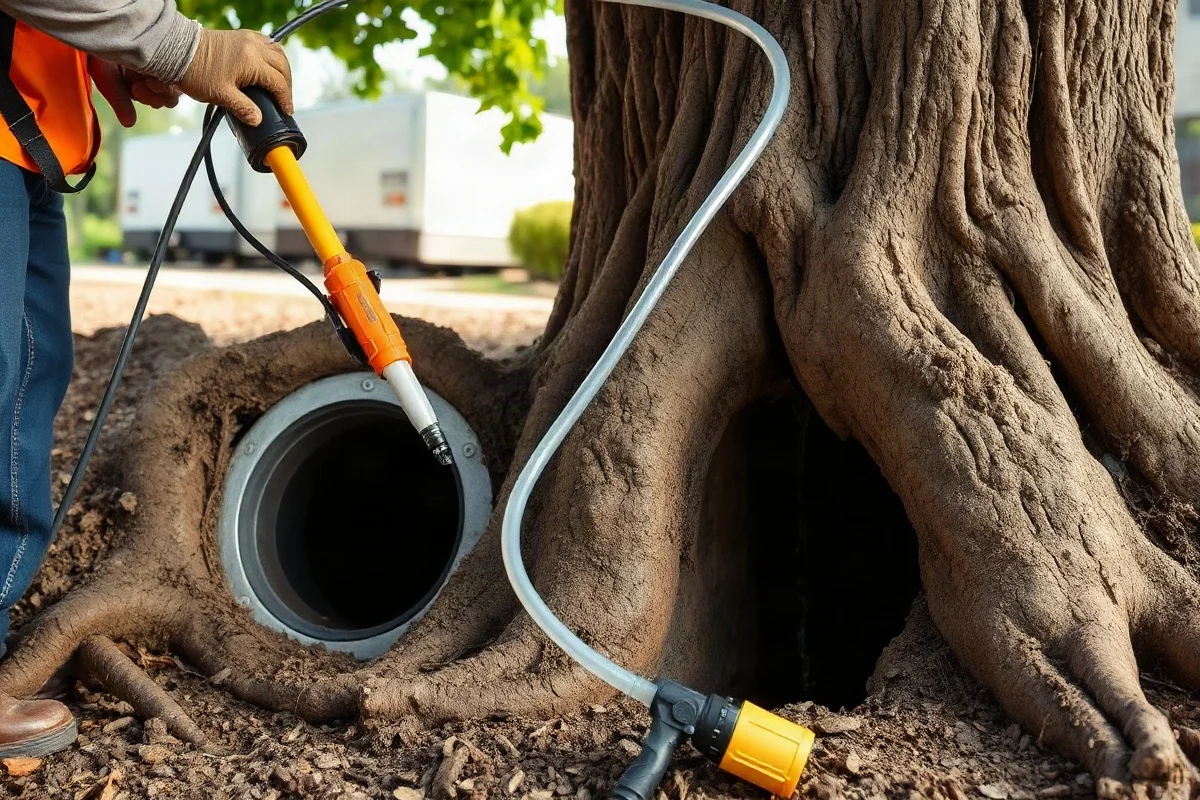
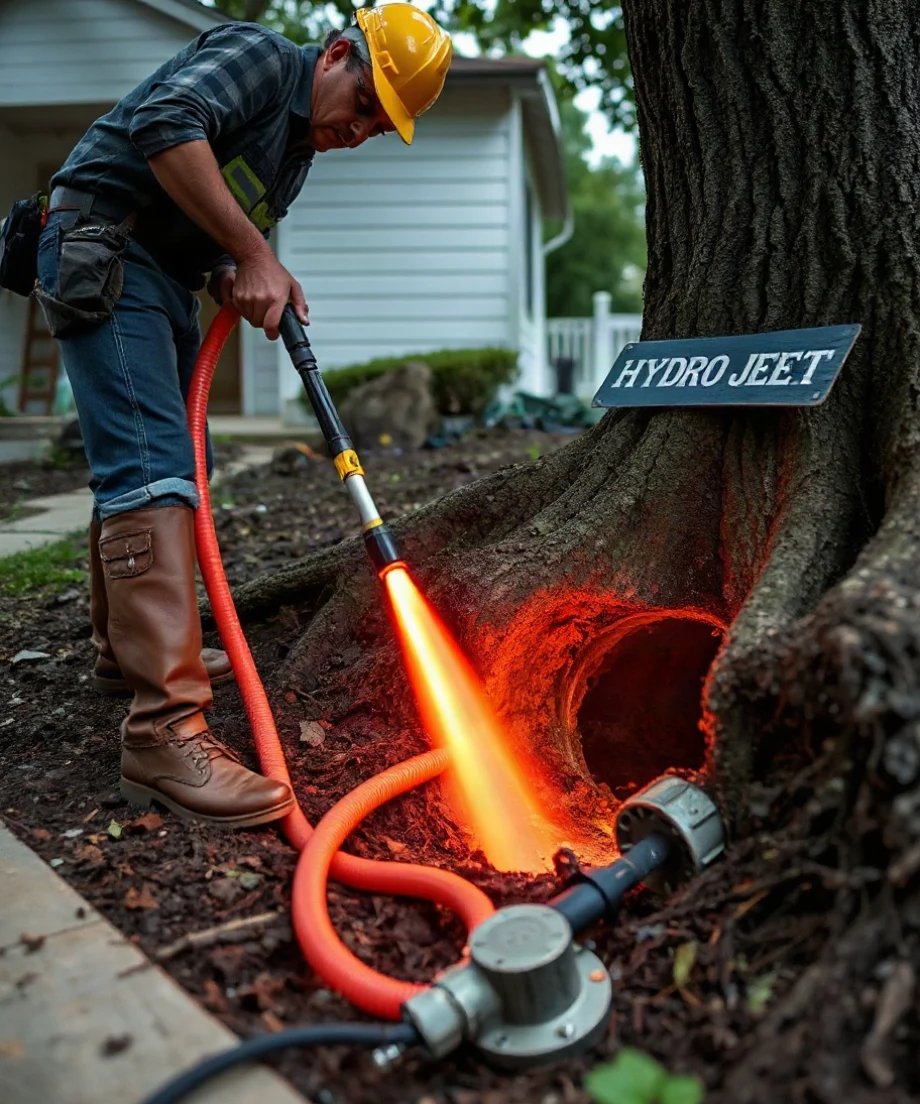
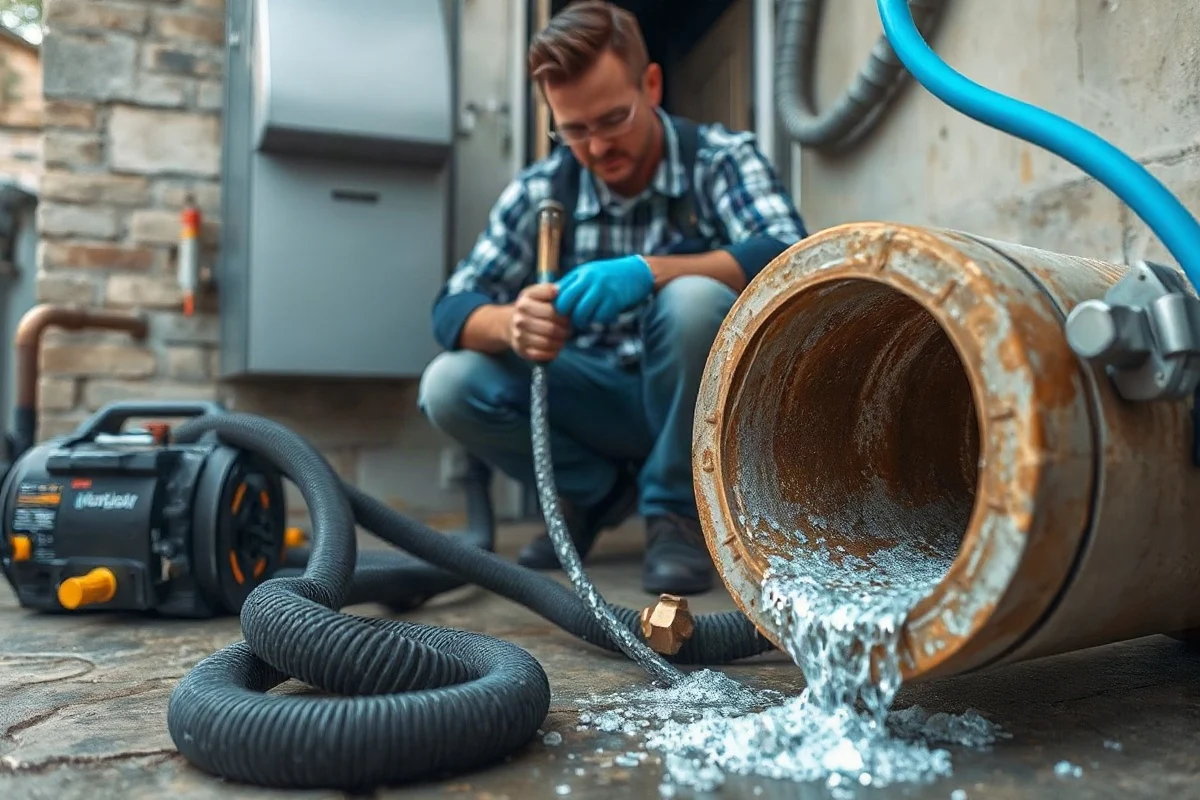
Yes, hydro jetting can remove many tree roots from a sewer or drain line, but it does not always fix the underlying problem. A professional hydro jetting machine uses a specialized nozzle and high-pressure water to cut through root growth, wash debris out of the pipe, and restore flow. However, roots usually enter through a crack, loose joint, separated connection, or other damaged section. If that defect remains, the roots may grow back and cause another blockage.
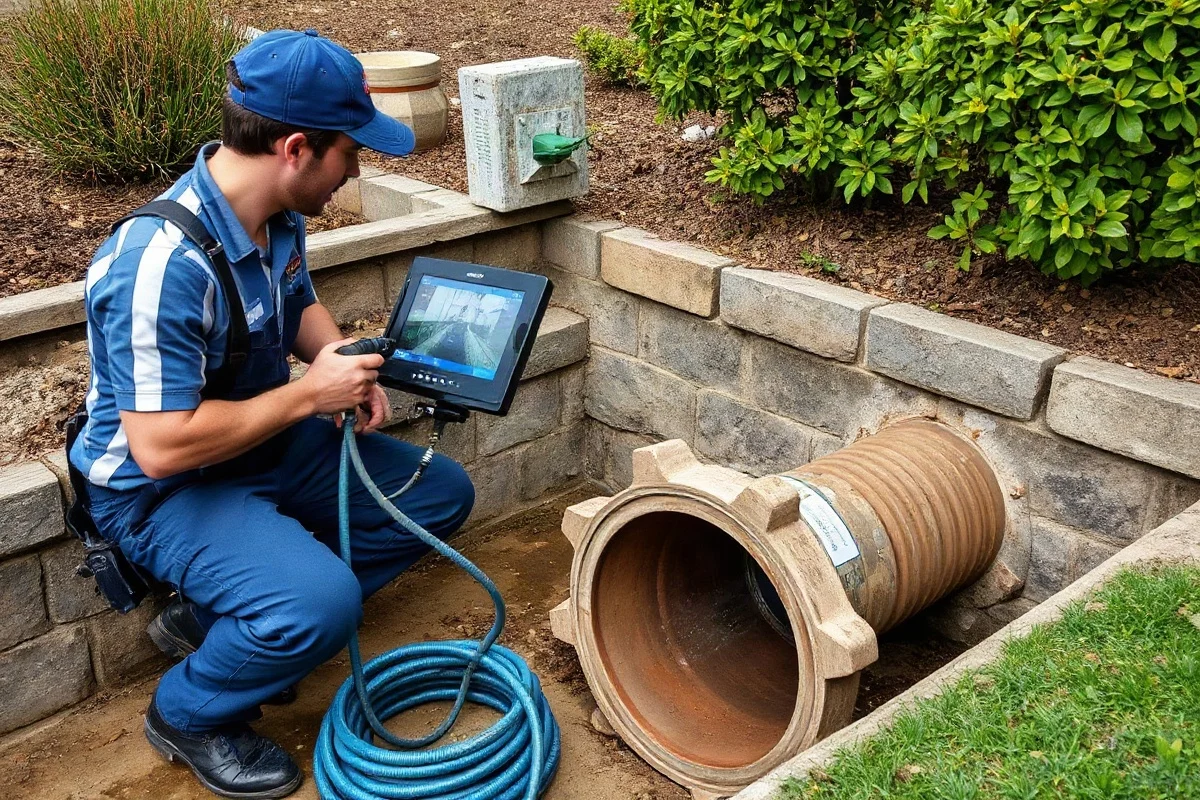
Tree-root problems are more serious than an ordinary kitchen or bathroom clog because they often affect a buried sewer line. The safest approach is usually to confirm the location and condition of the pipe with a camera inspection before choosing hydro jetting, mechanical cutting, pipe repair, or replacement.
How tree roots get into sewer pipes
Tree roots naturally seek water and nutrients. A sewer line with a small opening can provide both, especially when the surrounding soil is damp. Roots do not normally break through an intact, properly connected pipe simply because they are nearby. Instead, they tend to exploit an existing weakness.
Common entry points include:
- Cracked clay, cast-iron, concrete, or plastic piping
- Separated or shifted pipe joints
- Loose connections between sections of a sewer lateral
- Old joints sealed with materials that have deteriorated
- Pipe sections damaged by settling soil, heavy traffic, or nearby construction
Once inside, fine roots can form a dense mat. Toilet paper, grease, wipes, and other waste catch on that growth, gradually narrowing the passage. The result may be slow drains at first, followed by repeated backups or a complete sewer blockage.
What hydro jetting does to tree roots
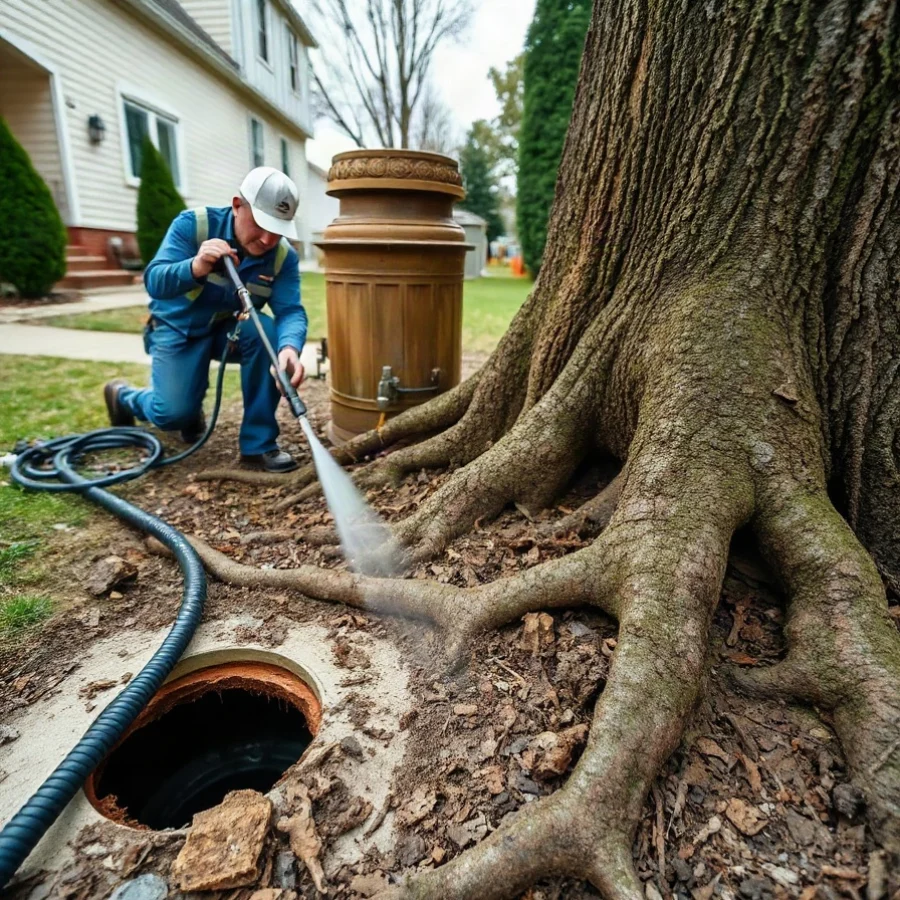
Hydro jetting directs water through a hose fitted with a cutting or flushing nozzle. The nozzle is designed to move through the line while water scours the inside walls. Depending on the pipe condition and the equipment used, the process can:
- Cut through small and moderate root masses
- Break up accumulated waste attached to the roots
- Flush loosened roots and debris downstream
- Clean more of the pipe wall than a basic drain cable may reach
- Help restore the pipe’s usable opening temporarily or for an extended period
Hydro jetting is not a chemical root killer, and it is not a permanent barrier against future growth. It removes the obstruction that is present during service. If the pipe is cracked or its joints have separated, the opening remains after cleaning.
Signs that tree roots may be blocking the line
Root intrusion can resemble other sewer problems, so symptoms alone cannot confirm the cause. Still, certain patterns make roots more likely:
- A sewer or main drain backs up repeatedly after it has been cleared
- Several fixtures drain slowly at the same time
- Toilets gurgle when a sink, shower, or washing machine drains
- There is a recurring sewage odor near a cleanout, basement, or yard
- The problem is worse during wet weather
- A home has mature trees close to the route of an older sewer line
- A drain cable pulls out fibrous material or the blockage returns quickly
These symptoms can also point to a collapsed pipe, heavy buildup, an offset joint, or a blockage farther downstream. That is why a drain camera inspection is often valuable before aggressive cleaning or excavation.
What homeowners can safely check
Homeowners can perform a few low-risk observations, but they should not attempt to enter a sewer cleanout, use powered cutting equipment, or open a contaminated backup without appropriate protection.
Check the pattern of the symptoms
Notice whether one fixture is affected or multiple fixtures are slow. A single sink may have a local trap or branch-line clog. Several fixtures backing up together are more consistent with a main drain or sewer-line problem.
Look for an accessible cleanout
You may be able to identify a capped cleanout in a basement, crawlspace, garage, or yard. Do not force a cap open if wastewater is likely under pressure behind it. Removing it can release sewage suddenly and expose you to contaminated water.
Protect the home from additional discharge
Stop using toilets, sinks, showers, washing machines, and other fixtures if a main sewer backup is suspected. Keep children and pets away from sewage. Do not mix drain chemicals, and do not pour root-killing products into a line without professional guidance. Chemical products may create hazards for people, pipes, and the technician who later services the line.
These checks can help describe the problem, but they cannot determine whether a pipe is structurally sound. For sewage exposure, a major backup, or water entering living areas, contact a qualified local professional. The emergency plumber category can help you identify the type of service to seek.
When hydro jetting may be appropriate
A plumber may recommend hydro jetting when inspection shows a line that is open enough for the equipment to pass and strong enough to withstand the cleaning process. It can be useful for recurring root growth, heavy grease or sludge, and buildup along a longer section of pipe.
The technician should consider the pipe’s material, age, diameter, condition, access point, and history of repairs. A severely deteriorated line may not be a good candidate for high-pressure cleaning. Sending powerful water into a fragile pipe can worsen an existing failure or expose a problem that was already close to breaking.
Ask whether the line will be inspected before and after cleaning. A post-cleaning camera view may help show whether the passage is open and whether cracks, offsets, holes, or collapsed sections remain.
Hydro jetting versus mechanical root cutting
A drain cable with a root-cutting head can sometimes reopen a blocked sewer line. It may be useful when access is limited or when the immediate goal is to restore flow. However, mechanical cutting often removes a path through the root mass rather than washing the entire pipe wall clean.
Hydro jetting can provide more thorough flushing, but it requires suitable equipment, correct nozzle selection, and careful pressure control. Neither method repairs a damaged pipe. The best choice depends on the inspection findings and the condition of the line, not simply on which method sounds more powerful.
When pipe repair or replacement is the better solution
Cleaning may be only a temporary measure when the pipe has a structural defect. Repair or replacement deserves serious consideration when a camera shows:
- A collapsed or severely deformed section
- A large crack, hole, or missing section of pipe
- Repeatedly separated joints
- Significant sagging that holds wastewater and debris
- Extensive corrosion or deterioration
- Root intrusion that returns soon after professional cleaning
Depending on access, location, and local requirements, repair options may include replacing a short section, trenchless rehabilitation, or replacing a longer portion of the line. A qualified plumber should explain which part of the evidence supports each recommendation. Avoid agreeing to excavation or replacement based only on a verbal claim that roots are present; request camera findings or clear documentation when practical.
For information about broader sewer-line problems and repair decisions, see the sewer line resource.
Factors that affect hydro jetting costs
The cost of root removal varies by job rather than by a universal flat rate. Important factors can include:
- How far the blockage is from the access point
- Whether a cleanout is available and usable
- The pipe’s diameter, material, and condition
- Whether camera inspection is performed before or after cleaning
- The severity and length of the root intrusion
- Access for the service vehicle and equipment
- Whether the line requires repeated cleaning or additional work
- Any repair, excavation, restoration, or after-hours service that follows
Local labor rates and service practices differ, so request a written estimate that separates inspection, cleaning, and recommended repairs. The plumbing costs resource can help you think through the categories that may appear on an estimate without assuming a specific local price.
How to choose the right plumber
Look for a qualified local plumbing professional with experience in sewer-line diagnosis and hydro jetting. Before work begins, ask:
- Will the line be inspected with a camera before cleaning?
- Is hydro jetting appropriate for the pipe’s current condition?
- What will happen if the camera finds a collapse or major defect?
- Will the technician provide a recording, images, or a written summary?
- Does the estimate identify inspection, cleaning, and repair separately?
- What safety steps will be used if sewage is present?
Use a licensed or otherwise properly qualified local professional for sewer work, especially when sewage exposure, excavation, structural pipe damage, concealed leaks, or local code requirements may be involved. Licensing and regulatory rules vary by location, so verify the provider’s qualifications with the appropriate local authority when needed.
How to reduce repeat root problems
After the line is cleared, ask the plumber what the inspection showed and how likely recurrence may be. The most dependable long-term solution is usually to correct the opening that allowed roots inside. Depending on the defect, that may involve repairing a joint, replacing a damaged section, or rehabilitating the pipe.
Do not assume that cutting down a nearby tree will solve the plumbing problem. Removing vegetation may not remove roots already inside the line, and trees can be protected by local rules or may be located on property you do not control. A plumbing diagnosis should come first.
In short, hydro jetting can be an effective way to remove tree roots and restore flow, but it should be treated as a cleaning method rather than a guaranteed permanent repair. A camera inspection, an assessment of pipe strength, and a clear plan for any damaged section will help you choose between cleaning, repair, and replacement.
Comments
0No comments yet. Be the first to share a helpful note or question.
Leave a Comment
Your email address will not be published. Comments are reviewed before appearing on the site.