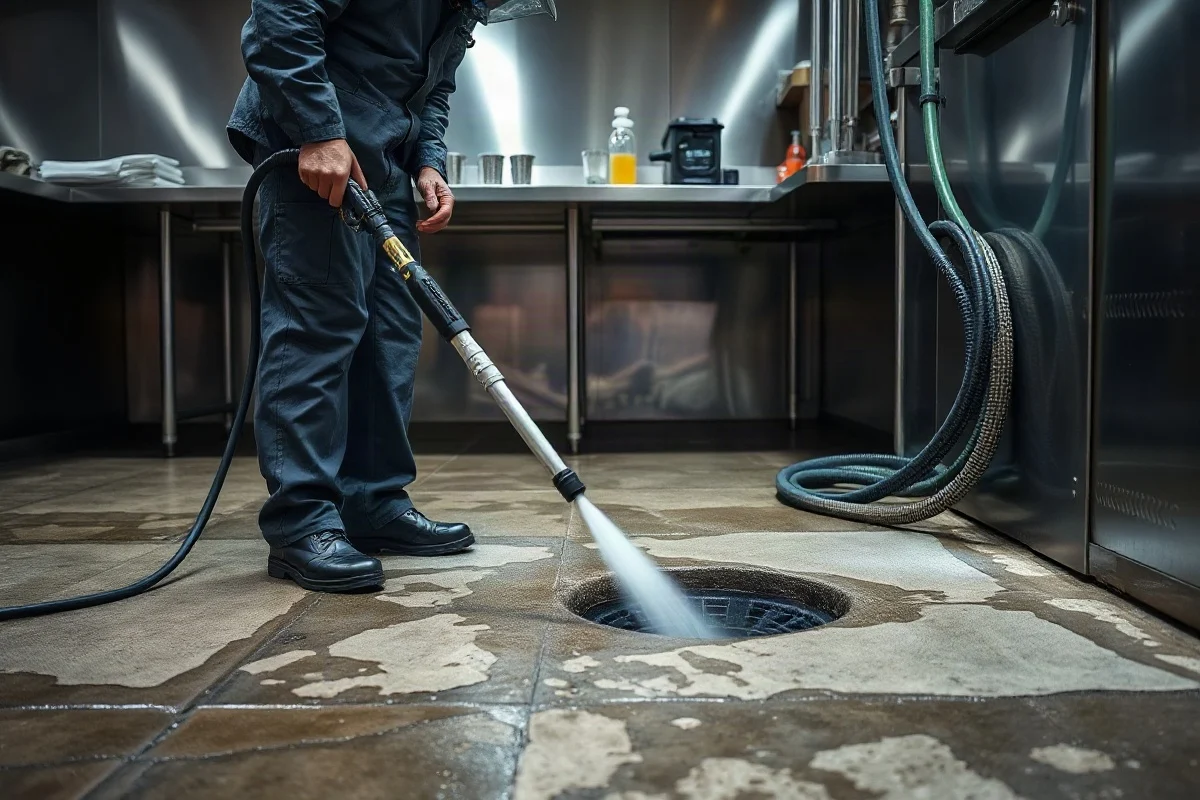
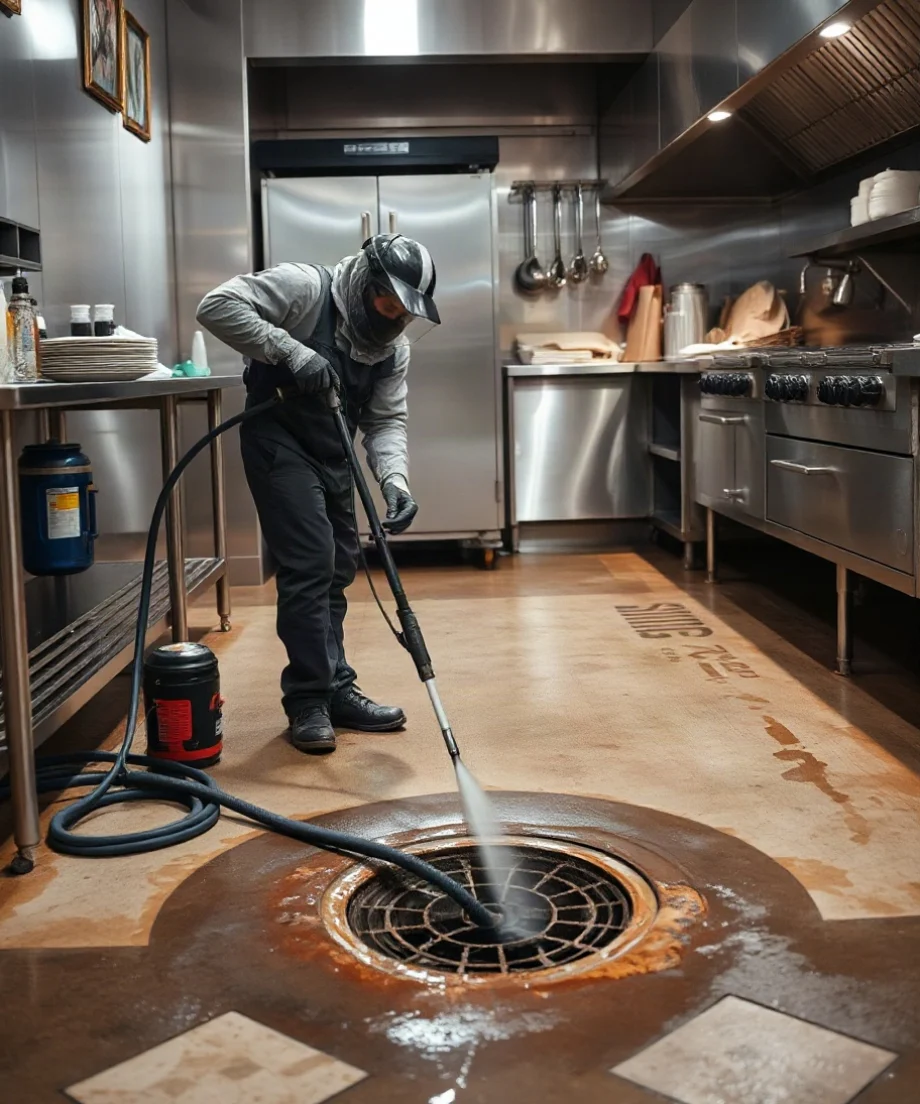
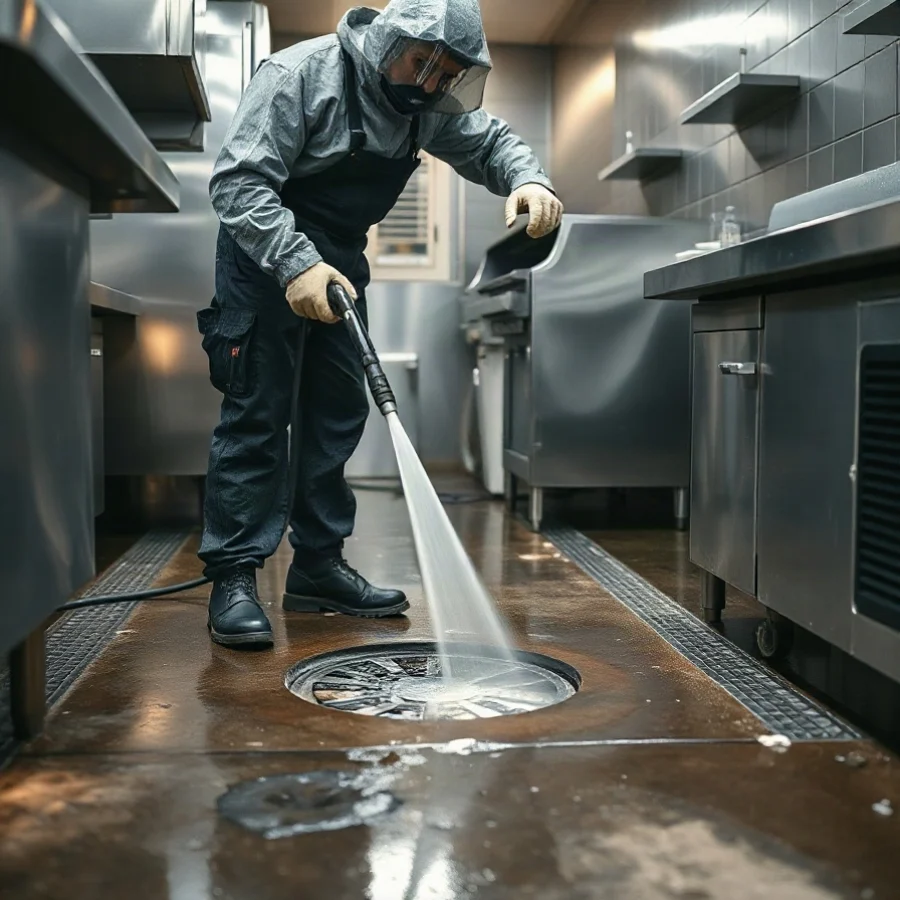
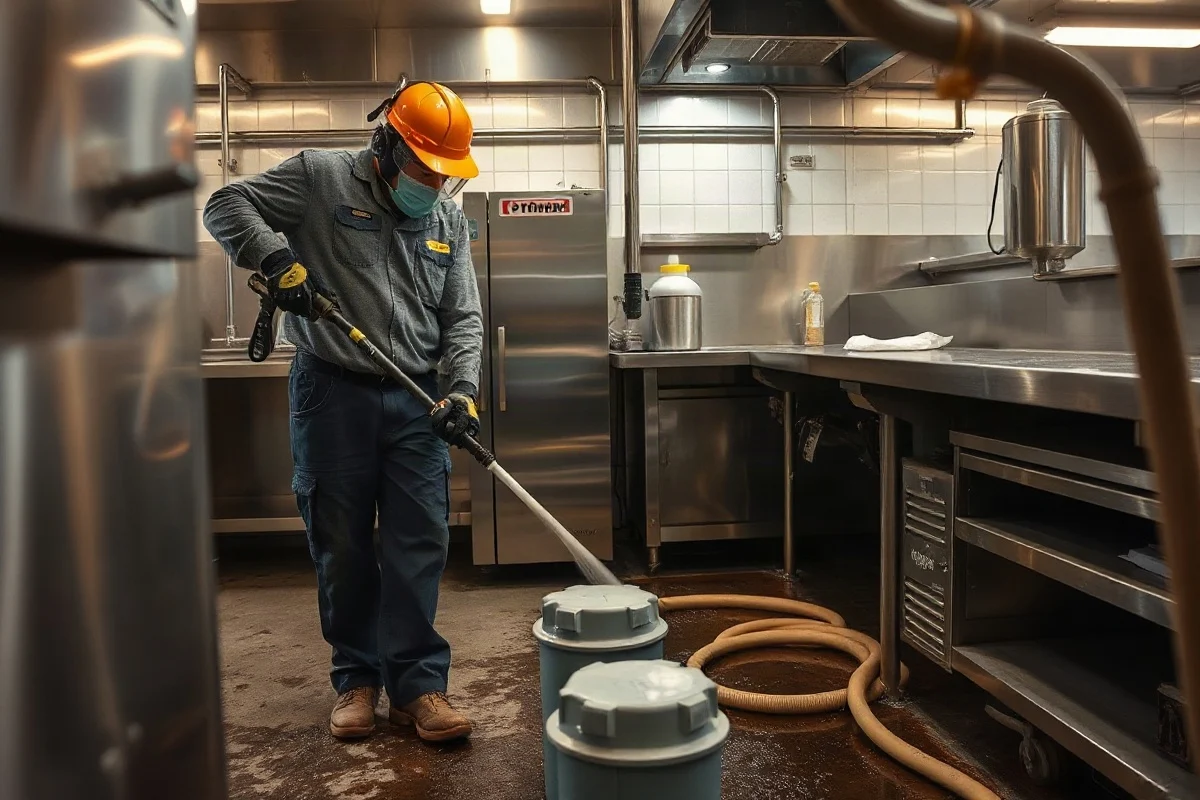
Hydro jetting is often an effective way to clean restaurant floor drain lines when grease, food residue, sludge, or other buildup keeps restricting flow. A qualified commercial plumber uses a specialized hose and high-pressure water to wash the inside of the pipe, rather than simply punching a narrow hole through the clog. Because the equipment can damage weak, cracked, or poorly connected piping, hydro jetting should be inspected, planned, and performed by a trained professional.
Why Restaurant Floor Drains Develop Serious Buildup
Restaurant drains handle a heavier and more varied load than most residential drains. Even when employees follow good cleaning practices, small amounts of cooking grease, sauces, food particles, detergent, and floor debris can enter the drainage system. Over time, these materials can stick to the inside of the pipe and reduce its usable diameter.
Floor drains may also collect water from dishwashing areas, food preparation spaces, mop sinks, refrigeration equipment, and routine floor cleaning. If the drain has a trap, strainer, or grate that is damaged or poorly maintained, larger debris can travel farther into the line. A drain that was adequate when the business first opened may also struggle if kitchen equipment, operating hours, or water usage have increased.
Common contributing factors include:
- Grease and oil cooling inside the drain line
- Food particles entering through missing or damaged strainers
- Soap and detergent residue combining with grease
- Sludge collecting in low sections of a horizontal pipe
- Tree roots entering an underground exterior line
- Pipe corrosion, cracks, offsets, or collapsed sections
- Insufficient slope or a recurring problem farther downstream
Hydro jetting can remove soft and hardened buildup, but it cannot repair a broken pipe or correct a design problem. Repeated blockages may indicate that the line needs a camera inspection or a different repair strategy.
Signs a Restaurant May Need Hydro Jetting
A single slow drain does not automatically mean the entire system needs hydro jetting. However, recurring symptoms can show that buildup remains inside the line even after basic drain cleaning.
Recurring slow drainage
If water drains slowly from several floor drains, the restriction may be located in a shared branch or main line. When only one fixture is affected, the problem may be closer to that drain. A plumber can help identify whether the blockage is local or part of a larger drainage issue.
Standing water around floor drains
Water that remains on the floor creates a slip hazard and can interfere with food-service operations. It may also allow contaminated water to spread across a work area. Stop using the affected area as needed, keep staff away from unsafe standing water, and contact a qualified local plumber if the drain does not clear promptly.
Bad odors or sewage-like smells
Persistent odors may result from organic buildup, a dry trap, poor venting, or a drainage problem. Odor alone does not prove that hydro jetting is required. A professional should determine whether the source is inside the drain, at the trap, in the vent system, or farther along the sewer line.
Gurgling, backups, or multiple affected drains
Gurgling can occur when air is forced through restricted wastewater lines. Backups affecting multiple drains are more concerning because they may point to a shared downstream obstruction. If wastewater or sewage is backing up, limit water use and treat the area as contaminated. Sewage exposure should be handled by qualified professionals using appropriate safety procedures.
What Hydro Jetting Does
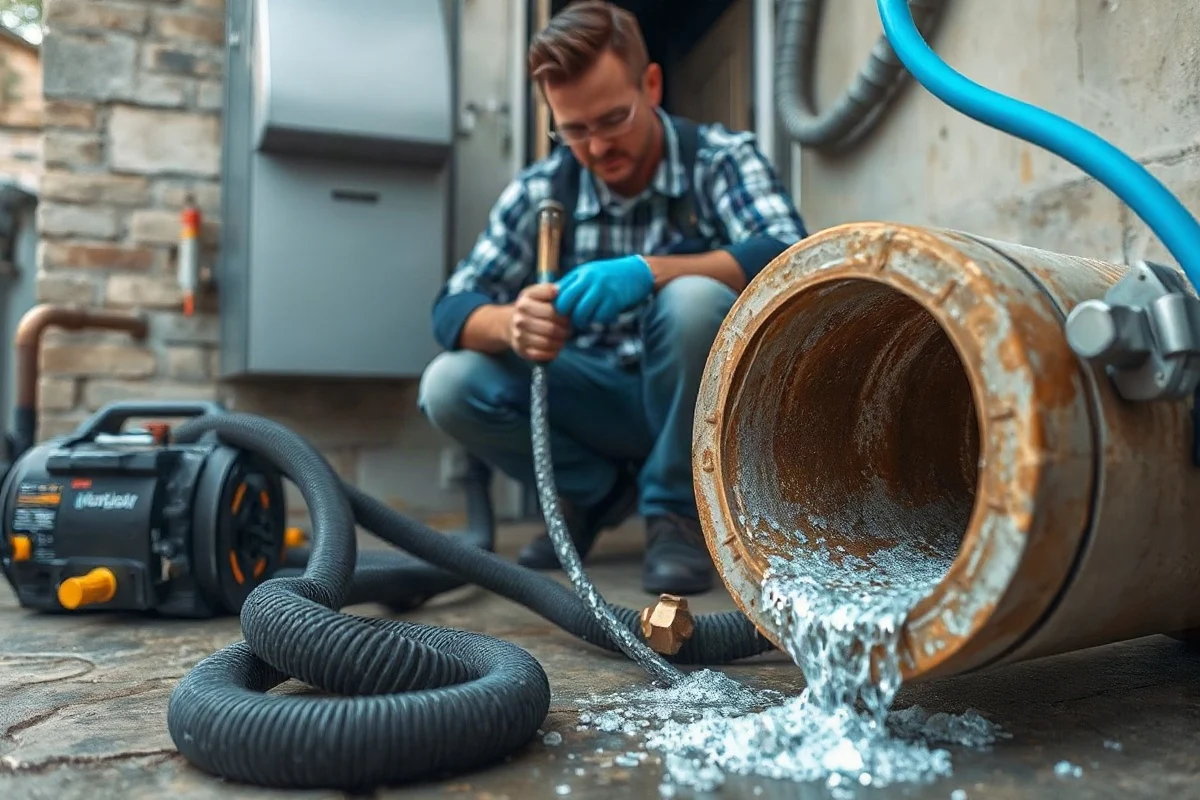
During hydro jetting, a plumber places a flexible hose into an appropriate access point, such as a cleanout or drain opening. The hose has a specialized nozzle that directs water forward and backward. The forward spray helps break through or cut into buildup, while the rear-facing spray helps pull the hose through the line and wash loosened material toward an approved discharge point.
The exact equipment and pressure depend on the pipe material, diameter, condition, access, and type of obstruction. More pressure is not automatically better. A knowledgeable plumber should select equipment that can clean the line without unnecessarily stressing older or damaged piping.
Hydro jetting is different from snaking. A drain cable may open a passage through a clog, but it may leave substantial grease or sludge attached to the pipe walls. Hydro jetting is intended to clean more of the interior surface. In some cases, a plumber may use a cable first to establish flow and then jet the line. The proper sequence depends on the condition and location of the blockage.
Inspection Before and After Jetting
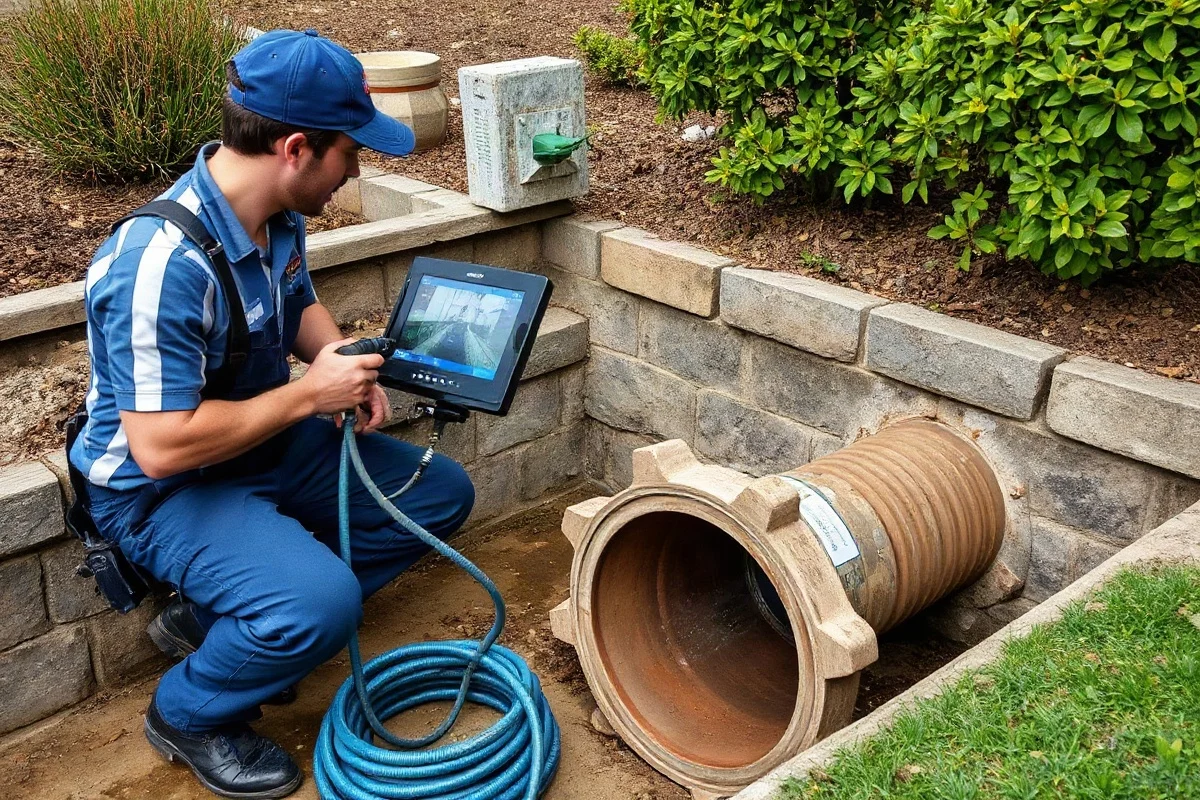
A camera inspection can be especially useful for commercial floor drains because it helps reveal conditions that water pressure alone cannot fix. The camera may show grease accumulation, root intrusion, a displaced joint, corrosion, a crack, or a collapsed section.
Inspection is also valuable before high-pressure cleaning when the pipe is old, repeatedly blocked, or underground. If the line is structurally unsound, aggressive cleaning could expose or worsen an existing weakness. After cleaning, a follow-up camera view may confirm whether the obstruction was removed and whether additional defects remain.
Ask the plumber whether inspection is recommended for your situation and what access points are available. You can learn more about the role of a drain camera inspection before scheduling service.
What Restaurant Owners and Managers Can Safely Check
Business owners and staff can perform a few low-risk observations, but they should not attempt to operate commercial hydro jetting equipment or dismantle buried drain lines.
Low-risk checks
- Note which drains are slow, overflowing, or producing odors.
- Check whether the drain grate or strainer is visibly blocked by removable debris.
- Confirm whether nearby sinks, floor drains, or equipment discharge points are affected.
- Record when the symptoms occur, such as during dishwashing or closing cleanup.
- Look for visible leaks around accessible traps or drain connections without touching contaminated water.
- Verify that staff are not pouring cooking grease, oil, or food waste into floor drains.
Do not pour chemical drain cleaner into a commercial floor drain before professional service. Chemicals may fail to remove heavy grease, create hazardous fumes, damage some materials, or expose workers to burns when the line is opened. Do not mix cleaning products, and do not enter a drain, grease interceptor, pit, or confined space.
Work That Requires a Qualified Professional
Hydro jetting is professional equipment work. The operator must understand pipe condition, access, pressure control, wastewater handling, and the possibility of hidden defects. A professional should also determine whether the obstruction is in the floor drain branch, the building drain, the sewer lateral, or another part of the system.
Use qualified local help for sewage backups, major flooding, suspected underground leaks, contaminated water, damaged pipes, confined spaces, or any work involving electrical equipment near standing water. If flooding threatens electrical systems, keep people away and contact the appropriate qualified professionals rather than entering the area.
Hydro Jetting, Repair, or Replacement?
Cleaning is appropriate when the pipe is structurally sound and the main problem is removable buildup. Repair may be needed when an inspection finds a cracked joint, separated connection, localized corrosion, or another defect. Replacement or specialized rehabilitation may be considered when a line is collapsed, severely deteriorated, repeatedly failing, or inaccessible for practical repair.
A clean pipe that quickly becomes blocked again may point to an unresolved cause. The issue could involve improper disposal practices, a grease management problem, a damaged line, root intrusion, inadequate venting, or a downstream sewer obstruction. A reputable plumber should explain the evidence rather than recommend repeated jetting without investigating the pattern.
For broader commercial drainage guidance, review the commercial plumbing information available through Plumber Near Me Service.
Factors That Affect Hydro Jetting Cost
Local service prices vary, so a trustworthy estimate should be based on the actual site conditions rather than a generic promise. Important cost factors may include:
- The length and diameter of the drain line
- The location and accessibility of cleanouts
- Whether a camera inspection is needed
- The type and thickness of the buildup
- The number of affected drains or branches
- Whether the line is inside the building or underground
- After-hours access, difficult site conditions, or required cleanup
- Whether repairs are needed after the line is cleaned
Before work begins, ask what the estimate includes, whether inspection is separate, how wastewater and debris will be managed, and what happens if the plumber finds a damaged pipe. You can also use the site's plumbing costs resource to understand why plumbing estimates can differ.
How to Choose the Right Commercial Plumber
Look for a contractor with experience in commercial drainage and restaurant environments. The right company should be willing to discuss access, pipe condition, safety, cleanup, and the limits of hydro jetting.
Useful questions include:
- Do you regularly service commercial kitchens and floor drain systems?
- Will you inspect the line before recommending high-pressure cleaning?
- What equipment is appropriate for this pipe material and condition?
- How will you protect food-service areas and manage wastewater?
- Will you explain any damage found during the inspection?
- What work is included in the written estimate?
- Who is responsible for any needed follow-up repairs?
Verify the contractor's business information and qualifications according to local requirements, and request a written description of the proposed work. Avoid choosing solely on the lowest quote, especially when the proposal does not explain inspection, access, cleanup, or potential repairs.
Preventing Future Floor Drain Problems
Prevention starts with keeping solids and grease out of the drainage system. Use properly fitted strainers, remove food debris before washing floors, and follow the facility's grease-handling procedures. Staff should never use a floor drain as a disposal point for oil, fat, cooking scraps, or concentrated food waste.
Keep a maintenance log that records slow drains, odors, backups, cleaning activity, and previous service. A plumber can use this history to identify patterns and recommend an appropriate inspection or cleaning schedule. The correct interval depends on the drain layout, volume, buildup rate, and operating conditions; it should not be based on an arbitrary universal timetable.
When a restaurant floor drain is slow, foul-smelling, or backing up, prompt professional assessment can help distinguish removable buildup from a damaged or undersized line. Hydro jetting may restore reliable flow, but the best long-term result comes from cleaning the right pipe, correcting the underlying cause, and maintaining safe disposal practices.
Comments
0No comments yet. Be the first to share a helpful note or question.
Leave a Comment
Your email address will not be published. Comments are reviewed before appearing on the site.