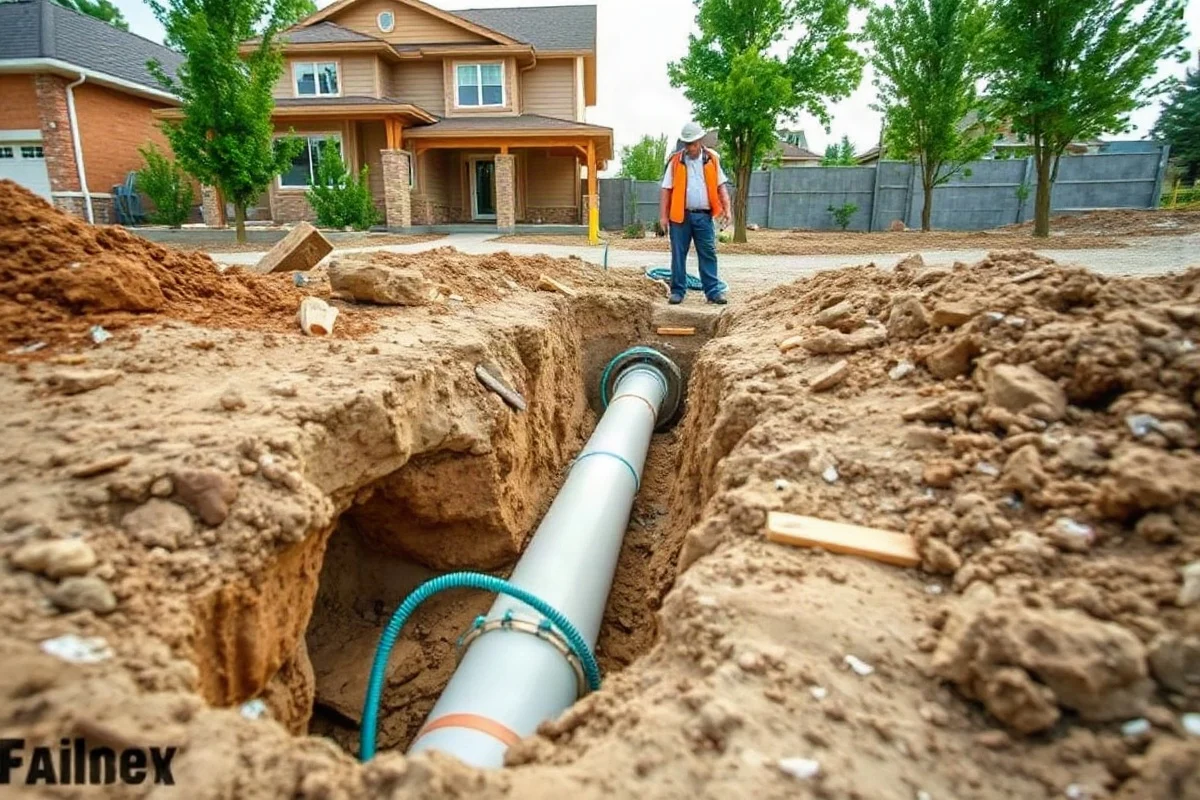
Yes, you may be able to build over a sewer line, but doing so can create serious access, structural, and repair problems if the line is not properly located and evaluated first. A sewer pipe beneath a home addition, garage, deck, driveway, or other structure may eventually need inspection, cleaning, repair, or replacement. Before construction begins, confirm the line’s exact location and depth, determine its condition, review applicable local requirements, and have qualified professionals assess whether the proposed work is appropriate.
Why Building Over a Sewer Line Can Be Risky
A sewer line is not simply an unused space beneath the soil. It is part of the property’s drainage system and may require access throughout its service life. Tree roots, shifting soil, ground settlement, blockages, corrosion, joint failures, and crushed sections can all lead to future problems. If a structure sits directly above the pipe, excavation and repairs may become more disruptive and expensive.
The risk depends on several factors, including the pipe’s material, age, depth, condition, alignment, and distance from the proposed foundation. The type of construction matters as well. A removable surface may be easier to work around than a reinforced foundation or enclosed addition. A professional should evaluate the entire route rather than focusing only on the point where the pipe appears to cross the building site.
What You Need to Confirm Before Construction
Find the sewer line’s actual location
Do not rely only on old drawings, assumptions, or the location of a cleanout. Plans can be incomplete, and a sewer line may not follow the path a homeowner expects. A qualified plumber can often trace the line and use a drain camera inspection to identify its route, depth, connections, and condition.
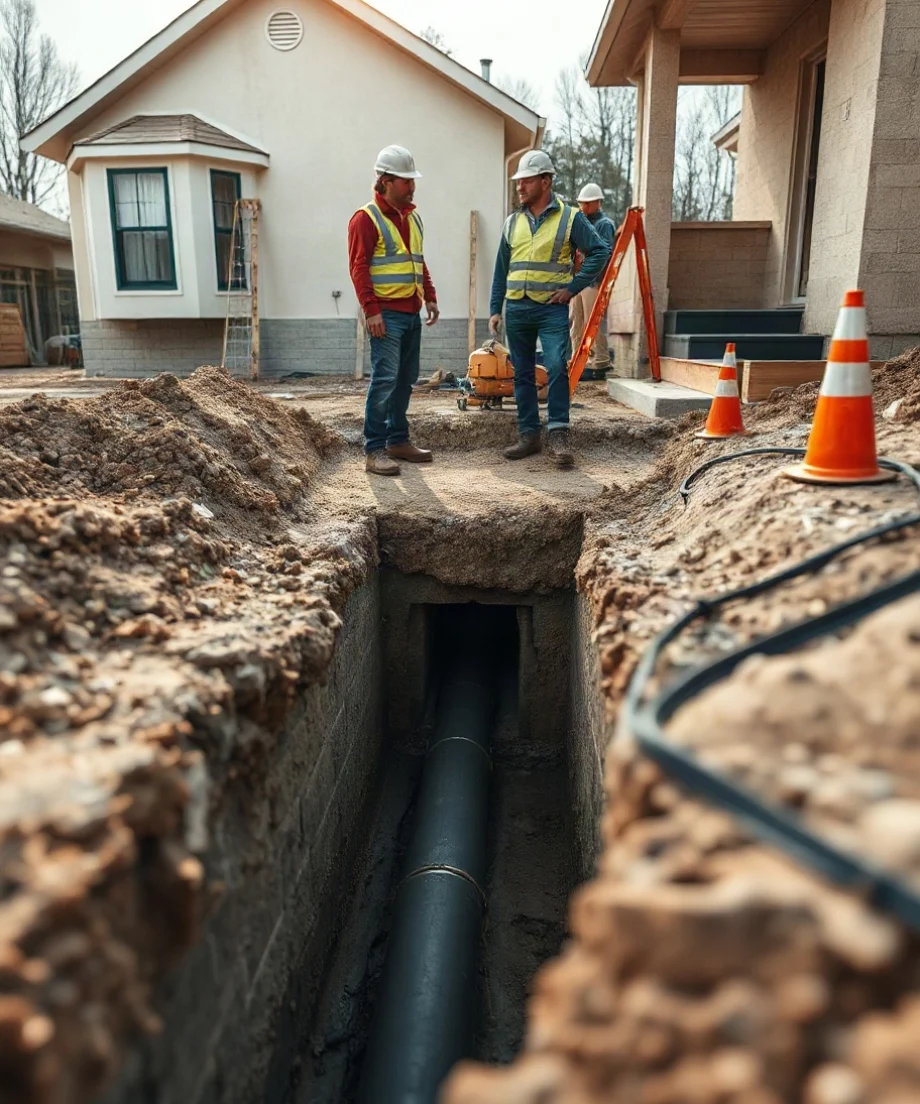
Before digging, property owners should also use the appropriate utility-locating service for buried utilities. Utility markings may identify public or private services differently, and a standard utility locate may not show every privately owned sewer connection on the property. Ask the professionals involved what each locating service covers.
Determine whether the pipe is private or shared
A sewer line may serve one home, several properties, or a larger development. A shared line can involve additional ownership and access concerns. The connection between a private building sewer and a public sewer system may also be treated differently under local requirements. Confirm who owns, maintains, and has access rights to the section beneath the proposed construction area.
Check the pipe’s condition
A sewer line that already has cracks, root intrusion, separated joints, severe buildup, or deformation is a poor candidate for being covered by permanent construction. A camera inspection can reveal conditions that are invisible from the surface. The inspection should document defects and identify whether the pipe has enough remaining service life for the planned project.
If the line is badly damaged, replacement or relocation may be more practical before construction begins. Covering a known defect does not make the defect go away; it may only make future access more difficult.
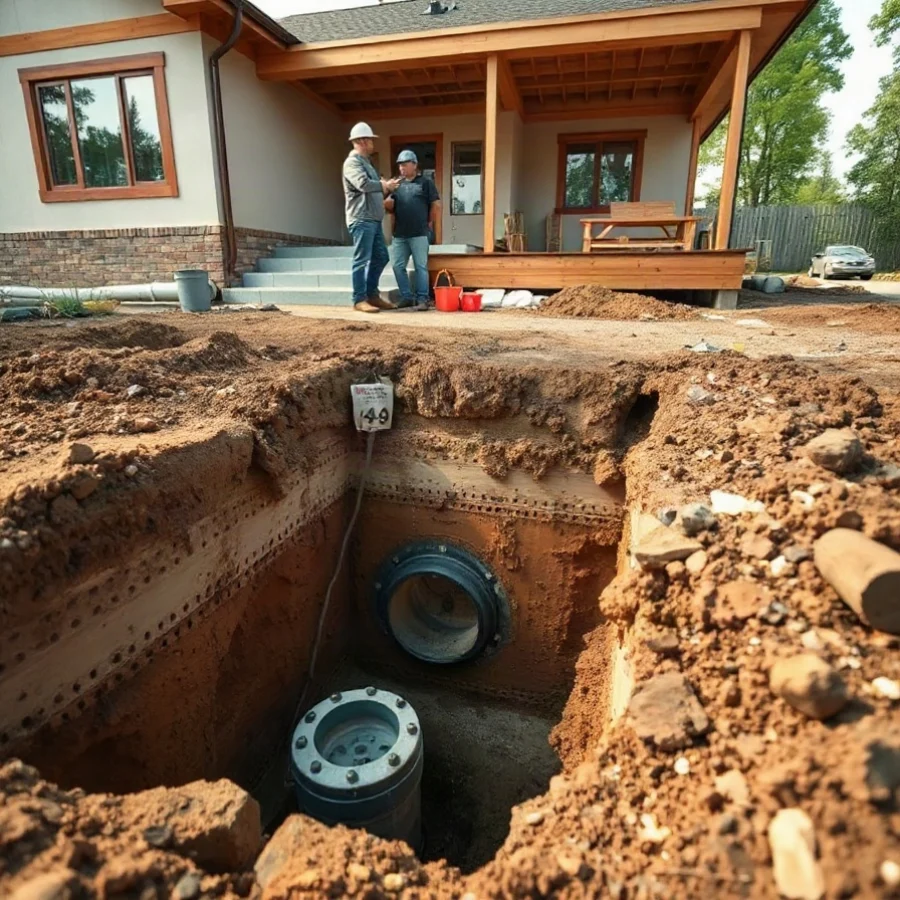
Possible Problems After Building Over a Sewer Line
Access may become difficult
Sewer cleaning equipment and inspection cameras need a practical access point. If a cleanout or access opening is buried beneath a slab, wall, addition, or other permanent feature, a future plumber may need to remove flooring, concrete, landscaping, or other construction materials. Even when a repair is technically possible, the work can take longer and affect more of the property.
Excavation can affect the structure
Repairing a buried sewer line often involves digging along part of its route. Excavating near footings, slabs, retaining walls, or load-bearing areas can create structural concerns. The pipe itself may also be damaged by construction equipment, excessive loading, settlement, or improperly compacted backfill.
Do not excavate beneath or beside a foundation to expose a sewer pipe unless the work has been evaluated by qualified professionals. Structural excavation is not a safe do-it-yourself task.
Leaks can remain hidden
A leaking sewer line beneath a building can allow contaminated wastewater into soil, crawl spaces, or other concealed areas. Warning signs may include sewer odors, recurring drain backups, unusually damp areas, pest activity, or unexplained settlement. Sewage exposure presents health risks, so affected areas should be kept away from children and pets and handled by qualified local professionals.
Future construction or utility work may be limited
Building over a sewer route can restrict options for later additions, landscaping, driveways, utility work, or drainage improvements. It may also complicate an eventual sewer replacement. Consider not only today’s project but also how the property may need to be maintained years from now.
When Relocating the Sewer Line May Make Sense
Relocation is not automatically necessary, but it may be worth evaluating when the proposed building would cover a major portion of the line, when the pipe is deteriorated, or when access points would be trapped beneath permanent construction. Relocation may also be considered when the existing alignment conflicts with footings, underground utilities, or planned interior plumbing.
A relocation project can involve excavation, new pipe installation, connections, testing, restoration, and coordination with structural or construction professionals. The correct design depends on site conditions and local requirements. A plumber should not promise that a new route is acceptable without reviewing grades, connection points, access, and the complete drainage layout.
In some cases, a pipe can remain in place if the building design preserves access and avoids placing problematic loads over it. That decision should be documented by the professionals responsible for the plumbing and structural design.
Safe Homeowner Checks Before Calling a Professional
Homeowners can gather useful information without opening the ground or entering unsafe areas:
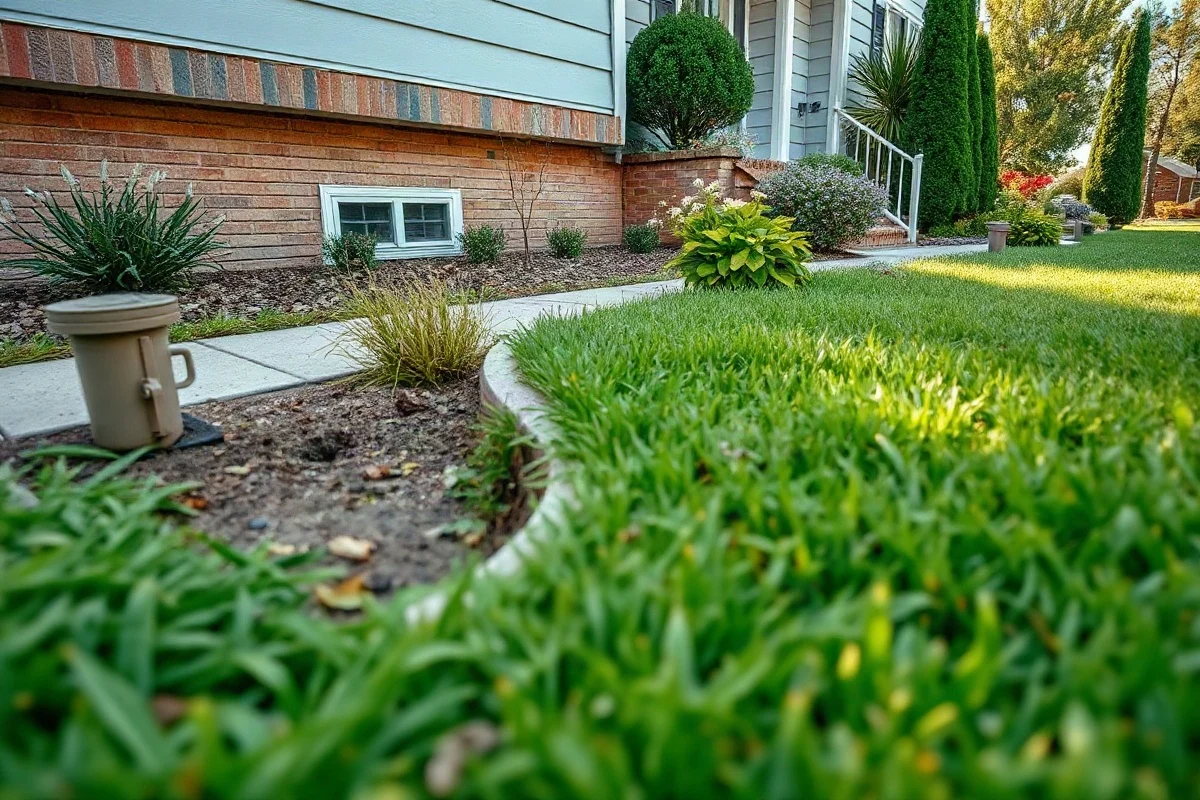
- Look for visible sewer cleanouts, access covers, or inspection points.
- Review property records, previous inspection reports, and construction drawings if available.
- Note recurring backups, slow drains, sewer odors, wet spots, or patches of unusually healthy vegetation.
- Identify the proposed foundation, slab, driveway, deck, or addition on a site plan.
- Ask the contractor whether the proposed work will cross or load the suspected sewer route.
- Keep children and pets away from sewage, standing wastewater, open excavations, and damaged pipe areas.
These checks can help organize the project, but they cannot confirm pipe condition or make excavation safe. Do not probe the ground with metal rods, dig near an unknown utility, remove a buried cover, or enter a trench.
Work That Requires Qualified Professionals
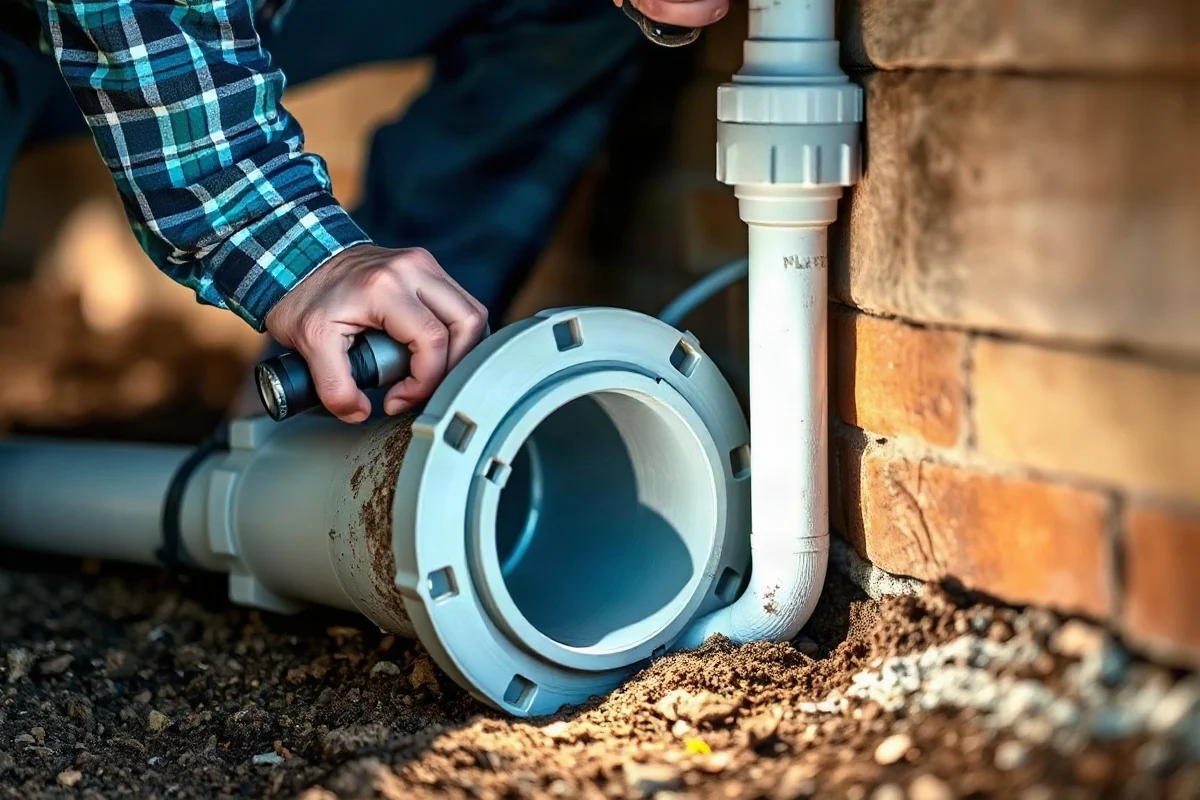
Use a qualified local plumber for locating, camera inspection, sewer cleaning, pipe repair, pipe replacement, or relocation. A drain camera inspection is especially useful before permanent construction because it can provide a visual record of the line’s interior and help identify defects. You can learn more about common inspection methods on the drain camera inspection service page.
Structural questions should be reviewed by the appropriate building or structural professional. Excavation near foundations, retaining walls, slabs, or load-bearing elements should not be treated as ordinary drain work. If construction requires changes to a public connection, shared sewer, or other regulated system, ask the responsible local office and your contractor which approvals apply. Requirements vary by location, project type, and property conditions.
Contact a qualified professional promptly if there is sewage exposure, a major backup, a collapsed pipe, a sinkhole-like depression, flooding near the foundation, or suspected damage to a public or shared sewer. Avoid using chemical drain cleaners to address a suspected buried sewer defect; they will not repair a broken line and can create hazards for anyone who later works on the system.
Repair, Replace, or Build Around the Line?
The best option depends on the inspection findings and the proposed construction. A professional may compare several approaches:
- Keep the line in place: This may be reasonable when the pipe is sound and the design preserves practical access.
- Repair a localized defect: A limited issue may be corrected before construction if the rest of the line is in good condition.
- Replace the existing section: Replacement may be appropriate for widespread deterioration, repeated failures, or a pipe that cannot reliably support the project.
- Relocate the line: A new route may reduce conflicts with the proposed structure, but it must be designed with proper slope, connections, access, and site constraints in mind.
- Modify the building design: Shifting a footing, preserving a service corridor, or keeping access outside the structure may avoid unnecessary sewer work.
Do not choose trenchless repair, pipe bursting, excavation, or another method based only on advertising. Each method has site limitations, and not every damaged or misaligned sewer can be treated the same way.
Cost Factors to Discuss With Your Contractor
There is no reliable single price for building over or relocating a sewer line. The total cost may be affected by the pipe’s length, depth, material, diameter, condition, access, soil, landscaping, pavement, foundation type, disposal needs, restoration, and the number of connections involved.
Inspection and locating are separate considerations from repair or replacement. A project may also require coordination among a plumber, builder, excavator, engineer, utility locator, or other specialists. Ask for an itemized written estimate that identifies investigation, excavation, pipe work, access improvements, testing, restoration, and any exclusions. For broader planning information, review this guide to plumbing cost factors.
Be cautious of estimates that skip inspection, do not explain the proposed route, or guarantee that no future access will ever be needed. A responsible professional should explain uncertainty and identify conditions that could change the scope.
How to Choose the Right Sewer Professional
Look for a local company with relevant experience in sewer locating, camera inspections, excavation, repair, and replacement. Ask whether the person inspecting the line will provide video or written findings and whether the estimate explains the recommended solution rather than presenting only one unexplained option.
Before authorizing work, ask:
- Where is the sewer line located, and how was that location confirmed?
- What defects were found, and how urgent are they?
- How will the proposed construction affect access to the line?
- Could the work affect a foundation, slab, shared sewer, or public connection?
- What repair or relocation alternatives were considered?
- Who is responsible for excavation, restoration, and coordinating with the builder?
- Which local requirements should be verified before construction starts?
If the line is already backing up or showing signs of failure, arrange an evaluation before pouring concrete, installing footings, or covering the route. Addressing the sewer first usually provides more options than discovering a problem after the structure is complete. For sewer-specific service guidance, see the sewer line resource.
Planning Ahead Can Prevent a Much Larger Problem
Building over a sewer line is a decision about long-term access, not just present-day construction. A pipe that works normally today may still need inspection or replacement later. Confirm its location, inspect its condition, understand ownership and access responsibilities, and coordinate the plumbing plan with the structural design before work begins.
When the route conflicts with a permanent structure, a qualified plumber and the appropriate construction professionals can compare keeping, repairing, replacing, relocating, or redesigning around the line. That evaluation is safer and more dependable than covering an uncertain pipe and hoping it never needs attention.
Comments
0No comments yet. Be the first to share a helpful note or question.
Leave a Comment
Your email address will not be published. Comments are reviewed before appearing on the site.