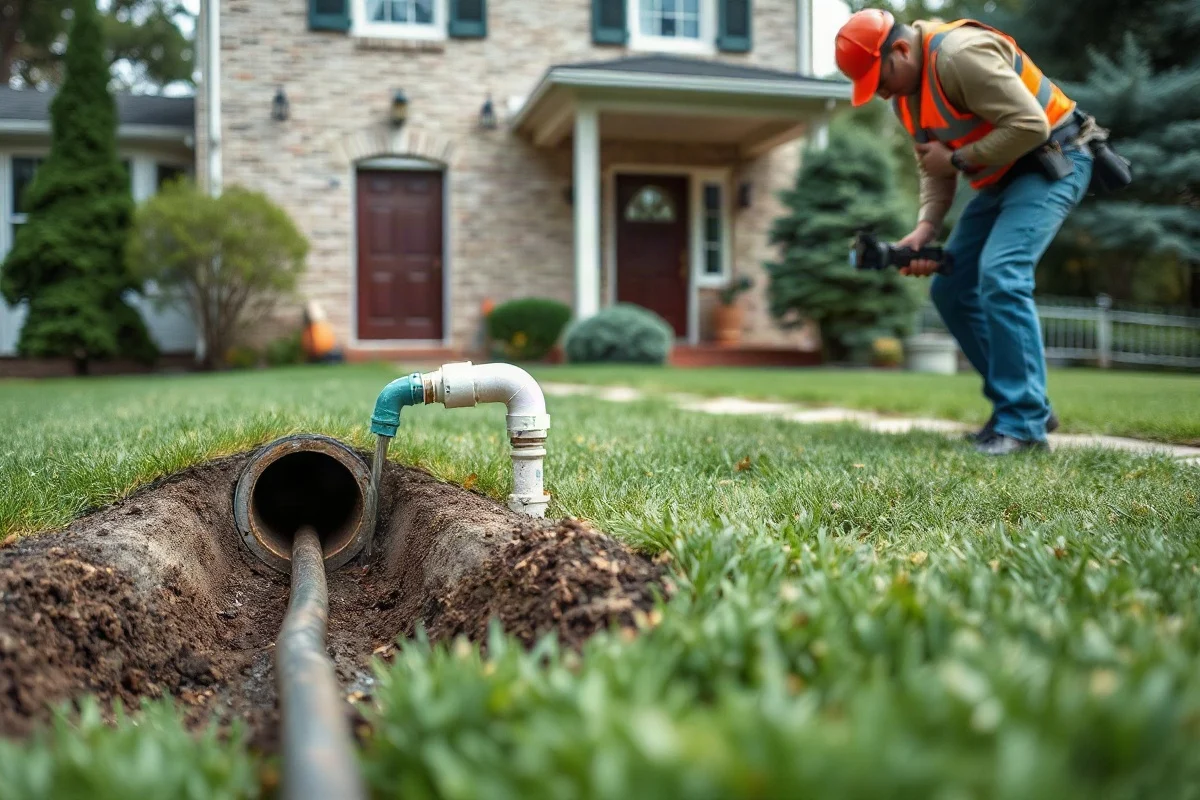
A residential sewer line is often buried several feet underground, but there is no single standard depth for every property. The line may be relatively shallow near the house and deeper as it travels toward a municipal main, or it may be installed deeper to protect against freezing, traffic, grading changes, or other site conditions. The exact depth depends on the home’s elevation, the route of the pipe, the location of the public sewer, soil conditions, climate, and the installation method used.
Knowing the approximate depth can help you plan landscaping, digging, repairs, or a sewer line replacement. However, estimating the location from the cleanout or property records is very different from excavating. Digging into a sewer line can release wastewater, damage utility lines, destabilize soil, or create a health hazard. Homeowners should limit their role to low-risk observation and documentation. A qualified local plumber should locate, inspect, expose, repair, or replace buried sewer piping.
Why Sewer Line Depth Varies
Unlike an indoor drain that can be measured from a basement or crawl space, a buried sewer line follows the natural and built features of the property. Several factors influence its depth.
Connection to the public sewer
A building sewer usually needs a continuous downward path toward the municipal sewer or a private septic system. If the public connection is lower than the house, the private line may become deeper as it crosses the property. A home on a slope may have a sewer line that is shallow on one side and substantially deeper near the street.
Freeze protection
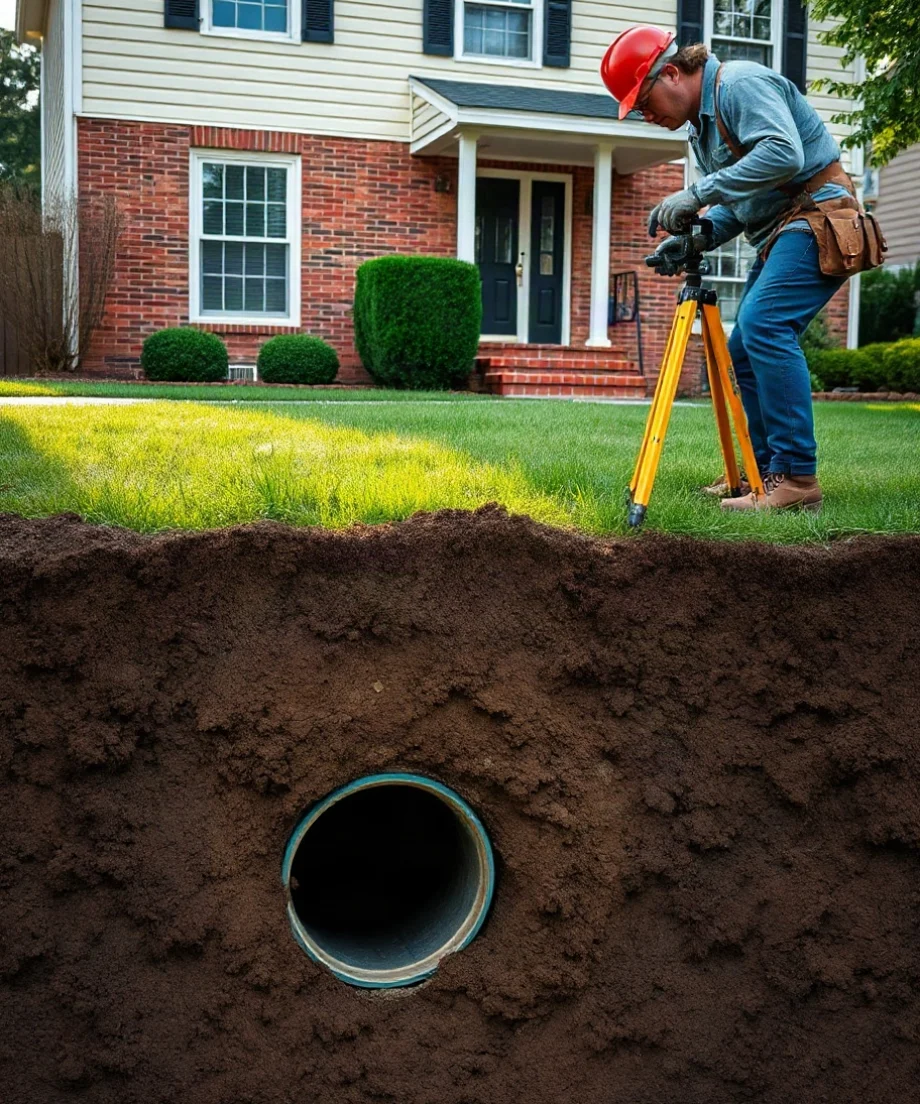
In colder regions, buried piping may need to be placed below the locally relevant frost depth or otherwise protected from freezing. The required approach varies by location and by the type of property and installation. Do not assume that every sewer line in a cold-weather area is buried at the same depth. A local professional can evaluate the installation in relation to local requirements and site conditions.
Ground elevation and grading
Yards are sometimes regraded after a sewer line is installed. Soil may be added, removed, or compacted during construction, changing the distance from the surface to the pipe. A line that was once easy to access may later be covered by a garden bed, retaining wall, driveway, or addition.
Driveways, roads, and load-bearing areas
Sewer piping under a driveway or street may be installed with additional cover or protection because vehicles and construction equipment can place stress on the ground above it. The depth can also change where a private line crosses into a public right-of-way. Work in these areas may involve utility coordination and local requirements, so it should not be treated as a simple digging project.
How to Estimate Where the Line Runs
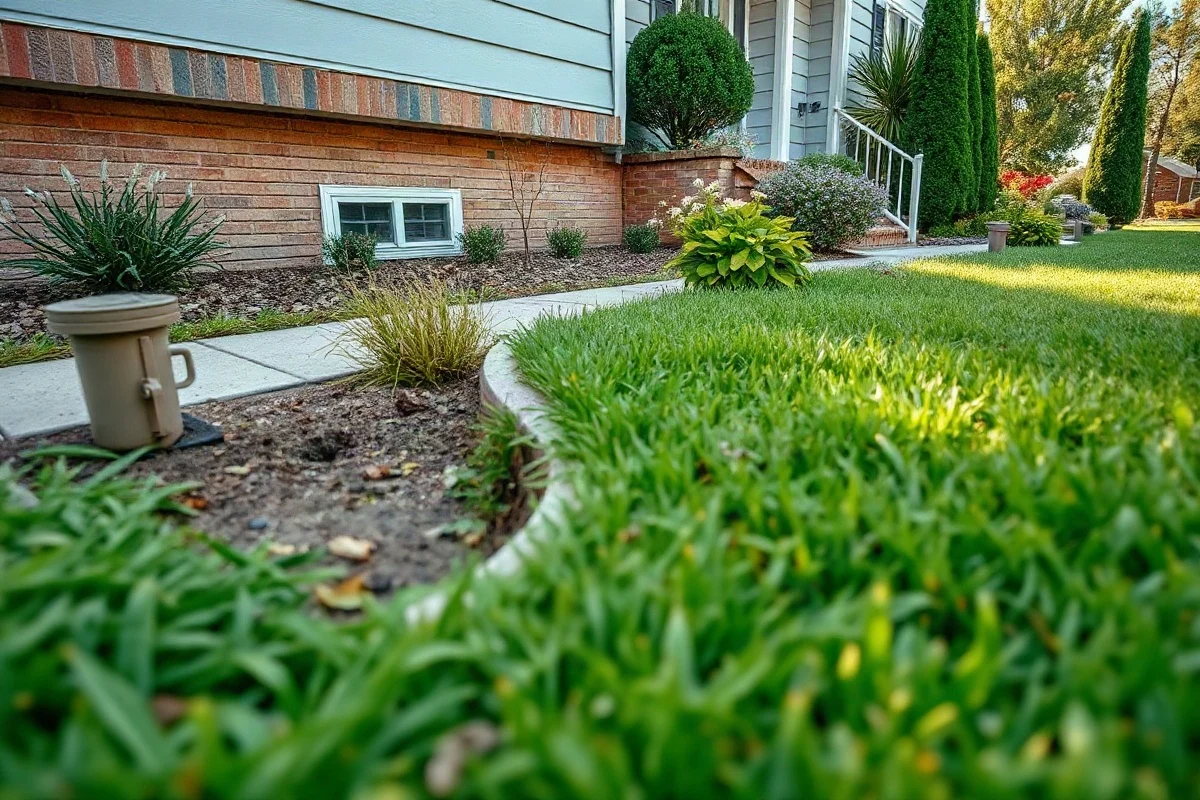
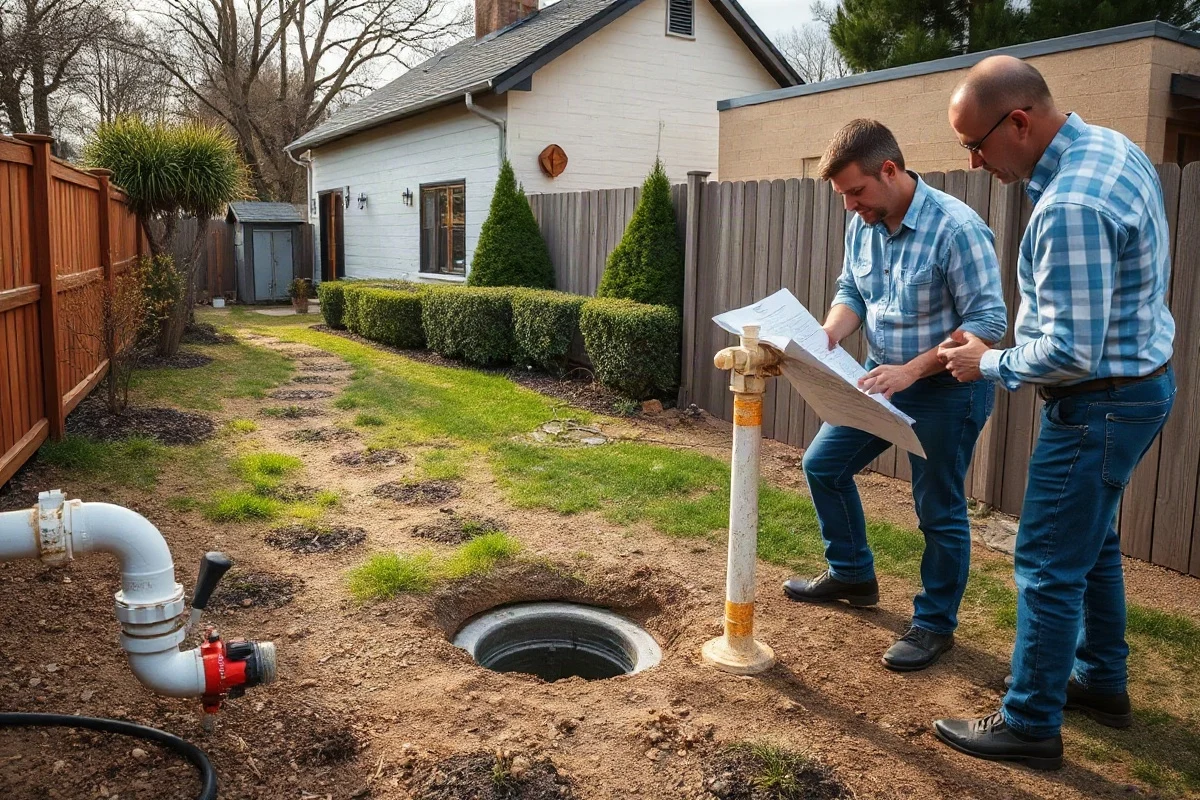
You may be able to develop a rough idea of the sewer line’s route without opening the ground. Start by locating the exterior sewer cleanout, if the property has one. Cleanouts are commonly placed near the building or along the path toward the street, but their locations vary. Follow the most logical route from the building’s main drain to the cleanout and then toward the public connection.
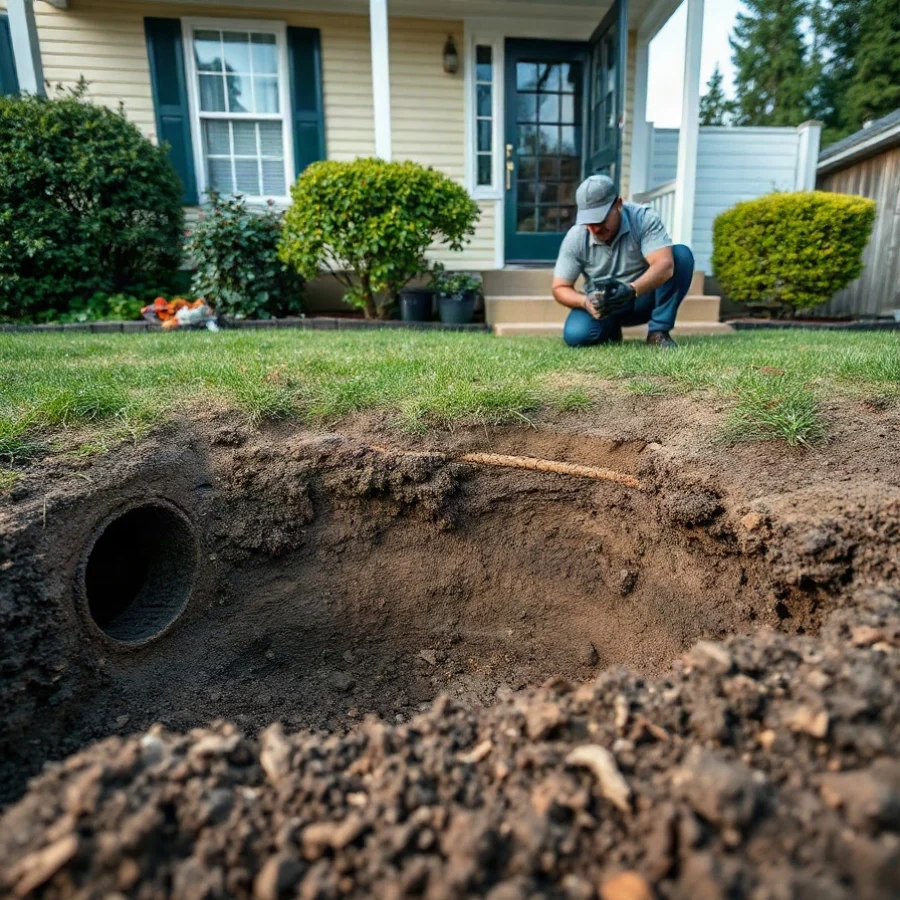
Check available home records, inspection reports, drainage plans, remodeling documents, or utility drawings. Older records may be incomplete or inaccurate, and a drawing may show an intended route rather than the pipe’s final position. If the property was recently built or renovated, the builder, plumber, utility provider, or local records office may have useful information, subject to availability and local procedures.
Do not rely on surface clues alone. A patch of grass, depression, unusually green vegetation, or wet soil can indicate a damaged sewer line, but it can also result from irrigation, rain, poor grading, or another underground problem. A cleanout provides an access point, not a guaranteed measurement of the pipe’s depth along its entire route.
Safe Homeowner Checks
Several low-risk checks can help you collect information before calling a plumber:
- Look for accessible exterior cleanouts, inspection caps, or drain access points without removing sealed or damaged covers.
- Note recurring backups, slow drains, gurgling fixtures, sewage odors, wet spots, sinkholes, or unexplained changes in lawn growth.
- Record when symptoms occur and whether multiple fixtures are affected at the same time.
- Review purchase documents, previous inspection reports, site plans, and records from past plumbing work.
- Mark proposed digging areas and contact the appropriate utility-locating service before any excavation.
Do not enter a sewer excavation, climb into a pit, handle sewage, or use heavy equipment to search for the pipe. Keep children and pets away from areas with sewage, exposed soil, or suspected ground collapse. If wastewater is entering the home or pooling around the property, use a qualified professional. Sewage exposure and unstable excavations can create serious health and safety risks.
When Depth Becomes a Plumbing Problem
Depth itself is not usually the cause of a sewer backup. Problems develop when the line has a blockage, broken section, root intrusion, separated joint, sag, crushed pipe, or poor drainage path. A deep line can make access more difficult and may increase the amount of excavation required, but a shallow line can also fail if it is damaged by vehicles, freezing, landscaping, or ground movement.
Common warning signs include several fixtures draining slowly, toilets that gurgle when a sink or washing machine drains, repeated backups, sewage odors near the yard, or wastewater coming through a floor drain. A single clogged sink often points to a local branch-drain issue, while problems affecting multiple fixtures may involve the main building sewer. Even so, symptoms alone cannot identify the exact location or depth of a failure.
A drain camera inspection can help a professional view the inside of the line and identify obstructions, cracks, roots, or collapsed sections. The camera may also help estimate the distance from an access point, but surface measurements and a locating device may be needed to determine the pipe’s position and depth more accurately.
How Professionals Locate a Buried Sewer Line
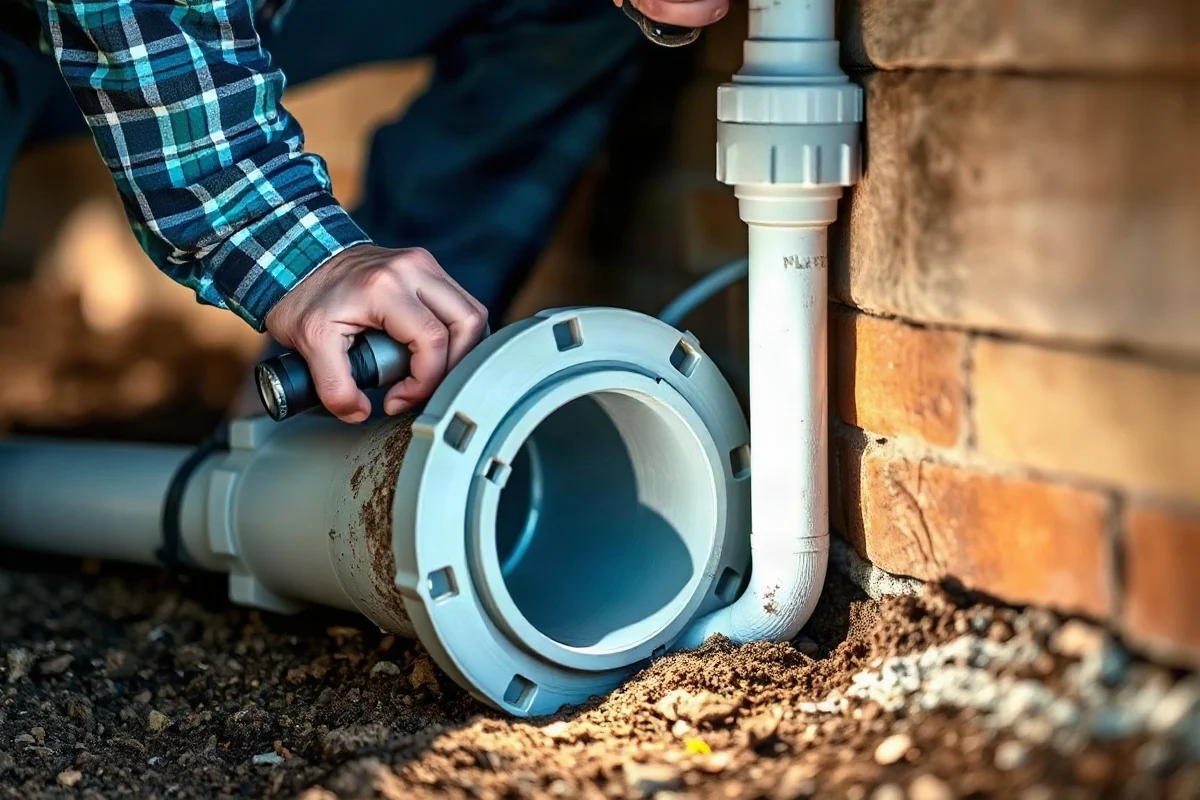
A plumber may begin with the cleanout, basement connection, or another accessible opening. A small inspection camera can travel through the pipe, and an electronic sonde or locating device may help trace the camera’s position from above ground. This process can provide a practical estimate of the route and depth without immediately excavating the entire line.
If the line is inaccessible, severely blocked, or damaged, the professional may recommend additional locating or excavation methods. Before digging, the contractor should address known utility risks and explain what the proposed work will and will not identify. Utility-locating services may locate public or private utilities differently, so ask who is responsible for identifying lines on the property and what areas are included.
Repair, Trenchless Work, or Replacement?
The right solution depends on the defect, pipe material, accessibility, soil, depth, route, and condition of the remaining line. A simple obstruction may respond to professional drain cleaning. Roots or buildup may require specialized cleaning, but cleaning does not repair a broken, sagging, or collapsed pipe.
For a localized defect, excavation and spot repair may be appropriate if the surrounding pipe is sound. If the line has extensive damage, repeated failures, or a deteriorated material, replacement may provide a more durable solution. In some situations, trenchless rehabilitation or replacement can reduce surface excavation, but it is not suitable for every layout or pipe condition. Ask the plumber to explain the limitations of each option rather than choosing solely on the basis of the smallest initial estimate.
Do not assume that a deeper sewer line must be replaced simply because access is difficult. A camera inspection and an evaluation of the actual failure are more useful than depth alone. Conversely, avoid repeated temporary clearing when inspections show structural damage or a persistent obstruction.
What Affects Sewer Line Repair Cost?
Actual pricing varies by property and location, so a reliable estimate requires an on-site assessment. Important cost factors can include:
- The distance from the building to the damaged section
- Pipe depth and the amount of soil that must be removed
- Pipe material, diameter, age, and condition
- Root intrusion, groundwater, soil movement, or a collapsed trench
- Access beneath driveways, patios, landscaping, additions, or other structures
- Whether excavation, restoration, pumping, cleaning, locating, or camera inspection is needed
- Whether the work affects private property, a shared connection, or a public right-of-way
Ask for a written scope that identifies the suspected problem, proposed repair method, access plan, restoration responsibilities, and items that could change the estimate. You can review general planning information in the site’s plumbing costs guide, but local conditions determine the price of a buried sewer project.
Choosing the Right Sewer Line Professional
Look for a local plumbing contractor with experience in sewer diagnostics and buried-line repair, not only indoor drain clearing. Ask whether the company can perform or arrange camera inspection, electronic locating, excavation, and the repair method being proposed. Confirm that the business carries the insurance and qualifications appropriate for the work in your area, and ask what parts of the project are handled by the contractor versus another utility or excavation provider.
A reputable professional should explain the evidence supporting the diagnosis. Be cautious of anyone who recommends digging up the yard without first describing the suspected route, or who promises that a specific method will work without inspecting the pipe. Before work starts, clarify how sewage exposure, access, surface restoration, and unexpected underground conditions will be handled.
Protect the Line After Repair
Keep records of the sewer route, cleanout locations, inspection findings, and repaired sections. Avoid planting large-rooted vegetation directly over the line unless a qualified professional advises that the location is suitable. Do not drive heavy equipment over areas with uncertain pipe support, and do not build over an access point that may be needed for future maintenance.
If multiple drains back up, sewage appears indoors or outdoors, or the ground above the line is sinking, arrange professional help promptly. For urgent sewage or flooding conditions, use an emergency plumber and keep people away from contaminated water. The safest way to determine how deep a sewer line is buried is not to guess with a shovel, but to combine available property records with professional locating and inspection.
Comments
0No comments yet. Be the first to share a helpful note or question.
Leave a Comment
Your email address will not be published. Comments are reviewed before appearing on the site.