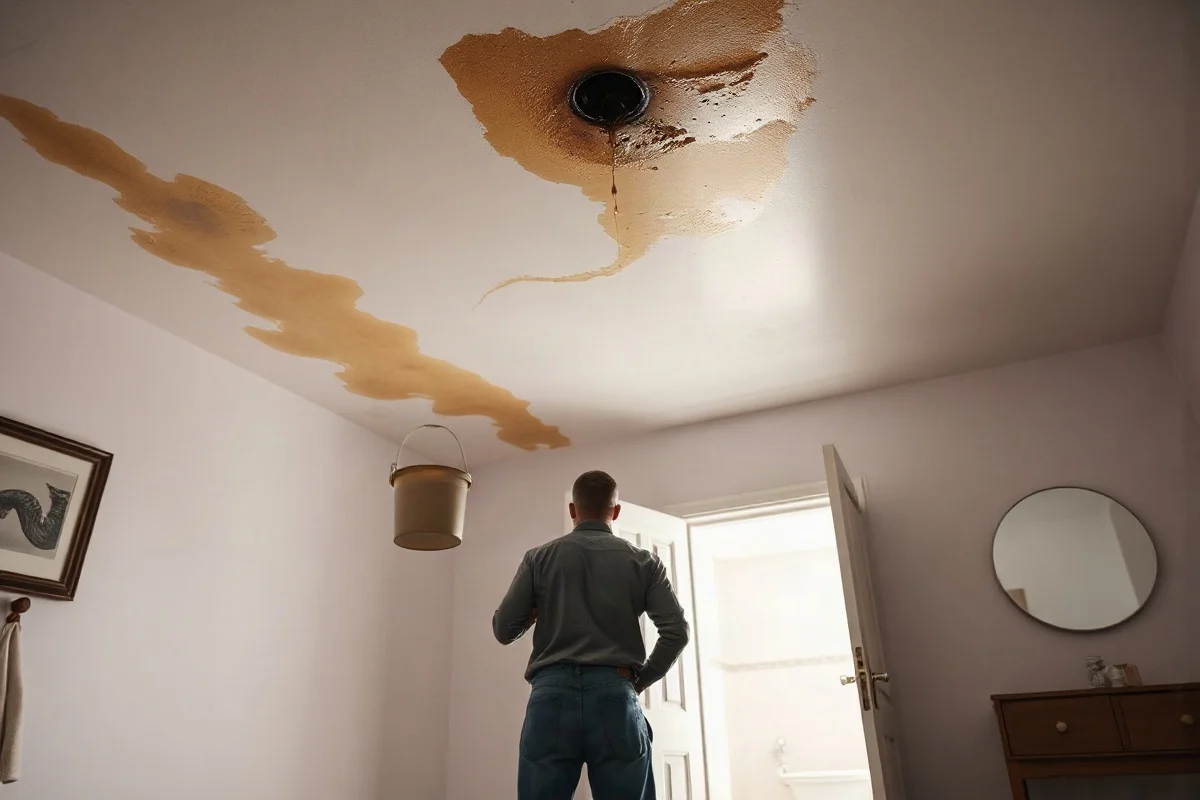
A ceiling water stain usually means moisture is entering from above, but the visible mark is not always directly below the leak. Water can travel along framing, pipes, insulation, and drywall before it appears. Start by protecting the room, noting when the stain grows, and checking only areas that are safely accessible. If the ceiling is bulging, actively dripping, near electrical equipment, contaminated by sewage, or associated with major flooding, leave the area and contact a qualified local professional promptly.
What a Ceiling Water Stain Can Tell You
The stain’s color, shape, location, and timing provide useful clues, although none of them proves the source by itself. A small yellow or brown ring often indicates a previous or slow leak. A stain that expands, feels damp, or drips after water use suggests an active problem. Soft, sagging, bubbling, or cracking drywall may indicate that the ceiling material has absorbed substantial moisture.
Timing is especially helpful. Does the stain appear after someone showers, flushes a toilet, runs a washing machine, uses a sink, or turns on an air conditioner? Does it worsen only during rain? Does it remain damp even when the plumbing fixtures above are not being used? Write down these observations and take dated photos. This information can help a plumber or other qualified contractor narrow the search without opening unnecessary areas.
Common Sources Above a Stained Ceiling
Bathroom plumbing
Bathrooms are frequent sources because they contain multiple water and drain connections in one area. A leaking toilet seal, shower drain, tub connection, supply line, faucet connection, or failed caulk joint can allow water to move into the floor assembly. A leak that appears after showers may come from the drain, the shower valve, the enclosure, or water escaping around the tub rather than from a supply pipe.
Supply pipes and drain lines
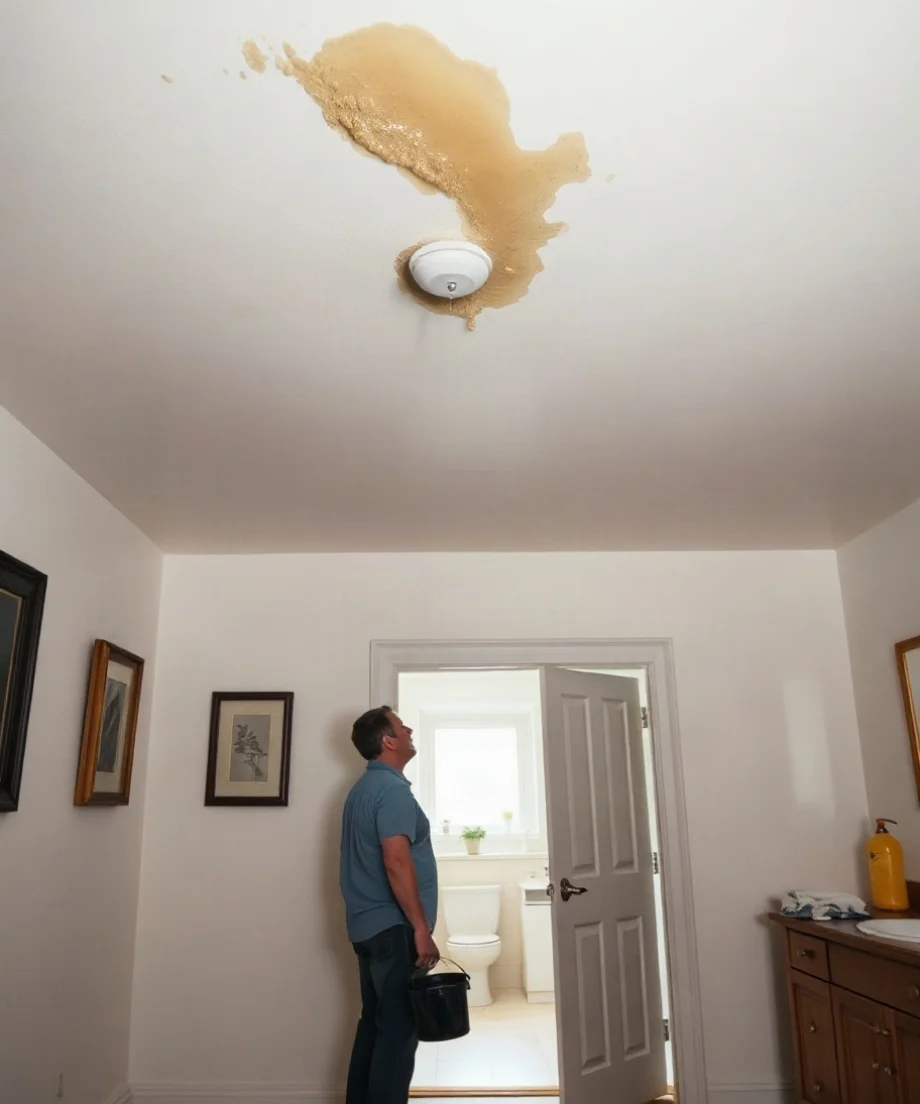
Pressurized supply pipes can leak even when no fixture is running. Drain lines generally leak when water is flowing through them, so the stain may grow after a sink, bathtub, dishwasher, or washing machine is used. Connections, corrosion, damaged fittings, and movement in the piping can all contribute to a leak. Some pipes are hidden inside walls or ceilings, making them difficult to inspect safely.
Roof or exterior water intrusion
If the stained ceiling is beneath an attic or roof, rain and melting snow may be involved. Damaged roofing materials, flashing, penetrations, gutters, or roof drainage can let water enter and travel before it reaches the ceiling. A roof-related leak may show up far from the point where water entered. Roof inspection should be handled by a qualified roofing professional, especially when climbing would be unsafe.
Heating, ventilation, and air conditioning equipment
An air-conditioning system or condensate drain can produce ceiling moisture if water is not draining correctly. A clogged or damaged condensate line, an overflowing pan, or heavy condensation may be involved. HVAC equipment often combines water, electricity, and mechanical components, so homeowners should avoid opening electrical compartments or attempting repairs beyond a simple visual check.
Neighboring rooms and building systems
In an apartment, condominium, or multi-story building, the source may be in another unit or a shared building system. Water can also come from a laundry area, mechanical room, sprinkler system, or plumbing chase. Notify the property manager or building representative while arranging qualified help, particularly if the source is not within your unit.
Safe Checks Homeowners Can Make
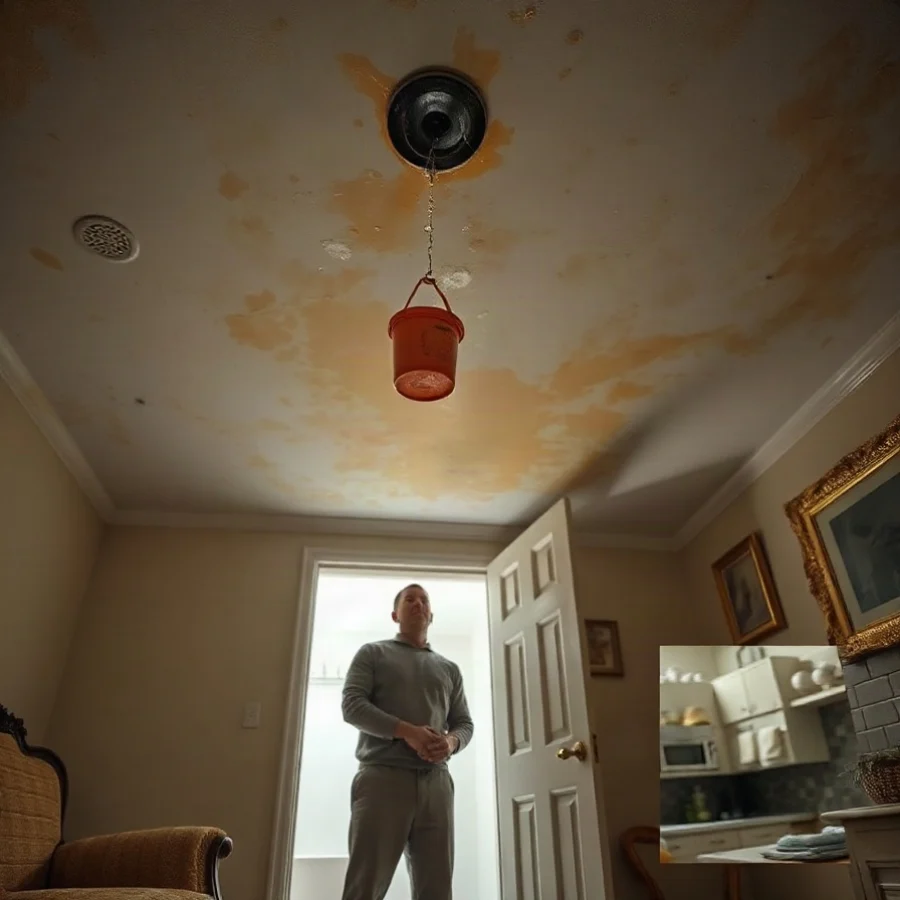
Before investigating, protect people and belongings. Move furniture, electronics, and rugs away from the affected area. Place a container under an active drip if doing so does not require standing beneath an unstable ceiling. Keep children and pets away from wet flooring and falling drywall.
Look without opening the ceiling
From the floor, inspect the stain for active dripping, sagging, bubbling paint, or cracks. Do not press on a swollen section or poke a hole to drain it. A water-filled ceiling can release suddenly, and cutting into it may damage hidden wiring or piping.
Check accessible areas above the stain
If there is a safe, properly lit attic or unfinished space, look for wet insulation, darkened framing, water trails, or active drips. Do not step between ceiling joists unless a safe walking surface is provided. Never enter an area with standing water near electrical equipment, exposed wiring, mold-like growth, or structural damage.
Compare the stain with water use
Ask household members when the mark changes. You can observe whether it worsens after normal use of a nearby fixture, but do not deliberately run large amounts of water if the ceiling is actively leaking. If a fixture clearly triggers the leak, stop using it and arrange professional repair. For related fixture problems, resources on bathroom plumbing and faucet and sink repair can help you understand common causes.
Check visible shutoff valves
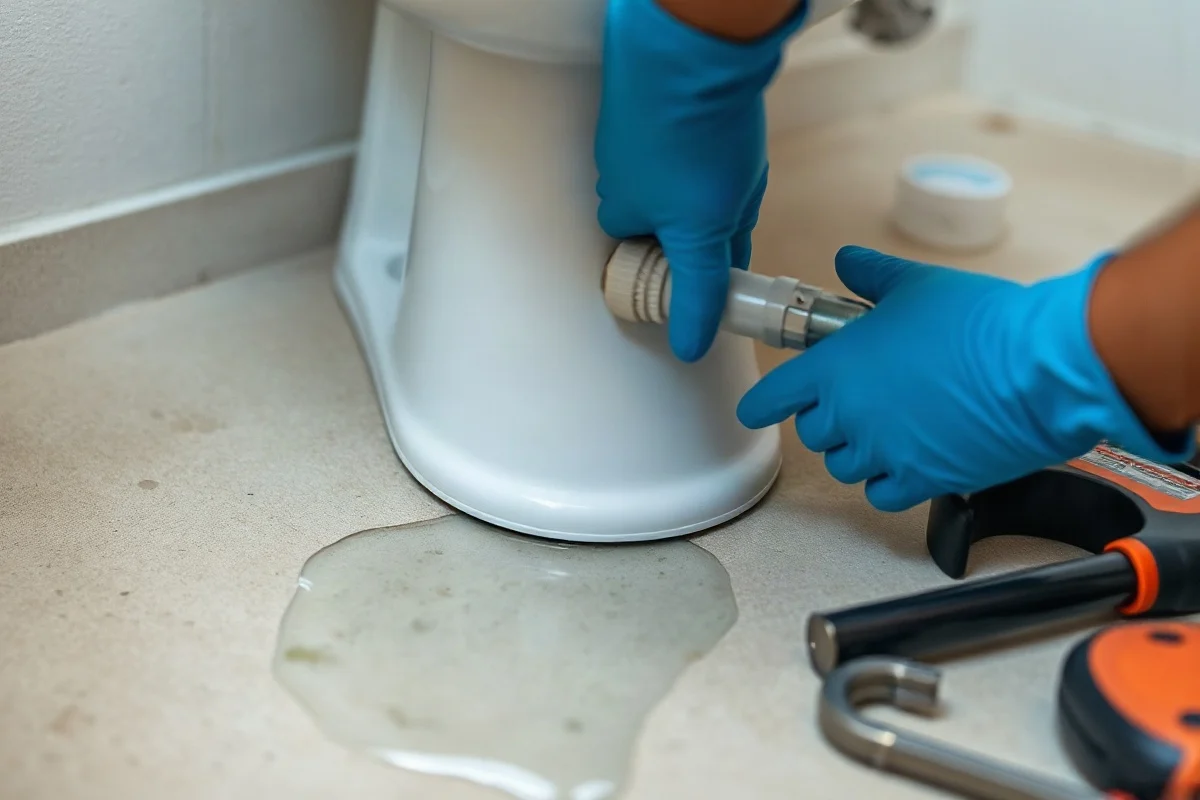
If a nearby toilet, sink, appliance, or water heater appears to be the source, inspect exposed connections for beads of water or active spraying. You may close an accessible fixture shutoff valve if you know which valve controls that fixture and it operates normally. Do not force a stuck valve. If water continues to flow, the leak is concealed, or the main shutoff is difficult to access, contact a qualified plumber.
When to Stop Investigating and Call a Professional
Some situations require more than observation. Call a qualified local plumber or appropriate specialist when the leak is hidden, the ceiling is saturated, or the source involves a pressurized pipe, drain inside a wall, sewer line, water heater, or building supply. Work involving gas, electrical connections, sewage exposure, major flooding, structural damage, or code-related changes should not be treated as a DIY project.
Turn off power to an affected area only if you can do so safely from a dry location without touching wet equipment or standing in water. If water is near an electrical panel, light fixture, outlet, or wiring, do not approach it. Contact emergency services when there is immediate danger, and use qualified electrical and plumbing professionals as appropriate. For severe or rapidly worsening leaks, see emergency plumbing guidance.
Sewage-contaminated water presents additional health risks. Avoid contact, keep people and pets away, and arrange professional cleanup and plumbing service. Do not rely on household disinfectant alone when porous ceiling materials or insulation have been contaminated.
Repair or Replace the Damaged Ceiling?
Stopping the leak is the first priority. Painting over a stain before the source is corrected can hide continuing damage and lead to another visible mark. Once the area is dry and the leak has been repaired, the ceiling should be assessed for softness, staining, odor, mold-like growth, and loss of strength.
A minor, dry stain may require cleaning, sealing, and repainting after the underlying problem is resolved. Damaged drywall may need partial replacement, especially if it is sagging, crumbling, swollen, or contaminated. Wet insulation may also need attention. Ceiling repairs can involve drywall, insulation, framing, paint, and electrical fixtures, so coordinate the work with qualified trades when necessary.
Do not assume that a ceiling can be safely restored just because the surface feels dry. Moisture can remain inside insulation, framing, or cavities. A professional may use moisture-measuring equipment or remove a limited section of material to determine the extent of the damage.
What Affects the Cost of Leak Repair?
Prices vary by location and by the work required, so a reliable estimate depends on an inspection. Important cost factors include:
- Whether the source is visible or concealed
- How far water traveled from the original leak
- The type and accessibility of the pipe, drain, fixture, roof, or HVAC component
- Whether drywall, insulation, flooring, cabinets, or framing were damaged
- Whether water is still flowing or the damage requires urgent stabilization
- Whether cleanup, drying, mold assessment, electrical work, roofing, or structural repair is needed
- Whether the repair requires coordination with a landlord, property manager, insurer, or another trade
Ask for a written description of the suspected source, the proposed repair, any testing or access work, and separate charges for restoration if those services are not included. Avoid choosing a contractor solely because of a low initial figure when the leak source has not yet been confirmed.
How to Choose the Right Professional
For a plumbing-related ceiling stain, look for a local plumber with experience tracing concealed leaks and repairing the specific system involved. Ask whether the person handling the work is qualified for the job in your area, and verify any credentials or insurance that are relevant to your situation. Because licensing and insurance requirements differ by location, confirm the details with the appropriate local authority or the contractor’s documentation rather than relying on a general online claim.
Describe the stain’s location, size, timing, recent water use, and any visible damage when requesting service. Share photos and mention whether the ceiling is sagging or near electrical equipment. A careful professional should explain how they plan to identify the source, what access may be needed, and which repairs are included in the estimate. You can also review general guidance on hiring a plumber before scheduling work.
Preventing a Repeat Stain
After repairs, keep an eye on the area for several days or longer, depending on the type of leak and the drying process. Check accessible connections periodically for moisture, avoid delaying repairs for dripping fixtures, and maintain caulk and grout where appropriate. Follow the manufacturer’s maintenance instructions for appliances and HVAC equipment, and have roof drainage or exterior problems evaluated when water enters during storms.
A ceiling stain is a warning, not merely a cosmetic defect. The safest approach is to document the pattern, limit water use when it worsens the problem, protect the room, and have the source confirmed before repairing the visible damage. When the leak is hidden, hazardous, or connected to sewage, electrical systems, major flooding, or structural concerns, use qualified local professionals rather than opening the ceiling or attempting a risky repair yourself.


Comments
0No comments yet. Be the first to share a helpful note or question.
Leave a Comment
Your email address will not be published. Comments are reviewed before appearing on the site.