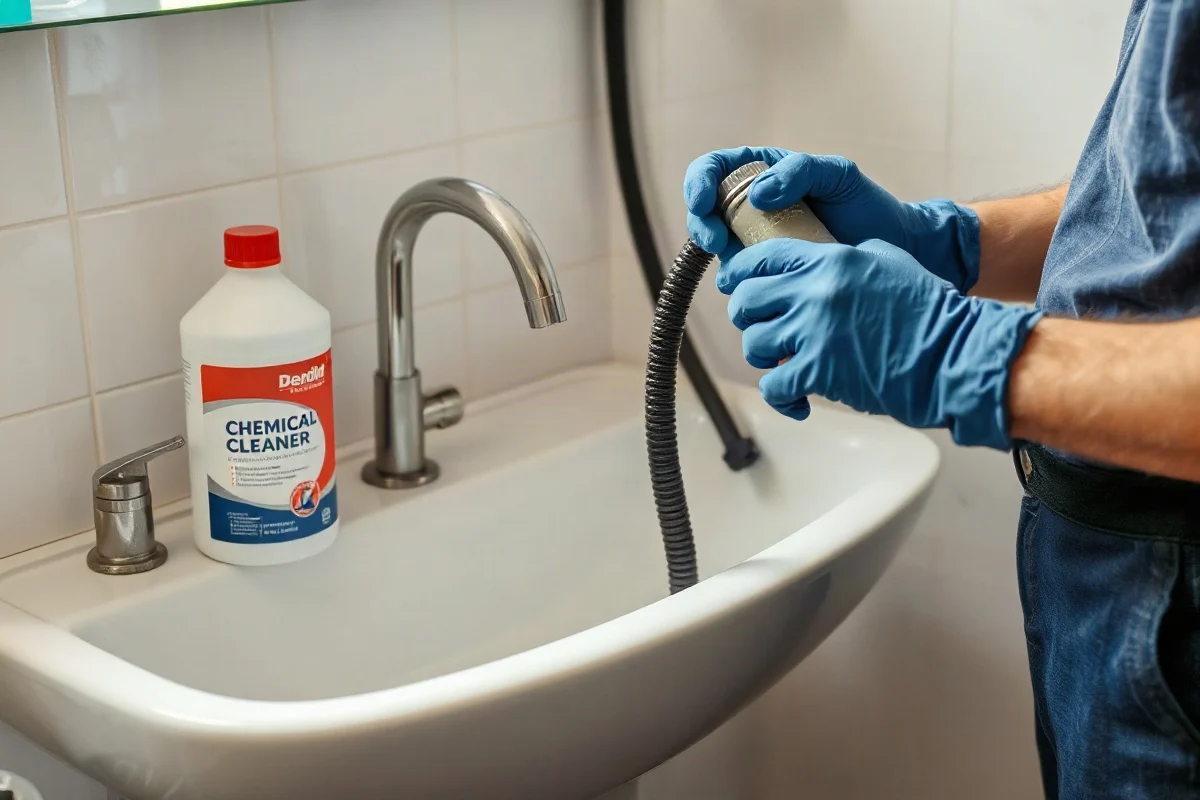
Professional snaking usually works better than chemical drain cleaner for a stubborn, recurring, or completely blocked drain. A drain snake physically breaks through or removes the obstruction, while a chemical cleaner may only dissolve part of it and can leave hazardous residue inside the pipe. Chemical products may help with a minor, slow drain in limited situations, but they are not a dependable substitute for finding and clearing the actual cause of a clog.
The right choice depends on the symptom, the drain location, the likely obstruction, and whether anyone may already have poured a chemical product into the line. A homeowner can safely try a few low-risk checks first. However, repeated clogs, sewage backup, standing water, multiple slow drains, and any situation involving chemical exposure should be handled carefully by a qualified local plumber.
How chemical drain cleaners work
Most chemical drain cleaners use highly caustic or oxidizing ingredients intended to break down organic material such as hair, grease, soap residue, and food particles. The product travels into the trap or drainpipe and reacts with the blockage. If the opening is large enough and the clog is made of a material the product can affect, the drain may begin flowing again.
That apparent improvement does not always mean the pipe is clean. A partial clog can remain attached to the pipe wall, allowing the same buildup to return. Chemical products also cannot reliably remove solid objects, tree roots, damaged pipe material, or a blockage located beyond the product’s reach. In some cases, they simply create a small channel through the obstruction while leaving most of it in place.
Risks of using chemical cleaner
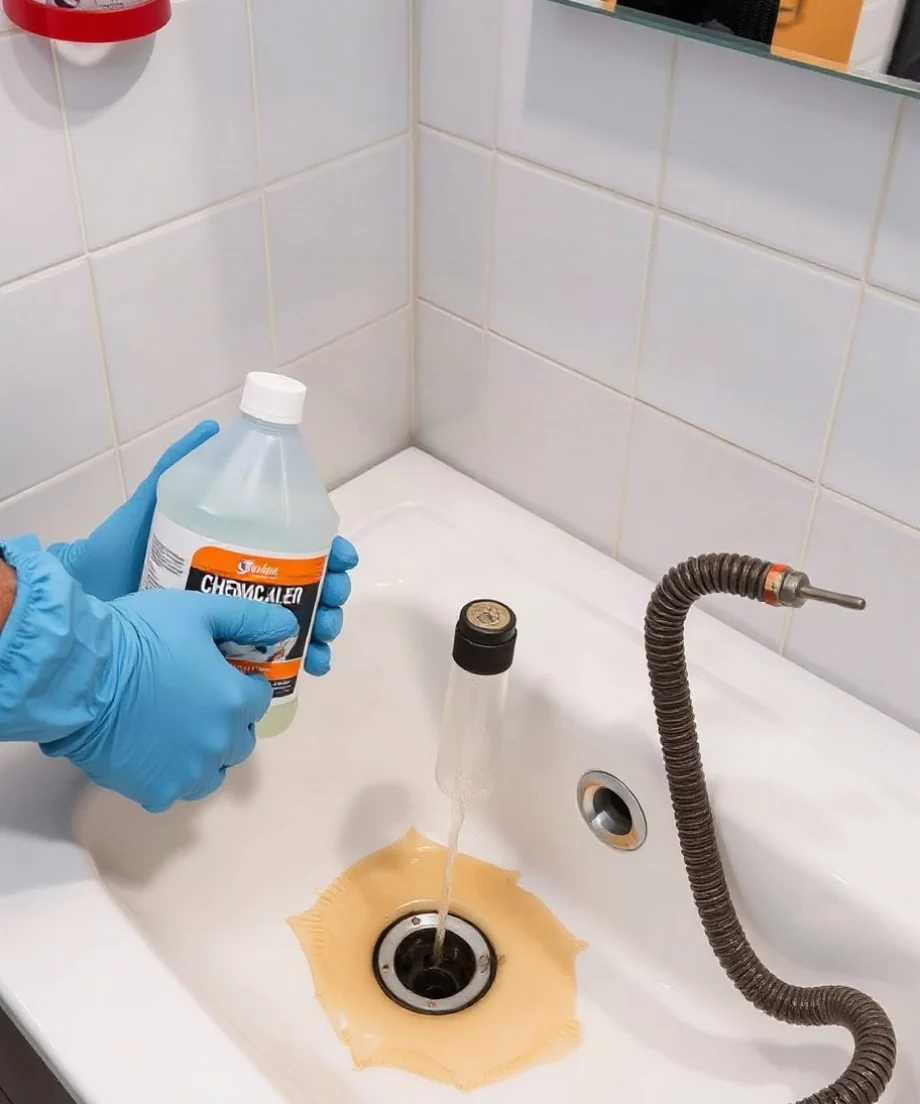
Drain cleaner can burn skin and eyes, damage clothing, and produce dangerous reactions if mixed with another product. Never combine drain cleaner with bleach, acids, ammonia-based products, or a different clog remover. Follow the product label exactly, keep children and pets away from the area, and do not lean over an opening while a chemical is present.
Chemicals can also complicate a later repair. If a plumber needs to remove a trap, use a snake, or inspect the line, remaining liquid may splash from the pipe. Tell the plumber which product was used and when. If the product contacts skin or eyes, follow the label’s emergency instructions and seek appropriate medical or poison-control guidance.
What professional snaking does differently
Professional snaking uses a cable and cutting or clearing head to reach the obstruction mechanically. Depending on the drain and the equipment, the plumber may work through a fixture opening, a cleanout, or another accessible point. The goal is to break apart the blockage, pull material back, or open a path through the pipe so water can drain normally.
Mechanical clearing is often more effective for hair mats, compacted food waste, paper buildup, and other physical obstructions. It is also a better approach when a drain is completely blocked or when chemical treatment has already failed. A professional can choose equipment suited to the line and reduce the risk of damaging a fixture or forcing the blockage farther into the plumbing system.
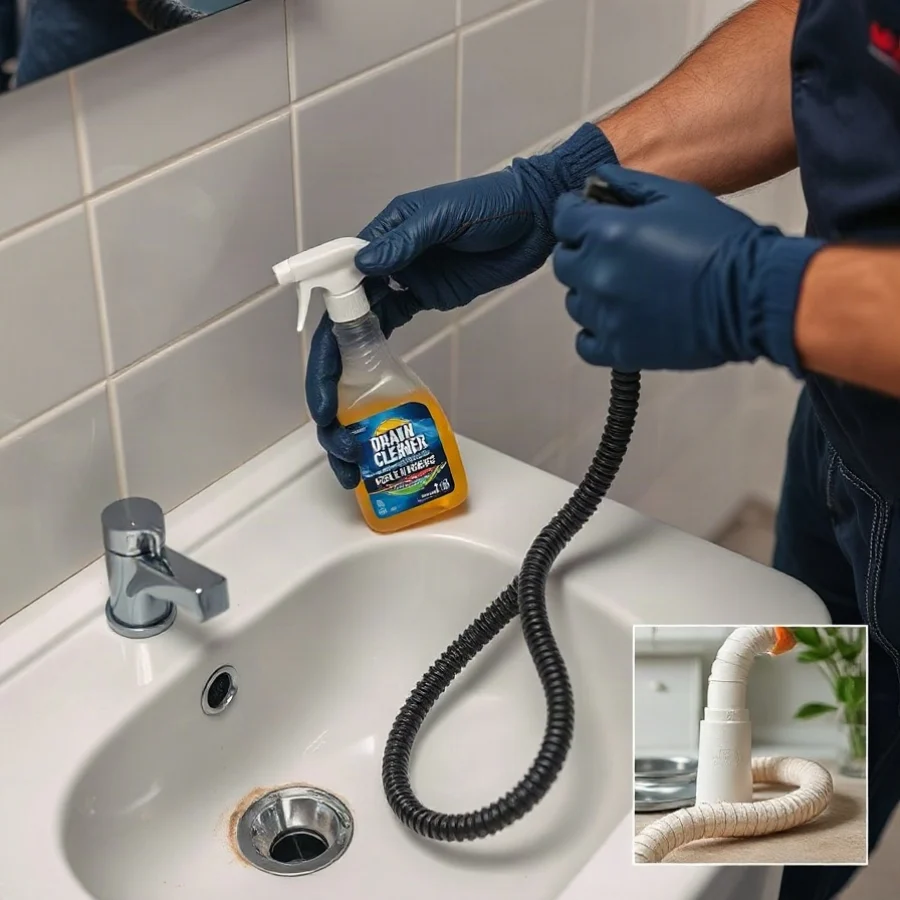
Snaking is not a universal cure. A cable may open a passage without correcting a collapsed, cracked, misaligned, or heavily scaled pipe. If roots, structural damage, or a recurring obstruction is suspected, the plumber may recommend additional inspection rather than repeatedly clearing the same line.
Signs of a minor clog versus a larger problem
A minor clog often affects one fixture and develops gradually. For example, a bathroom sink may drain slowly because of hair, soap residue, or buildup around the stopper and trap. A kitchen sink may slow after grease or food particles accumulate. These problems may respond to safe surface cleaning or careful use of a plunger.
More serious warning signs include:
- A toilet, tub, and sink becoming slow at the same time
- Water backing up into a tub or shower when another fixture runs
- Sewage odors, wastewater, or contaminated water near a drain
- A clog that returns soon after being cleared
- Gurgling sounds from several fixtures
- Standing water that does not move after plunging
- Overflow from a floor drain or cleanout
Several affected fixtures can indicate a branch-line or main sewer problem rather than a single sink clog. Sewage exposure is a health concern, so avoid contact and arrange qualified local help. You can learn more about common warning signs through this guide to sewer line problems.
Safe homeowner checks to try first
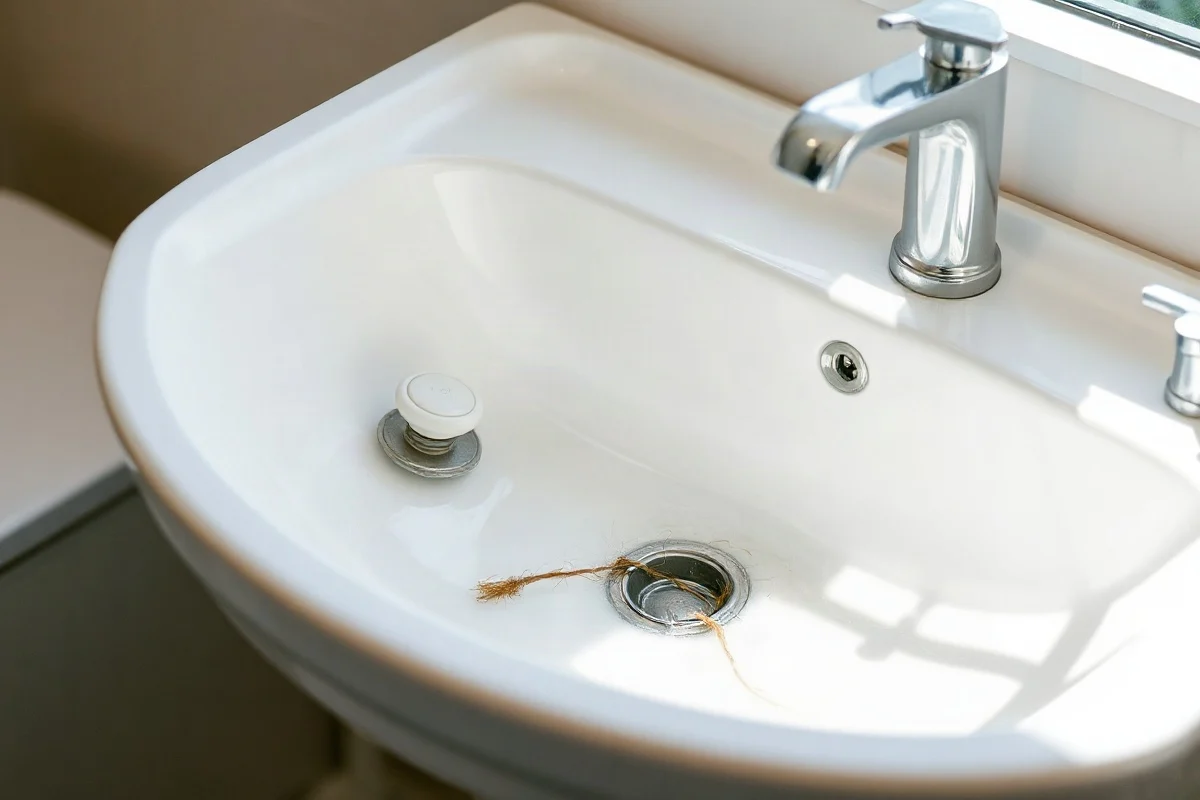
Before reaching for a chemical product, stop adding water to the affected fixture. Remove visible debris from the drain opening, stopper, or strainer using gloves. In a bathroom sink, the stopper may collect hair and residue that can be removed without entering the wall or floor plumbing.
A properly sized cup plunger can be useful for some fixture clogs. Add enough water to cover the plunger’s rim, seal the overflow opening on a sink or tub when appropriate, and use controlled strokes. Do not plunge aggressively if a chemical cleaner may be in the drain. The liquid could splash back onto your skin or into your eyes.
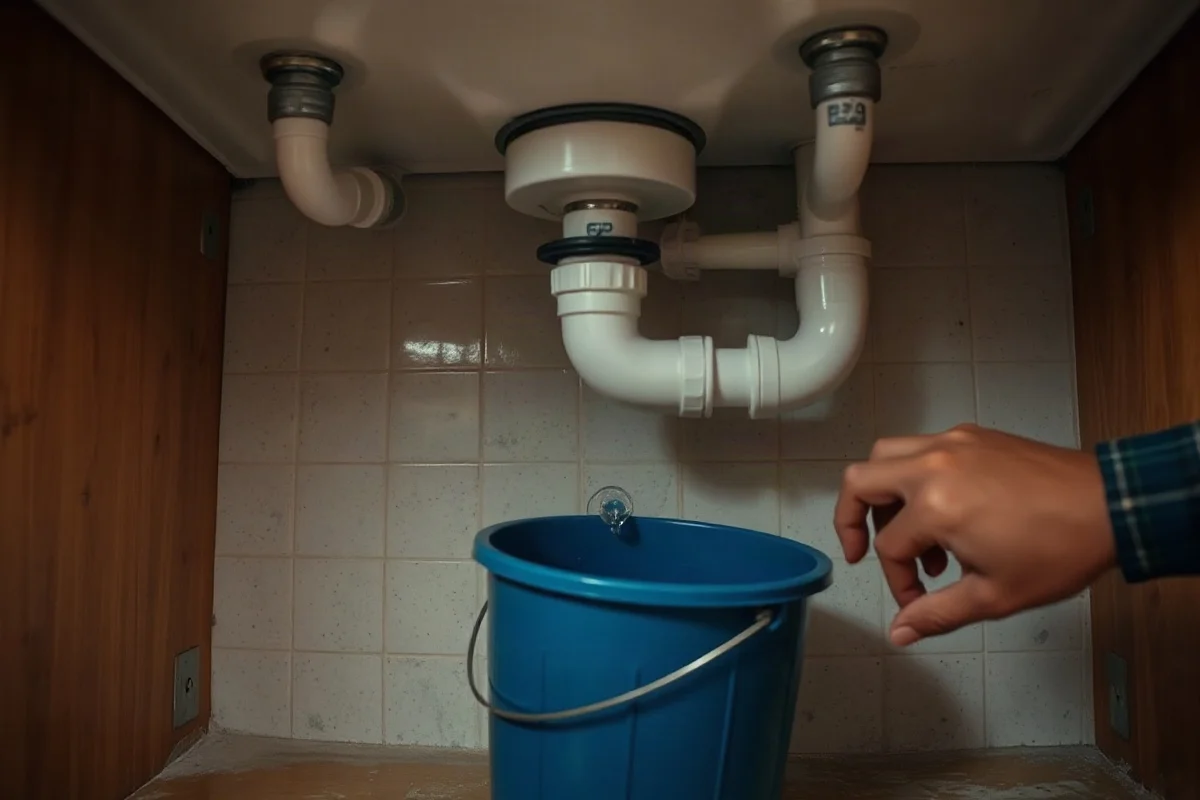
For a removable sink trap, a homeowner with basic tools may choose to place a bucket beneath it and clean the trap, but only if no chemical drain cleaner has been used and the connections can be handled safely. Stop if fittings are corroded, stuck, leaking, or connected to a configuration you do not recognize. Avoid inserting improvised objects deep into the drain, and do not disassemble plumbing that could release contaminated water.
Do not use boiling water as a general solution. Very hot water may help soften some grease in limited circumstances, but it can also damage certain fixtures, seals, or connected materials. Use the fixture manufacturer’s guidance when available, and avoid experimenting with heat on unknown plumbing.
When a professional is the better choice
Contact a qualified local plumber when the drain is completely blocked, the clog keeps returning, or more than one fixture is affected. Professional help is also appropriate when you suspect a blockage inside a wall, under a floor, or in the main sewer line. These locations are difficult to diagnose accurately from the fixture opening.
Call for prompt help if wastewater is backing up, a large amount of water is flooding the room, or a hidden leak may be present. Keep people and pets away from contaminated water. If water is near electrical equipment, avoid contact and address the electrical hazard through an appropriately qualified professional before entering the area.
Tell the plumber about everything you have tried, including plunging, disassembly, and chemical products. This information affects how the technician approaches the line and what protective measures may be needed. For broader drain maintenance and repair guidance, see our drain cleaning resource.
Snaking, hydro jetting, or drain replacement?
Snaking is often the first mechanical option because it can clear many localized blockages without opening walls or replacing pipe. The appropriate cable size and access point depend on the fixture and the plumbing layout. A professional may recommend a different method if the obstruction is extensive or the pipe has significant buildup.
Hydro jetting uses pressurized water to scour material from the inside of a suitable pipe. It may be considered for heavy grease, mineral scale, or recurring buildup, but it is not appropriate for every pipe condition. A plumber should evaluate the line before recommending high-pressure cleaning, especially when the pipe may be fragile or damaged.
Replacement is generally considered when inspection shows structural failure, severe deterioration, repeated breaks, or a condition that clearing cannot correct. A drain that is slow because of a collapsed or badly damaged section will not be permanently fixed with chemical cleaner or repeated snaking. Ask the plumber to explain the observed condition and why a repair, cleaning, lining option, or replacement is being recommended.
Cost factors to discuss before work begins
The cost of drain service varies by location and by the difficulty of the job. Important factors include the affected fixture, accessibility, blockage severity, time required, equipment used, after-hours scheduling, and whether the problem extends into a branch drain or sewer line. Additional inspection, repair, excavation, or replacement can change the scope substantially.
Request a clear explanation of the service being proposed before work starts. Ask whether the estimate covers diagnosis, mechanical clearing, inspection, cleanup, and any follow-up recommendations. Do not assume that a drain cleaning visit includes repair of damaged pipe or that a temporary flow improvement means the underlying problem is resolved. Our plumbing cost guide provides broader information about factors that influence service pricing without promising a specific local price.
How to choose the right plumber
Look for a local professional who clearly explains the likely cause, the proposed method, and the limits of the service. Ask whether the company has experience with the type of drain involved and whether inspection is recommended for recurring problems. Verify applicable qualifications, insurance, and business information according to your local requirements, and request written details for any substantial repair.
Be cautious of anyone who promises that one chemical treatment will permanently solve every clog or who recommends major replacement without explaining what was found. A reliable plumber should distinguish a simple fixture blockage from a deeper line problem and should tell you when additional investigation is necessary.
Making the safer decision
For a mildly slow, isolated drain with no sign of chemical exposure, a visible-debris cleanup or careful plunging may be a reasonable first step. Chemical drain cleaner is a limited option at best and carries meaningful handling risks. It should never be mixed with other products or used as a routine substitute for diagnosis.
Professional snaking is usually the more dependable choice for stubborn, complete, or recurring clogs because it addresses the obstruction mechanically and gives a plumber an opportunity to evaluate the condition of the line. When sewage, flooding, hidden leaks, multiple slow fixtures, or unsafe conditions are involved, stop experimenting and contact a qualified local professional.
Comments
0No comments yet. Be the first to share a helpful note or question.
Leave a Comment
Your email address will not be published. Comments are reviewed before appearing on the site.