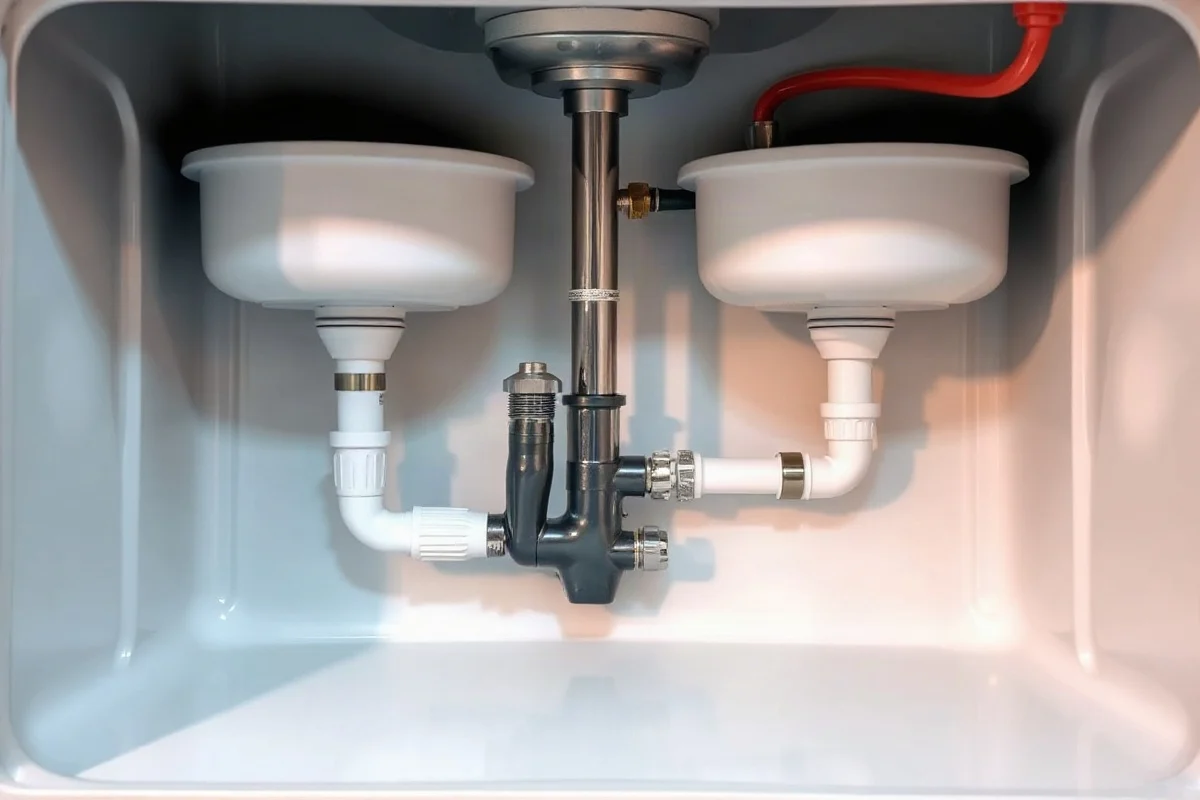
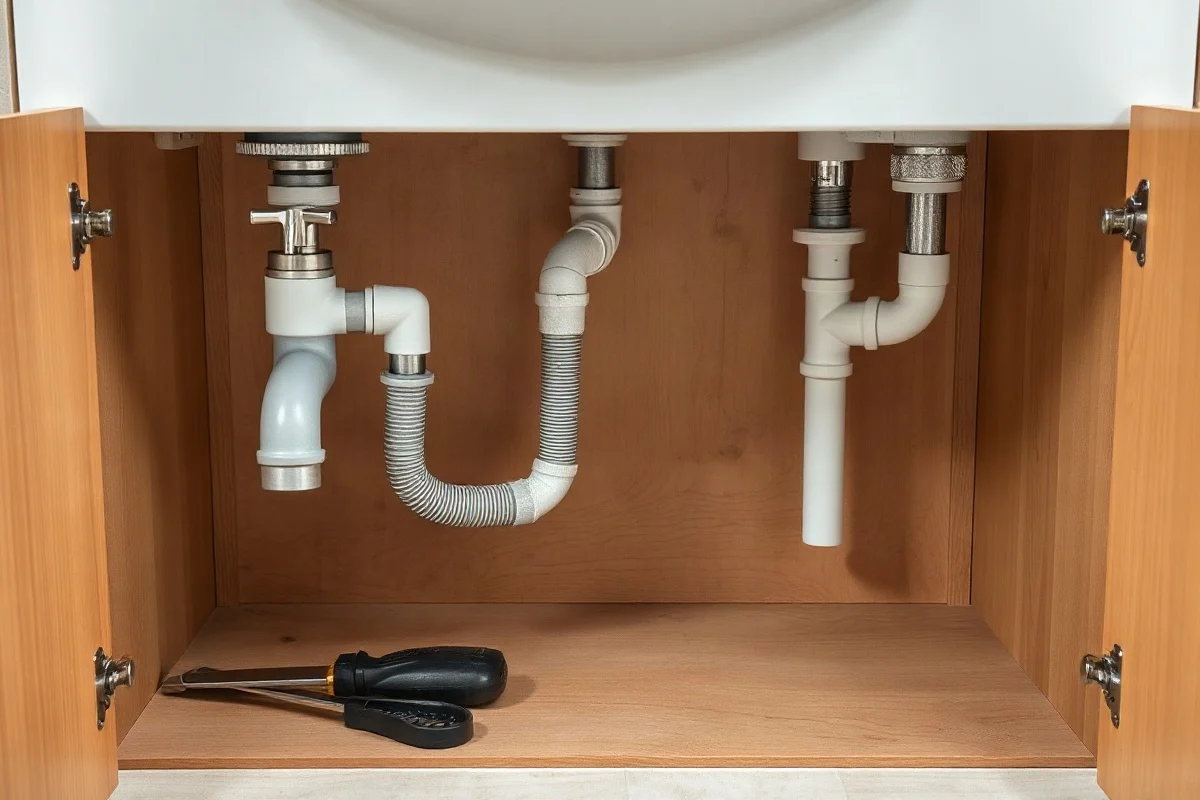
The main parts of a kitchen sink drain are the sink strainer, tailpiece, P-trap, trap arm, drain tee or baffle tee, and the branch drain that leads into the wall. A double-bowl sink may also have a continuous waste pipe connecting both basins, while a garbage disposal and dishwasher add their own connections. Knowing these names makes it easier to identify a leak, describe a clog, or explain a repair to a plumber.
Most of the visible piping under a sink is made from white plastic, black plastic, chrome-plated metal, or another approved drainage material. The exact arrangement varies with the sink design, disposal installation, and the location of the drain opening in the wall. The basic purpose remains the same: carry wastewater away while using a water-filled trap to block sewer gases from entering the home.
The main parts of a kitchen sink drain
Sink strainer
The sink strainer is the metal or plastic fitting installed in the drain opening at the bottom of the sink basin. It usually includes a removable basket that catches food scraps and other debris before they enter the drain. A rubber or composite gasket beneath the sink helps seal the strainer to the sink, and a retaining nut holds the assembly in place.
When water appears directly below the drain opening, the strainer seal may be loose, damaged, or deteriorated. This is different from a leak at a pipe joint farther down. To check safely, dry the area, place a paper towel below the strainer, and run a small amount of water into the basin. If the towel becomes wet immediately beneath the basket, the strainer connection may need to be resealed or replaced.
Tailpiece
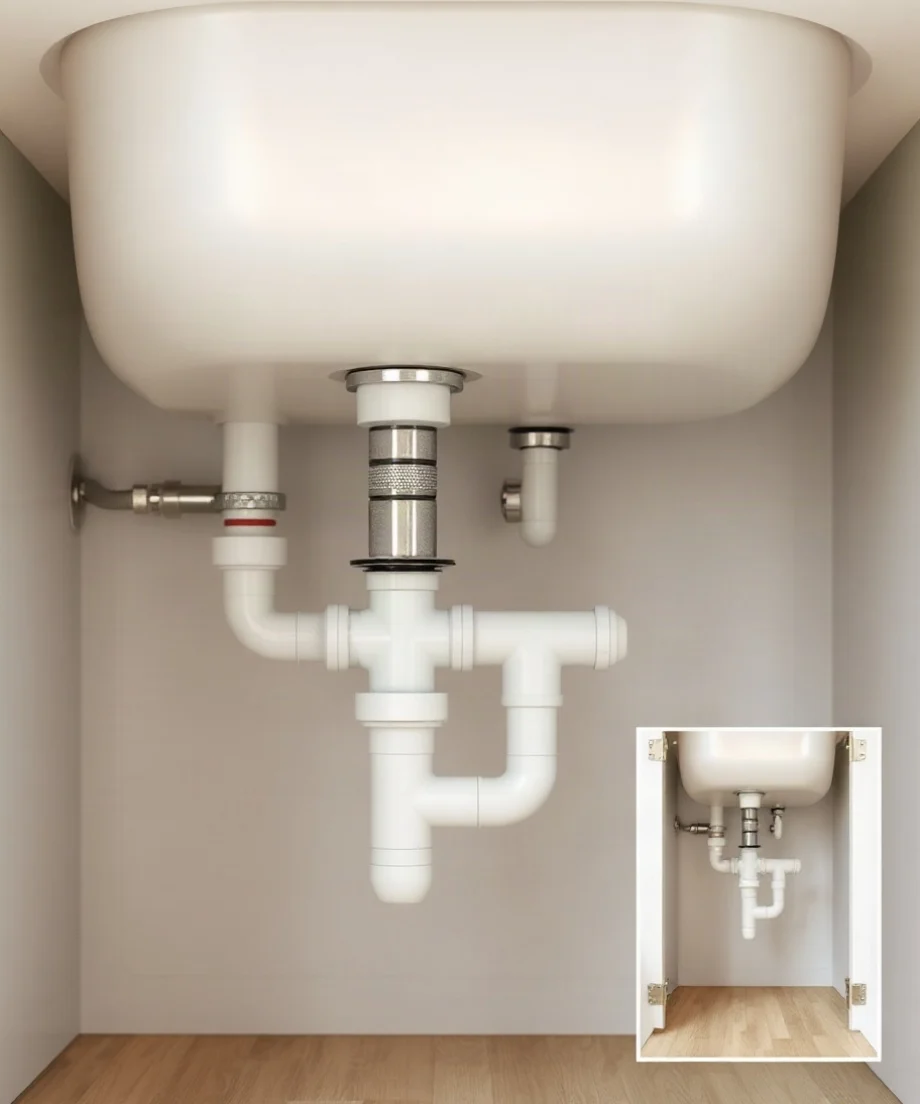
The tailpiece is the short, mostly straight pipe that connects the sink strainer to the P-trap. On a single-bowl sink, it usually drops vertically from the strainer. On a sink with a garbage disposal, the disposal body often functions as the section between the sink opening and the drain piping, so the visible arrangement may look different.
Tailpieces are commonly connected with slip nuts and washers. A loose nut, misaligned washer, or cracked pipe can cause a slow leak. These connections can sometimes be inspected and gently tightened by a homeowner, but overtightening can distort a plastic washer or damage the fitting. Tighten only enough to stop movement, then test with clean water.
P-trap
The P-trap is the curved section of pipe beneath the sink. It is called a “P-trap” because its shape resembles the letter P when viewed from the side. The trap holds a small amount of water after the sink drains. That water barrier helps prevent sewer gases from traveling through the drain and into the kitchen.
The P-trap is one of the most recognizable and serviceable parts of a sink drain. It may collect grease, food particles, coffee grounds, or small objects that fall into the basin. A slow drain, unpleasant odor, or water leaking from the curved section can point to a problem with the trap.
A homeowner can usually place a bucket beneath the trap and inspect it for visible drips. However, removing the trap can release dirty water and debris. Wear gloves and eye protection, keep the cabinet contents away from the work area, and do not mix chemical drain cleaners with any other product. If the trap is corroded, stuck, damaged, or connected to older piping that may break, a qualified plumber is the safer choice.
Trap arm
The trap arm is the pipe that runs from the P-trap toward the wall connection. It carries wastewater away from the trap and into the branch drain inside the wall. On many sinks, the trap arm appears as a horizontal or slightly angled pipe extending from the curved trap.
A leak at the trap arm may come from a slip-joint connection, a damaged washer, a crack, or a misaligned section. If the pipe disappears into the wall, the visible connection may not tell the whole story. Water damage inside the cabinet, a damp wall, or recurring moisture after the pipes have been tightened can indicate a concealed problem that requires professional diagnosis.
Slip nuts and washers
Slip nuts are threaded plastic or metal nuts that secure sections of tubular drain piping. A tapered or flat washer inside the connection creates the seal. They are not pipes themselves, but they are important parts of the drain assembly and are frequent sources of small leaks.
Slip-joint connections must be properly aligned. A washer installed backward, a missing washer, cross-threaded nut, or pipe pushed too far into the fitting can all produce leakage. If tightening does not solve the problem, replacing the washer may help, but a cracked pipe or damaged threaded fitting requires replacement of the affected part.
Drain tee or baffle tee
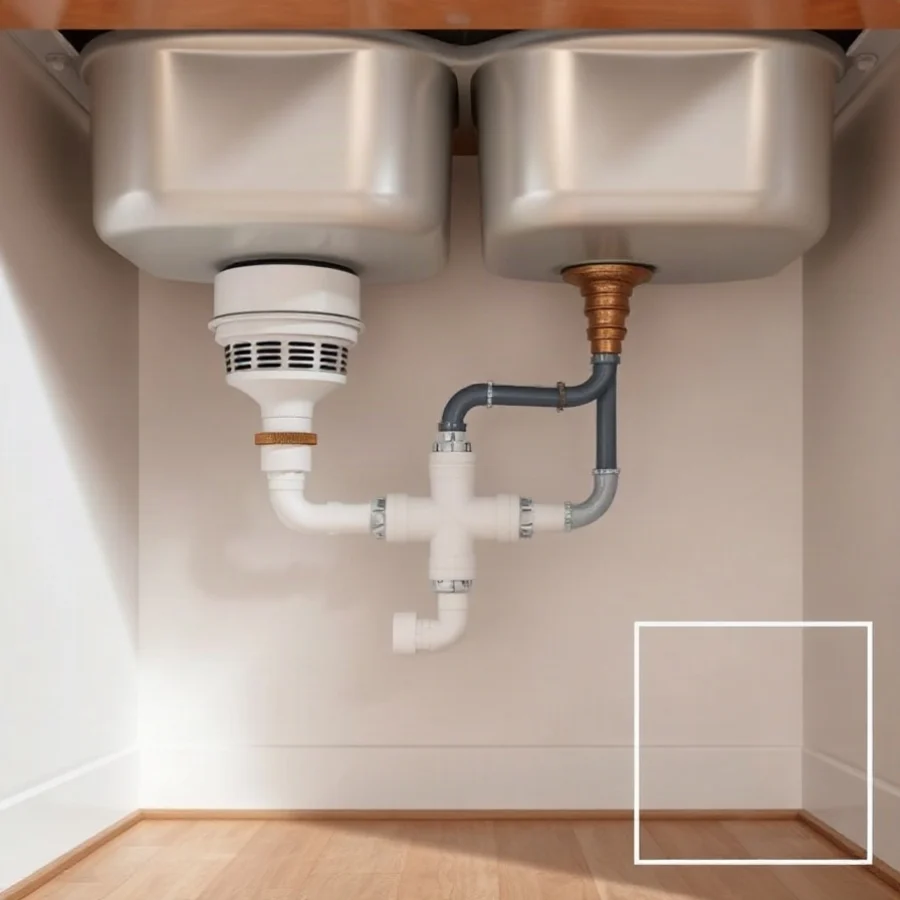
In a double-bowl kitchen sink, a drain tee may connect the two bowl outlets to one shared drain route. When a garbage disposal is installed on one side, the fitting may be a baffle tee or another type of continuous waste connection. Its job is to bring wastewater from both basins together before it reaches the trap or wall drain.
The arrangement can be confusing because the two sink bowls may not drain through identical paths. One bowl may connect through a disposal, while the other uses a strainer and tailpiece. A horizontal pipe, sometimes called a continuous waste pipe, links the outlets. Leaks often occur at the joints where this pipe meets the bowl outlet, disposal, or trap.
Continuous waste pipe
The continuous waste pipe is the horizontal section used to connect two sink basins. It may run from one tailpiece to a tee, or from the non-disposal basin toward the garbage disposal outlet. The pipe normally uses slip-joint connections so it can be adjusted to fit different sink layouts.
Because several connections may be close together, water can travel along the outside of the pipe and drip from a different location than the original leak. Drying the entire assembly and testing one basin at a time can help identify the source. If water backs up into the other bowl, the problem may be a clog rather than a simple joint leak.
Branch drain
The branch drain is the larger drain pipe inside the wall that carries wastewater from the kitchen sink toward the main drain system. Only a short portion may be visible beneath the sink. The trap arm connects to this drainage path through a wall fitting.
A blockage in the branch drain may cause repeated backups even after the P-trap has been cleaned. Signs include slow drainage that returns quickly, gurgling sounds, water backing up into both sink bowls, or wastewater appearing in another nearby fixture. Avoid repeated use of chemical drain cleaners when a deeper clog is suspected. A drain professional can determine whether the obstruction is in the trap, branch drain, or a larger shared line. See our guide to professional drain cleaning for more information.
Vent connection
The kitchen sink drain is also part of a vented plumbing system. A vent allows air into the drainage piping so water can flow without creating excessive suction or pressure. The vent pipe usually runs inside the wall and through the building, so it is not normally visible beneath the sink.
Drain odors, slow draining, gurgling, or water that moves unevenly can sometimes be associated with a venting problem, although these symptoms also have many other possible causes. Because vent piping may be concealed and may involve code-related work, changes or repairs should be handled by a qualified local professional.
Additional connections under a kitchen sink
Garbage disposal drain connection
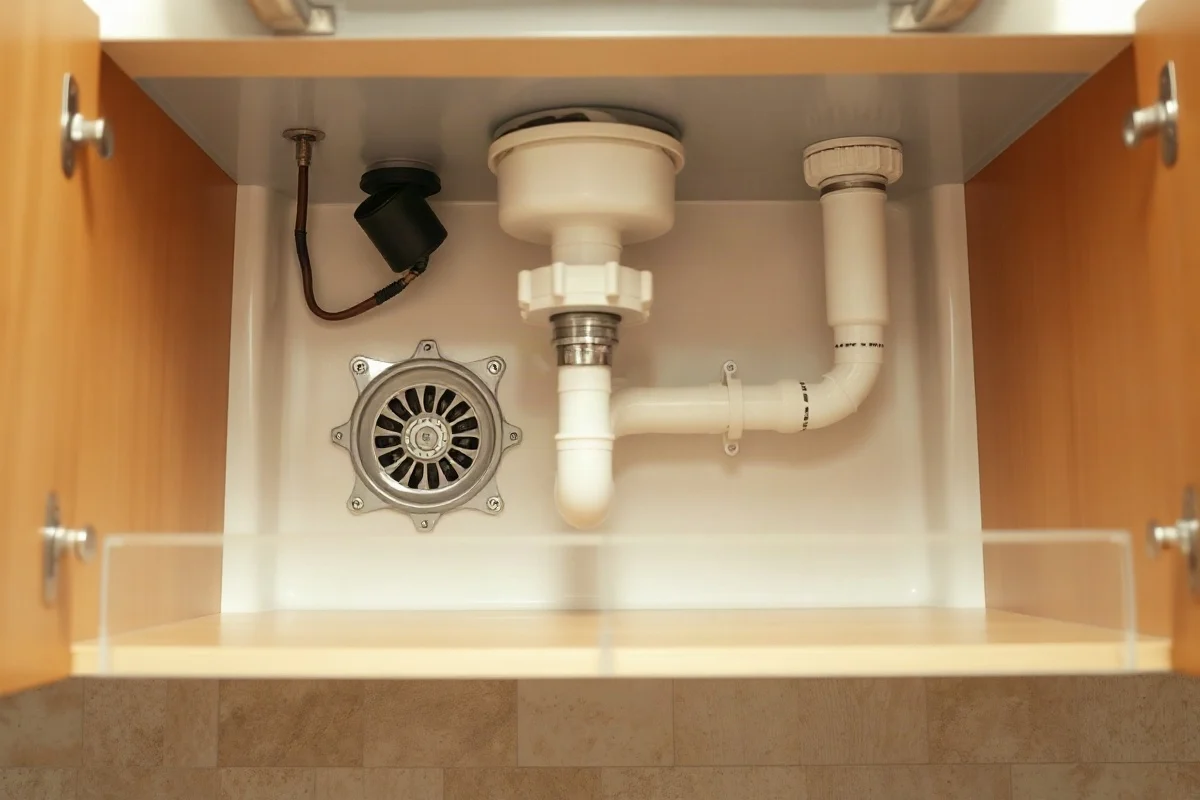
A garbage disposal mounts beneath one sink opening and grinds food waste before sending it into the drain. Its side outlet connects to the drain piping. If a dishwasher drains through the disposal, the dishwasher hose attaches to a dishwasher inlet on the disposal body. That inlet must be opened during installation for the dishwasher to drain properly.
Do not reach into a disposal to search for an obstruction. Turn the unit off, disconnect its power source if you are qualified to do so, and use only safe visual checks from above. Electrical connections, disposal removal, and wiring should be handled by a qualified professional when you are unsure of the procedure. For related guidance, review our information about garbage disposal problems.
Dishwasher drain hose
The dishwasher drain hose is flexible tubing rather than a rigid sink drain pipe. It carries used dishwasher water to the disposal inlet or a sink drain connection. A loose clamp, kink, split hose, or incorrect connection can allow water into the cabinet or prevent the dishwasher from draining.
Check for obvious kinks and moisture around the hose connections, but do not alter the hose routing if doing so could create a backflow or installation problem. Persistent dishwasher drainage issues should be evaluated by a qualified appliance or plumbing professional.
What homeowners can safely check
Low-risk checks include looking for visible drips, drying the pipes with a towel, placing a bucket beneath the P-trap, checking whether a slip nut is visibly loose, and running a small amount of clean water through one basin at a time. Remove items from the cabinet first so you can see the complete drain assembly.
Do not ignore swollen cabinet flooring, staining, mold-like growth, sewage odors, or water near electrical equipment. Stop using the sink if water is reaching an electrical outlet, appliance wiring, or other unsafe area. Significant flooding, contaminated wastewater, hidden leaks, and any electrical or disposal-related hazard should be handled by a qualified local professional. You can also find practical information about kitchen drain leak repair before scheduling service.
Repair or replace: how to decide
A washer, slip nut, or short tubular section may be repairable when the surrounding fittings are sound and the leak is clearly visible. Replacement is generally more appropriate when the pipe is cracked, heavily corroded, repeatedly leaking, or no longer aligns properly. A damaged trap or wall connection should not be patched with tape or sealant as a permanent solution.
If the sink drains slowly but the pipes remain dry, the issue may be a clog rather than a leak. A plunger designed for sinks may help with a minor obstruction after removing standing water and blocking the second basin on a double sink. Do not plunge aggressively if chemical drain cleaner was recently used, because splashing the product can cause serious injury.
What affects plumbing service cost?
The cost of a kitchen sink drain repair depends on the failed part, accessibility, labor time, the need to remove a disposal or cabinet components, and whether the problem extends into the wall or branch drain. Materials can also vary depending on the existing pipe type and the replacement configuration. Because local rates and job conditions differ, request a written explanation of the work and any applicable service charges before authorizing repairs. Our plumbing cost guide explains the factors that commonly affect estimates.
How to choose the right plumber
Choose a qualified local plumber who can clearly identify the leaking or clogged component, explain whether repair or replacement is recommended, and distinguish visible pipe work from problems inside the wall. Ask what the estimate includes, whether additional work requires your approval, and what documentation or workmanship terms apply. For sewage exposure, major flooding, concealed leaks, electrical hazards, or work that may involve local code requirements, use a properly qualified professional rather than attempting the repair yourself.
Once you know the names of the parts, the plumbing beneath a kitchen sink becomes easier to understand: the strainer collects water from the basin, the tailpiece carries it downward, the P-trap holds a protective water seal, the trap arm leads toward the wall, and the branch drain carries wastewater away. That basic map can help you perform safe visual checks and describe the problem accurately without taking unnecessary risks.
Comments
0No comments yet. Be the first to share a helpful note or question.
Leave a Comment
Your email address will not be published. Comments are reviewed before appearing on the site.