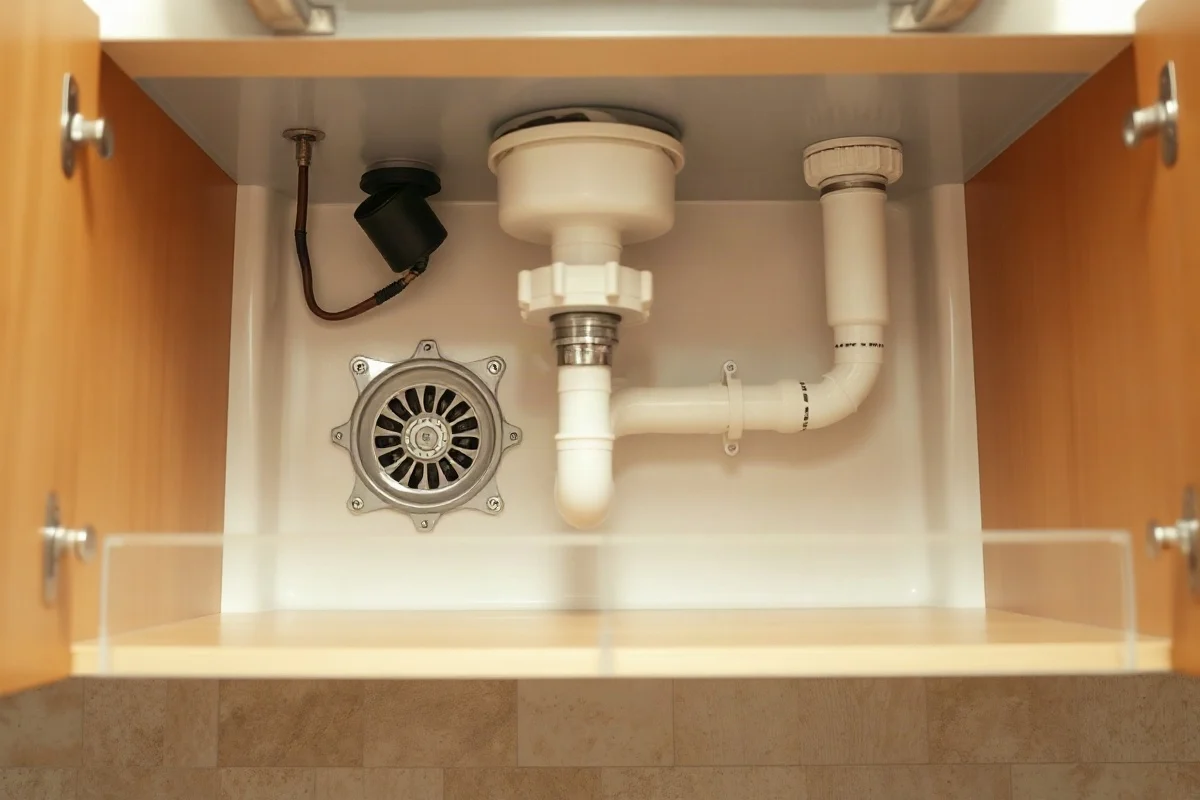
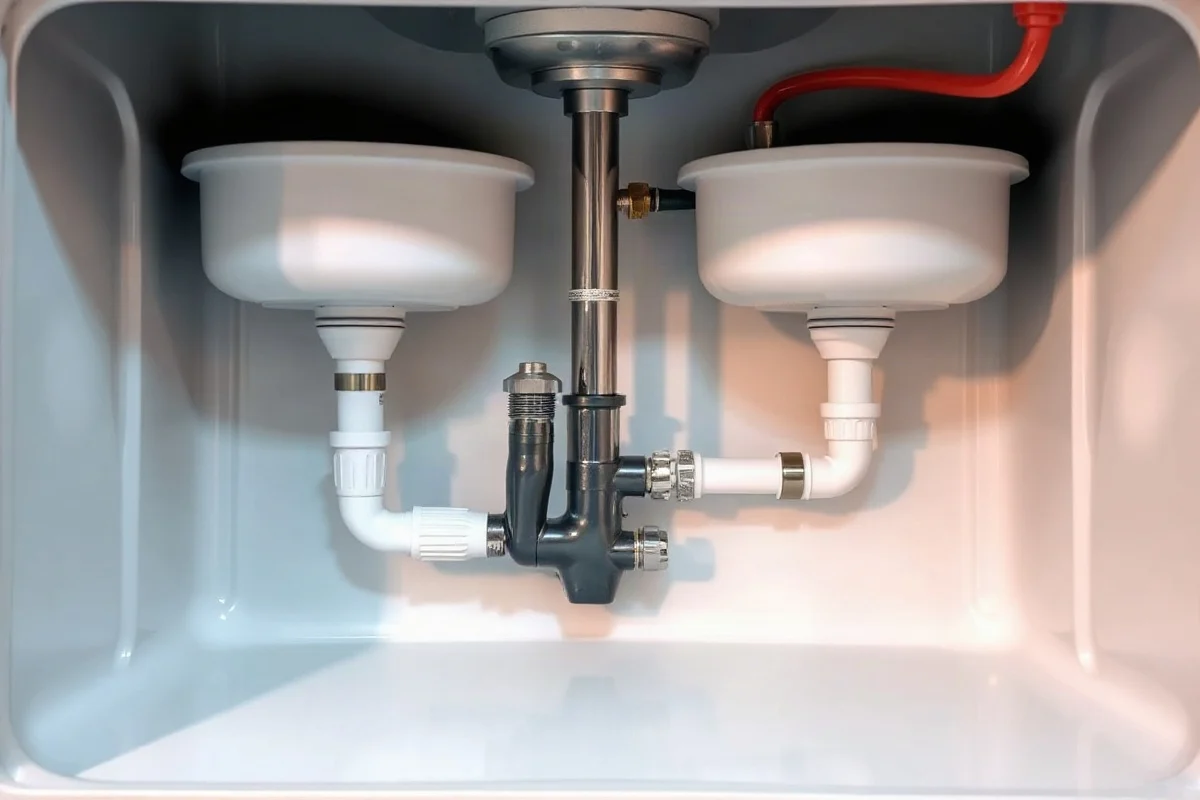
The kitchen drain is usually called the sink drain or drain opening. However, the plumbing beneath it is a complete drain assembly made up of the drain flange, basket strainer, tailpiece, trap, and drainpipe. If your kitchen sink has a garbage disposal, the disposal may connect directly to this assembly and serve as part of the drain path.
Knowing the correct names can make it easier to describe a clog, leak, odor, or replacement project to a plumber. It also helps you identify which part you can safely inspect yourself and which problems require professional attention. This guide explains the common names, how the assembly works, typical symptoms, safe homeowner checks, repair choices, and factors that affect the cost of service.
Common Names for the Kitchen Drain
People use several terms for the kitchen drain, and the right term depends on which part they mean:
- Sink drain: The general term for the opening and connected plumbing that carries wastewater away from the sink.
- Drain opening: The visible opening at the bottom of the basin.
- Basket strainer: The removable metal or plastic fitting inside the drain opening. It catches food particles and helps seal the sink.
- Drain flange: The upper rim of the drain fitting that sits around the opening in the sink.
- Tailpiece: The short vertical pipe connected below the basket strainer or garbage disposal.
- P-trap: The curved section of pipe that holds a small amount of water to block sewer gases from entering the home.
- Drainpipe or branch drain: The pipe that carries wastewater from the trap toward the larger drainage system in the wall or floor.
When contacting a plumbing company, saying “the kitchen sink drain is leaking” is usually enough to start the conversation. If you can identify the exact location, add details such as “the leak is at the P-trap” or “water backs up when the disposal runs.”
How the Kitchen Sink Drain Assembly Works
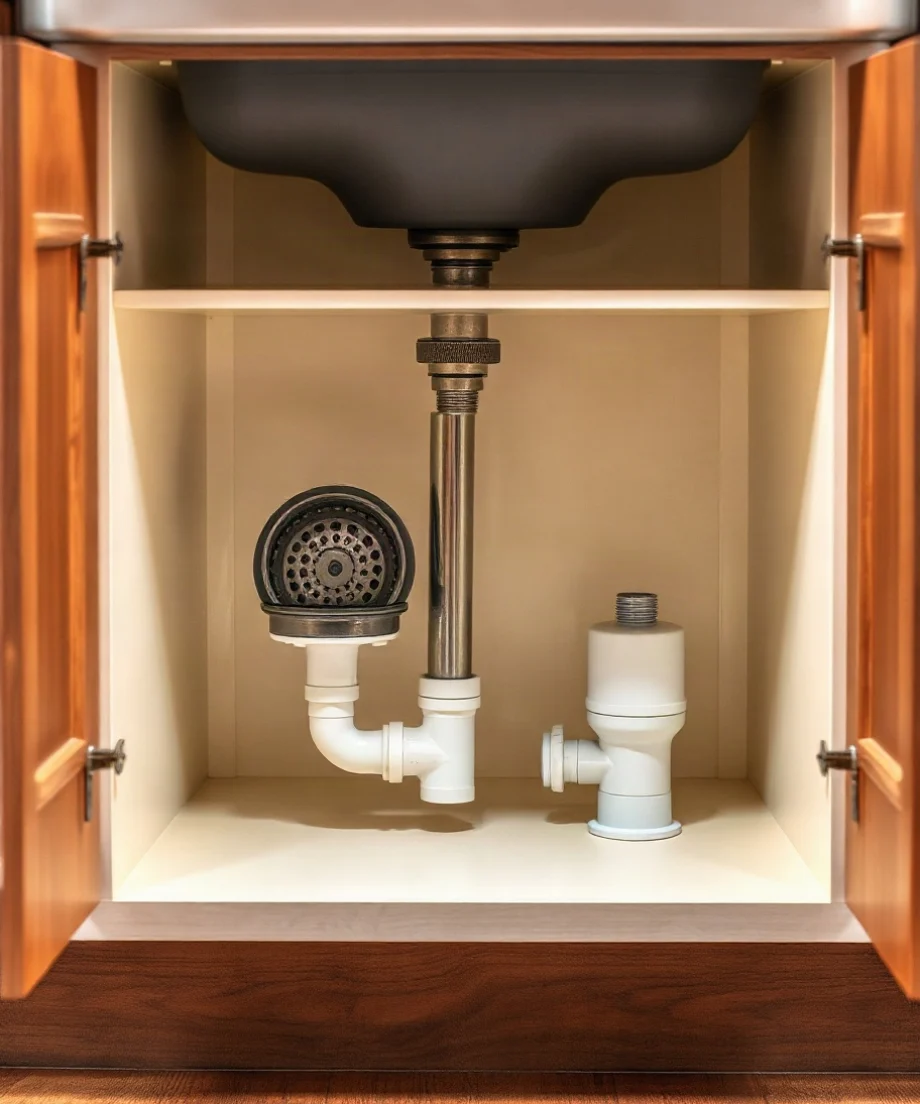
Water flows from the sink basin through the basket strainer. It then travels through the tailpiece and into the P-trap. From there, the water moves through the wall pipe and into the home’s larger drain and sewer system.
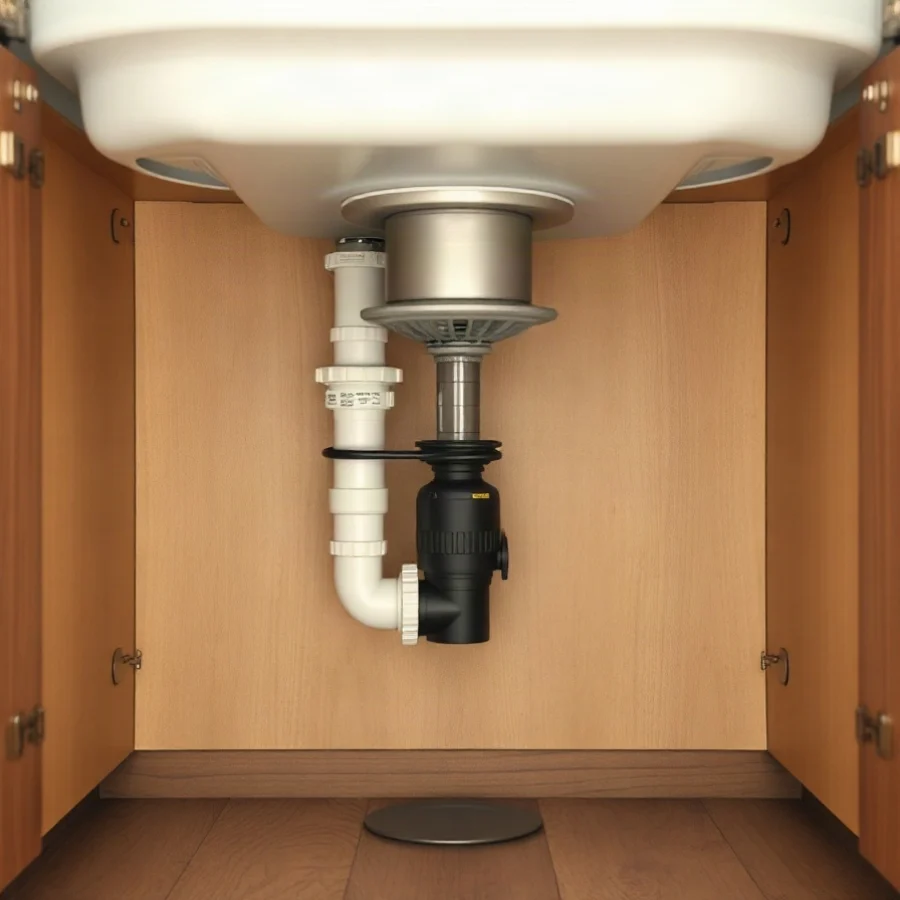
A double-bowl sink may have two basket strainers connected by a horizontal pipe. One bowl may connect to a garbage disposal while the other connects to a standard strainer. Depending on the layout, both sides may join before the P-trap. A dishwasher drain hose commonly connects near the disposal or to a dishwasher branch fitting under the sink.
The P-trap is important because its water seal helps prevent unpleasant sewer odors from coming through the drain. If the trap is damaged, disconnected, or improperly assembled, you may notice a leak, odor, or repeated drainage problem.
Common Kitchen Drain Problems and What They May Mean
Slow drainage
A sink that drains slowly may have grease, food residue, soap buildup, or other debris in the basket strainer, trap, or nearby drainpipe. A partial blockage farther down the line can also restrict flow. If the problem affects more than one fixture, the obstruction may be farther into the branch drain rather than directly beneath the sink.
Standing water or a complete backup
Standing water usually indicates a significant blockage. Do not continue running the faucet or garbage disposal because additional water can overflow onto cabinets and flooring. If plunging does not restore drainage, a qualified professional may need to inspect and clear the line. More information about warning signs is available in this guide to clogged drains.
Water leaking under the sink
A leak may come from a loose slip-joint nut, a worn washer, a cracked trap, a failed basket strainer seal, or a connection near the disposal. Water can also originate from the faucet supply lines or dishwasher hose and appear to be a drain leak.
Place a dry paper towel beneath each connection and run a small amount of water into the sink. Watch for the first location that becomes wet. This low-risk check can help identify the source, but avoid reaching into moving disposal components or disassembling connections that are corroded, stuck, or under unusual strain.
Bad odors
Odors may result from food debris, grease, buildup inside the drain, a dirty disposal, or a problem with the trap’s water seal. If the smell resembles sewage and returns after basic cleaning, the trap or venting arrangement may need professional evaluation.
Gurgling sounds
Gurgling can indicate restricted airflow, a partial blockage, or a drainage problem farther along the line. Occasional noise is not always an emergency, but persistent gurgling combined with slow drainage, backups, or odors deserves attention.
Safe Homeowner Checks
Several basic checks are generally low risk when performed carefully:
- Remove visible debris from the drain opening and basket strainer.
- Check beneath the sink for dripping connections or pooled water.
- Run water briefly while observing the trap and nearby joints.
- Use a sink plunger designed for the fixture, especially if the basin contains standing water.
- Clean a removable disposal splash guard if the disposal is turned off and cannot start unexpectedly.
- Keep the cabinet area dry and place a container beneath a minor trap leak until it can be repaired.
Do not mix chemical drain cleaners. Avoid using them if you may need to open the piping, because trapped chemicals can injure you or a technician. Do not put your hand into a garbage disposal, even when it appears to be off. If the disposal jams, disconnecting power at the appropriate shutoff and following the manufacturer’s instructions is safer than reaching inside.
When to Call a Qualified Professional
Contact a qualified local plumber when a clog keeps returning, multiple fixtures drain slowly, water leaks inside a cabinet or wall, or the drainpipe is cracked or badly corroded. Professional help is also appropriate when a drain must be rerouted, a sink or disposal is being installed, or the work may involve concealed piping or local code requirements.
Stop using the sink and seek prompt help for major flooding, sewage exposure, a leak near electrical equipment, or water entering walls, ceilings, or flooring. If a garbage disposal has electrical damage, a burning smell, or a problem that cannot be safely isolated, use a qualified professional rather than attempting electrical repairs.
A recurring kitchen backup may not be a simple sink clog. Possible causes include a blockage in the branch drain, damaged piping, poor drainage layout, or a sewer line problem. A professional may use a drain machine or camera inspection when the location and condition of the obstruction are unclear. For persistent drain issues, see the available drain cleaning services.
Repair or Replace the Drain Assembly?
A loose connection, worn washer, or damaged basket strainer can often be repaired without replacing the entire assembly. A plumber may recommend replacing a section when the trap is cracked, the threads are damaged, or corrosion prevents a reliable seal.
Replacement may make more sense when several components are deteriorated, the sink is being upgraded, or an older disposal and drain configuration no longer fits the new fixture. A proper repair should address the cause of the problem, not simply tighten a connection or add temporary sealant.
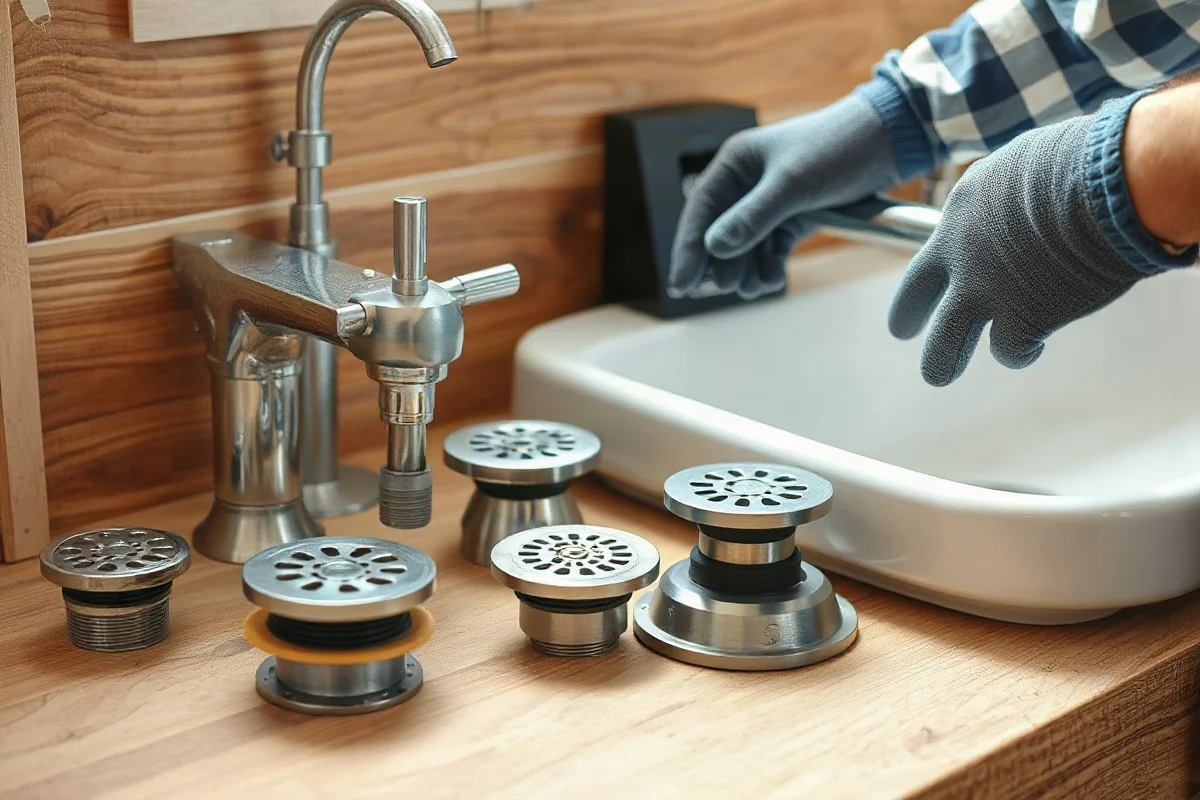
If you are replacing the sink itself, the drain opening size and the location of the existing plumbing affect the installation. A new sink may require different fittings, a new strainer, changes to the trap connection, or adjustments for a disposal and dishwasher hose. Sink installation is often best handled by a professional when the cabinet layout or existing piping is difficult to access. You can review general sink installation considerations before requesting service.
What Affects Kitchen Drain Repair Cost?
The price of service varies by the actual problem and the work required. Important factors may include:
- Whether the issue is a simple washer or connection repair, a clog, or damaged piping.
- How accessible the drain assembly is beneath the sink.
- Whether the problem is limited to the sink or extends into a branch drain or sewer line.
- Whether a garbage disposal, dishwasher connection, or double-bowl configuration is involved.
- The condition of existing fittings and whether corrosion makes removal difficult.
- Whether diagnostic work, specialized drain equipment, or a camera inspection is necessary.
- The plumber’s service policies and the time, materials, and complexity involved.
Ask for a clear explanation of the recommended repair before work begins. A trustworthy plumber should identify the suspected cause, explain whether repair or replacement is appropriate, disclose applicable charges, and describe any limitations without promising results that cannot be verified.
How to Choose the Right Kitchen Plumber
Look for a qualified local professional with experience in drain repair, sink plumbing, and garbage disposal connections. Before scheduling, explain the symptoms, when they began, whether other fixtures are affected, and whether there is active leaking or standing water.
Ask who will perform the work, what diagnostic steps may be needed, and how the estimate is determined. Confirm that the provider can handle concealed leaks, drain line problems, or electrical concerns when those issues are discovered. Local licensing, insurance, permit, and code requirements can vary, so verify the applicable information with the appropriate local authority or service provider rather than relying on a general online assumption. For more preparation advice, use this guide to hiring a plumber.
The simplest name is “kitchen sink drain,” but the system includes multiple parts that can fail independently. Identifying whether the problem is at the strainer, tailpiece, P-trap, disposal connection, or deeper drain line gives a plumber useful information and helps prevent the wrong repair. Start with safe visual checks, protect the cabinet and floor from water, and bring in qualified help for recurring clogs, concealed leaks, sewage concerns, major flooding, or any work involving electrical or code-related issues.
Comments
0No comments yet. Be the first to share a helpful note or question.
Leave a Comment
Your email address will not be published. Comments are reviewed before appearing on the site.