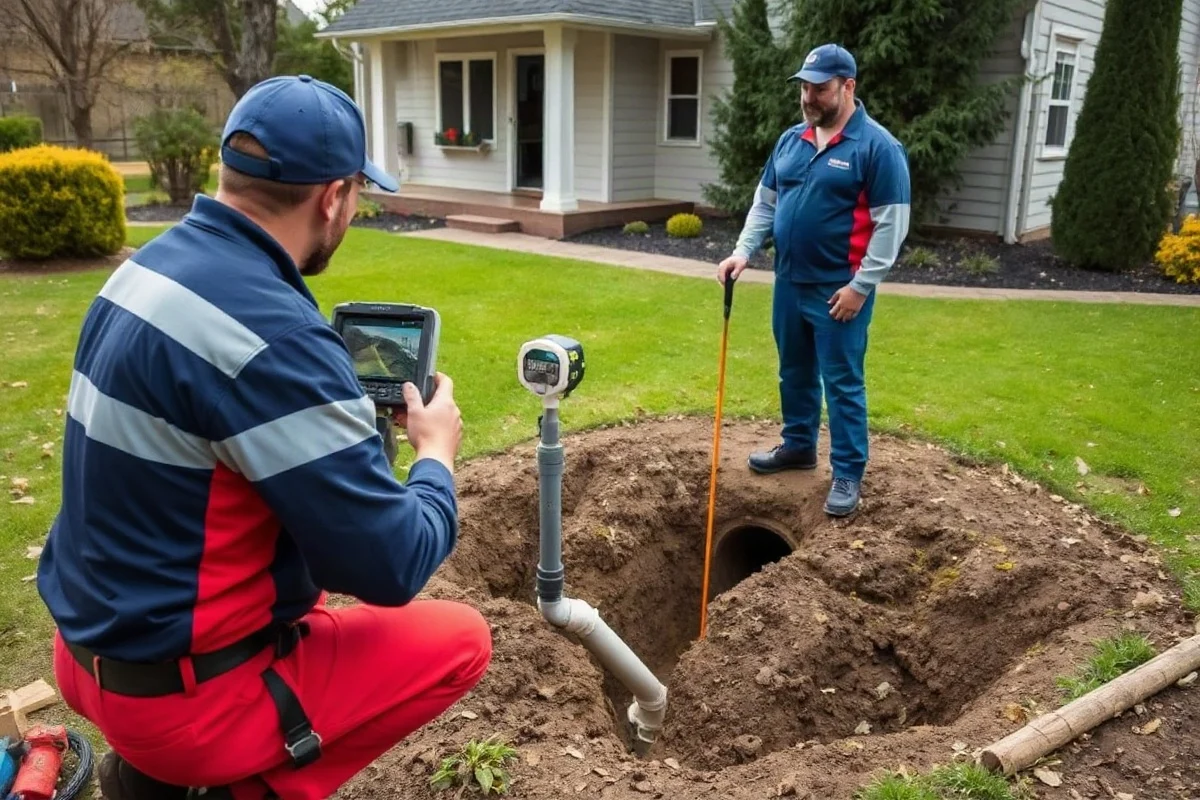
Plumbers find sewer line leaks by identifying drainage and sewage symptoms, testing how the system behaves, and inspecting the inside of the pipe with specialized equipment. The most useful tools often include a sewer camera, locating equipment, smoke or dye testing in appropriate situations, and targeted excavation or access through a cleanout. Because sewer leaks can expose people to contaminated wastewater and may involve buried or concealed piping, diagnosis and repair should generally be handled by a qualified local professional.
Why Sewer Line Leaks Can Be Difficult to Locate
A sewer line usually runs beneath floors, walls, landscaping, driveways, or other structures. A leak may begin at a joint, crack, damaged fitting, failed connection, or collapsed section of pipe. Wastewater can then travel through soil or along the outside of a pipe before appearing somewhere that is far from the actual defect.
This means the wet spot, foul odor, or drain problem you notice may not identify the exact location of the leak. A careful plumber first separates sewer problems from other plumbing issues, such as a supply-line leak, a clogged branch drain, a failing toilet seal, or groundwater entering a basement or crawl space.
Common Signs of a Sewer Line Leak
One symptom alone does not prove that a buried sewer pipe is leaking. A combination of symptoms is more informative, especially when the problem affects several fixtures or repeatedly returns after cleaning.
- Multiple slow or blocked drains: If toilets, showers, tubs, and sinks drain slowly at the same time, the blockage may be in the main sewer line rather than in one fixture.
- Recurring backups: A drain that clears temporarily but backs up again can indicate root intrusion, a damaged pipe, heavy buildup, or a structural defect.
- Sewage odors: Persistent foul smells indoors, beneath a building, or outdoors may point to a broken pipe, an open cleanout, a failed connection, or a venting problem.
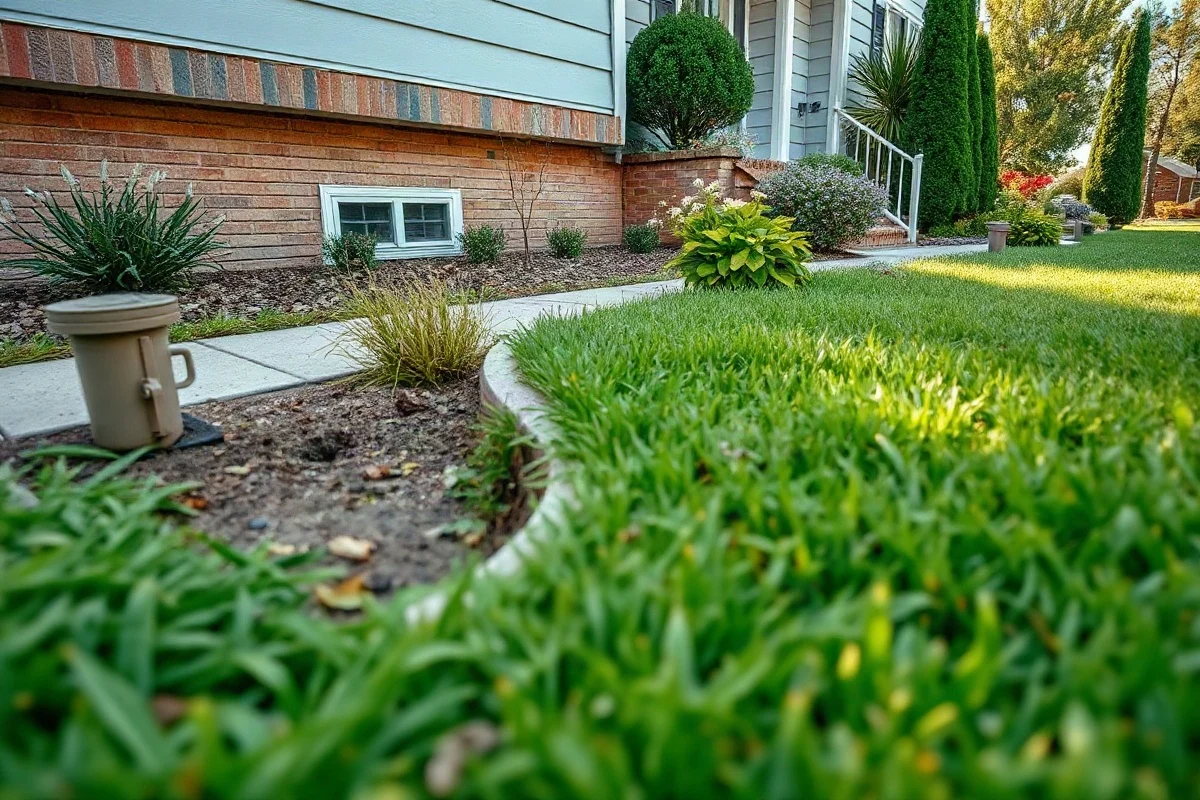
- Unusually green or fast-growing grass: A buried sewer leak can provide moisture and nutrients to nearby vegetation. This clue is not conclusive because irrigation, rain, and other leaks can create the same pattern.
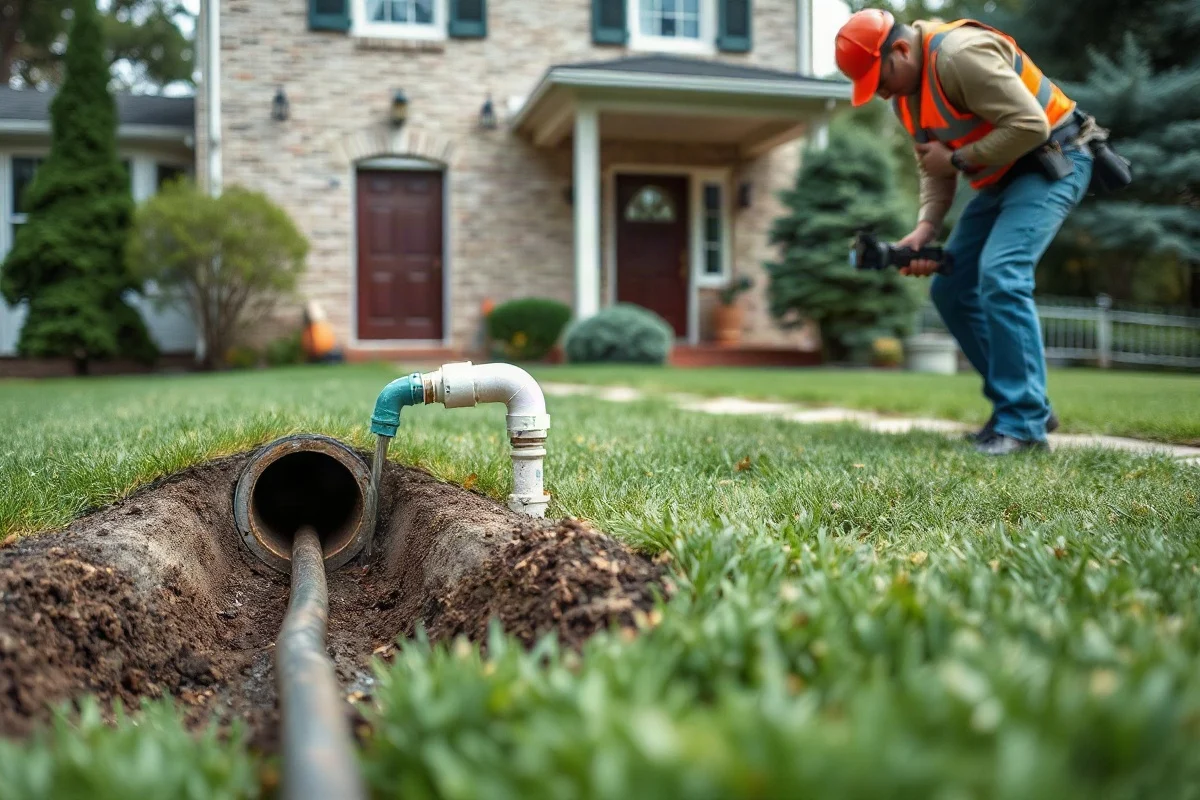
- Wet or sunken ground: Soft soil, standing water, sinkholes, or a depression along the sewer route may indicate escaping wastewater or soil erosion.
- Gurgling toilets or drains: Bubbling and gurgling can occur when air is trapped by a blockage or when the sewer system is not draining properly.
- Unexplained indoor moisture: Dampness around a slab, crawl space, basement, or floor may result from a sewer leak, but a water-supply leak or foundation issue is also possible.
When sewage is backing up into the home, avoid contact with the water and keep children and pets away. Sewage exposure is a health hazard. A qualified local plumber should evaluate the condition, and significant contamination may also require professional cleanup.
How Plumbers Diagnose the Leak
1. They review the symptoms and plumbing layout
The diagnostic process often begins with questions about when the problem occurs, which fixtures are affected, whether the issue follows heavy rain, and whether prior drain cleaning or repair has helped. The plumber may also review the location of cleanouts, bathrooms, additions, septic components if applicable, and the point where the building sewer connects to the public system or private treatment system.
This information helps determine whether the problem is likely in a fixture drain, an interior branch line, the building drain, or the buried sewer line outside the structure.
2. They inspect accessible cleanouts
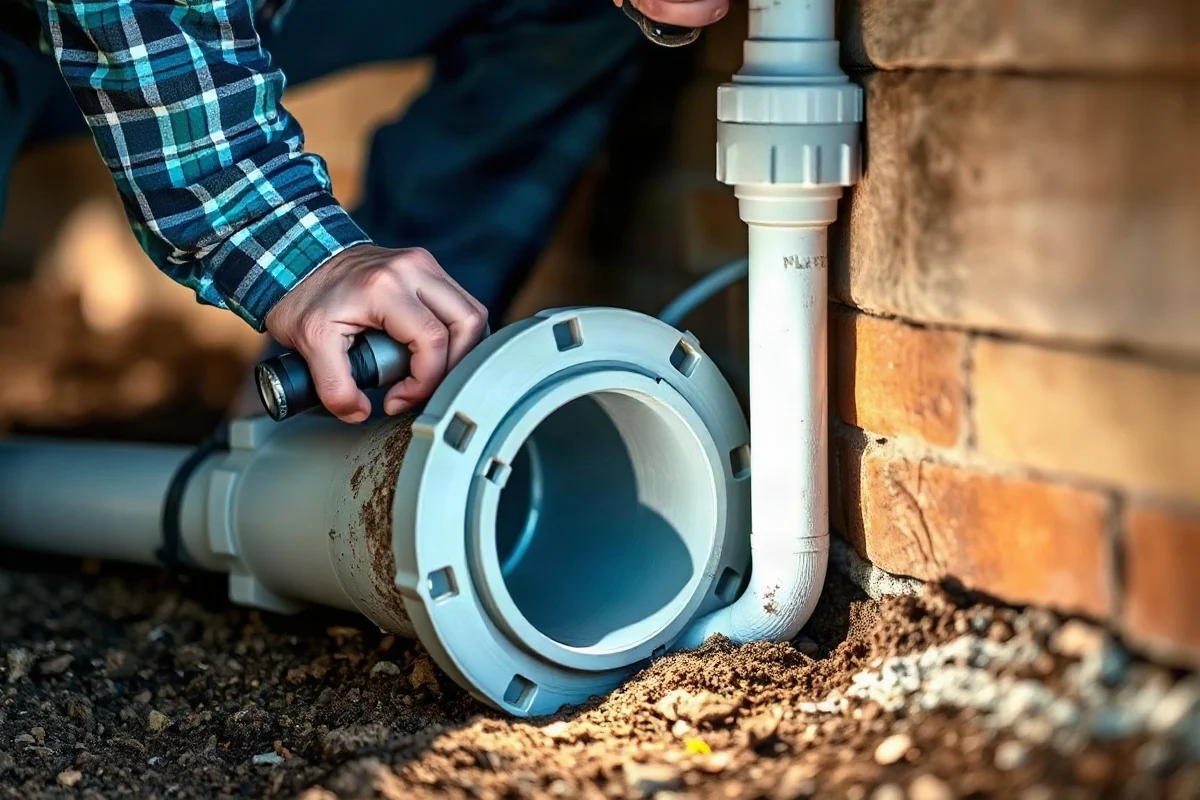
A cleanout provides access to the drainage piping without removing a toilet or opening a wall. The plumber may open the cleanout carefully to check for standing wastewater, flow direction, blockage location, or unusual conditions inside the pipe. A full cleanout can suggest a downstream obstruction, while an empty line does not necessarily rule out a leak.
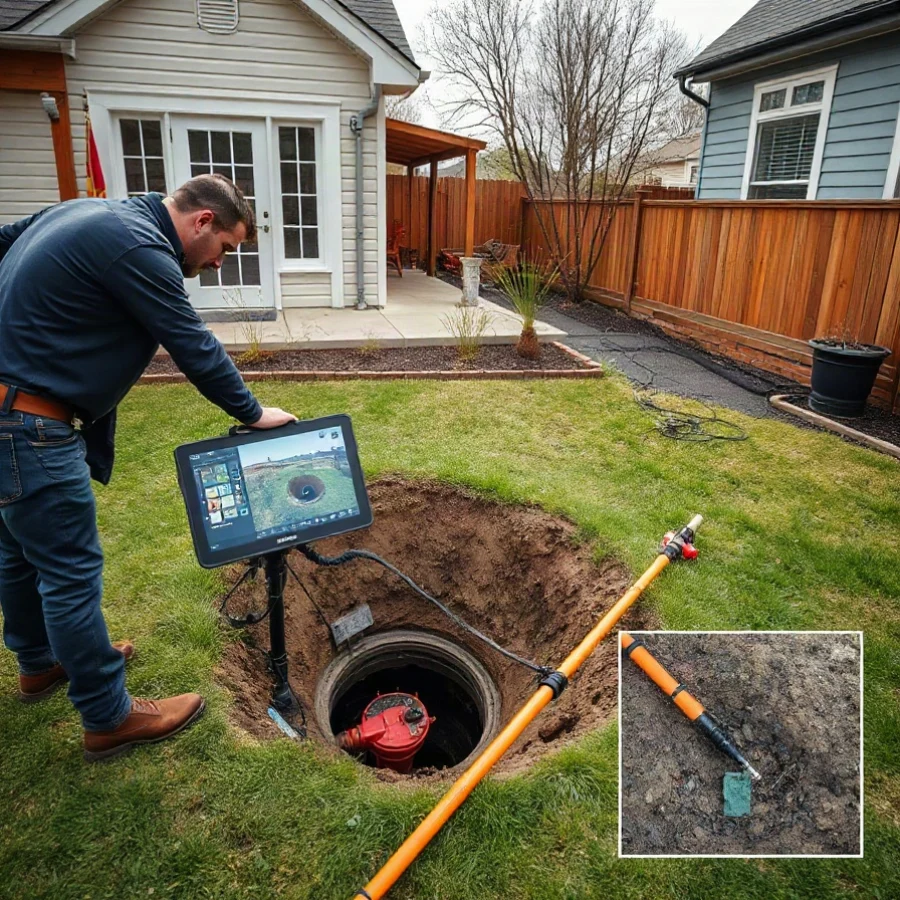
Homeowners should not open a cleanout if sewage is under pressure, the cap is damaged, the area is flooded, or they are unsure how to do it safely. Wastewater can discharge unexpectedly, and some cleanouts may be difficult to reseal.
3. They perform a sewer camera inspection
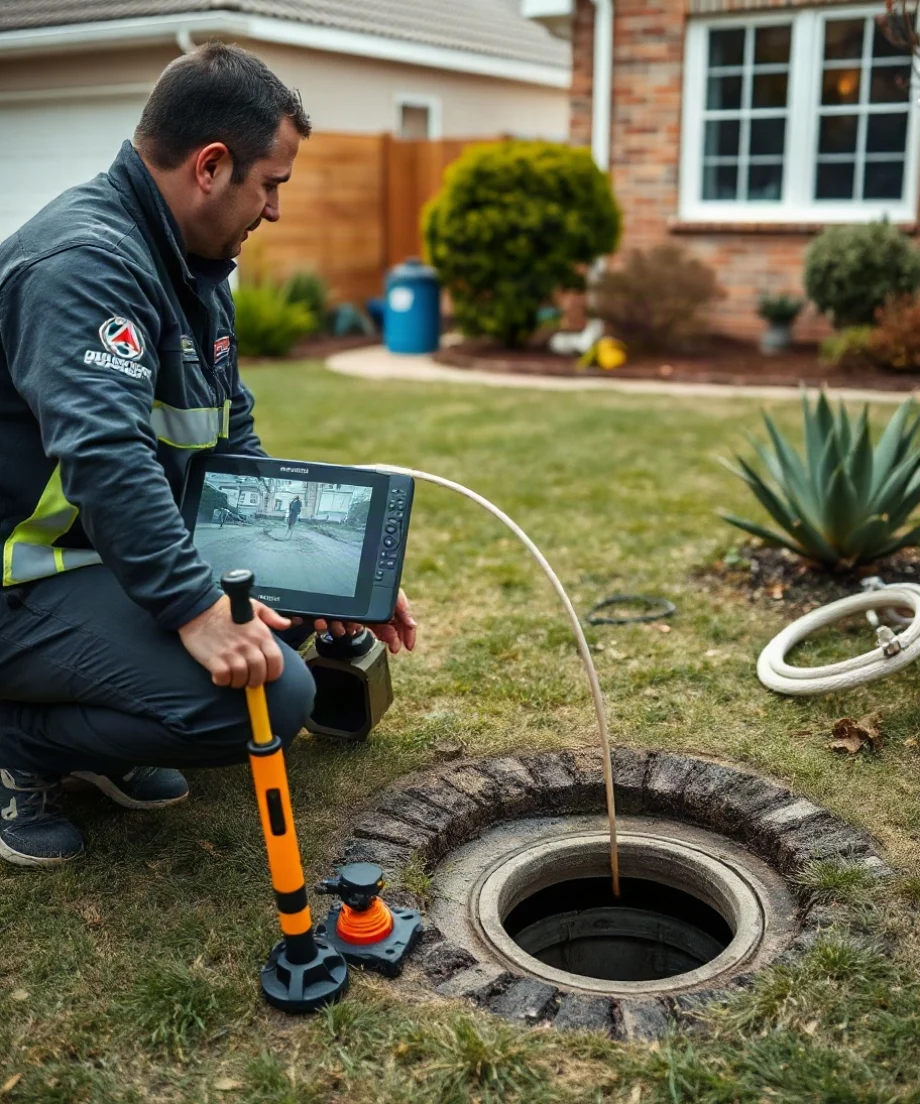
A sewer camera is one of the most useful tools for locating defects. The plumber feeds a flexible camera through a cleanout or another access point and views the interior of the pipe on a monitor. The inspection can reveal cracks, separated joints, root intrusion, corrosion, heavy buildup, offsets, crushed sections, and standing water caused by poor alignment or sagging.
Many inspection cameras include a transmitter, sometimes called a sonde, near the camera head. Once the defect is identified, the plumber can use a locator above ground to estimate its position and depth. This can reduce unnecessary digging and help create a more focused repair plan. A camera inspection may not show every problem, however. Severe blockages, collapsed pipes, difficult bends, or limited access can restrict the view.
Learn more about what this diagnostic process involves in our guide to drain camera inspections.
4. They use flow and water tests
A plumber may run water through specific fixtures while observing how quickly it reaches the sewer line or whether the system backs up. Testing fixtures separately can help distinguish a branch-line issue from a main-line problem. In some cases, controlled water testing can identify whether a section holds or loses water, although the exact method depends on the plumbing layout and site conditions.
Testing should not be improvised when sewage is already backing up. Adding more water can worsen an overflow and spread contamination.
5. They may use smoke or dye testing
Smoke testing can help locate improper openings, damaged vent connections, or leaks that allow sewer gases to enter a building. Dye testing may help trace water movement in certain systems, but it is not appropriate for every property or every suspected defect. The plumber should choose a method that fits the piping, the suspected leak, and the risk of releasing wastewater or odors indoors.
6. They locate the pipe before excavation
After identifying a likely defect, the plumber may use electronic locating equipment, site measurements, utility information, or other methods to estimate the pipe's route. Before digging, property owners and contractors must address underground utility safety and any applicable local requirements. Homeowners should not excavate around a suspected sewer line without understanding the risks of buried utilities, unstable soil, contaminated water, and damage to the pipe.
Safe Checks Homeowners Can Make
Homeowners can gather useful information without opening buried piping or handling sewage:
- Note which fixtures are slow, blocked, or gurgling.
- Check whether the problem occurs when a toilet is flushed or when a large amount of water is used.
- Look for unusual odors, wet soil, sinkholes, or vegetation changes outdoors from a safe distance.
- Check whether a visible cleanout cap is missing or damaged, without opening it.
- Record when symptoms began and whether they are worse after rain.
- Keep people and pets away from sewage, standing wastewater, and saturated soil.
Do not pour harsh chemical drain cleaners into a system suspected of having a sewer-line defect. These products may create a hazard for anyone who later opens the pipe and may not address a structural problem. Avoid using repeated high-pressure methods unless a professional has confirmed that the pipe can safely withstand the procedure.
Repair or Replacement: How the Decision Is Made
Finding a leak does not automatically mean the entire sewer line must be replaced. The appropriate solution depends on the pipe's material, age and condition, the number and location of defects, accessibility, soil movement, root intrusion, and whether the line can be restored reliably.
A localized repair may be reasonable when the defect is limited to one accessible section and the remaining pipe is structurally sound. The repair could involve replacing a section, correcting a separated joint, or repairing a damaged connection.
Trenchless rehabilitation may be considered for some pipe layouts and materials. Depending on the system and site, methods can include lining or pipe bursting. These approaches are not suitable for every damaged, collapsed, misaligned, or inaccessible line, so a professional should explain the limitations and expected result.
Full replacement may be more practical when the pipe has widespread damage, repeated failures, severe collapse, extensive root intrusion, or poor alignment. Replacement can also be considered when previous repairs have not solved the underlying problem. Ask the plumber to identify the evidence supporting the recommendation rather than relying only on a general statement that the pipe is old.
What Affects Sewer Line Repair Costs?
There is no reliable single price for sewer leak repair because every property and pipe route is different. Cost is affected by factors such as:
- The distance between the building and the suspected defect
- Whether the line is accessible through a cleanout
- The pipe's material, diameter, depth, and condition
- The amount of excavation, surface removal, and restoration required
- Roots, unstable soil, groundwater, or other site complications
- Whether a localized repair, rehabilitation, or replacement is appropriate
- The need for additional inspections, cleanup, pumping, or specialized equipment
For practical planning information, see our overview of plumbing cost factors. A trustworthy estimate should explain the suspected location, proposed method, included work, possible complications, and any work that is specifically excluded.
When to Call a Professional Immediately
Arrange qualified local help promptly if sewage enters the home, several fixtures back up, the ground is collapsing, a large amount of wastewater is present, or a sewer leak may be affecting a foundation, crawl space, or occupied area. Treat any sewage exposure as unsafe. If a suspected leak is near electrical equipment, do not enter standing water or touch electrical components; contact an appropriate professional and follow local emergency guidance.
For severe backups or active flooding, an emergency plumber may be appropriate. A sewer problem that is not immediately flooding the home still deserves timely evaluation because leaking wastewater can damage soil, structures, landscaping, and indoor finishes.
How to Choose the Right Sewer Plumber
Look for a professional who regularly handles sewer diagnosis and repair, not only fixture replacements or basic drain clearing. Before authorizing work, ask:
- Will you perform a camera inspection, and can I review the findings?
- How will you locate the suspected defect from above ground?
- Is the recommendation based on a localized failure or widespread pipe damage?
- What repair options are practical for this property?
- How will sewage, excavation, and surface restoration be handled?
- What is included in the written estimate, and what conditions could change it?
- What documentation do you provide for the completed work?
Verify that the contractor is qualified for the type of work involved and ask about applicable local licensing, insurance, permits, and utility-safety procedures rather than assuming they are the same everywhere. Avoid pressure to excavate immediately when the diagnosis has not been explained. A clear camera report, location information, and written repair scope make it easier to compare options.
Sewer line leaks are usually found through a combination of symptom analysis, access-point testing, camera inspection, and precise locating—not by digging at the first wet spot. Safe homeowner observations can help a plumber narrow the problem, but sewage exposure, buried-pipe work, excavation, and structural repairs should be left to qualified professionals. For more information about sewer-related services and repair planning, visit the sewer line service guide.
Comments
0No comments yet. Be the first to share a helpful note or question.
Leave a Comment
Your email address will not be published. Comments are reviewed before appearing on the site.