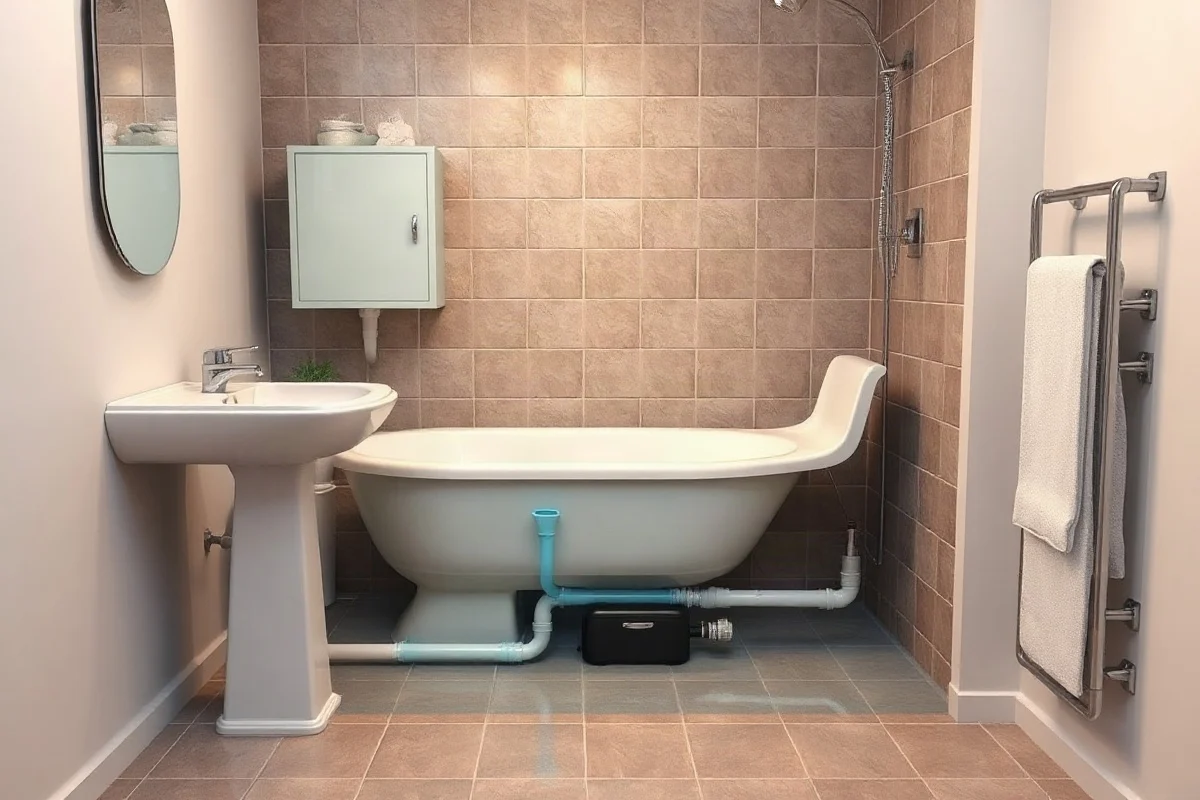
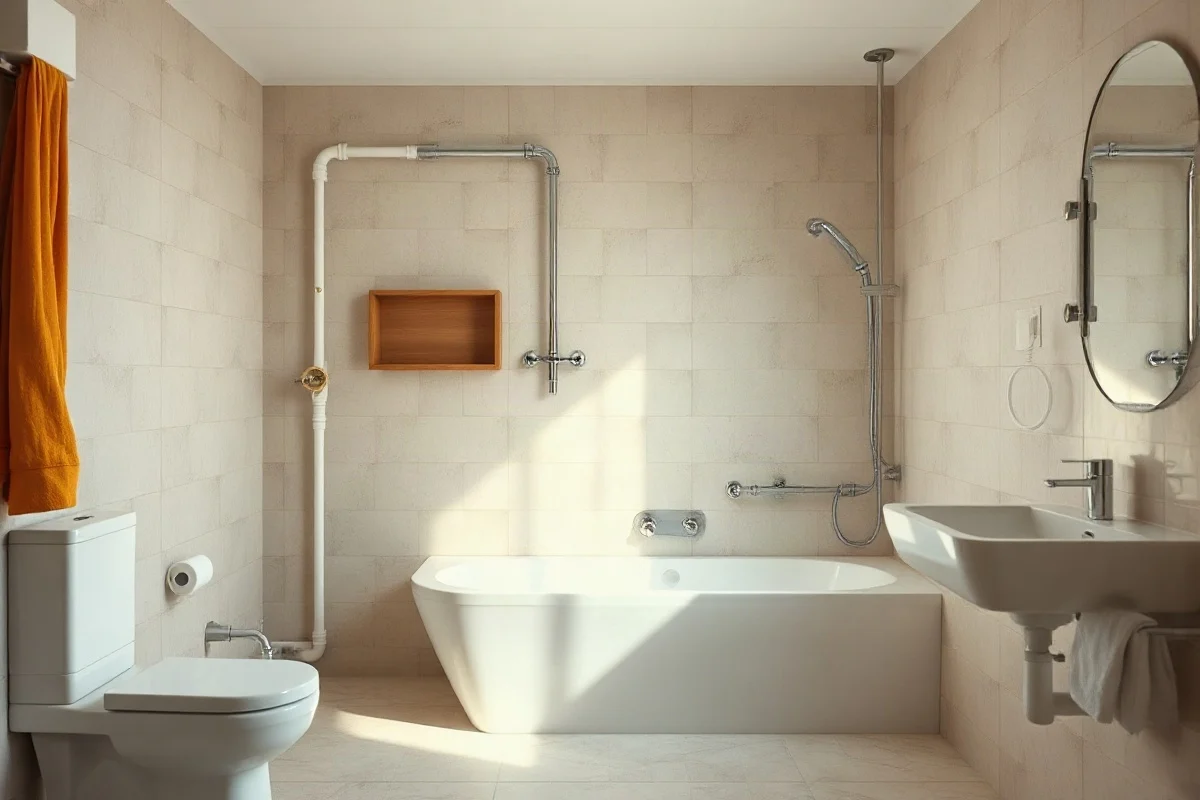
Bathroom plumbing works through two connected systems: pressurized supply pipes bring clean hot and cold water to each fixture, while drainpipes carry used water away through a trap and the building’s drainage system. Vent pipes allow air into the drain system so water can flow properly and help direct sewer gases outside. Toilets, sinks, showers, tubs, and bidets each connect to these systems in slightly different ways, but they all depend on reliable water pressure, watertight connections, proper drainage, and adequate venting.
Understanding this basic layout can help you recognize common problems before they cause serious damage. It can also show you which checks are reasonable for a homeowner and which repairs require a qualified local plumber.
The three parts of a bathroom plumbing system
Water supply lines
Supply lines carry pressurized water from the main plumbing system to bathroom fixtures. One line normally supplies cold water, while another supplies hot water from the building’s water-heating system. Small shutoff valves are often installed below sinks and behind toilets so the water to one fixture can be turned off without shutting down the entire property.
Flexible connector hoses may connect the shutoff valves to a faucet or toilet tank. Tub and shower valves are usually connected inside the wall, which means their supply connections are not always visible. Because concealed connections are difficult to inspect, a leak around a shower valve or behind a wall should be handled carefully.
Drainpipes and traps
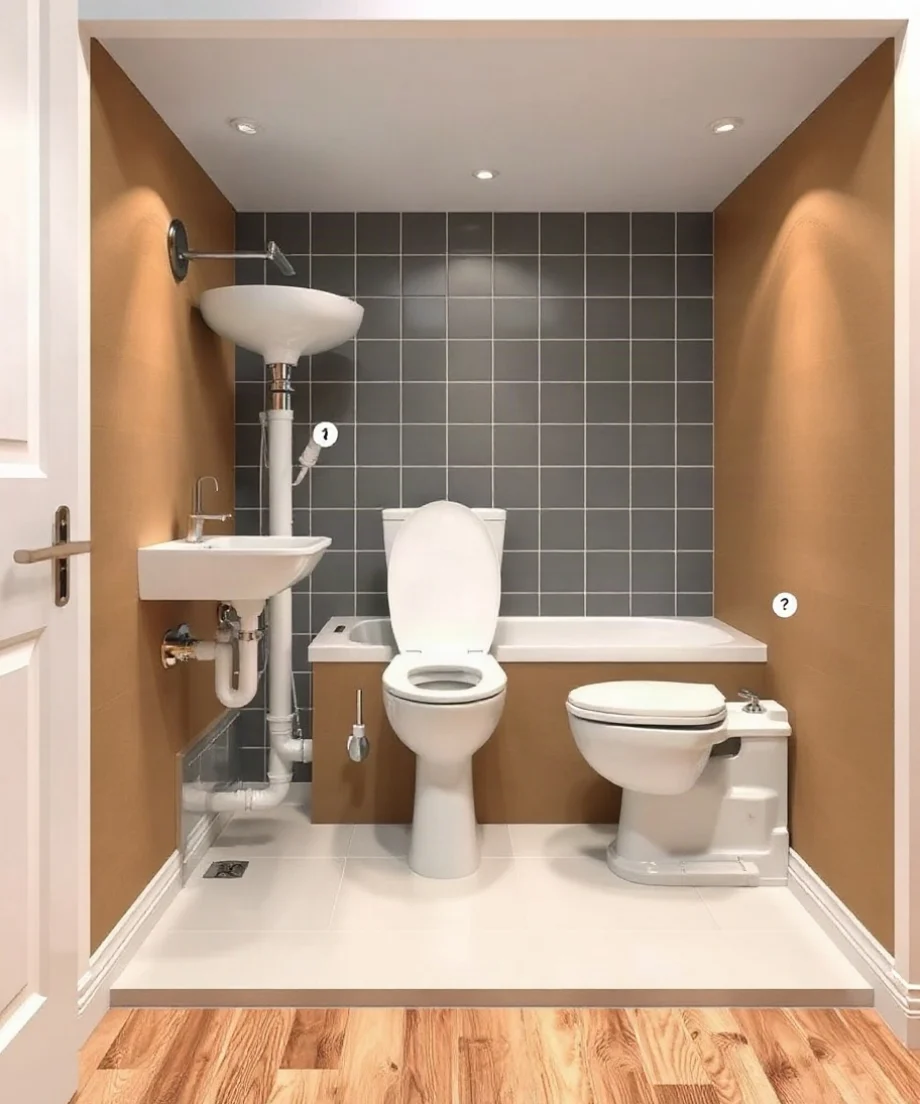
After water leaves a sink, tub, or shower, it enters a drainpipe. Most fixtures, except toilets in their usual configuration, use a trap. A trap is a curved section of pipe that holds a small amount of water. This water barrier helps keep sewer gases from entering the bathroom.
A sink commonly has a removable trap beneath the basin. A tub or shower trap is usually below the floor and may be less accessible. Toilets have a built-in trapway inside the porcelain fixture. If a trap becomes blocked, the fixture may drain slowly, make unusual sounds, or back up.
Vent pipes
Drainage needs air as well as an open path. Vent pipes connect to the drain system and allow air to balance pressure as water moves through the pipes. They also help keep traps from being emptied by suction. Vent piping generally extends through the structure and outdoors, although the exact arrangement varies by building.
A blocked or poorly functioning vent may cause gurgling drains, slow drainage, unpleasant odors, or water that moves unevenly through the system. Since vents may be located in walls, ceilings, attics, or on the roof, investigating them can involve fall hazards and concealed plumbing. A qualified professional should evaluate suspected vent problems that cannot be explained by a simple, accessible clog.
How individual bathroom fixtures work
Sink
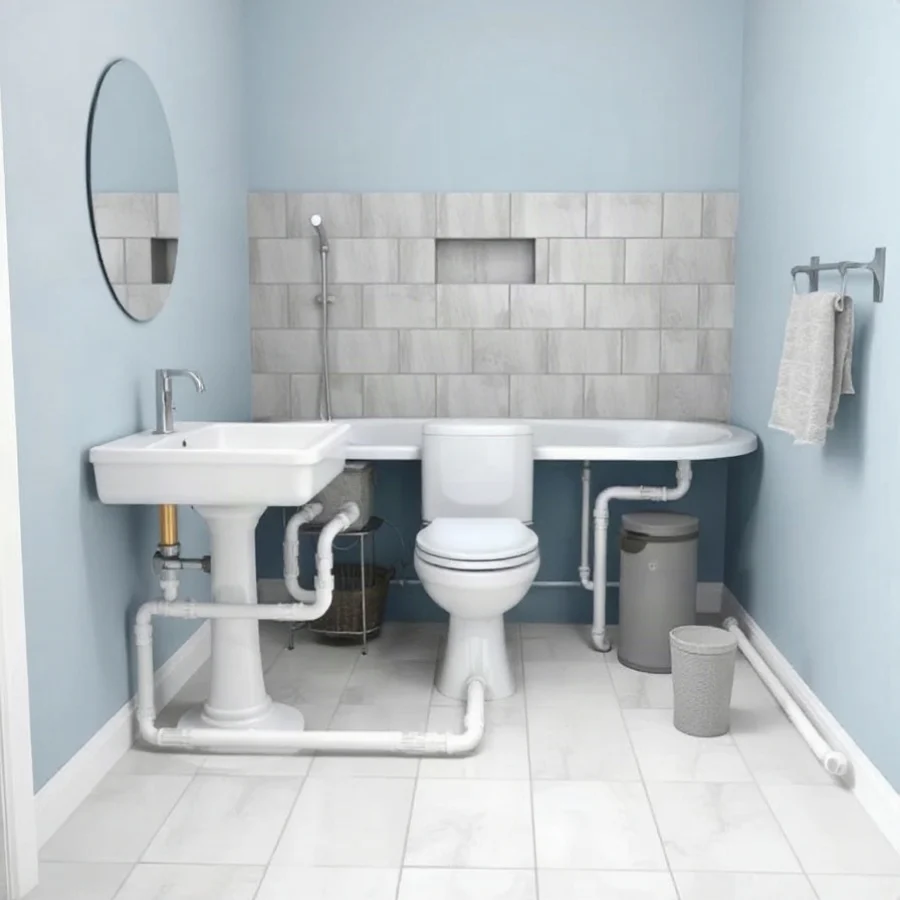
A bathroom sink receives hot and cold water through the faucet. When the faucet is opened, pressure pushes water through the valve and spout. Used water flows through the drain opening, usually passes through a stopper assembly, enters the trap, and continues into the branch drain.
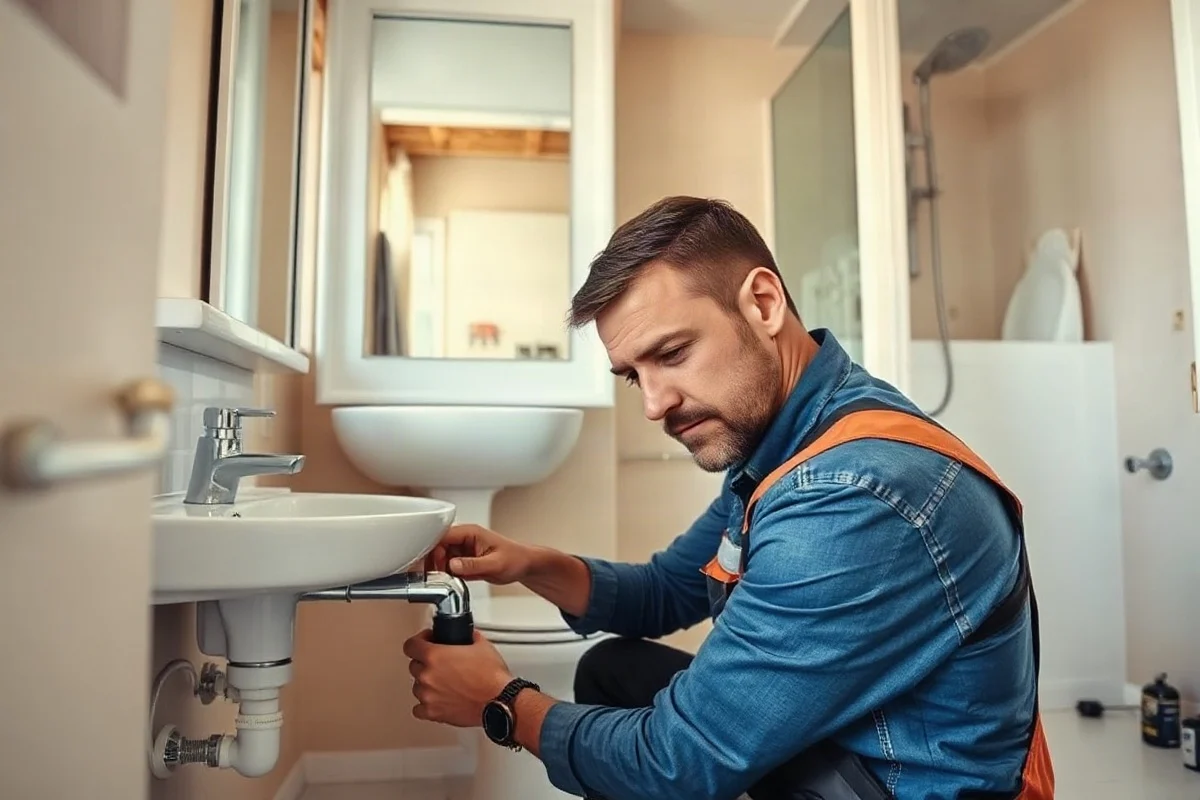
Common sink problems include a dripping faucet, a loose supply connection, a clogged stopper, a slow drain, and a leaking trap. Mineral buildup, worn internal cartridges or washers, hair, soap residue, and deteriorated seals can all contribute. You can often inspect the visible connections under the sink, but stop using the fixture if water is reaching the cabinet, wall, or floor.
Toilet
A toilet uses a supply line to fill its tank or valve assembly. Pressing the flush handle or button releases water into the bowl, where the flow carries waste through the toilet’s internal trapway and into the drain. A fill valve then allows the tank to refill, and a shutoff valve controls the supply line near the wall or floor.
A toilet that keeps running may have a problem with the flapper, fill valve, flush valve, float, or adjustment. A weak flush may result from low water in the tank, a partial blockage, mineral deposits, or a drainage problem. Water around the base can indicate a failed seal, a loose connection, a cracked fixture, or water that is running down from another location.
A homeowner can usually turn off the toilet’s accessible shutoff valve and check whether the supply hose or tank connection is visibly leaking. Do not keep flushing an overflowing toilet. Turn off the shutoff valve or lift the tank lid and stop the fill valve if necessary, then arrange appropriate help. For additional guidance, see this toilet repair guide.
Bathtub and shower
A tub or shower valve mixes hot and cold water and sends it to a tub spout, showerhead, or handheld sprayer. A diverter may direct the water between the tub spout and showerhead. The drain carries used water through a trap below or near the fixture before it enters the larger drainage system.
Slow tub and shower drains are often caused by hair, soap residue, or buildup near the drain opening. A drain cover may be removable for cleaning, but do not force parts that are corroded or difficult to access. Chemical drain products can damage some plumbing components, create hazardous splashes, and make later work more dangerous. If plunging and careful surface cleaning do not improve the problem, a professional can determine whether the restriction is deeper in the drain.
Water stains, soft flooring, peeling paint, or damp areas around a tub or shower may indicate a failed seal, damaged grout, a leaking valve, or a concealed pipe problem. Because water can travel before it becomes visible, do not assume the wettest area is the source.
What common bathroom plumbing symptoms can mean
| Symptom | Possible causes | Safe first check |
|---|---|---|
| Slow sink, tub, or shower drain | Hair, soap buildup, a partial blockage, or a venting issue | Remove visible debris and check the accessible stopper or drain cover |
| Dripping faucet | Worn cartridge, washer, valve seal, or mineral buildup | Confirm the leak is from the faucet and close the fixture shutoffs before any minor work |
| Low water flow | Blocked aerator or showerhead, partially closed valve, supply restriction, or pressure issue | Clean an accessible aerator or showerhead and verify valves are fully open |
| Toilet runs continuously | Flapper, fill valve, float, or flush mechanism problem | Remove the tank lid and observe whether water is entering or escaping continuously |
| Bad odor | Dry trap, buildup, sewer-related issue, or a damaged connection | Run water in an infrequently used fixture; call a professional if odor persists |
| Water under a sink | Loose supply connection, trap leak, drain seal, or faucet leak | Dry the area and observe the exact connection while briefly running water |
Safe homeowner checks versus professional work
Checks you can usually perform safely
- Locate the main water shutoff and the individual fixture shutoff valves.
- Look for visible drips, staining, corrosion, cracked hoses, or moisture under a sink.
- Remove hair or debris from an accessible drain cover or stopper.
- Clean a faucet aerator or showerhead if it can be removed without force.
- Use a plunger correctly for a minor, localized clog.
- Check a toilet tank for an obvious running mechanism or unusually high water level.
- Keep cabinets and floors dry so a small leak is easier to identify.
Before handling a connection, close the applicable shutoff valve and place a container or towel beneath it. If the valve does not operate, the connection is corroded, or water continues to flow, stop and seek professional help. Never rely on a damaged valve when a leak is actively worsening.
Work that should be left to a qualified professional
Call a qualified local plumber for concealed leaks, burst pipes, repeated backups, damaged drain lines, sewer odors that persist, water damage inside walls or floors, failed shower valves, major toilet leaks, or work involving structural access. Sewage exposure is a health hazard and should not be cleaned or repaired casually.
Gas lines, electrical connections, major flooding, and any unsafe condition require prompt professional attention. If water is near electrical equipment, avoid the area and use appropriate emergency services or qualified local help. Do not open walls or ceilings simply to investigate a suspected leak unless you understand the risks and have a plan to control the water.
Repair or replacement: how to decide
A repair may make sense when the fixture is in good condition and the problem is limited to a replaceable component, such as a faucet cartridge, toilet fill valve, supply hose, stopper, or accessible seal. Replacement may be more practical when a fixture is cracked, heavily corroded, repeatedly failing, difficult to obtain parts for, or causing damage around it.
The correct decision depends on the source of the problem, the condition of connected plumbing, accessibility, and the likelihood of another failure. A professional inspection can help separate a simple fixture repair from a larger problem behind the wall or below the floor. Avoid choosing a replacement based only on appearance if the drain, supply, or mounting conditions also need attention.
What affects bathroom plumbing costs?
Bathroom plumbing costs vary by the type and location of the problem. Important factors include whether the issue is an emergency, how accessible the damaged component is, the time needed to diagnose it, the fixture or pipe materials required, the extent of water damage, and whether walls, ceilings, flooring, or cabinetry must be opened and restored.
A visible faucet leak is usually a different type of job from a concealed shower leak or a recurring drain backup. Ask for a clear explanation of the diagnosis, the proposed repair, parts and labor, possible additional work, and what is excluded. Local rates and applicable requirements vary, so an honest professional should evaluate the property rather than promise a universal price before seeing the conditions.
How to choose the right plumber
Look for a plumber who is qualified for the work, communicates clearly, and can explain both the immediate repair and the likely underlying cause. Ask whether the company has experience with the specific issue, such as a concealed bathroom leak, sewer backup, water damage, or fixture replacement. Confirm the business’s current credentials and insurance directly, because requirements differ by location and project.
Before work begins, request a written description of the repair and ask how the plumber will protect finished surfaces. Be cautious of pressure to approve unrelated work without an explanation, vague estimates, or claims that cannot be verified. For urgent flooding or a rapidly worsening leak, use a reliable emergency plumbing service and shut off water if you can do so safely.
Keeping bathroom plumbing in good condition
Preventive habits can reduce avoidable problems. Do not flush wipes, paper towels, hygiene products, or other items that can obstruct the drain system. Use a drain cover to catch hair, avoid hanging heavy items from exposed supply lines, and repair dripping faucets before mineral buildup or cabinet damage worsens. Check under sinks and around toilets periodically for moisture, staining, or a musty smell.
Know where your fixture shutoffs and main water shutoff are located. If a fixture begins leaking, a fast shutoff can limit damage while you arrange help. For persistent clogs, repeated toilet backups, unexplained water use, or signs of a hidden leak, professional diagnosis is safer than repeatedly treating the symptom. Bathroom plumbing is a connected system, and a problem that appears small at one fixture can sometimes originate farther inside the supply, drain, or vent network.
Comments
0No comments yet. Be the first to share a helpful note or question.
Leave a Comment
Your email address will not be published. Comments are reviewed before appearing on the site.