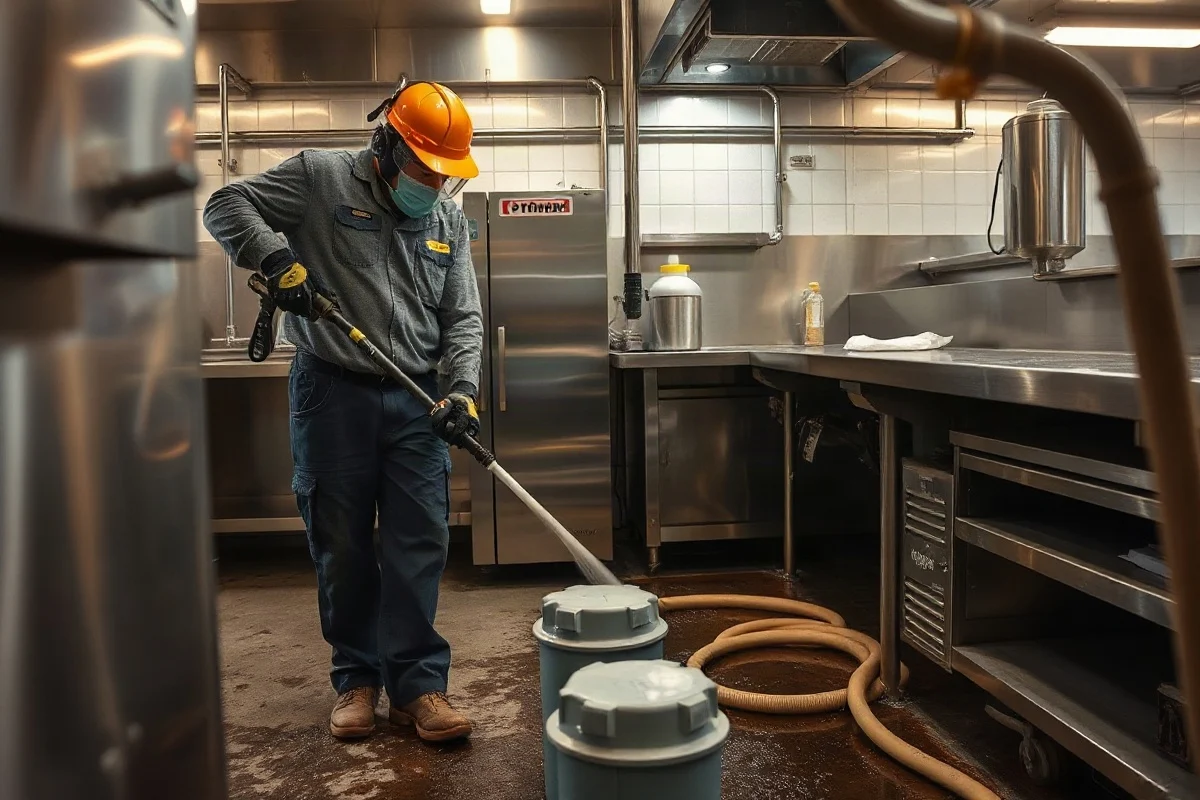
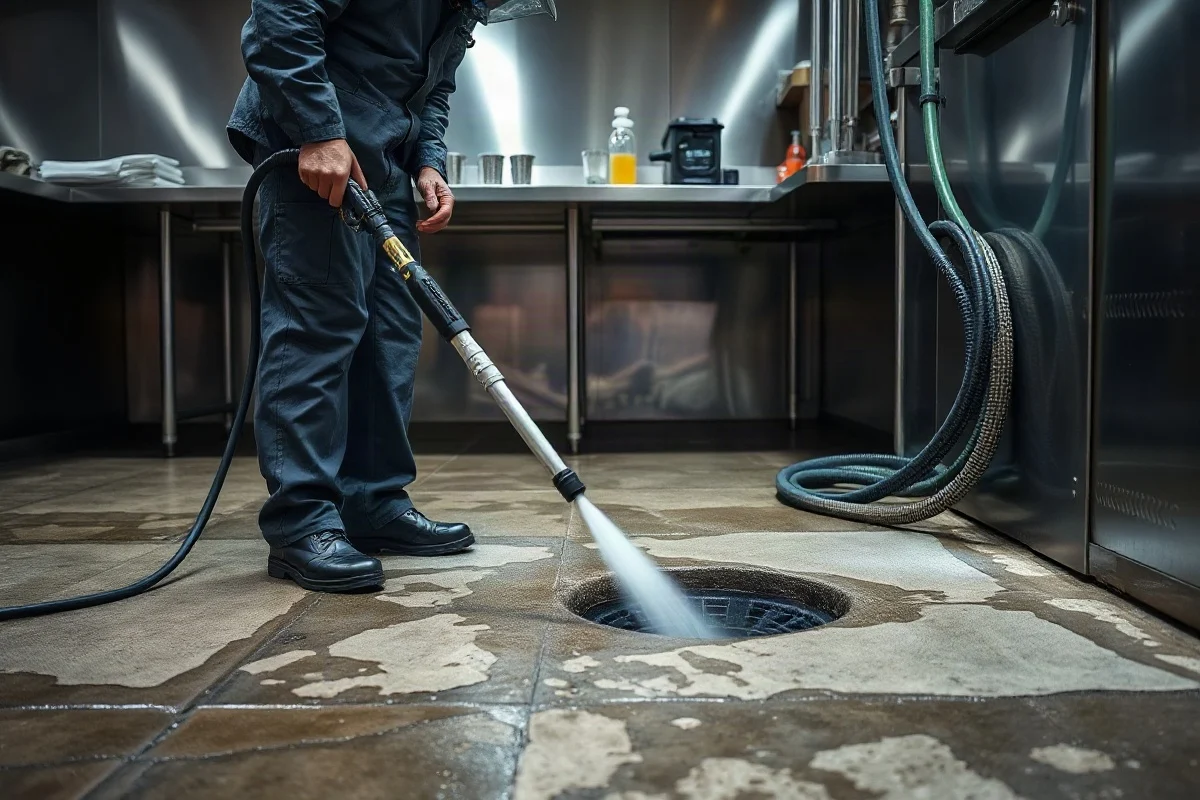
Hydro jetting clears a grease trap line by forcing a controlled stream of high-pressure water through the pipe, breaking apart grease, food residue, sludge, and other deposits so they can be flushed out. A qualified plumbing professional typically inspects the line first, removes or services the grease trap as needed, and chooses pressure and equipment appropriate for the pipe’s condition. Because the work involves specialized equipment and contaminated wastewater, it is generally not a do-it-yourself repair.
Why Grease Trap Lines Become Blocked
A grease trap, also called a grease interceptor in some commercial settings, is designed to separate fats, oils, and grease from wastewater before that water enters the drainage system. It can reduce the amount of grease moving through downstream pipes, but it cannot eliminate the need for regular cleaning and maintenance.
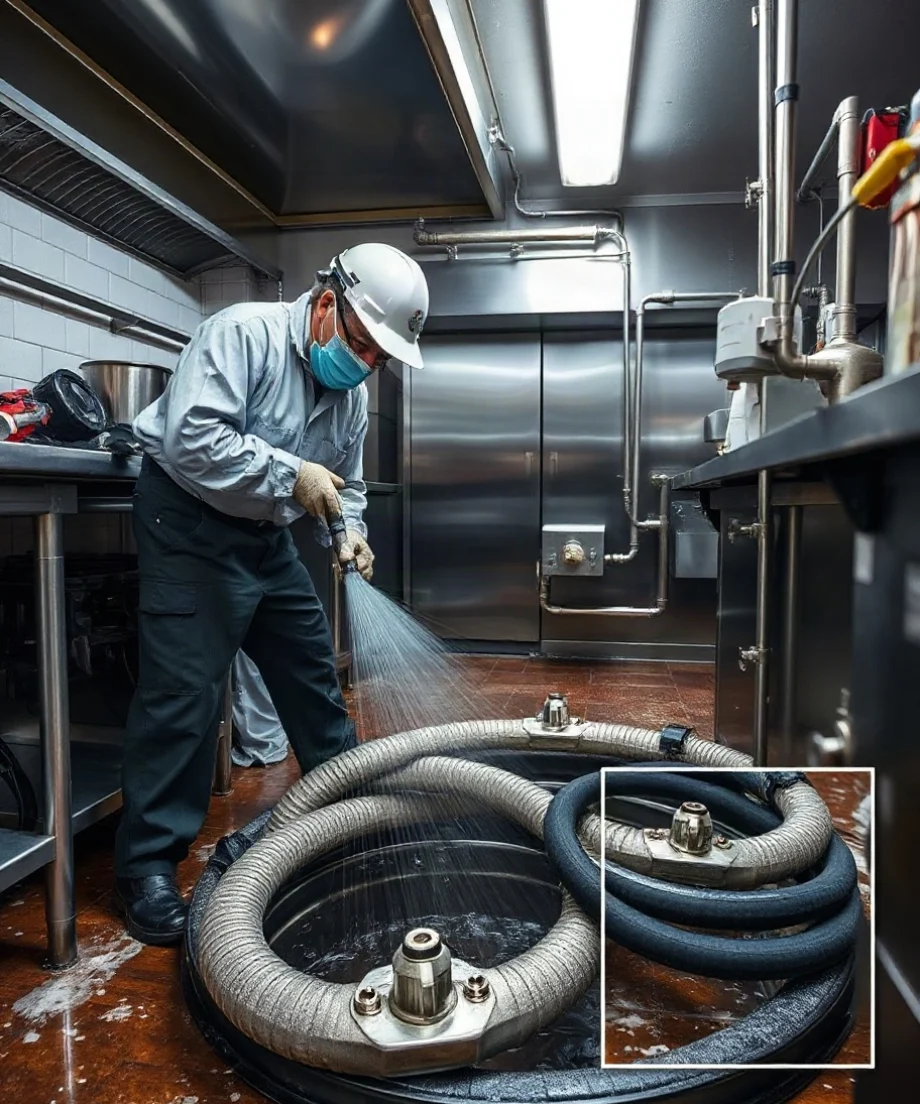
Over time, grease can collect along the inside of the line between the trap and the building sewer. Food particles, soap residue, mineral deposits, and other debris may stick to that greasy surface. The opening becomes smaller, wastewater drains more slowly, and the line may eventually stop flowing.
Common causes of a restricted grease trap line include:
- Infrequent grease trap pumping or cleaning
- Cooking oil or liquid grease poured into sinks
- Food scraps entering a kitchen drain
- Heavy grease accumulation downstream from the trap
- Improperly sized, damaged, or poorly maintained drainage components
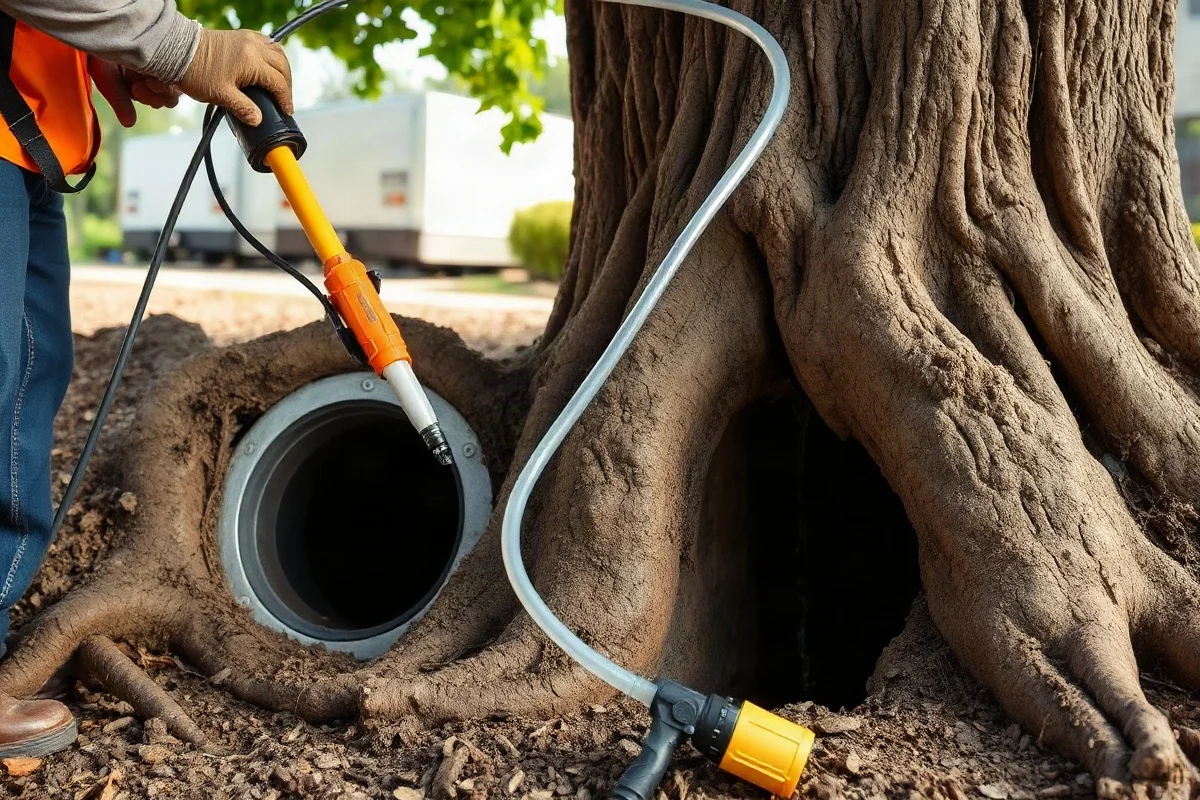
- Tree roots, collapsed pipe sections, or other problems unrelated to grease
Hydro jetting is especially useful when a traditional cable machine can open a passage but leaves a thick coating behind. A cable may punch through a blockage, while water jetting can wash buildup from more of the pipe wall. However, jetting will not repair a broken, collapsed, badly offset, or severely deteriorated pipe.
Signs a Grease Trap Line May Need Jetting
A blocked line often gives warning signs before a complete backup. The earlier the problem is evaluated, the easier it may be to determine whether the cause is grease, a damaged pipe, or a problem with the trap itself.
- Kitchen sinks drain slowly even after routine cleaning
- Wastewater backs up near the grease trap or floor drain
- Multiple fixtures drain slowly at the same time
- There is a persistent foul odor around the trap or nearby drains
- Gurgling sounds come from sinks or floor drains
- Water returns after the line appears to have been cleared
- Grease or dirty wastewater rises from a drain during heavy water use
A recurring backup is important information. If the same line blocks again soon after snaking or trap cleaning, grease may still be coating the pipe, or there may be a deeper structural issue. A professional may recommend a drain camera inspection to see what is happening inside the line before selecting a treatment.
If wastewater containing sewage or food waste has entered the building, keep people and pets away from the affected area. Avoid contact with contaminated water and arrange qualified local help, especially when the backup is extensive or involves a commercial kitchen.
How the Hydro Jetting Process Works
1. The line is evaluated
Before using a jetter, the plumber should identify the affected section and assess the pipe’s condition. This may involve locating access points, asking about the symptoms, checking the grease trap, and using a camera when the cause is uncertain. A camera can help distinguish grease buildup from roots, a collapsed section, a foreign object, or a pipe that has separated.
Inspection matters because high-pressure water can be inappropriate for a fragile or severely damaged line. The equipment, nozzle, access point, and operating pressure should be selected for the specific system rather than assumed from a general rule.
2. The trap and access point are prepared
The plumber may need to pump or clean the grease trap before jetting the connecting line. Access is usually made through a suitable cleanout or another service opening. The work area should be protected from splashing, and the operator should use appropriate personal protective equipment because grease trap contents can contain bacteria and other contaminants.
3. A specialized nozzle is inserted
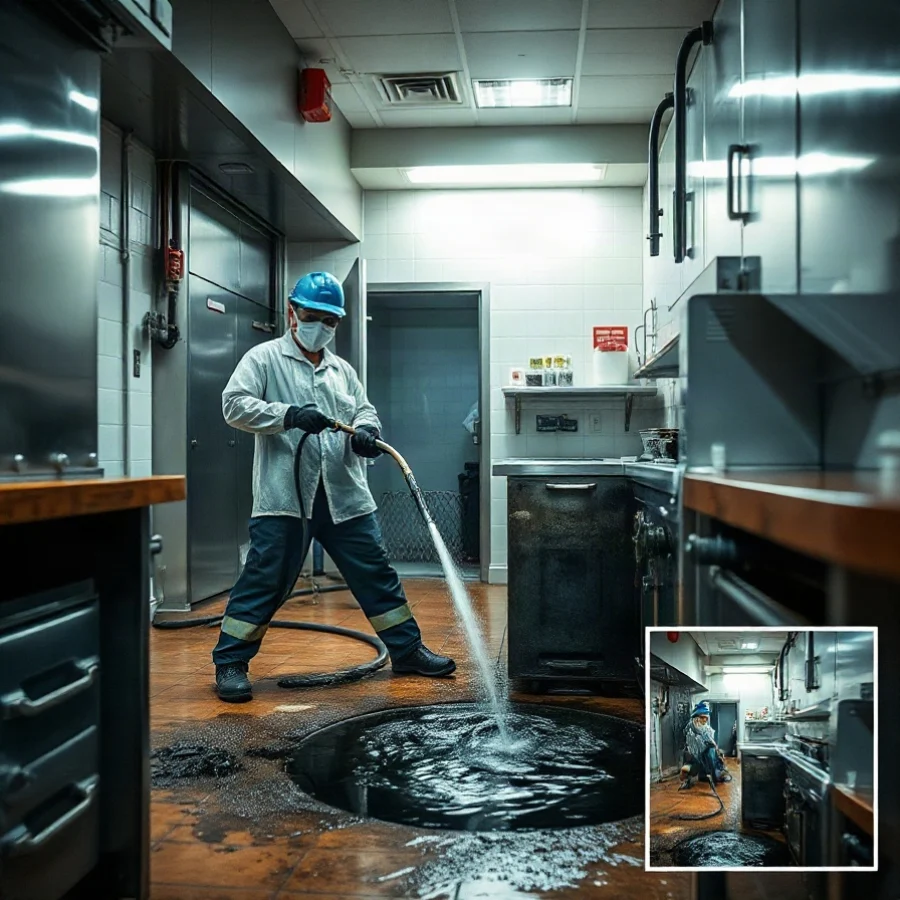
A flexible hose with a selected nozzle is placed into the line. The nozzle has openings that direct water backward and, depending on its design, forward. The backward spray helps move the hose through the pipe and pulls loosened material toward the access point. The forward spray can help cut through deposits and wash the pipe wall.
4. Buildup is broken apart and flushed out
As the hose travels through the line, the water stream cuts through accumulated grease and sludge. The loosened material is moved out of the pipe rather than simply pushed farther downstream. The plumber may make multiple passes, adjust the nozzle, or work from another access point if the line is long or heavily restricted.
5. Flow is tested and the area is cleaned
After jetting, the line is flushed and tested to confirm that wastewater moves properly. The plumber may use a camera afterward to verify that significant deposits have been removed and to look for defects that could cause another blockage. Grease and contaminated water should be collected and disposed of according to applicable local requirements, rather than released carelessly onto the property.
What Homeowners or Business Owners Can Safely Check
Low-risk checks can help document the problem, but they should not replace professional service when a grease trap line is blocked.
- Notice which fixtures are slow and whether the problem affects one drain or several.
- Check for visible standing water, overflow, or leaks around the trap and cleanout.
- Confirm whether the issue appears after heavy kitchen use or occurs continuously.
- Look for an accessible cleanout cover, but do not remove a pressurized, stuck, or contaminated cover.
- Stop pouring grease, oil, and food scraps into drains.
- Keep a record of recent trap cleaning, backups, and previous repairs.
Do not pour chemical drain cleaner into a grease trap line. Chemicals may create hazardous splashes, damage some plumbing components, interfere with professional inspection, and fail to remove the grease coating. Do not attempt to operate commercial jetting equipment without training. High-pressure water can cause serious injuries, force contaminated material into the work area, or damage an unsuitable pipe.
For general information about professional drain service, see the hydro jetting guide from Plumber Near Me Service.
When Hydro Jetting Is the Right Repair
Hydro jetting may be a good option when the line has substantial grease or sludge buildup, the pipe is structurally sound, and ordinary snaking has not provided lasting results. It can clean a larger portion of the pipe interior and may be useful as part of scheduled maintenance for facilities that produce significant grease.
Jetting is not automatically the best answer for every stoppage. A plumber may recommend another approach when:
- The pipe is cracked, collapsed, severely corroded, or misaligned
- Roots have entered through damaged joints
- The blockage is caused by a solid object that needs to be removed
- The grease trap itself is damaged or incorrectly configured
- The line cannot be safely accessed
- The plumbing system has a history of repeated structural failures
In those situations, the solution could involve spot repair, pipe replacement, trap repair, or another drain-cleaning method. The correct choice depends on inspection findings, not just the presence of slow drainage.
Hydro Jetting Versus Snaking
Drain snaking uses a cable to bore through or retrieve a blockage. It can be effective for some isolated obstructions and may restore flow quickly. It may not remove a thick layer of grease from the full circumference of a pipe, however.
Hydro jetting uses water to scour and flush the interior. That makes it more suited to widespread grease coating, but it requires specialized equipment, careful pressure selection, and a suitable pipe. In some cases, a plumber may use a cable first to create access and then jet the line. A camera inspection can help determine which method is reasonable.
Cost Factors to Discuss Before Work Begins
Do not rely on a generic online price for this service. Actual charges vary by location, access, line length, severity of the blockage, equipment needed, disposal requirements, and whether additional inspection or repair is necessary.
Ask the plumber what the estimate includes. Relevant questions include:
- Is the grease trap pumping or cleaning included?
- Is a camera inspection recommended, and is it billed separately?
- Does the estimate cover one access point or multiple attempts?
- How are contaminated wastewater and removed grease handled?
- What happens if the inspection finds a broken or collapsed pipe?
- Are there additional charges for difficult access, after-hours work, or specialized equipment?
For broader planning information, review the plumbing costs guide, while keeping in mind that service conditions differ from one property to another.
How to Choose the Right Plumbing Professional
Look for a qualified local plumbing company with experience in grease traps, commercial drainage, and hydro jetting. Ask whether the person evaluating the line can explain the cause of the blockage rather than simply recommending the most intensive service.
A dependable provider should be willing to discuss the inspection, equipment access, expected work area, cleanup, disposal, and possible alternatives. Request a written scope of work and clarify what is included before authorizing service. Licensing, insurance, and regulatory requirements vary by location, so verify the credentials and requirements that apply in your area instead of relying on a general claim.
If there is major flooding, sewage exposure, a hidden leak, electrical equipment near standing water, or a damaged building sewer, keep clear of the hazard and contact qualified local professionals. In an urgent backup, the emergency plumber resource can help you identify the type of service to seek.
Preventing Repeat Grease Line Blockages
Prevention begins with controlling what enters the drainage system. Collect cooking oil and grease for proper disposal instead of pouring them into a sink. Scrape food residue into the trash or an approved collection system before washing dishes. Use strainers where appropriate, and do not treat a garbage disposal as a substitute for grease management.
Follow the grease trap manufacturer’s maintenance guidance and the recommendations of your plumbing professional. Keep records of pumping and cleaning so buildup can be addressed before wastewater backs up. If slow drainage, odor, or recurring backups return after service, arrange another evaluation rather than repeatedly using chemical products.
Hydro jetting can restore a grease trap line when the pipe is sound and the main problem is accumulated grease or sludge. The safest, most durable result comes from combining inspection, proper cleaning, responsible grease disposal, and timely repair of any structural problem found inside the line.
Comments
0No comments yet. Be the first to share a helpful note or question.
Leave a Comment
Your email address will not be published. Comments are reviewed before appearing on the site.