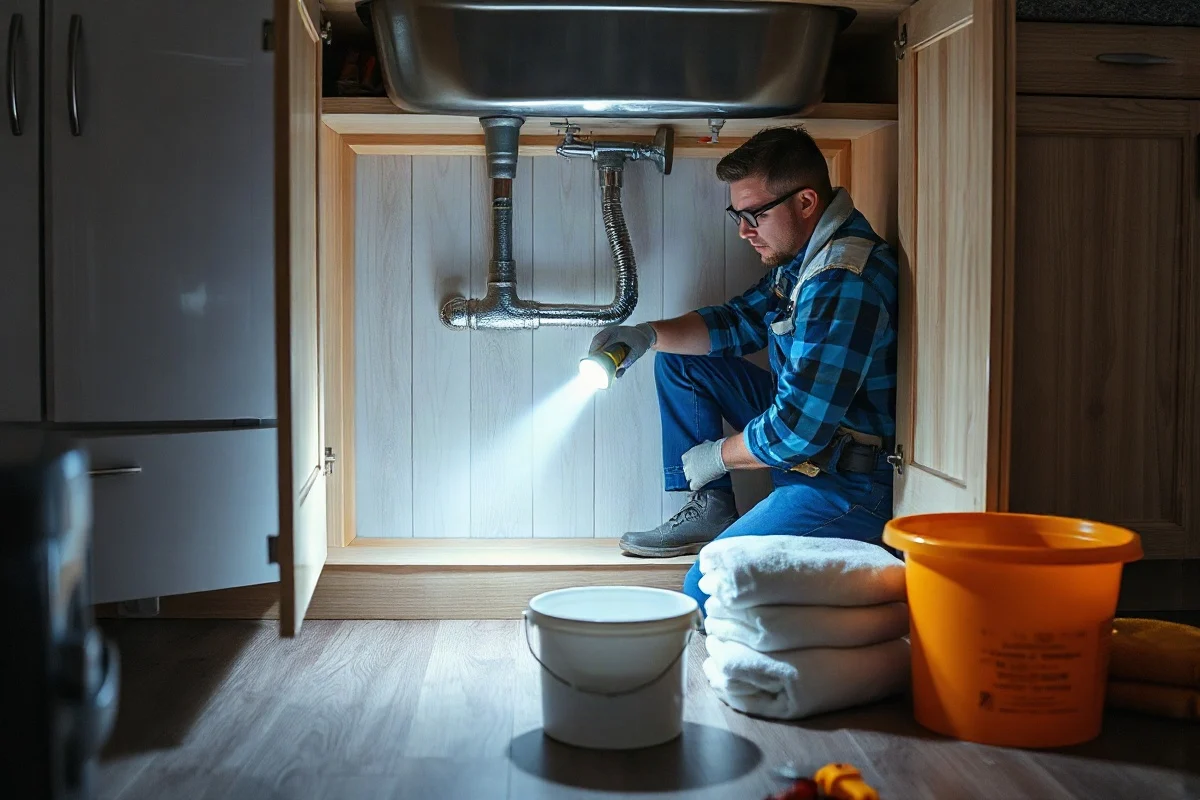
Plumbers repair a burst pipe under a kitchen sink by shutting off the water, removing standing water, identifying the failed pipe or fitting, replacing the damaged section, and testing the repair for leaks. The first priority is stopping water flow before cabinets, flooring, drywall, or electrical components suffer more damage. A homeowner can usually close the sink’s supply valves or the home’s main shutoff, but cutting pipe, opening walls, and making a permanent repair are often best handled by a qualified local plumber.
What to do before the plumber arrives
If water is actively spraying or running, turn the small shutoff valve on the affected supply line clockwise. Most kitchen sinks have separate hot- and cold-water valves below the faucet. If a valve will not close, is missing, or the leak is on a pipe that the valves do not control, shut off the home’s main water supply instead.
Open the faucet briefly after shutting off the water to release some pressure. Place a pan, bucket, or towels under the leak, and remove items from the cabinet. Do not reach into standing water if an electrical outlet, power strip, garbage disposal cord, or other energized equipment may be wet. Avoid using the disposal until the area is dry and the equipment has been checked.
Do not try to stop a pressurized spray with your hand, tape, or a cloth wrapped around the pipe. These measures may slow a leak temporarily but do not create a dependable repair. If the water has spread across the floor, soaked building materials, or reached electrical components, contact appropriate qualified professionals promptly. Sewage contamination, extensive flooding, or unsafe electrical conditions require more than an ordinary under-sink repair.
How a plumber diagnoses the burst pipe
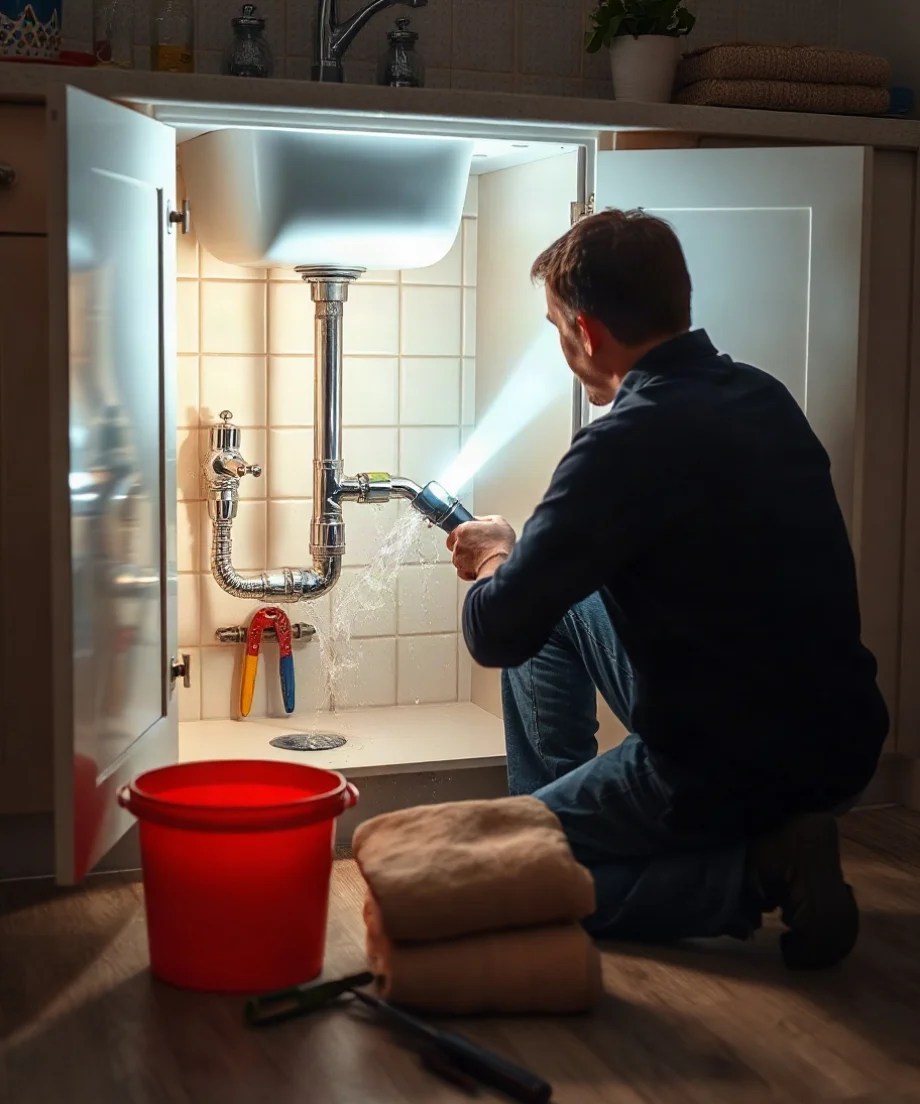
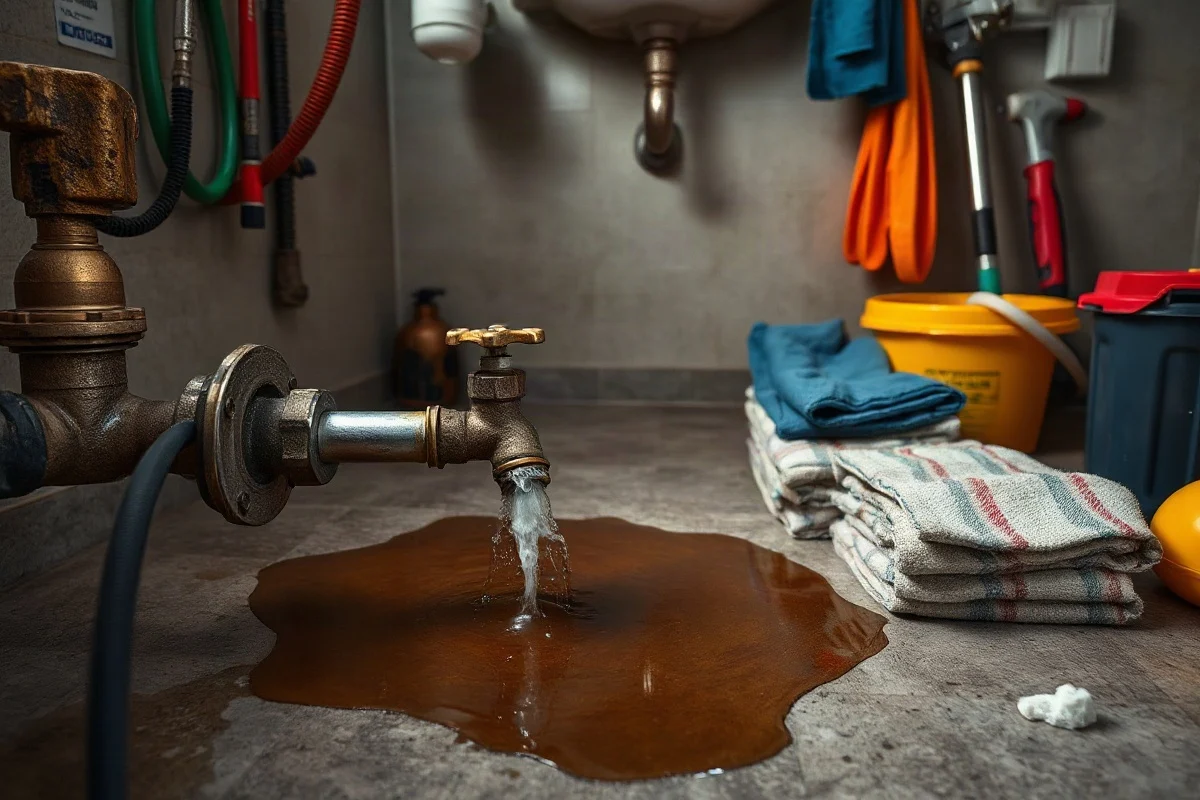
A plumber begins with a visual inspection of the cabinet, shutoff valves, faucet connections, supply lines, drain assembly, and exposed water pipes. The location of the water does not always identify the source. Water can travel along a hose, cabinet floor, or pipe before dripping at a lower point.
Common sources under a kitchen sink
- Flexible faucet supply lines: A braided or polymer-covered hose may leak at the connector, crimp, or body of the line.
- Compression connections: A loose, damaged, or poorly seated connection can leak where a supply tube meets a valve or faucet.
- Shutoff valves: The valve may leak around its stem, at the outlet, or through a damaged body.
- Rigid copper, PEX, or other water pipe: A split, pinhole, cracked section, or failed joint may be concealed behind the cabinet or wall.
- Drain components: A cracked trap, loose slip joint, failed gasket, or damaged disposal connection can release water only when the sink drains.
- Faucet or sprayer connections: Water may run down from the faucet base or a pull-down hose and appear to be a cabinet pipe leak.
The plumber may turn the water on briefly after protecting the cabinet and identifying the shutoff points. This controlled test helps show whether the leak occurs under supply pressure, when the faucet runs, or only when the basin drains. A supply-side leak can continue even when the faucet is off, while a drain leak usually appears when water flows through the sink or disposal.
Why a pipe or fitting may burst
A burst under-sink pipe is not always caused by one dramatic event. Age, corrosion, mechanical stress, movement, freezing temperatures, excessive pressure, and poor installation can all contribute. A supply line may be bent sharply or strained when items are stored in the cabinet. A valve connection can deteriorate over time, and a rigid pipe may crack if it is unsupported or repeatedly stressed.
Freezing is a particular concern in cold areas, especially where plumbing runs against an exterior wall or through an unheated space. Water expands as it freezes, creating pressure inside the pipe. The visible split may not release water until the pipe thaws and normal pressure returns.
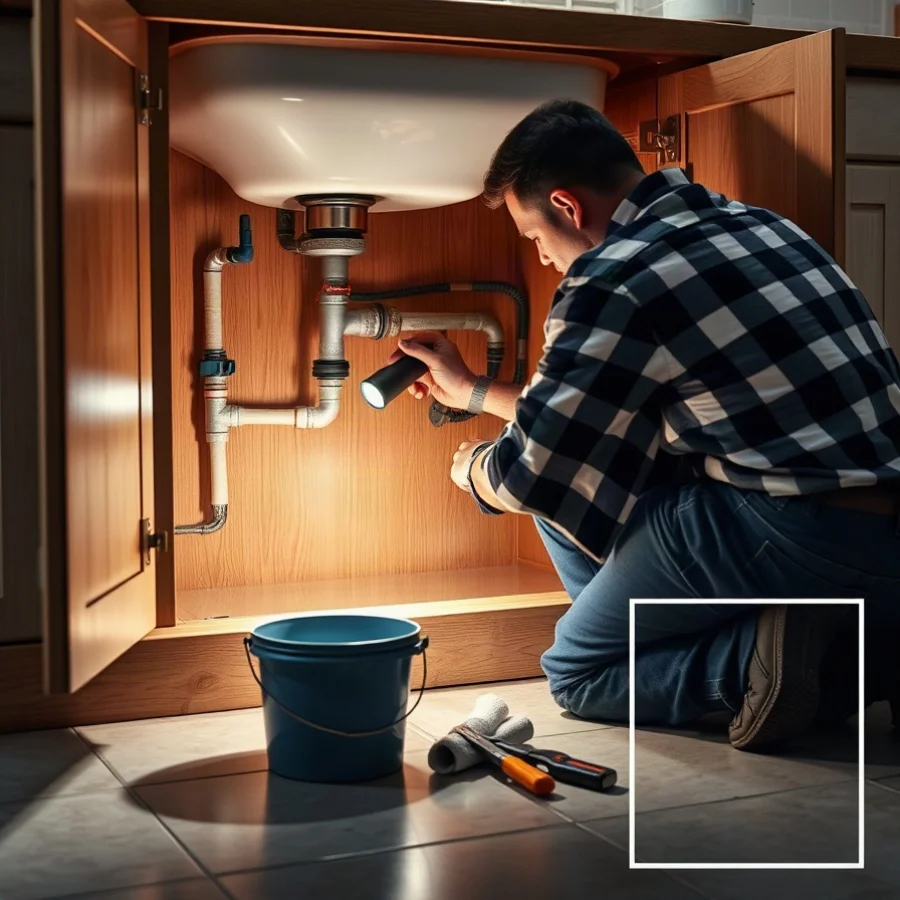
If a plumber finds corrosion, multiple damaged fittings, or evidence of a broader pressure or installation problem, replacing only the visibly leaking part may not be the most reliable solution. The repair recommendation should account for the condition of the surrounding components, accessibility, and the likelihood of another failure.
How the repair is performed
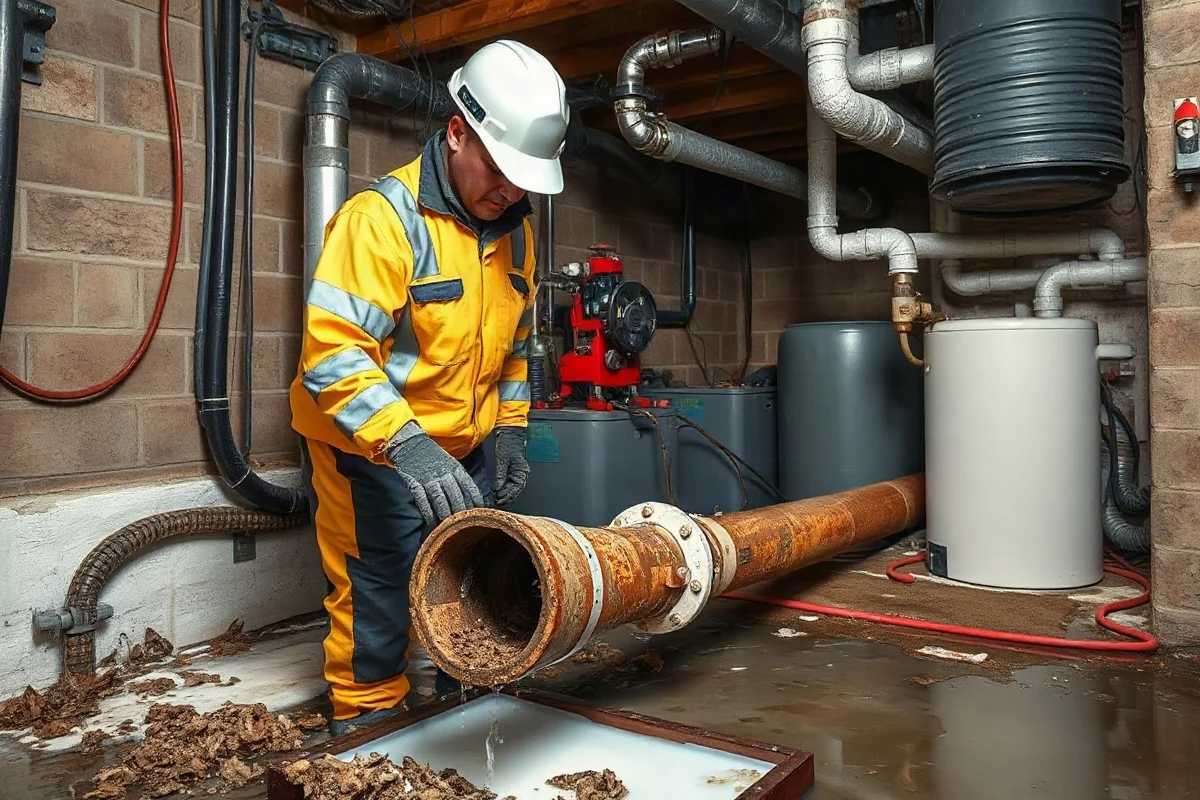
Once the source is confirmed and the water is off, the plumber drains the affected line and protects the cabinet. The damaged component is then removed using tools appropriate for the material and connection. The repair may involve replacing a supply hose, shutoff valve, connector, gasket, trap, or a section of pipe.
Replacing a flexible supply line
If the supply line has failed, a plumber generally removes it from the shutoff valve and faucet, checks both connection points, and installs a correctly sized replacement. The valve and faucet threads must be in usable condition. A new hose will not solve a leak caused by a damaged valve body or faucet connection.
Repairing a damaged pipe section
For a cracked or split pipe, the plumber cuts out the damaged portion and connects sound pipe ends with fittings suitable for the pipe material and installation. The exact process depends on whether the plumbing is copper, PEX, CPVC, or another approved material. Connections must be clean, properly aligned, and supported so the repaired section is not placed under unnecessary strain.
Replacing a shutoff valve
A leaking shutoff valve may need replacement rather than tightening. The plumber confirms that the upstream water is fully off, removes the old valve, inspects the exposed pipe and connection, and installs a compatible valve. If the pipe is corroded or damaged near the valve, additional pipe work may be necessary.
Repairing a drain-side leak
If the problem is on the drain rather than the pressurized water supply, the plumber may replace a trap, washer, tailpiece, flange, or disposal connection. Drain repairs are tested by running water through the sink and observing every joint. A drain leak may not appear during a simple visual inspection while the sink is empty.
Repair or replacement: How plumbers decide
A small, isolated failure does not automatically require replacement of all plumbing under the sink. A plumber usually considers the age and condition of the part, the extent of corrosion, whether the connection can be removed without damaging the pipe, and whether the component is a standard replaceable item.
Replacement is more likely when a flexible line is damaged, a valve body is cracked, a trap is brittle, or surrounding connections show significant deterioration. If several parts are failing at once, replacing related components may reduce the chance of another leak, although the recommendation should be based on the actual condition of the plumbing rather than a blanket upgrade.
Access also matters. A pipe that is fully exposed under the sink may be straightforward to reach. A line that disappears behind the cabinet, floor, or wall may require additional investigation and opening of finished surfaces. Do not assume that a wet cabinet floor means the entire water line must be replaced; diagnosis should come first.
How the completed repair is tested
After the repair, the plumber restores water pressure gradually and checks each new connection. The area may be dried first so fresh moisture is easier to identify. The faucet is operated on both hot and cold settings, and the sink is filled and drained to test the drain assembly. If a disposal or dishwasher connection is involved, those components may also need a careful leak check.
A professional should also look for movement, stress, or poor support that could affect the repair. The cabinet should be left as dry as practical. Homeowners should continue checking the area after the service, especially after the sink has been used several times.
Cost factors for a burst pipe under the sink
The final cost depends on the part that failed and the conditions around it. Important factors include:
- Whether the problem is a supply line, valve, drain fitting, or pipe inside the wall
- How difficult the failed component is to access
- Whether water damage requires drying, cabinet work, or other restoration
- Whether corrosion prevents simple removal of an old connection
- Whether one component or several related parts need replacement
- Whether service is requested outside normal business hours
- Whether additional diagnostic work is needed to locate a concealed leak
Ask for a clear explanation of the diagnosis, the proposed repair, parts and labor, and any conditions that could change the estimate. Avoid choosing a contractor solely on the lowest initial number if the quote does not explain what is included. For broader information, see this guide to plumbing costs.
When to call a plumber immediately
Arrange professional help promptly if the main shutoff will not stop the water, the leak is inside a wall or floor, the pipe has burst repeatedly, or cabinet and flooring materials are becoming saturated. A professional is also the safer choice when the repair involves concealed plumbing, extensive corrosion, sewage exposure, gas, electricity, structural damage, or work that may need to meet local requirements.
If the leak is causing active flooding, use the home’s main water shutoff if it is safe to reach and contact an emergency plumbing service. You can review emergency plumber guidance while arranging local help. Do not remove wall or cabinet materials near energized wiring, and do not enter contaminated water without appropriate protection.
How to choose the right local plumber
Look for a plumber who regularly handles burst pipes, water-line repairs, valves, and kitchen plumbing. Before work begins, ask what they believe is leaking, whether the repair is exposed or concealed, and how they will test it afterward. Request a written description of the work and ask whether water damage restoration is separate from plumbing service.
Use a qualified local professional whose credentials and insurance are appropriate for the work in your area. Local rules can vary, so verify any licensing, permit, or inspection questions with the relevant local authority or the plumber before the job starts. A reputable professional should be willing to explain the repair without pressuring you into unnecessary replacement.
For related guidance, explore pipe repair services and the questions to ask when hiring a plumber. Fast shutoff and accurate diagnosis can limit damage, but a lasting repair depends on matching the replacement method to the failed pipe, fitting, and surrounding plumbing.
Comments
0No comments yet. Be the first to share a helpful note or question.
Leave a Comment
Your email address will not be published. Comments are reviewed before appearing on the site.