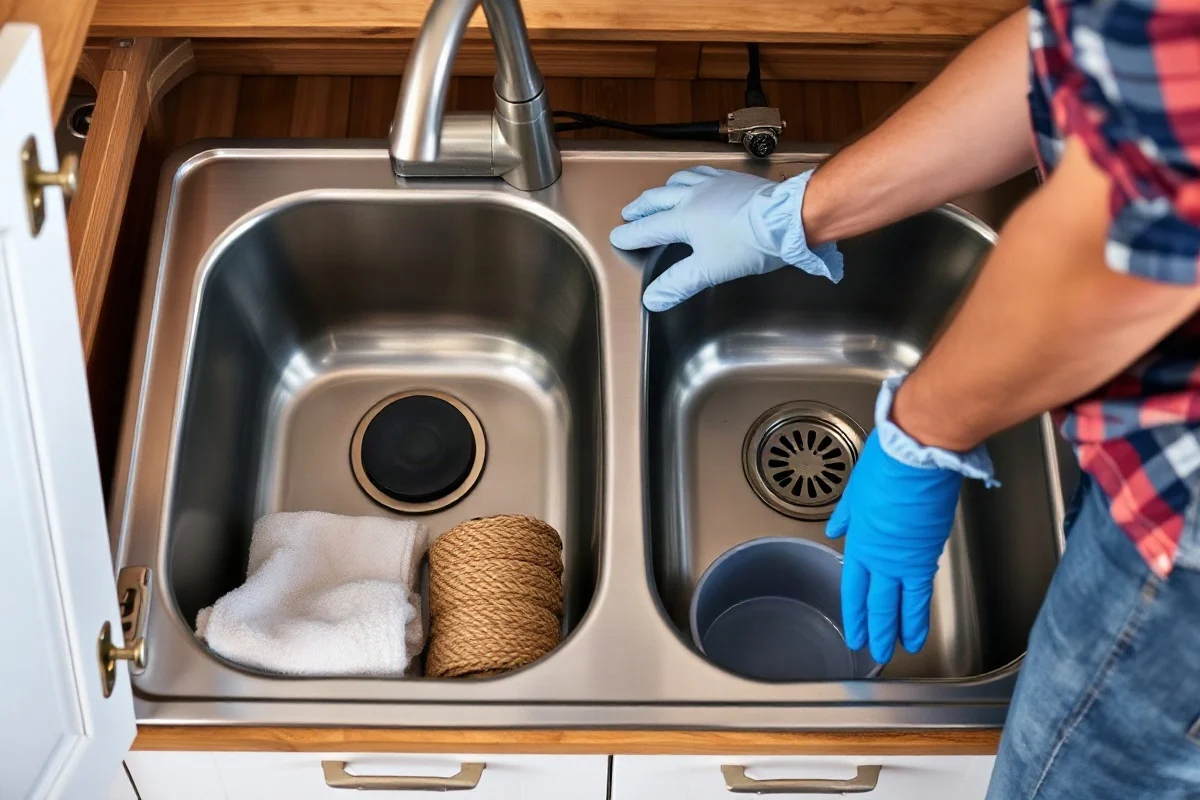
To clear a clogged double kitchen sink safely, remove standing water, check the garbage disposal and sink strainers, then plunge one basin while sealing the other drain. If that does not work, clean the removable P-trap only when it is accessible and there is no sewage exposure, major leak, or hazardous condition. Avoid chemical drain cleaners, and call a qualified local plumber when the blockage is deep, recurring, or connected to a larger drainage problem.
Why a double kitchen sink clogs
A double sink usually shares a drain connection beneath the basins. Water from both sides eventually travels through a branch drain, a P-trap, and then the larger drain line in the wall. A blockage in any shared section can cause both basins to drain slowly or fill with water.
Common causes include grease and cooking oil, food particles, coffee grounds, starchy scraps, soap residue, and objects that fall through a strainer. If the sink has a garbage disposal, fibrous foods, bones, eggshells, and large food pieces can contribute to a jam or downstream clog. A sink that repeatedly backs up after basic cleaning may have buildup farther inside the branch drain or a problem in the building drain.
Start with safe checks
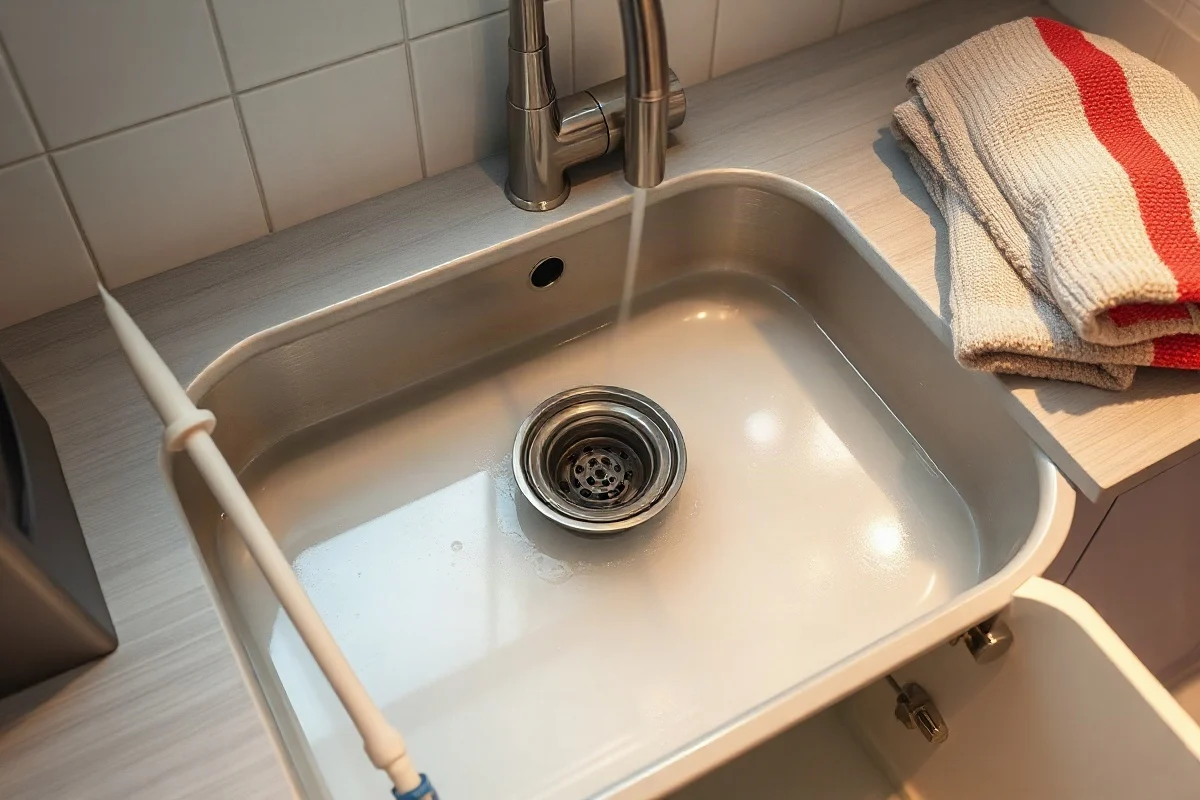
Before taking anything apart, protect the cabinet and floor with towels or a shallow bucket. Wear gloves and eye protection, especially if the water has been sitting for a while. Do not mix drain products or use a plunger after pouring chemical cleaner into the sink. Chemical residue can splash onto your skin or eyes and may damage plumbing components.
Check the garbage disposal
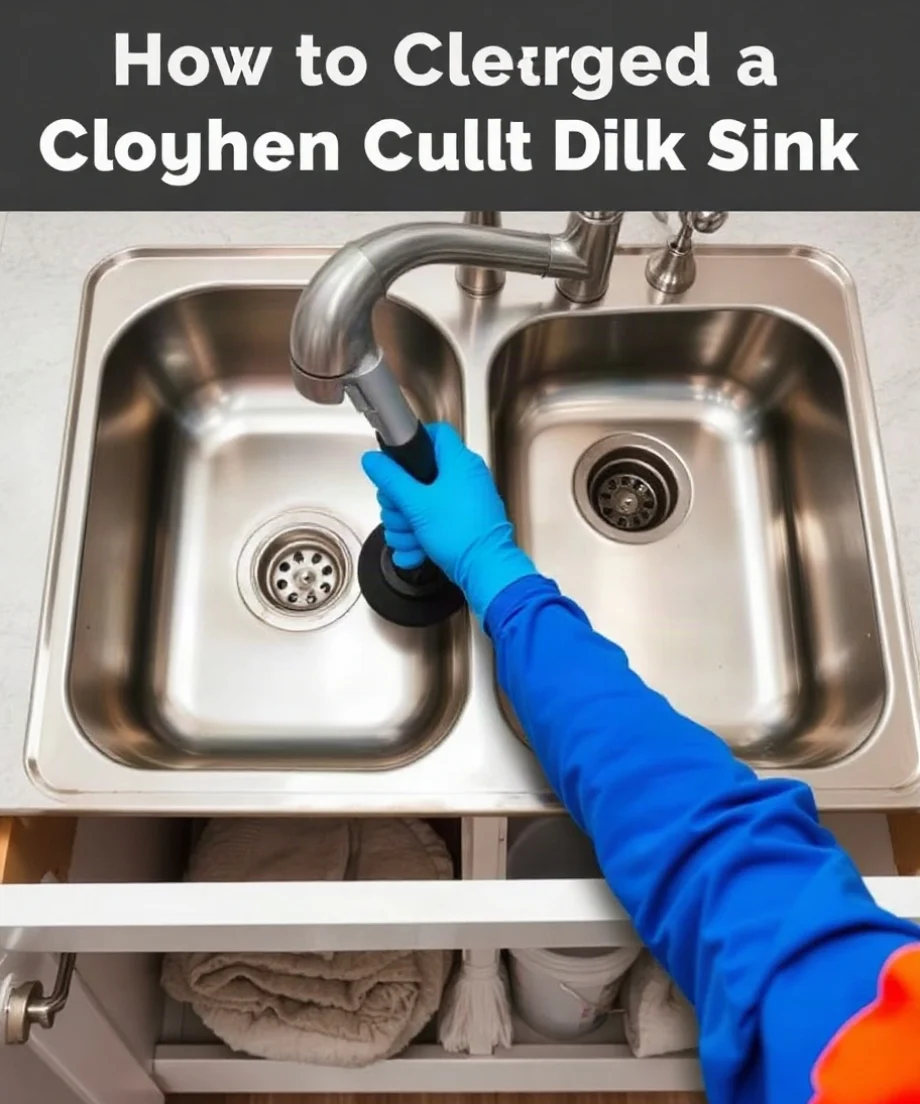
If one basin contains a disposal, turn it off at the wall switch and disconnect its power before inspecting it. If possible, unplug the unit under the sink. Never put your hand inside a disposal, even if it appears to be off. Use a flashlight to look for an obvious object near the opening, and remove only items that can be safely reached with pliers while the power is disconnected.
Many disposals have a reset button on the underside, but resetting the unit will not remove a downstream drain blockage. If the disposal hums, trips a breaker, leaks, or remains jammed, stop troubleshooting and arrange professional service. Electrical components and disposal repairs require extra caution around water. For related guidance, see garbage disposal repair and service.
Inspect the strainers and stopper areas
Remove the sink strainers or baskets if they lift out easily. Clear away visible food debris and wash the parts with hot tap water and dish soap. Do not rely on boiling water as a complete fix. Very hot water may soften grease temporarily while leaving the underlying blockage in place, and it can create a burn hazard during removal.
Plunge the two basins correctly
Plunging is one of the lowest-risk ways to address a fresh sink clog, but it works only when the drain openings are sealed properly. Use a flat-bottomed sink plunger rather than a toilet flange plunger.
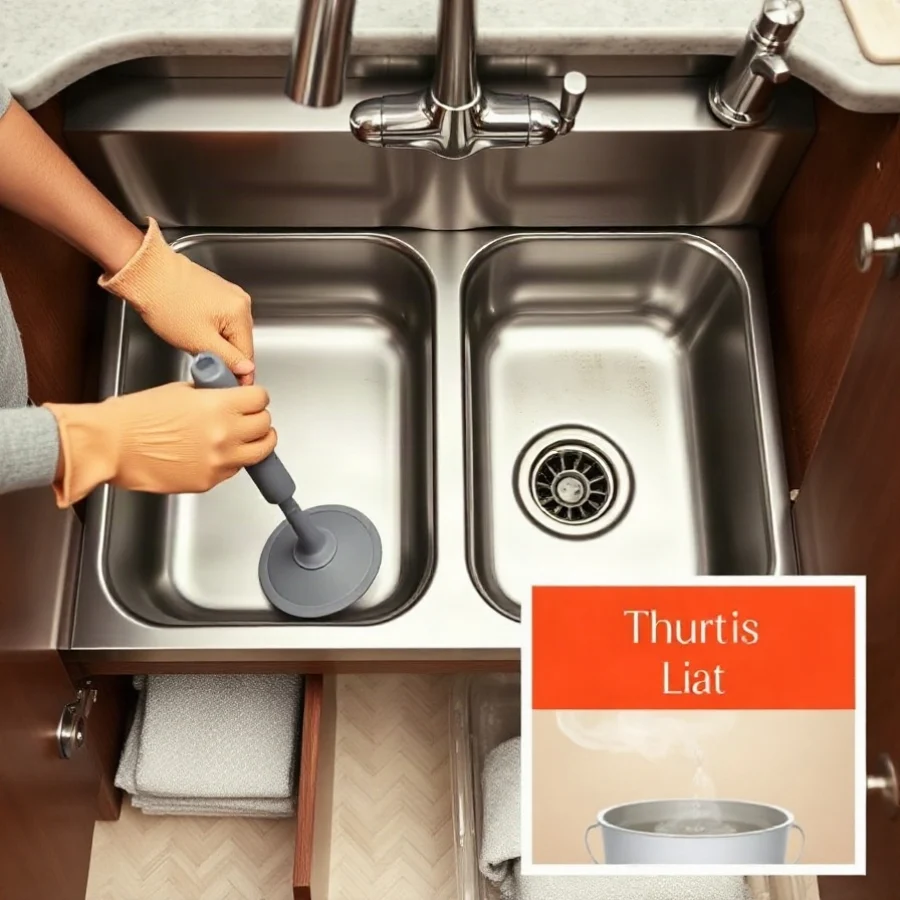
- Remove enough standing water to expose the drain opening, leaving a small amount to help form a seal.
- Place the plunger over one drain.
- Seal the second drain completely with a drain stopper, wet cloth, or a flat cover that will not slip.
- Press down gently at first, then use firm, controlled strokes for about 15 to 20 seconds.
- Lift the plunger and watch whether the water moves. Repeat several times if the water is responding.
- Switch basins and repeat the process, keeping the opposite drain sealed.
Sealing the second basin matters because pressure can escape through the shared drain opening instead of moving the obstruction. If the sink has an air gap or dishwasher connection at the rim, do not disconnect hoses simply to plunge the sink. Stop if water begins leaking from a fitting or if the cabinet floor becomes wet.
Clean the P-trap only if it is safe and accessible
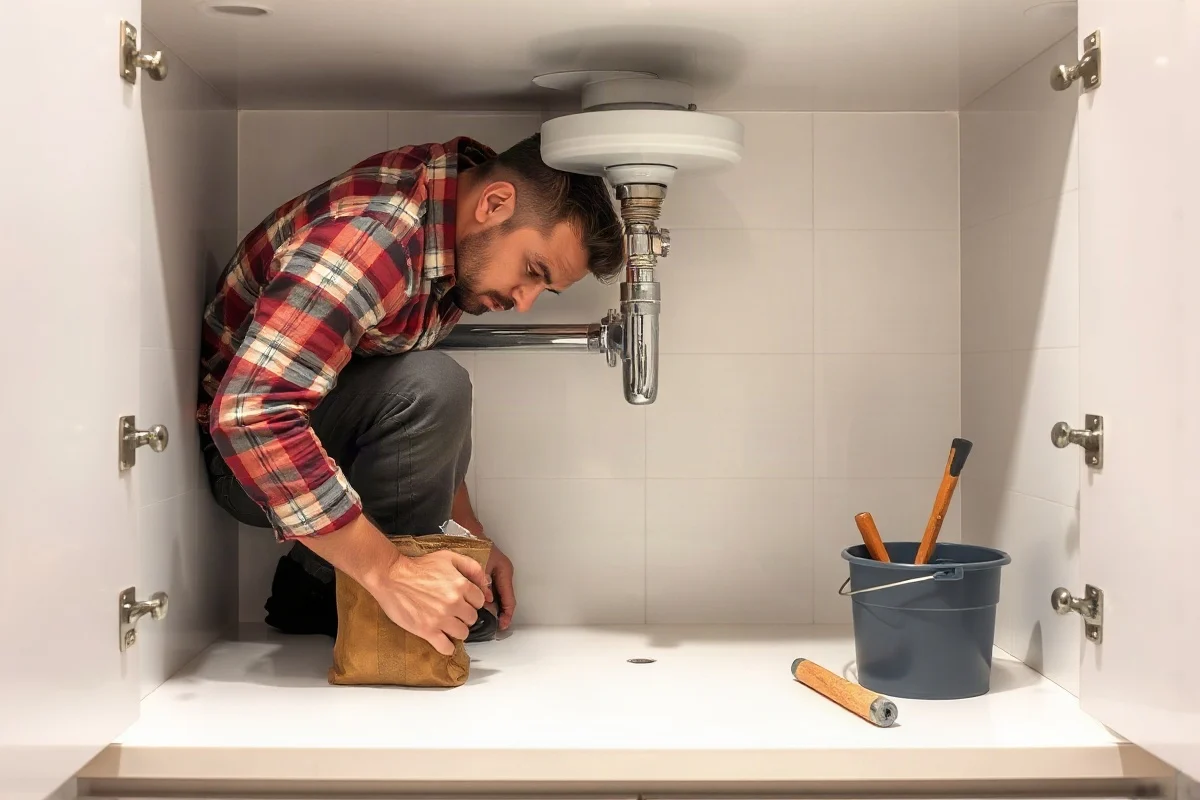
The P-trap is the curved section of pipe below the sink. It can collect food debris and grease, but opening it releases dirty water. This is a reasonable homeowner task when the trap is exposed, the connections are easy to reach, and no chemical drain cleaner has been used. Do not proceed if the piping is corroded, damaged, difficult to access, or connected to an unusual setup you do not understand.
Basic trap-cleaning steps
- Place a bucket beneath the curved trap and add towels around it.
- Loosen the slip nuts by hand if possible. Use a wrench carefully only when necessary; forcing old fittings can crack plastic or damage metal pipe.
- Lower the trap slowly and empty its contents into the bucket.
- Clean the trap with a brush and rinse it into a container rather than washing grease and solids down another drain.
- Check the washers for distortion or damage before reassembling the connections.
- Hand-tighten the slip nuts, then run a small amount of water while checking every joint for leaks.
If the trap is clear but the sink still backs up, the obstruction is probably farther along the drain. Do not repeatedly disassemble the plumbing or use improvised tools that can puncture a pipe or become stuck. A plumber may need to clear the branch line with appropriate equipment. More information is available in this drain cleaning guide.
When not to use a chemical drain cleaner
Caustic or acidic drain products are a poor first choice for a double sink. They may fail to dissolve a compacted food blockage, remain trapped in standing water, damage some materials, and create a serious splash hazard for anyone who later opens the trap or uses a cable. Never mix different products, and never combine a drain cleaner with bleach or another household chemical.
If a chemical product has already been poured into the sink, do not plunge it or open the trap. Keep people and pets away from the area and tell the plumber exactly what product was used. Follow the product label for immediate safety instructions.
Signs the blockage needs a professional
Arrange service from a qualified local plumber when any of these conditions apply:
- Both basins back up quickly after plunging.
- Water rises in the sink when a dishwasher runs or another fixture drains.
- The clog returns soon after cleaning.
- There is a leak from the trap, wall connection, disposal, or supply line.
- The drain has a strong sewage odor, sewage-colored water, or contamination.
- You hear gurgling from multiple fixtures or notice a toilet bubbling when the sink drains.
- The blockage may be in a concealed wall pipe, shared building drain, or sewer line.
- The cabinet is flooded, the floor is damaged, or water is near electrical equipment.
Stop using the sink if continued drainage could cause an overflow. For serious flooding, sewage exposure, concealed leaks, or an urgent loss of safe use, contact a qualified local professional or an emergency plumbing service. Do not enter contaminated water or work around wet electrical equipment.
Repair or replacement: what usually makes sense?
A simple blockage usually calls for cleaning rather than replacing the sink. A damaged strainer, trap washer, disposal flange, or drain fitting may be replaced if the component is leaking, cracked, badly corroded, or no longer seals after cleaning. Replacing a disposal may make sense when the unit has a persistent leak, a failed motor, repeated jams, or internal damage, but a new disposal will not solve a clog in the shared drain line.
The sink itself may need replacement only when the basin, rim, drain opening, or mounting area is cracked, severely corroded, or unable to hold a watertight connection. A plumber should evaluate concealed pipe damage, recurring blockages, and any work that involves opening a wall or modifying drainage connections. A camera inspection may be useful when the location or cause of a persistent blockage is uncertain.
What affects the cost of clearing a kitchen sink clog?
Service pricing varies by location and by the work required, so a reliable estimate should be based on an inspection rather than a guess. Factors can include whether the obstruction is in the P-trap or farther down the line, how accessible the piping is, whether a disposal must be disconnected, the condition of old fittings, the equipment needed, and whether leaks or damaged components also require repair.
Ask what the service call includes, whether diagnosis and drain clearing are listed separately, and whether any additional work requires approval before it begins. You can review general information about plumbing cost factors, but local conditions and the actual cause of the clog will determine the final amount.
How to choose the right plumber
Look for a local plumbing professional with experience in kitchen drains, garbage disposals, and recurring blockages. Before work starts, describe whether one or both basins are affected, whether the dishwasher causes backup, what you have already tried, and whether any drain chemicals were used. Ask how the plumber plans to locate the obstruction and what happens if the first clearing method does not resolve it.
Choose a provider who explains the repair clearly, identifies unsafe conditions, gives written pricing information when available, and does not pressure you into replacing unrelated fixtures. Licensing and permit requirements vary by location, so verify applicable credentials and requirements with the relevant local authority rather than relying on a generic claim. For more preparation advice, see how to choose a plumber.
Preventing another double-sink clog
Use sink strainers, scrape plates into the trash or compost before washing them, and keep grease, oil, coffee grounds, flour, and fibrous food scraps out of the drain. Run water while using the disposal and follow the unit manufacturer's care instructions. Do not treat the disposal as a substitute for a trash can.
Pay attention to slow drainage, gurgling, odors, or water rising in the opposite basin. Addressing those early signs can be easier than waiting for a complete backup. If the same double sink repeatedly clogs despite careful use and routine cleaning, have the shared drain evaluated instead of relying on repeated plunging or chemical products.
Comments
0No comments yet. Be the first to share a helpful note or question.
Leave a Comment
Your email address will not be published. Comments are reviewed before appearing on the site.