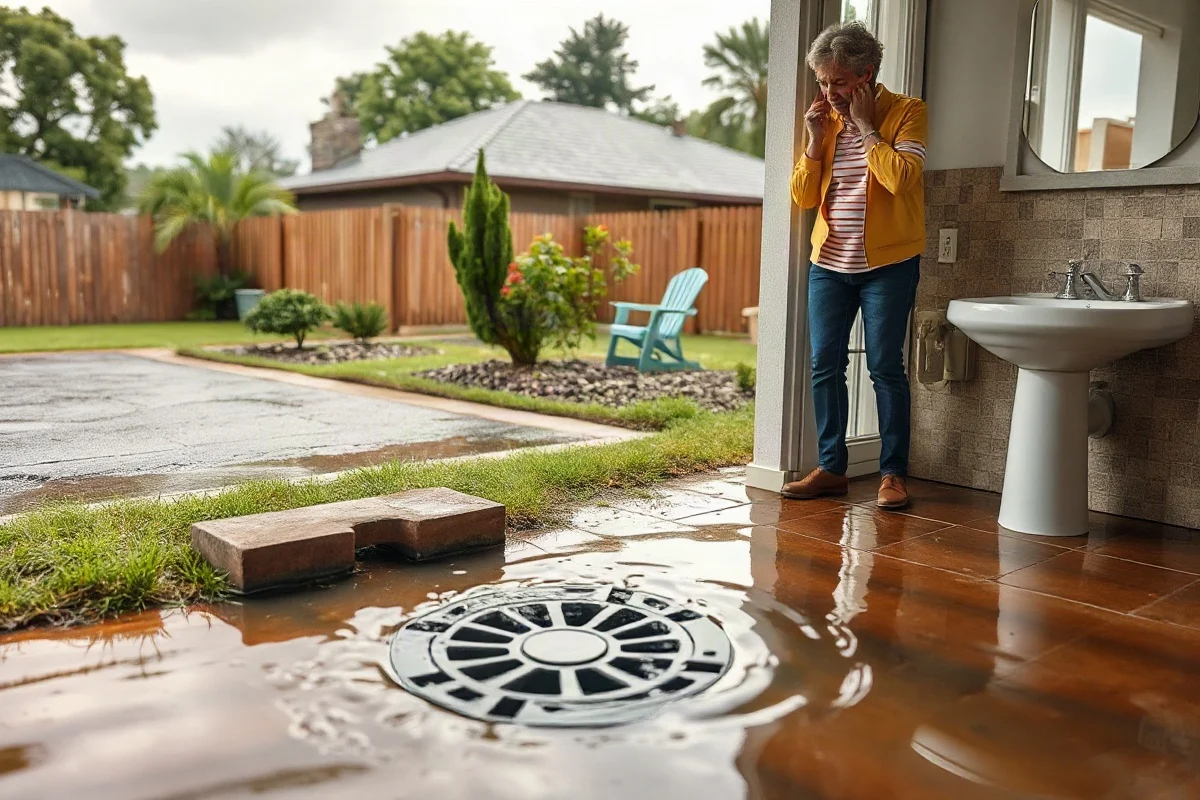
A drain that clogs after heavy rain usually points to a drainage problem beyond a simple buildup of hair or food. Stormwater may overload the public sewer system, expose a partial blockage in your private sewer line, force water through damaged pipes, or overwhelm a sump pump or yard drainage system. If more than one fixture backs up, wastewater appears, or the problem returns after every major storm, stop using affected fixtures and contact a qualified local plumber for diagnosis.
What heavy rain can change in your plumbing system
Under normal conditions, wastewater leaves your home through drainpipes and a building sewer connection. Heavy rain adds a large amount of water to the surrounding drainage network in a short time. Depending on your property and local infrastructure, that water can affect the path or pressure of wastewater leaving your home.
A partial obstruction may allow normal flow during dry weather but become a serious restriction when the system is under extra load. In other cases, the blockage was already developing and the storm simply made the symptoms noticeable. Rain is often the trigger that reveals an existing weakness rather than the only cause of the clog.
Common reasons a drain backs up after rain
A partial blockage in the main sewer line
Grease, wipes, roots, scale, sediment, and other debris can narrow a sewer line over time. A small amount of water may pass through the narrowed section on an ordinary day. During a storm, increased flow can exceed the line's limited capacity, causing slow drains, gurgling, or backups inside the home.
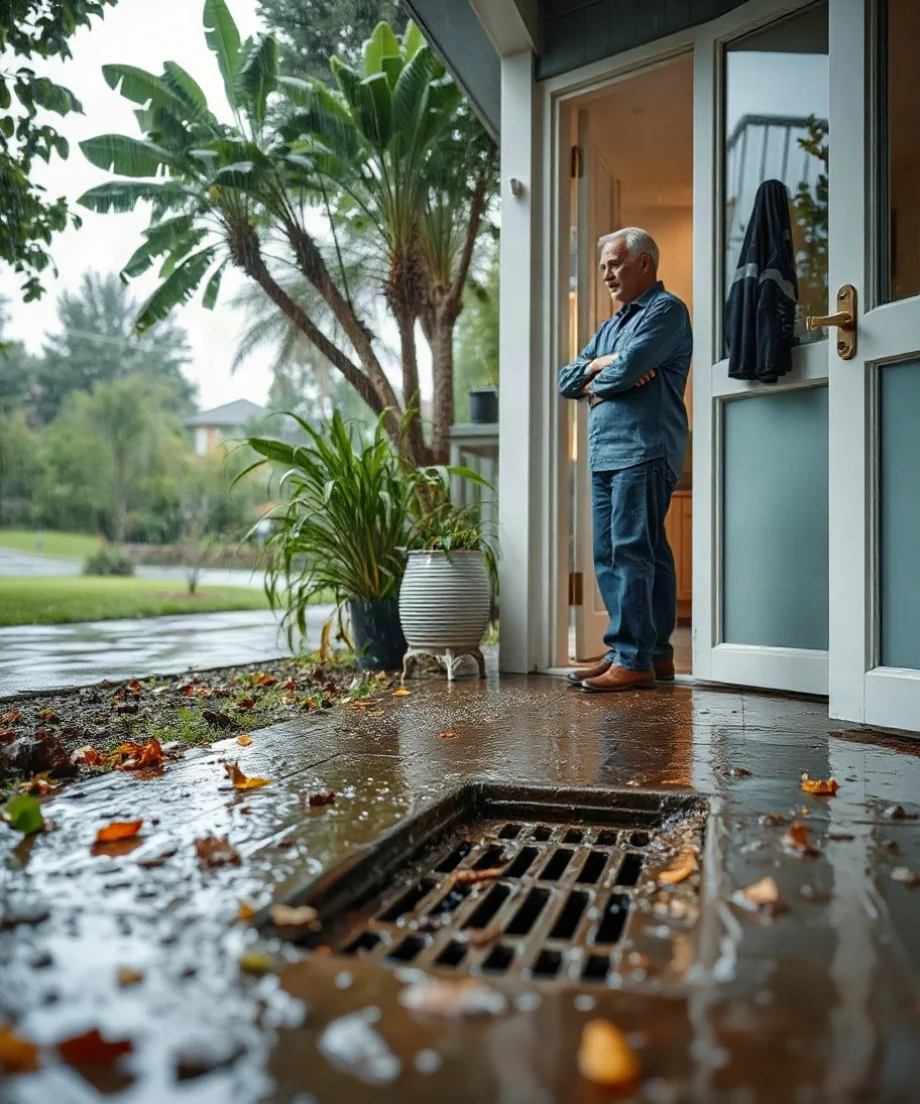
Main-line problems often affect several fixtures at once. You might notice a toilet bubbling when a sink drains, water rising in a shower or floor drain, or multiple fixtures becoming slow at the same time. These signs suggest the problem may be farther downstream than an individual sink trap.
Tree roots entering a damaged or separated pipe
Roots can enter a sewer pipe through cracks, loose joints, or other defects. The roots create a rough, restricted passage that catches paper and debris. Rain-related groundwater movement can increase the amount of water reaching the damaged section, making the restriction more obvious.
Root intrusion is not something a homeowner can reliably confirm from inside the house. A plumber may recommend a drain camera inspection to see the condition, location, and extent of the obstruction before choosing a repair method.
Public sewer surcharge or a shared drainage problem
In some areas, intense rainfall can fill portions of a municipal or shared sewer network. If the downstream system cannot accept more flow, water may move slowly or back toward connected properties. This can resemble a private sewer blockage.
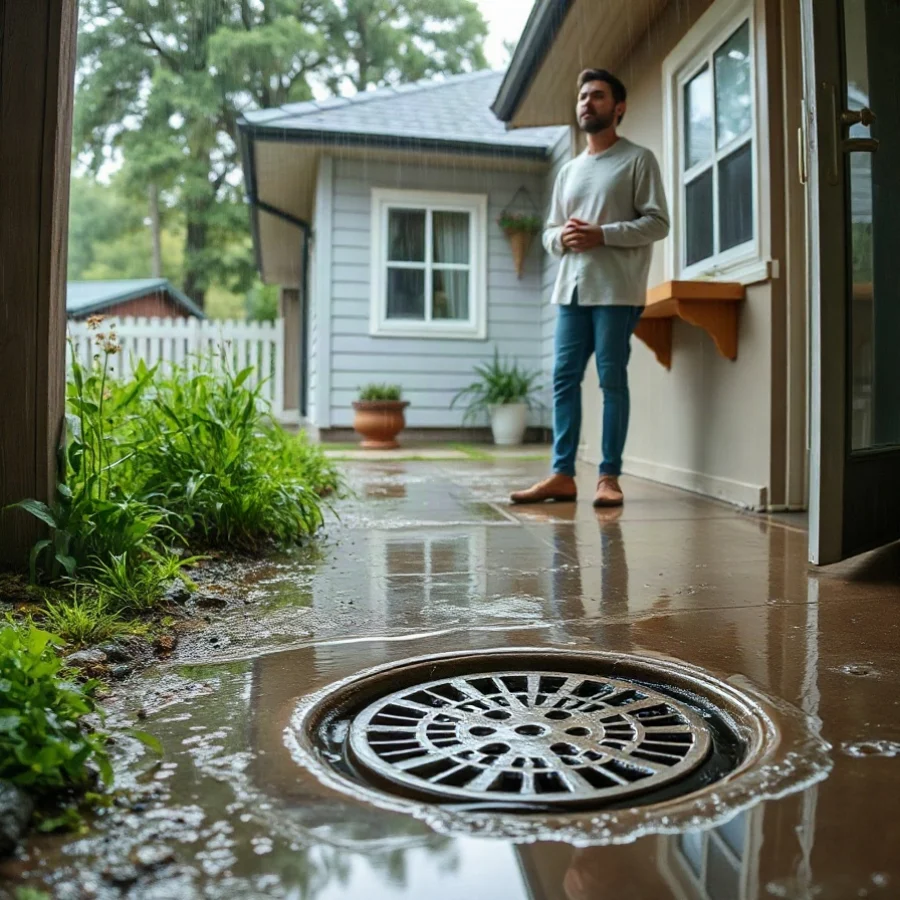
A plumber can help determine whether the issue appears to be on your property or farther downstream. If neighbors are reporting similar backups, the local utility or public works department may also need to investigate. Avoid assuming that a private drain-cleaning visit will solve a problem caused by a larger network.
Stormwater entering the sanitary sewer system
Downspouts, foundation drains, sump discharge, or damaged service lines can sometimes send stormwater where it does not belong. Improper connections or deteriorated underground piping may overload the sanitary sewer during rain.
The exact rules for stormwater and sanitary connections vary by location. Do not disconnect, reroute, or modify underground drainage piping based only on online advice. A qualified local professional can evaluate the arrangement and explain what work is appropriate for your property.
A flooded sump pump or overwhelmed basement drainage system
If the affected drain is in a basement or lower level, heavy rain may be exposing a sump pump problem rather than a conventional clog. A pump may lack power, have a blocked intake, discharge into a restricted line, or be unable to keep up with incoming water.
Keep away from standing water if electrical equipment, outlets, extension cords, or appliances may be submerged. Do not enter a flooded area to operate electrical equipment. If sewage is present, treat the water as contaminated and arrange professional cleanup and plumbing help.
Foundation or underground pipe damage
Ground movement, erosion, settling, freezing conditions, construction activity, and age can damage buried drain or sewer piping. Rain may wash soil into a broken line or increase pressure around a weak section. Warning signs can include repeated backups, damp areas in the yard, sinkholes, foul odors outside, or unusually green vegetation over one part of the sewer route.
Buried pipe repairs are professional work. Excavation can damage utilities or worsen the problem, so do not dig to locate a suspected sewer line unless the work has been properly planned and the area is safe.
Safe checks you can make first
Low-risk observations can help you describe the problem, but they do not replace a diagnosis when the main line or sewer is involved.
- Note which fixtures are slow or backing up. Record whether the problem affects one sink, one bathroom, an entire floor, or the whole home.
- Check whether the issue occurs only during rain or continues after the weather clears.
- Look for standing water, sewage, unusual odors, bubbling toilets, or water rising from a floor drain.
- If safe, check whether a visible outdoor drain, grate, or downspout outlet is covered by leaves or debris. Do not enter flowing water or open a secured utility structure.
- Stop running washing machines, dishwashers, showers, and other high-volume fixtures if wastewater is backing up.
- If a basement has standing water, keep people and pets away until electrical and contamination risks have been addressed.
For a single, slow sink without signs of a main-line issue, you may remove visible debris from the stopper and clean the trap only if you can do so safely. Use a container for residual water and avoid mixing chemical drain cleaners. Chemical products can cause burns, damage some plumbing materials, and create a hazard for a plumber who later has to open the line.
A plunger may help with a localized fixture clog when there is no sewage exposure and the fixture is suitable for plunging. Stop if the water rises, another fixture begins to back up, or the attempt does not improve drainage. Do not keep forcing water into a system that may already be overloaded.
When the problem requires a professional
Call a qualified local plumber when multiple drains back up, a toilet bubbles when another fixture runs, wastewater appears, or the clog returns after basic cleaning. These symptoms can indicate a main sewer restriction, root intrusion, pipe damage, or a problem outside the home.
Professional help is also appropriate when you suspect a concealed leak, underground pipe failure, stormwater connection, sump pump discharge problem, or structural drainage issue. Work involving sewage exposure, major flooding, electrical equipment, excavation, or code-related changes should not be treated as a do-it-yourself project.
If water is actively entering the home, the ceiling is damaged, a wall is wet, or the backup threatens electrical equipment, focus first on safety and limiting damage. Shut off water only if you can identify the correct valve and reach it safely. For serious flooding or sewage contamination, you may need both plumbing and water-damage professionals.
Repair or replacement: what may be recommended
The correct repair depends on the location and condition of the obstruction or pipe. A plumber may first use a cable machine to clear a blockage. If roots, heavy buildup, or a recurring obstruction are suspected, other cleaning methods may be considered. A drain camera inspection can help identify breaks, offsets, root intrusion, or a remaining blockage without guessing based only on symptoms.
Cleaning may be enough when the pipe is structurally sound and the problem is limited to a removable obstruction. Repeated clogs, severe root growth, collapsed sections, separated joints, or extensive corrosion may require a pipe repair or replacement plan. The most suitable option can depend on pipe material, depth, access, location, and the condition of nearby sections.
Do not assume that the most aggressive cleaning method is the best solution. Clearing a line can restore flow while leaving a damaged pipe in place. Ask the plumber to explain whether the proposed work addresses the cause or only the immediate symptom. For recurring sewer problems, information about sewer line repair and service can help you prepare questions before an appointment.
What affects the cost of fixing a rain-related clog?
There is no reliable single price for this problem because the work can range from a simple fixture clearing to extensive underground repair. Important cost factors include:
- Whether the blockage is in one fixture, the main building drain, or the buried sewer line
- How difficult the line is to access
- Whether a camera inspection or other diagnostic work is needed
- The type and severity of the obstruction, such as grease, roots, sediment, or a collapsed section
- Whether cleaning is sufficient or excavation, pipe replacement, or restoration is required
- Site conditions, including flooding, contaminated water, landscaping, concrete, or limited access
- Whether the public sewer or another utility must be involved
Before work begins, ask what the service includes, which findings would change the recommendation, and whether diagnosis and repair are billed separately. Request a written description of the proposed work rather than approving an unspecified major repair based only on the phrase “main line clog.” For broader planning information, review this guide to plumbing cost factors.
How to choose the right plumber
Look for a local plumbing company with experience in main drains, sewer lines, storm-related backups, and camera-based diagnosis. Ask whether the person evaluating the line can explain where the blockage is located and how that conclusion was reached.
Before hiring, confirm the company’s current business details, insurance information, and any licensing requirements that apply in your area. Local rules differ, so verify them through the appropriate state, county, or city sources rather than relying on a generic claim. Ask for an itemized estimate, the expected limits of the work, and what happens if the line cannot be cleared or a damaged pipe is discovered.
A careful plumber should distinguish a localized fixture clog from a main sewer problem and should not recommend excavation without a reasonable basis. If the backup involves sewage, flooding, or an urgent risk to the home, you can use a qualified emergency plumbing service while still asking for a clear diagnosis and scope of work.
Preventing repeat backups after storms
Keep leaves and debris away from visible surface drains, maintain gutters and downspouts, and make sure water is directed away from the foundation in a way that is appropriate for your property. Do not pour grease, cooking oil, wipes, or harsh chemicals into drains. Pay attention to early warning signs such as slow drainage, gurgling, sewer odors, or a toilet that bubbles when another fixture runs.
If the problem has happened more than once, keep a record of the dates, rainfall, affected fixtures, and any previous drain-cleaning work. That history can help a plumber separate a temporary storm-related surcharge from a recurring defect in your private sewer line. The goal is not simply to make the drain flow today, but to identify why rain repeatedly turns a developing restriction into a backup.
Comments
0No comments yet. Be the first to share a helpful note or question.
Leave a Comment
Your email address will not be published. Comments are reviewed before appearing on the site.