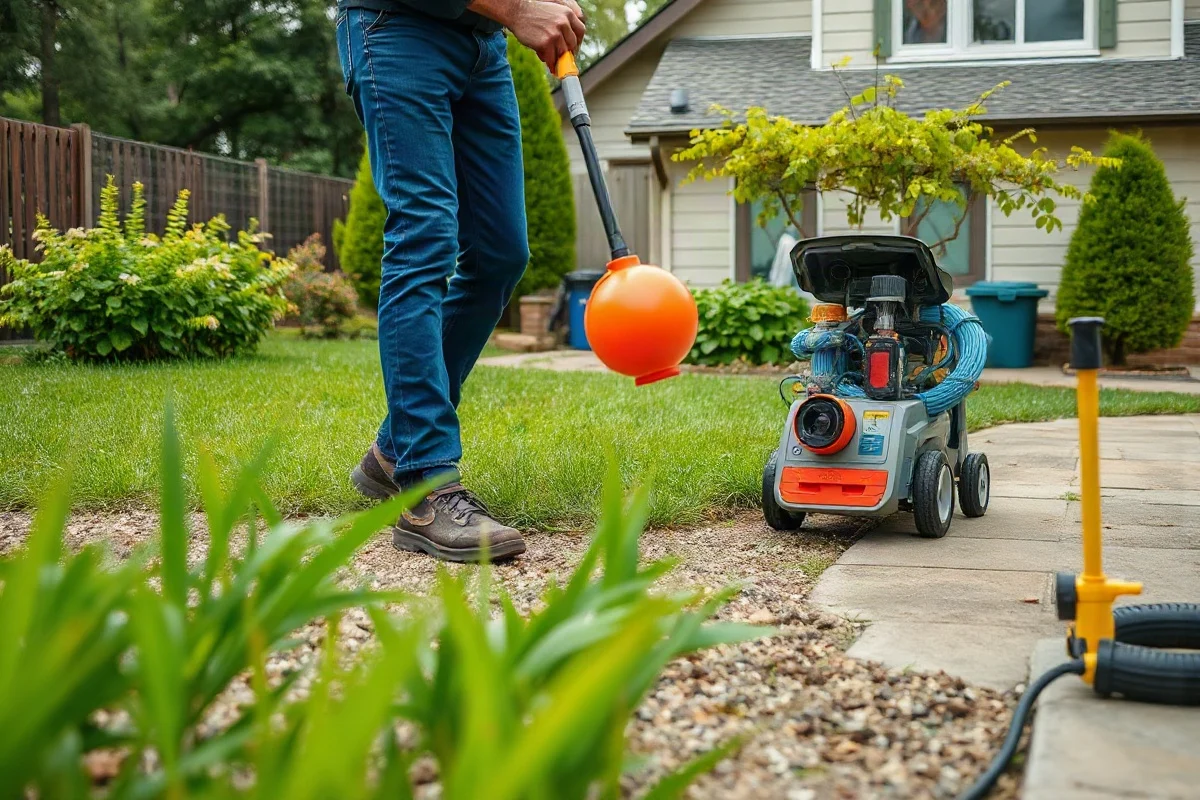
To locate a sewer line in your yard, start by checking your property records and looking for a sewer cleanout, then trace the most likely route from the home toward the street or private septic system. You can make several low-risk observations yourself, but digging, exposing a buried pipe, or confirming a damaged line should be handled by a qualified local plumber or utility-locating professional.
Knowing where the line runs can help before landscaping, building a fence, installing a drainage system, or investigating repeated backups. It can also prevent accidental damage to buried plumbing and other utilities. Because underground layouts vary by property age, local infrastructure, and previous repairs, treat visual clues as a starting point rather than a precise map.
Why You May Need to Find the Sewer Line
Homeowners commonly search for a sewer line when they notice slow drains throughout the house, recurring backups, sewage odors, wet soil, unusually green grass, or standing water in one area of the yard. You may also need its location before excavating for a patio, retaining wall, trees, irrigation, or an addition.
A line that serves the entire house usually leaves the building from a lower-level plumbing area and travels toward a municipal connection, an easement, or a septic tank. The route is often fairly direct, but it may change direction to avoid foundations, trees, rocks, or other buried structures. Older homes and properties with additions can have less predictable layouts.
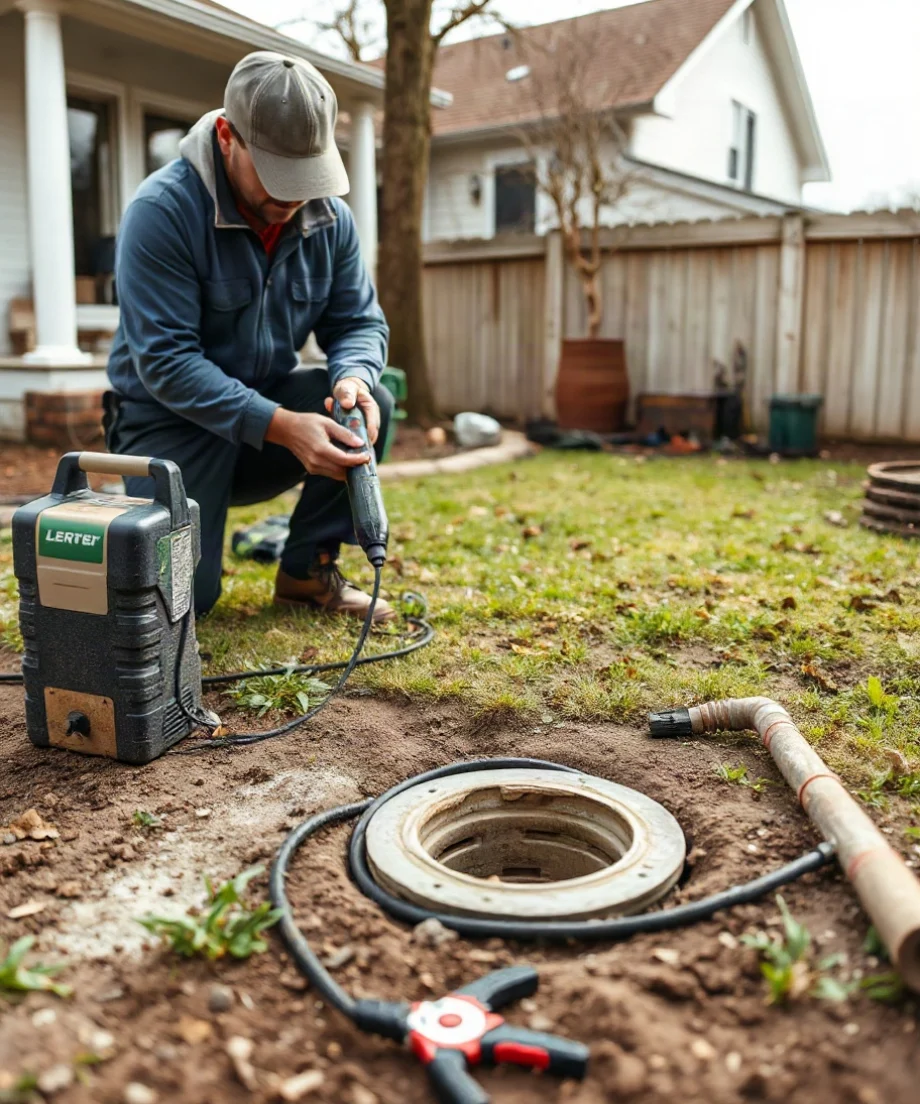
Start With Records and Existing Information
Check property documents
Look for a site plan, plumbing sketch, septic drawing, inspection report, or records from a previous sewer replacement. Some homes have documentation showing the service line, cleanouts, easements, or septic tank location. These records may be incomplete or outdated, so compare them with what you see on the property.
If your home is connected to a public sewer, the local utility or public works department may be able to explain where the public connection or right-of-way is located. The information available varies by area, and a utility representative may not be able to identify the private portion of the line. Ask what records are available before relying on an assumed route.
Review inspection and repair paperwork
Previous invoices may mention a sewer cleanout, camera inspection, trench location, or repair area. A prior plumbing contractor may also have marked the line on a sketch or photograph. If you recently bought the property, check the home inspection materials for notes about drains, sewer connections, or septic equipment.
Look for a Sewer Cleanout
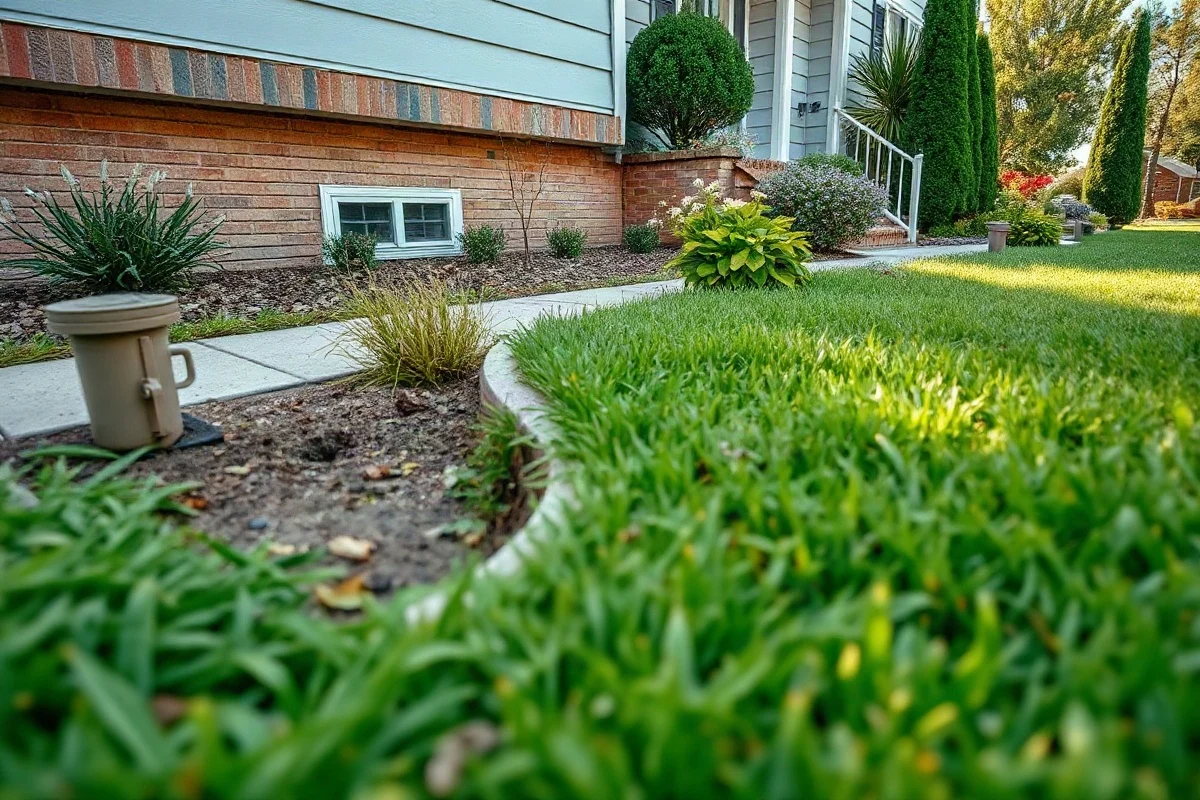
A sewer cleanout is an access point that allows a plumber to inspect or clear the building sewer. It often has a capped pipe near the exterior wall, although some cleanouts are located inside a basement, crawlspace, garage, or utility area. Outdoor caps may be near the foundation, along a side yard, or in a landscaped area.
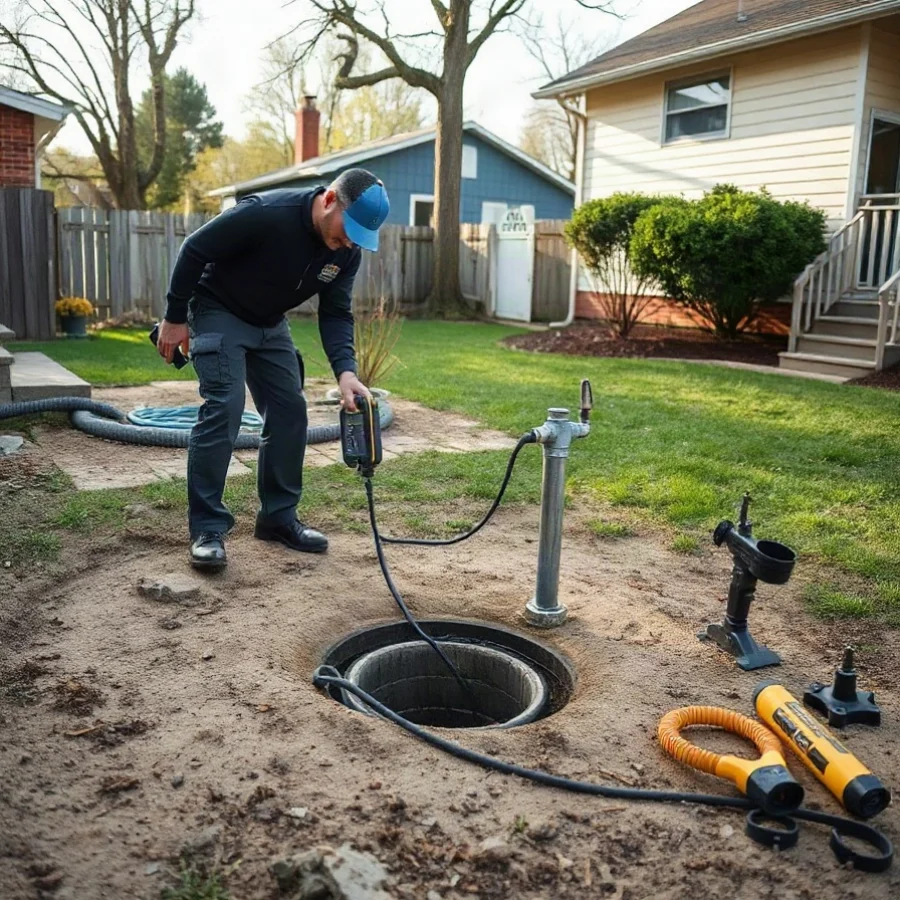
Look for a round or square cap that sits slightly above or near ground level. It may be made of plastic, metal, or another material and may have a raised fitting or a recessed plug. Do not assume every capped pipe is a sewer cleanout; irrigation, drainage, and other systems can have similar-looking access points.
You can gently clear leaves or loose soil from around a visible cap, but do not force it open. A stuck, damaged, or pressurized cap can create a hazard, especially if sewage is backing up. If the cap is cracked, leaking, missing, or surrounded by contaminated water, keep people and pets away and contact a qualified professional.
Trace the Likely Route From the House
Find the lowest-level plumbing fixtures in the home, such as a basement bathroom, floor drain, or utility sink. The main building drain commonly leaves the structure below or near this level. From there, the sewer line may run outside toward the street or toward a septic tank.
Look for a practical route rather than assuming the line follows the center of the yard. Plumbing generally takes a path that allows wastewater to move away from the home, but the exact slope and direction cannot be confirmed from the surface. A sewer line may pass beneath a driveway, walkway, garden bed, or older addition.
Surface clues can include a narrow strip of greener grass, a shallow depression, soft soil, or a patch that dries differently from the surrounding yard. These signs may indicate a leak, settling over a trench, or a separate drainage problem. They are not proof of a sewer line location, particularly after rain or irrigation.
Consider Whether the Property Uses a Septic System
If the home is not connected to a municipal sewer, the building sewer usually leads to a septic tank, lift station, or another private wastewater component. Septic tanks are often located a reasonable distance from the home, but their position depends on the original design, soil conditions, access requirements, and later changes to the property.
Search for septic records, tank service receipts, inspection documents, or information provided during the property purchase. You may also see access lids, inspection ports, a slightly raised area, or a drainfield area. Do not open a septic tank or enter an excavation. Sewage gases and unstable soil can cause serious injury or illness.
Use Safe Homeowner Checks
Low-risk checks can help you gather information without disturbing the ground:
- Walk the property and photograph visible cleanouts, access lids, wet areas, and suspected route changes.
- Measure the approximate distance from the house to a cleanout or suspected connection point.
- Note whether multiple fixtures drain slowly at the same time.
- Ask prior owners, neighbors, or a property manager whether sewer work has been completed.
- Compare current yard conditions with older property photos if available.
- Mark your observations on a simple site sketch for a plumber.
Do not insert a rod, garden hose, drain cable, dye, or camera into an unknown pipe just to locate it. These methods can damage plumbing, spread contamination, become stuck, or produce misleading results. Dye testing may also affect wastewater systems and should be discussed with a professional first.
Do Not Dig Until Utilities Are Located
A sewer line may share a general area with electric, gas, telecommunications, water, irrigation, or other buried services. Before digging, contact the appropriate local utility-marking service or one-call system for your area and follow its instructions. Utility-marking services may identify public utilities, but they may not locate every privately installed line on your property.
Never use a shovel to probe an uncertain area, and do not excavate near a suspected gas or electrical line. If you smell gas, see damaged wiring, encounter sewage, or discover major flooding, leave the area and contact the appropriate emergency or qualified local professional. Keep children and pets away from open holes, contaminated soil, and standing wastewater.
Professional Ways to Confirm the Location
Electronic sewer locating
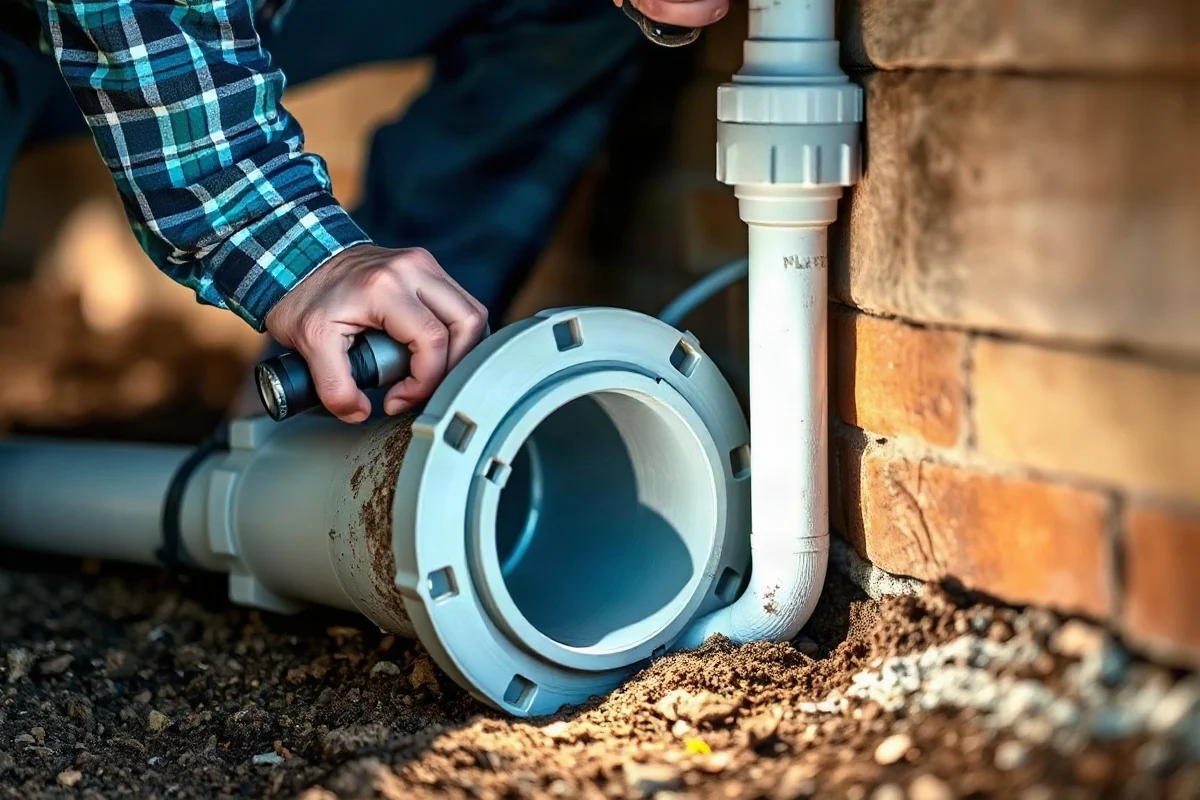
A plumber may place a sonde, transmitter, or other locating device into an accessible sewer line and track its position from above ground. This can identify the approximate route and depth without opening a long trench. The result depends on access, pipe condition, equipment, and interference from nearby utilities or structures.
Drain camera inspection
A camera inspection can show the interior condition of the pipe while helping the technician estimate where defects or connections are located. If you suspect roots, breaks, offsets, or repeated blockages, a drain camera inspection may provide more useful information than surface clues alone.
Ask the plumber to explain how the location was measured and whether the markings show the pipe centerline, an access point, or a suspected defect. A camera can reveal the condition inside the line, but it does not automatically guarantee exact surface positioning without proper locating equipment.
Ground scanning and excavation
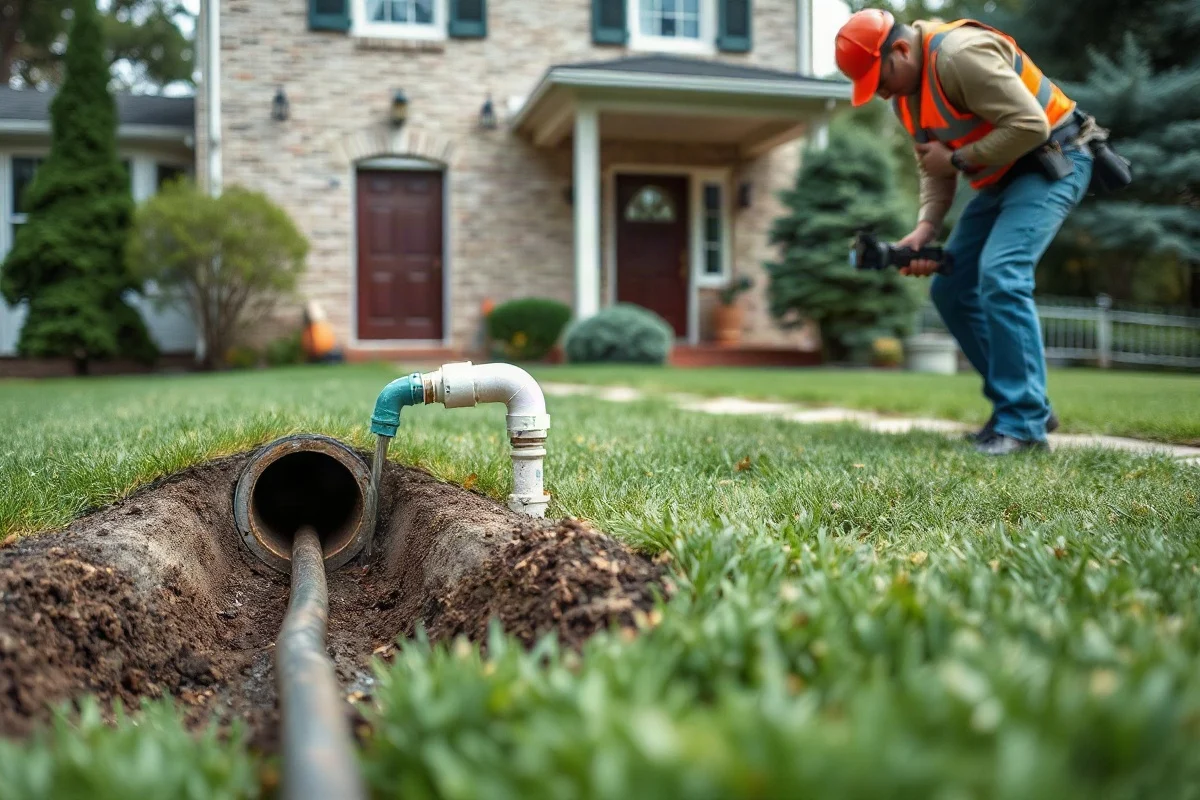
Some professionals use ground-scanning equipment or carefully expose a small section of pipe after utilities have been identified. Excavation may be necessary when the line is too damaged for a camera or when a repair plan requires confirmation of depth and material. This work should be planned by a qualified professional because digging can damage utilities, destabilize soil, or expose sewage.
What Sewer Location Clues May Indicate
A single slow drain may point to a fixture or branch drain issue rather than the main sewer line. When several fixtures back up together, the problem is more likely to involve a larger drain or building sewer. Gurgling toilets, sewage odors, repeated backups, and wastewater appearing at a floor drain deserve prompt attention.
Wet or unusually green ground along a suspected route may indicate a leaking sewer line, but it can also result from a broken water line, irrigation leak, poor grading, or natural drainage. A sunken trench may reflect soil settlement after previous work rather than an active failure. A professional diagnosis should connect the symptoms with an inspection instead of relying on one surface feature.
Repair, Replacement, or Further Investigation?
Finding the line does not necessarily mean it needs to be replaced. A plumber may recommend cleaning, localized repair, pipe lining, replacement of a damaged section, or continued monitoring depending on the pipe material, defect type, access, age, and surrounding conditions. Root intrusion, cracks, separated joints, corrosion, crushing, and recurring blockages can require different approaches.
Ask for a written explanation of the problem, the proposed work area, and whether the recommendation is based on a camera inspection or another documented finding. If excavation is proposed, ask how the route will be marked, what surfaces may need restoration, and how the contractor will protect nearby utilities. Local permit or code requirements can vary, so the contractor should explain which responsibilities apply to the project rather than making assumptions.
For background on common sewer problems and service options, you can review the sewer line guide. If the immediate issue is a widespread backup or rapidly worsening wastewater problem, use a qualified local professional rather than repeatedly running water or attempting aggressive drain chemicals.
Factors That Affect the Cost of Locating or Repairing a Sewer Line
There is no reliable single price for this work because properties and sewer systems differ. Cost factors may include:
- Whether the line is accessible through a cleanout or requires additional access.
- The length, depth, and route of the pipe.
- Whether the pipe passes beneath concrete, asphalt, landscaping, structures, or fences.
- The need for camera inspection, electronic locating, ground scanning, or excavation.
- The pipe material, size, condition, and type of damage.
- Restoration of soil, paving, plants, or other surfaces.
- Whether the project involves a private sewer connection, septic component, or shared line.
- Site access, wastewater contamination, and other safety controls.
Request an itemized estimate that separates diagnosis, locating, repair or replacement, excavation, disposal, and restoration. Do not choose a contractor solely from a low initial quote if the scope is unclear.
How to Choose the Right Local Plumber
Look for a company with relevant experience in sewer locating, drain camera inspections, excavation, and the type of wastewater system on your property. Ask whether the person performing the work is qualified for the task and whether the company can provide documentation of findings. Licensing, insurance, permits, and code obligations vary by location, so verify the requirements with the appropriate local authority instead of relying on general online claims.
A dependable plumber should explain the diagnostic process before starting, identify safety concerns, describe what can and cannot be confirmed, and provide a clear written scope. Be cautious of anyone who recommends major excavation without explaining the evidence, route, expected access, and alternatives.
When comparing providers, this guide to hiring a plumber can help you prepare questions about qualifications, documentation, and the proposed work. If sewage is entering the home, multiple drains are backing up, or contaminated water is spreading through the yard, stop using affected fixtures and seek qualified local help promptly.
Comments
0No comments yet. Be the first to share a helpful note or question.
Leave a Comment
Your email address will not be published. Comments are reviewed before appearing on the site.