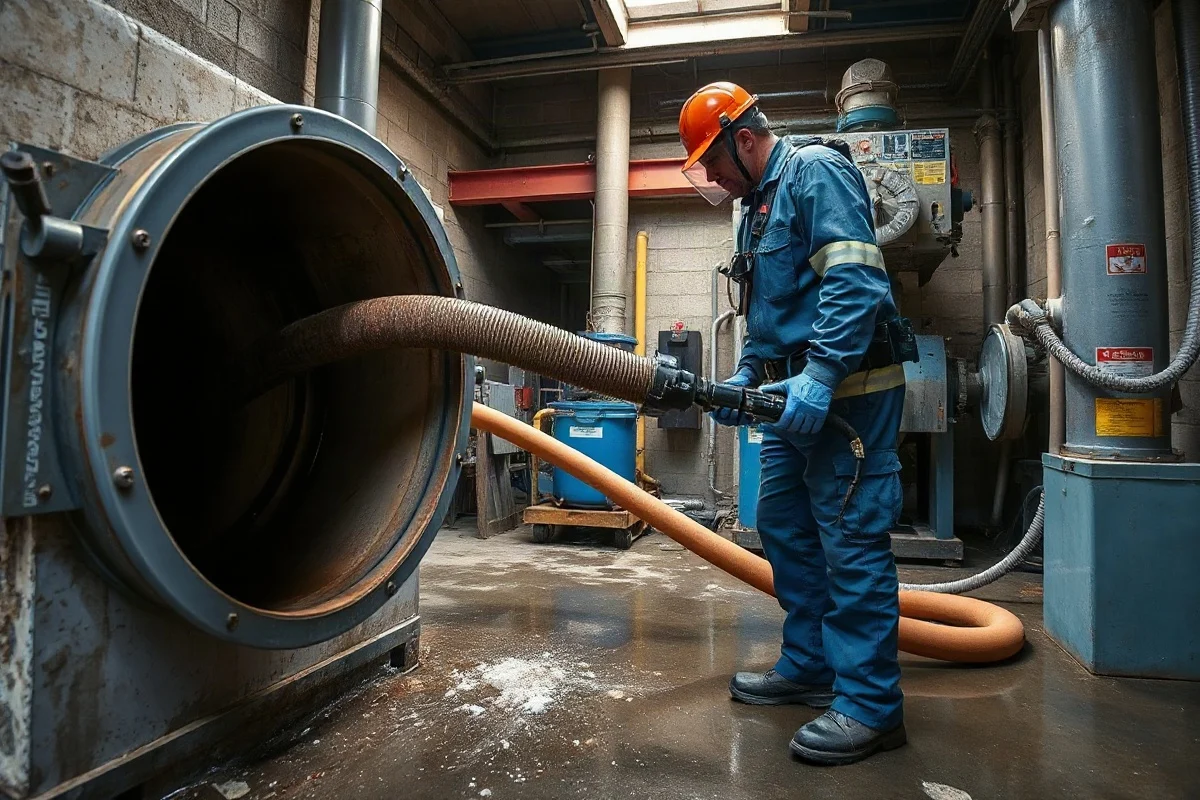
Hydro jetting is often an effective way to clean commercial sewer lines when grease, sludge, mineral scale, roots, or recurring debris restrict the pipe. A qualified sewer professional uses specialized equipment to direct controlled, high-pressure water through the line, breaking up buildup and flushing it toward an approved discharge point. Because commercial sewer systems can be large, interconnected, and difficult to access, hydro jetting should be evaluated and performed by an experienced professional rather than attempted with consumer equipment.
What Hydro Jetting Does
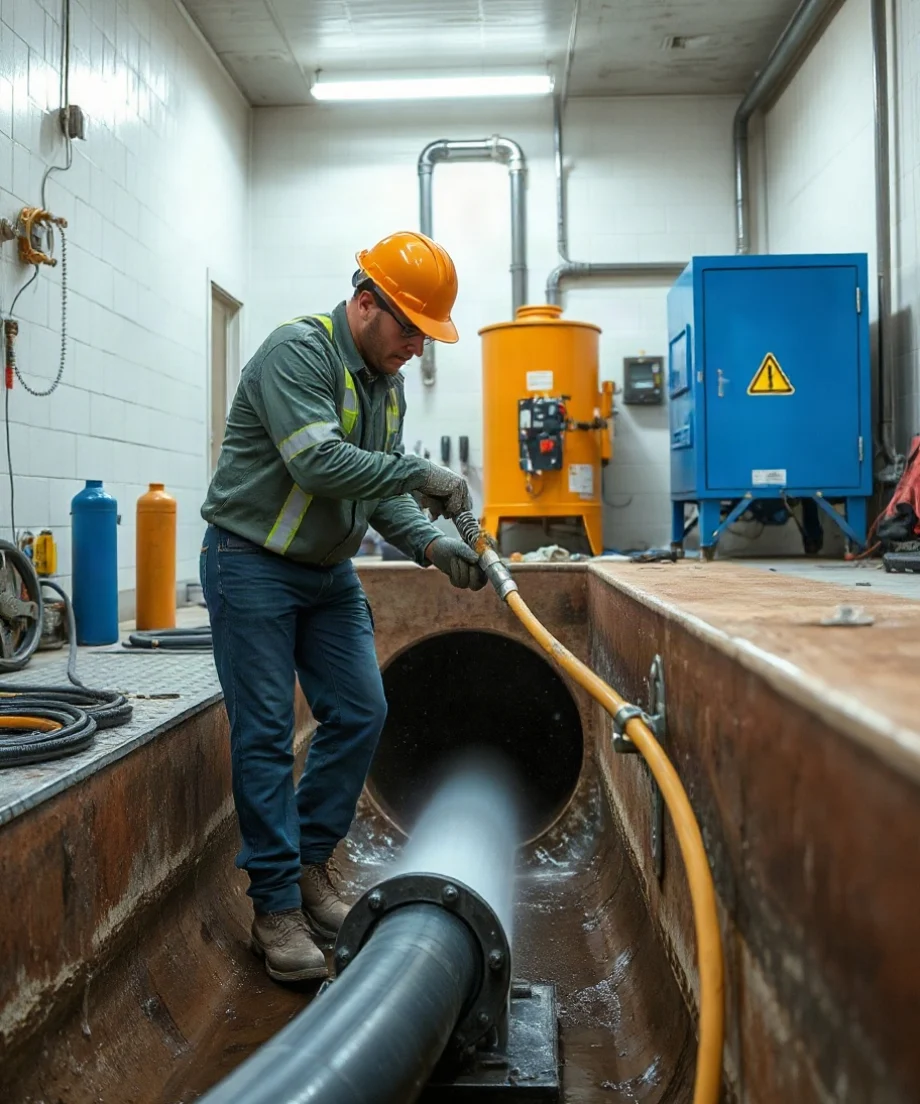
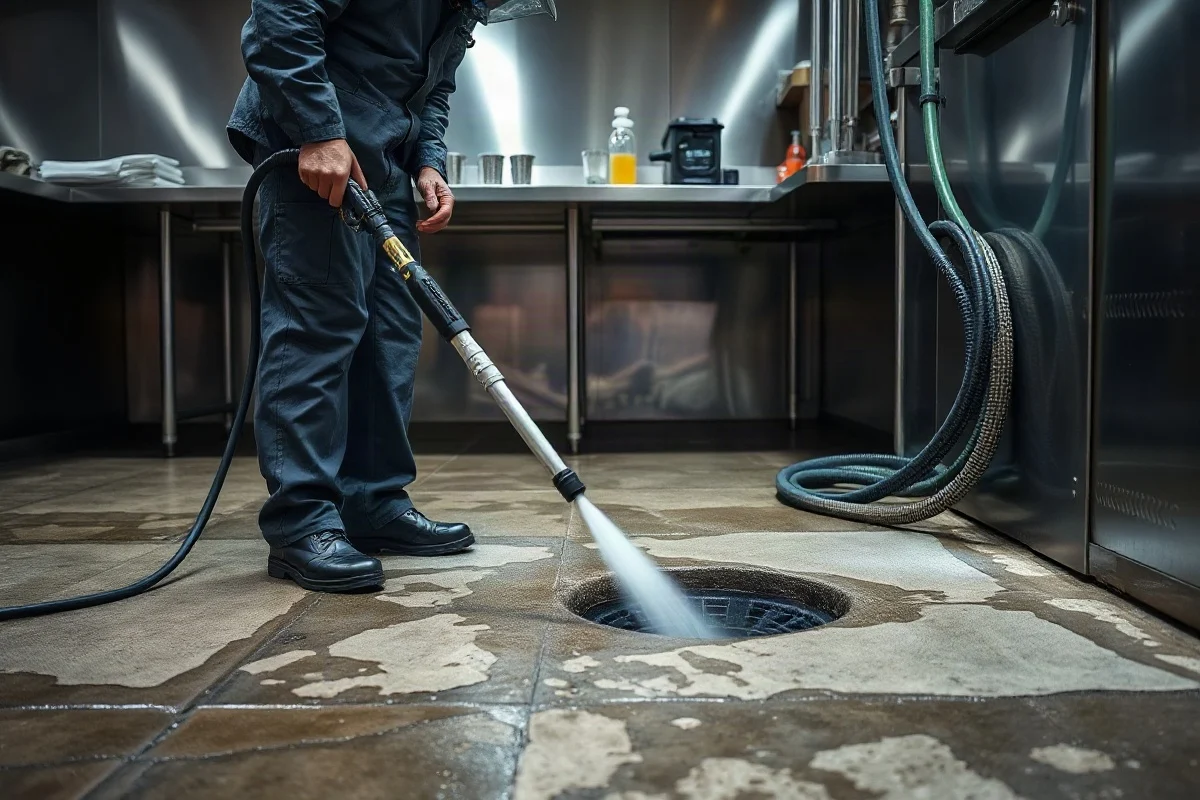
Traditional drain snaking may create a narrow opening through a blockage. Hydro jetting is different: it uses water flowing through a specialized nozzle to scour the inside walls of a sewer pipe. Depending on the equipment and the condition of the line, the water can help remove grease, food residue, sludge, soap deposits, mineral scale, and some root intrusion.
The work typically begins with access through a cleanout, maintenance opening, or another suitable point in the drainage system. The technician may inspect the line first, select a nozzle and pressure suitable for the pipe, and position the hose so the water moves in the proper direction. After cleaning, the technician may run an inspection camera to check whether the obstruction was removed and whether structural defects remain.
Hydro jetting cleans the pipe, but it does not automatically repair a collapsed, severely cracked, displaced, or badly deteriorated sewer line. If the pipe has a structural failure, cleaning may provide only temporary improvement before excavation, lining, spot repair, or replacement is considered.
When Commercial Sewer Lines May Need Hydro Jetting
Commercial properties often generate more wastewater and solid or greasy residue than a typical home. Restaurants, apartment buildings, hotels, schools, medical facilities, warehouses, and office complexes may experience problems that develop gradually rather than as one sudden blockage.
- Recurring backups: Drains work after clearing but slow down or back up again soon afterward.
- Multiple slow fixtures: Several sinks, floor drains, toilets, or other fixtures drain slowly at the same time.
- Grease accumulation: Food service operations may send fats, oils, and grease into the drainage system despite routine maintenance.
- Foul odors: Persistent sewer odors can indicate stagnant wastewater, organic buildup, or a partial restriction.
- Gurgling or bubbling: Air displaced by a restricted sewer line may cause unusual sounds at nearby fixtures.
- Wastewater backups: Sewage appearing in floor drains or lower-level fixtures requires prompt professional attention.
- Preventive maintenance needs: A property with a history of blockages may benefit from a documented cleaning schedule based on actual conditions.
These symptoms do not prove that hydro jetting is the right solution. A blockage may instead be caused by a damaged pipe, a failed backwater device, tree roots, an undersized section, or a problem in a municipal sewer connection. Diagnosis matters before cleaning begins.
Common Causes of Commercial Sewer Restrictions
Grease, oil, and food waste
Grease can stick to the inside of a sewer line and gradually narrow the passage. Food particles and other solids may collect on that rough surface, creating a larger restriction. Pouring hot water into a drain does not remove established grease deposits throughout a commercial sewer line. Food service businesses should follow their waste-handling procedures and avoid treating hydro jetting as a substitute for grease control.
Mineral scale and hardened deposits
Hard water minerals and long-term deposits can reduce the usable diameter of a pipe. Older metal lines may develop rough interior surfaces that catch debris more easily. The technician must consider pipe material and condition before selecting cleaning equipment, because excessive force or an unsuitable nozzle can worsen a fragile line.
Root intrusion
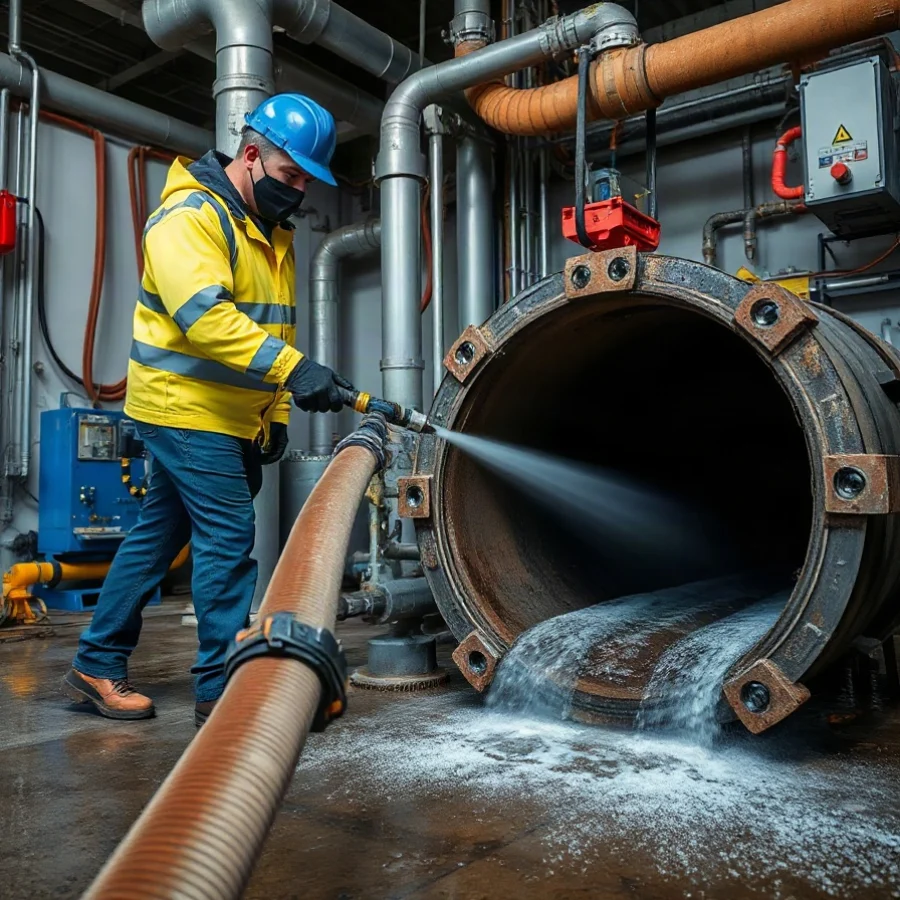
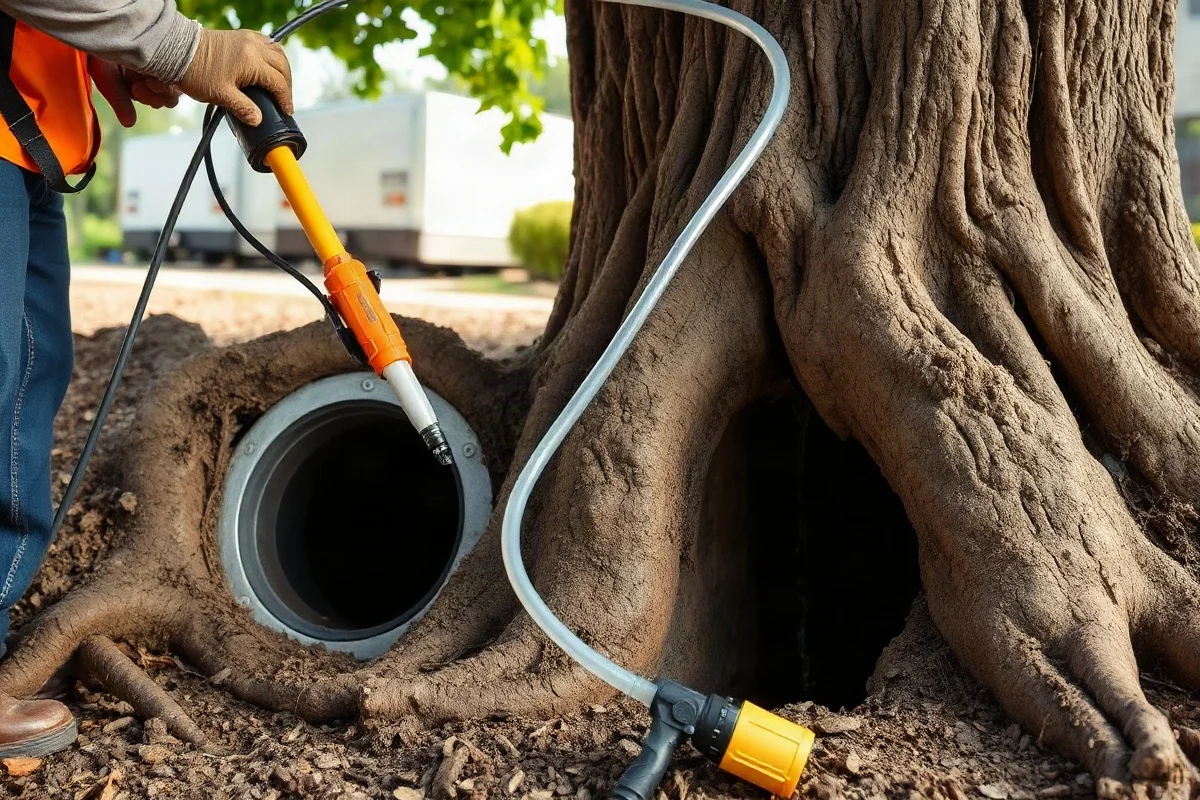
Roots can enter through joints, cracks, or other openings. Jetting may clear the roots from the interior, but it does not permanently seal the entry point. If roots return, a camera inspection and a discussion of structural repair options may be necessary.
Sludge and sediment
Some commercial systems collect sand, dirt, paper products, or other sediment. A partial restriction may allow water to pass but still leave the property vulnerable to a complete backup during heavy use. Cleaning and proper disposal of removed material should be planned with the service provider.
Safe Checks Before Calling a Professional
Property staff can perform a few low-risk observations, but commercial sewer work should not be treated as a do-it-yourself project. Do not open a cleanout if wastewater is under pressure, do not enter a sewer access area, and do not use high-pressure equipment without proper training.
- Record which fixtures are slow, blocked, or overflowing.
- Note whether the problem affects one fixture, one area, or the entire building.
- Check for visible leaks, standing wastewater, unusual odors, and sounds from drains.
- Ask staff whether the issue began after heavy rain, construction, a kitchen event, or a change in building use.
- Review recent maintenance records, previous backups, grease-control work, and camera inspection reports.
- Keep people away from sewage-contaminated areas and prevent contact with contaminated water.
Do not pour chemical drain cleaners into a commercial sewer line before service. Chemicals may create a hazard for workers, damage some plumbing components, and complicate diagnosis. If sewage is backing up, several fixtures are affected, or water is entering occupied areas, contact a qualified local professional promptly. You can also review the emergency plumber guidance for situations requiring urgent attention.
Why a Camera Inspection Is Important
A camera inspection helps distinguish a removable obstruction from a structural problem. It may reveal a belly in the line, offset joints, cracks, corrosion, root intrusion, heavy scale, or a collapsed section. The images can also help identify where the defect is located and whether cleaning has restored a clear passage.
For recurring commercial problems, consider asking for inspection footage or a written description of the findings. A camera cannot always show every condition, and access, water level, pipe size, and debris can affect visibility, but it is often valuable evidence when deciding between cleaning and repair. Learn more through the drain camera inspection resource.
Hydro Jetting Versus Snaking
A mechanical cable can be useful for opening a localized blockage, especially when access is limited or the immediate goal is to restore flow. However, a cable may leave grease or sludge attached to the pipe walls. Hydro jetting is generally intended to clean more of the pipe’s interior, which can make it better suited to recurring buildup in a commercial setting.
The two methods are not competing answers in every situation. A technician may use a cable to establish an opening, inspect the line, and then determine whether jetting is appropriate. If the pipe is damaged or unstable, repair may be safer than aggressive cleaning. The correct method depends on the obstruction, pipe material, access point, and condition of the sewer line.
What the Commercial Service Process May Include
- Problem assessment: The technician reviews symptoms, property layout, prior service, and available access points.
- Initial inspection: A camera or other diagnostic method may be used to locate the restriction and assess pipe condition.
- Equipment selection: The provider chooses a hose, nozzle, and operating approach based on the line and the material being removed.
- Cleaning: Water is directed through the pipe while the technician controls hose movement and monitors flow.
- Flushing and verification: Removed material is managed appropriately, and the line may be inspected again to confirm results.
- Recommendations: The provider explains whether routine cleaning, a repair, or further investigation is appropriate.
Commercial work may require coordination with building occupants, kitchen staff, tenants, facility managers, or other contractors. Ask how access, water use, cleanup, and temporary service interruptions will be handled before work starts.
Repair or Replacement After Jetting
If the line flows well after cleaning and the pipe is structurally sound, ongoing maintenance may be appropriate. If the camera shows a broken, collapsed, badly corroded, or displaced section, cleaning alone is not a permanent repair. Depending on the location and condition, a professional may discuss spot repair, trenchless rehabilitation, excavation, or replacement.
A recurring blockage is a reason to investigate further, not simply repeat the same service indefinitely. Ask what caused the restriction, how much of the line was inspected, and what evidence supports the recommended next step. For broader sewer-line information, visit the sewer line resource.
Commercial Hydro Jetting Cost Factors
Service costs vary by project and location, so a responsible provider should evaluate the property before offering a meaningful estimate. Factors that may affect the price include:
- Length, diameter, and accessibility of the sewer line
- Number and location of cleanouts or access points
- Severity and type of buildup
- Pipe material and the risk of damage from cleaning
- Need for camera inspection before or after jetting
- Difficulty managing wastewater, debris, or cleanup
- Work performed during normal operations versus a planned maintenance window
- Additional repairs identified during inspection
Be cautious of a quote that does not explain what is included. Ask whether inspection, equipment setup, flushing, cleanup, documentation, and follow-up recommendations are part of the proposed service. For general information about plumbing service pricing, see plumbing costs, while remembering that commercial sewer projects require property-specific evaluation.
How to Choose a Commercial Sewer Professional
Look for a company with relevant commercial sewer experience, appropriate equipment, and a clear diagnostic process. Ask whether the crew has handled similar pipe sizes, building types, grease-related restrictions, or recurring sewer problems. Verify any licensing, insurance, safety, and disposal requirements that apply in your area rather than relying on general online assumptions.
A qualified provider should explain the proposed method, potential risks, access needs, expected disruption, and what happens if the inspection reveals damaged pipe. Request a written scope of work and ask who will be responsible for coordinating with the property manager or other contractors. A professional should not promise that jetting will solve every sewer problem before examining the line.
Keeping Commercial Sewer Lines Clear
Good maintenance begins with preventing avoidable material from entering the system. Train employees not to flush wipes, paper towels, packaging, grease, or food scraps into drains. Maintain strainers and grease-control equipment according to the facility’s procedures. Keep records of backups, inspections, cleanings, and repairs so recurring patterns are easier to identify.
Preventive hydro jetting may be useful for some properties, but the schedule should be based on observed buildup, line condition, usage, and professional recommendations. Over-cleaning is not a substitute for correcting a damaged pipe or poor waste-handling practice. When commercial sewer symptoms appear, early diagnosis can help protect operations, reduce exposure to sewage, and clarify whether cleaning or a more extensive repair is needed.
Comments
0No comments yet. Be the first to share a helpful note or question.
Leave a Comment
Your email address will not be published. Comments are reviewed before appearing on the site.