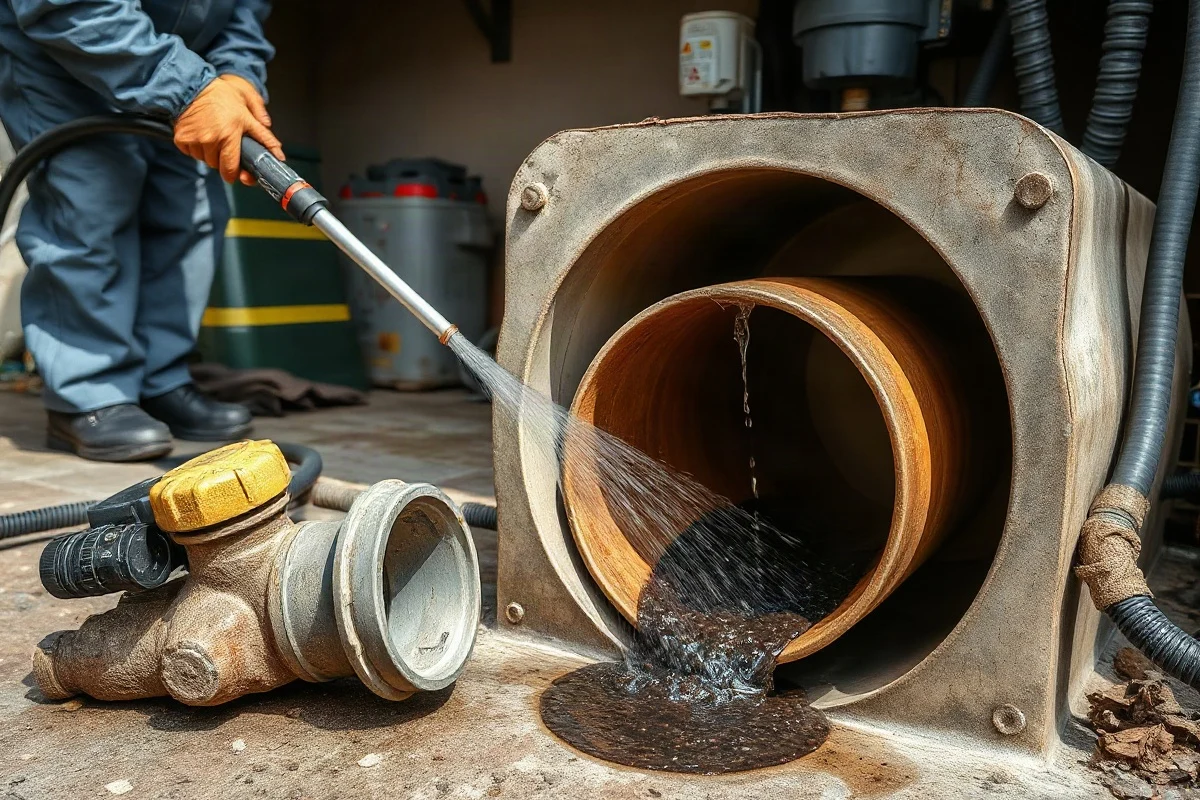
Hydro jetting is often an effective way to remove sludge from drain pipes because it uses pressurized water to scour the inside of the line rather than simply punching a narrow path through the blockage. It is usually a professional service, not a routine do-it-yourself repair. Before jetting, a qualified plumber should evaluate the drain, identify the source of the buildup, and consider whether the pipe is strong enough for the equipment and pressure being used.
What sludge in a drain pipe looks like
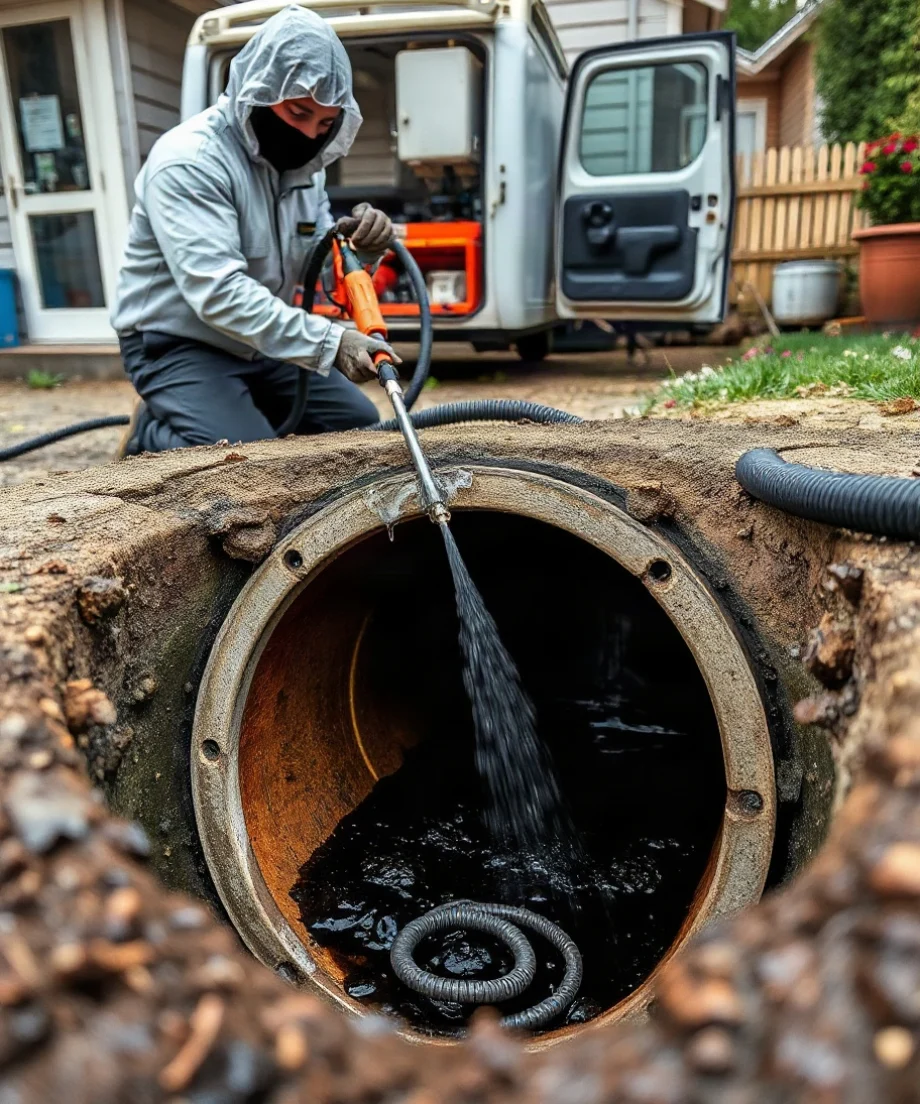
Drain sludge is a thick layer of wet debris that collects on the interior walls of a pipe. It may contain soap residue, grease, food particles, hair, paper fibers, mineral deposits, soil, or organic waste. In some sewer lines, roots and deteriorated pipe material can combine with sediment to form a dense, sticky restriction.
Unlike a single solid object, sludge can spread along a long section of pipe. Water may still pass through at first, but the reduced opening slows drainage and gives more material a place to collect. Over time, a line that was only mildly slow can become a recurring clog or a complete backup.
Signs that sludge may be restricting the line
Sludge is only one possible cause of a slow drain, so symptoms should be considered together rather than treated as a diagnosis. Common signs include:
- Water draining slowly from a sink, shower, floor drain, or tub
- Recurring clogs that return soon after plunging or snaking
- Gurgling sounds from drains or toilets
- Foul odors coming from a drain opening
- Multiple fixtures draining slowly at the same time
- Water backing up into a shower, floor drain, or other low fixture
- Dark or greasy residue around a drain opening
A single slow bathroom sink may have a local hair or soap blockage. Several fixtures with the same problem suggest a restriction farther downstream. If wastewater is backing up, stop using affected fixtures and arrange qualified help. Sewage exposure is a health hazard, and continued water use can worsen flooding.
Why hydro jetting can help
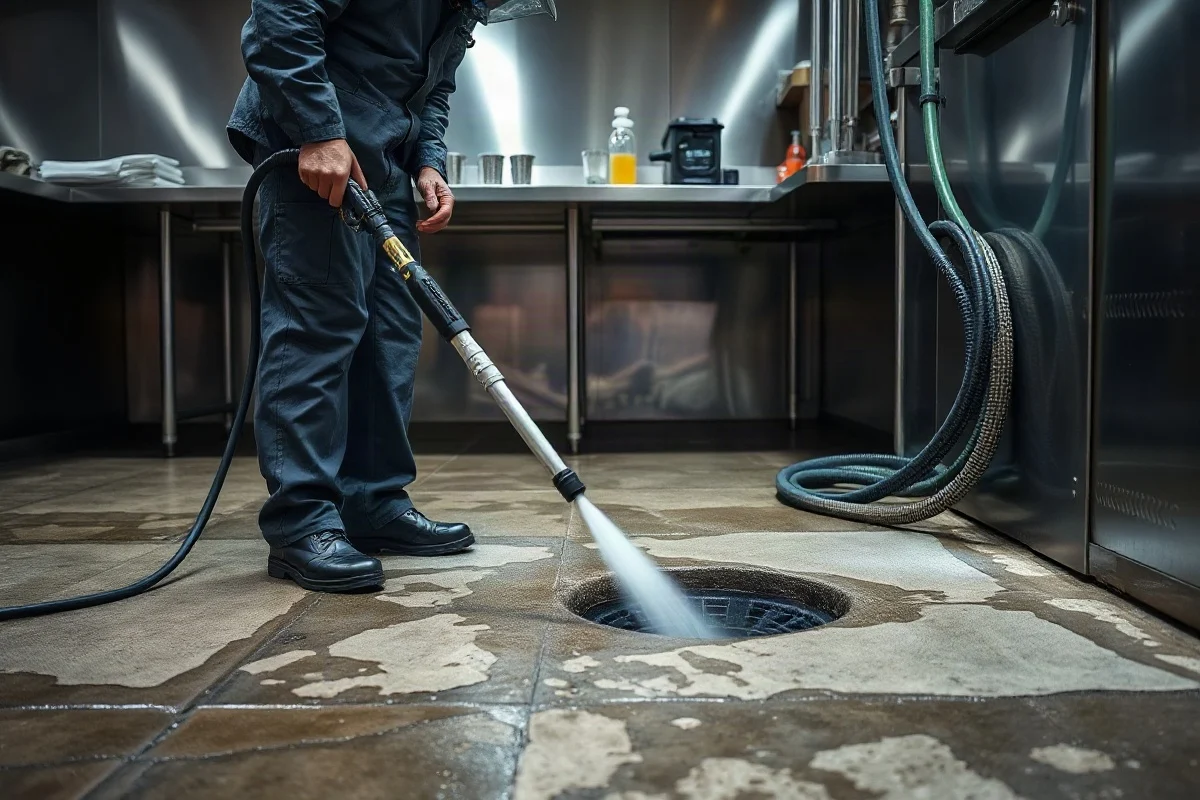
A hydro jetting machine sends a controlled stream of water through a specialized nozzle. Forward-facing jets help move the nozzle through the pipe, while rear-facing jets wash debris from the pipe walls and carry loosened material toward an accessible cleanout or downstream connection.
This differs from conventional drain snaking. A cable may break through a blockage or open a passage, but it may leave a substantial coating on the pipe walls. Jetting can clean a larger portion of the interior when conditions are suitable. It may also remove grease and soft deposits that quickly catch new debris after a basic clearing.
Hydro jetting is not a universal solution. It cannot restore a collapsed pipe, reliably repair a separated joint, or replace a damaged section. If roots, cracks, corrosion, or a structural failure are causing the restriction, cleaning may provide only temporary relief unless the underlying pipe problem is addressed.
Likely causes of sludge buildup
Kitchen drain deposits
Grease, cooking oils, starches, and food particles can cling to kitchen drain walls. Hot water may move some grease temporarily, but it does not remove all of the material from a long drain run. Repeated disposal of grease into the sink can create a thick restriction over time.
Bathroom residue
Soap, body oils, toothpaste, hair, and skin particles can combine into a sticky coating. Bathroom drains often develop a local blockage near the stopper or trap, but buildup can also extend farther into the branch line.
Mineral deposits
Hard-water minerals can narrow a pipe, particularly where flow is slow or water remains in the line. Mineral scale may be hard and brittle rather than sludge-like, and it may require a different cleaning approach or pipe replacement if the restriction is severe.
Sewer line sediment and root intrusion
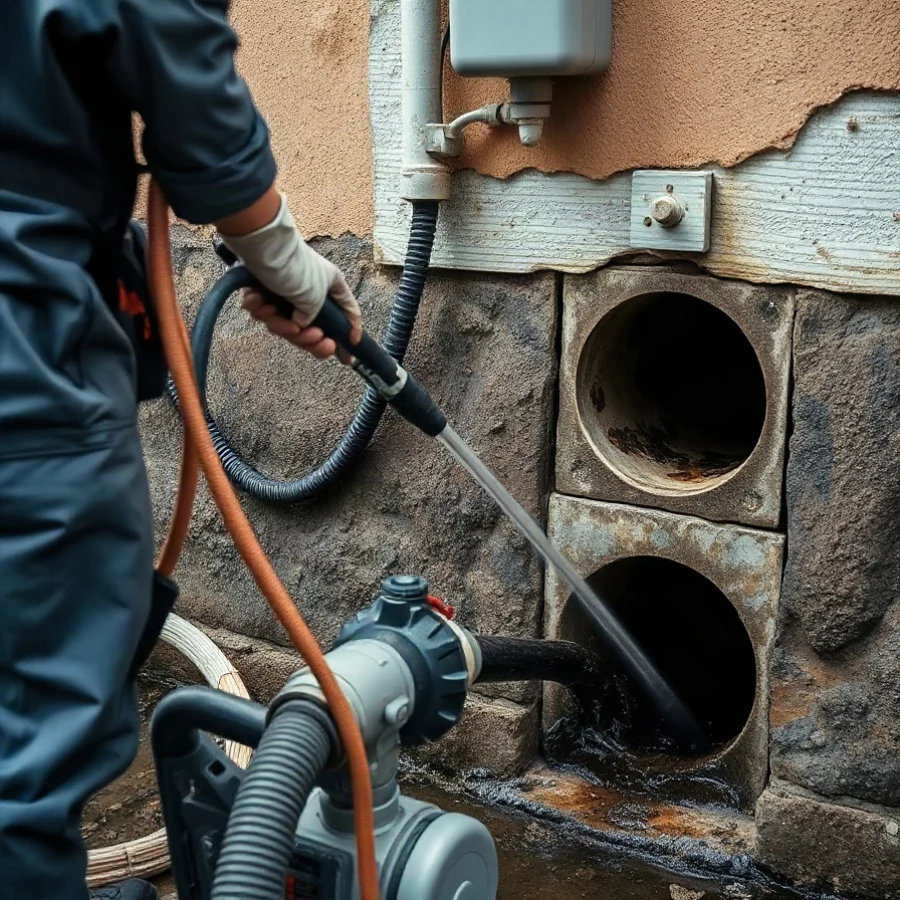
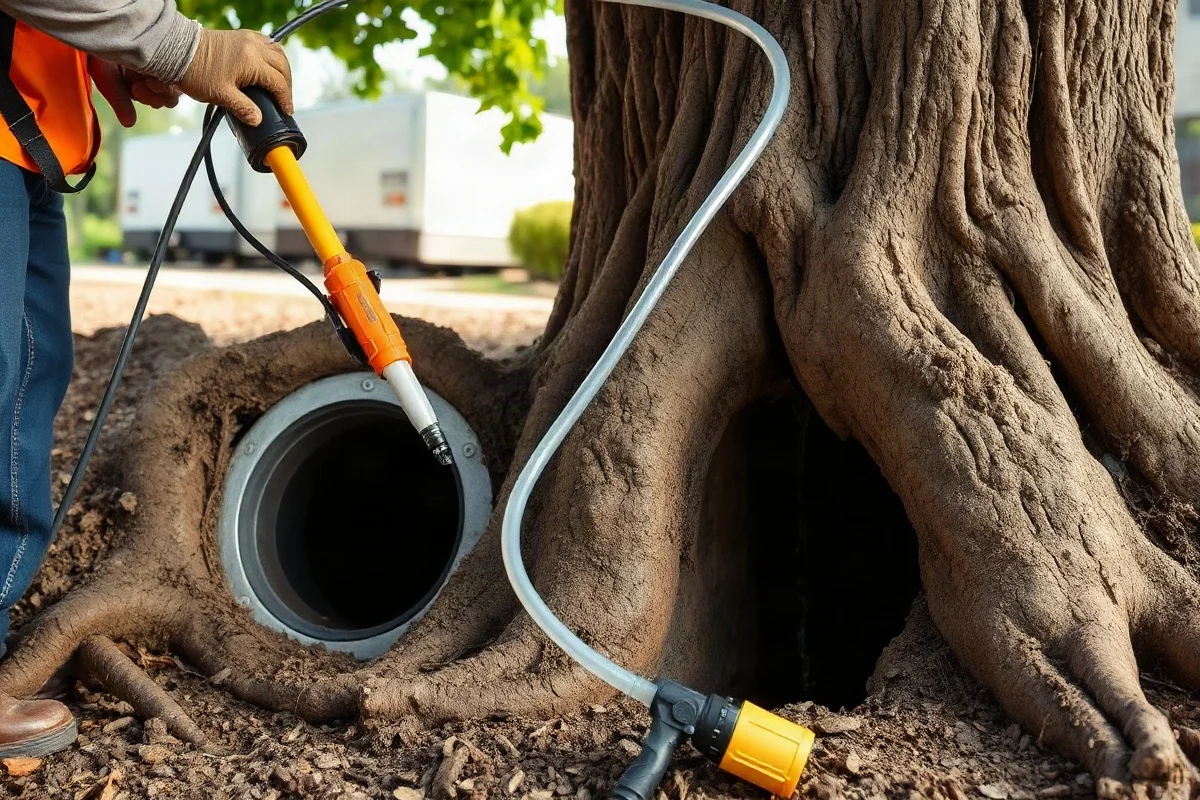
Building drains and sewer lines can collect soil, sediment, and organic debris when a pipe has a damaged joint, a crack, poor drainage, or root intrusion. A camera inspection is useful when multiple fixtures back up or when a blockage keeps returning.
Safe checks a homeowner can make
There are a few low-risk observations you can make before calling a plumber. Note which fixtures are affected and whether they are connected to the same area. Check whether the problem is limited to one drain or appears throughout the home. Look under accessible sinks for obvious leaks, but do not dismantle a connection if wastewater may spill.
You can remove and clean a visible sink stopper or hair screen if it lifts out easily. Follow the fixture manufacturer’s instructions when available. A plunger may help with a simple local blockage, provided the fixture has enough water to cover the plunger cup and no chemical drain cleaner has recently been used.
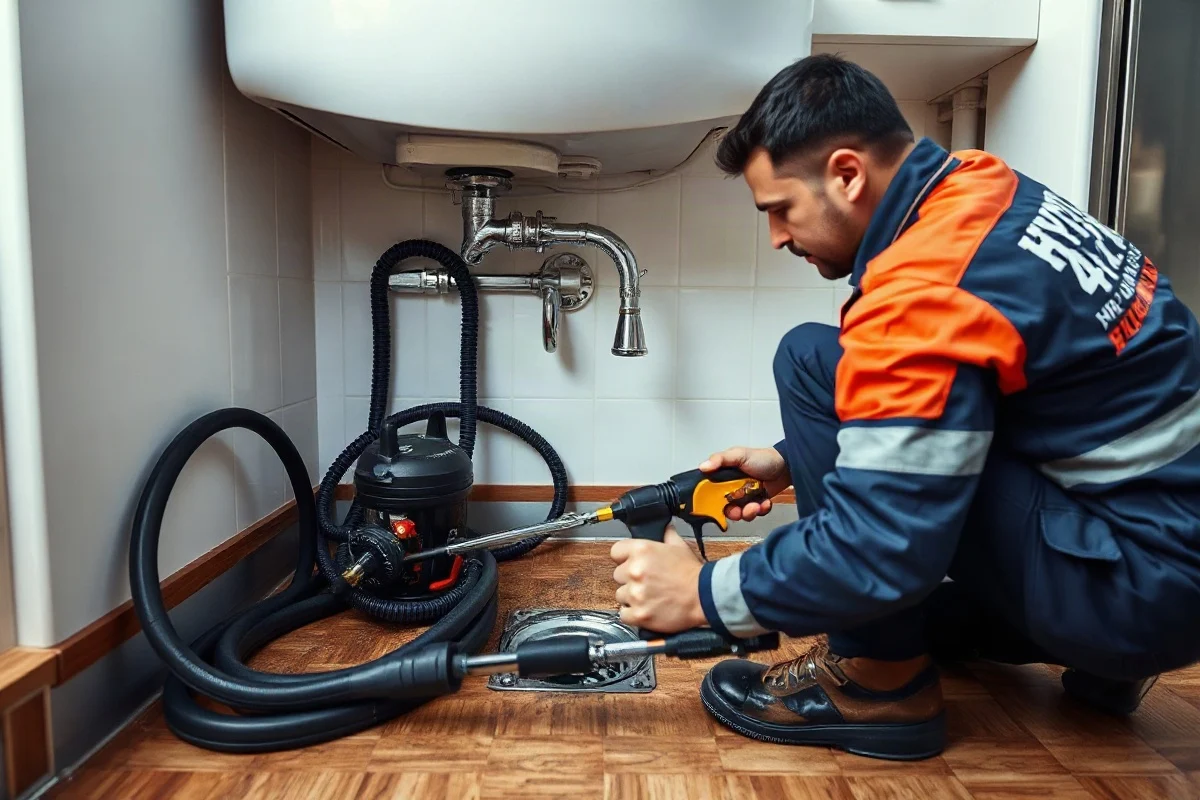
Avoid mixing drain chemicals or using them repeatedly in a line that may need professional attention. Chemical residue can injure a person who later opens the trap or works on the drain. Do not insert a pressure washer hose into a household drain, and do not attempt to reproduce professional hydro jetting with improvised equipment.
What a professional inspection should include
A reputable plumber should ask about the drain’s history, identify the affected fixtures, and determine whether the problem is local or part of a larger line. Depending on access and symptoms, the plumber may use a drain machine, locate a cleanout, inspect the pipe with a camera, or test how water flows through the system.
A camera inspection can be especially valuable before jetting an older, unknown, or repeatedly blocked line. It may reveal roots, a sagging section, corrosion, a broken connection, or a heavy deposit that changes the recommended approach. The inspection does not guarantee that every hidden defect will be found, but it can help separate a cleaning problem from a structural pipe problem.
Before work begins, ask what equipment will be used, where the loosened material will go, how the plumber will protect indoor surfaces, and what findings would cause the work to stop. The plumber should explain the proposed scope clearly rather than promising that jetting will solve every drain problem.
When hydro jetting may not be appropriate
High-pressure water can damage a pipe that is already severely deteriorated or incorrectly connected. The risk depends on the pipe’s material, condition, access, layout, and the equipment settings selected by the professional. A plumber may recommend a gentler cleaning method, a camera inspection first, or repair and replacement instead of jetting.
Use qualified local help for sewage backups, major flooding, concealed leaks, excavation, damaged sewer lines, or any situation involving contaminated water. If the blockage is associated with a commercial kitchen, multifamily building, or other complex system, choose a contractor experienced with that type of plumbing rather than treating it like a single household sink.
For general information about related services, see hydro jetting services and professional drain cleaning.
Clean the pipe or replace it?
Cleaning is more likely to make sense when the pipe is structurally sound and the main problem is grease, sludge, soft buildup, or another removable restriction. It can also be useful as part of maintenance when a line has a history of buildup but no evidence of a damaged pipe.
Repair or replacement may be more appropriate when an inspection shows a collapse, major crack, separated joint, severe corrosion, persistent root intrusion, or a section that repeatedly fails after cleaning. Replacing an entire line is not automatically necessary; a plumber may be able to repair only the damaged section, depending on its location and condition.
Ask the plumber to distinguish between what the inspection confirms and what is only suspected. A clear explanation should cover the immediate restriction, the condition of the surrounding pipe, and the consequences of choosing cleaning, repair, or replacement.
What affects the cost of hydro jetting
Pricing varies by location and by the actual work required, so a reliable estimate cannot be based on the phrase “hydro jetting” alone. Cost factors may include the number of affected lines, pipe diameter, access to a cleanout, blockage severity, the need for a camera inspection, travel and setup, cleanup, and whether the work occurs during an urgent service call.
Long sewer lines, difficult access, commercial systems, heavy deposits, and follow-up repairs can require more labor and equipment than a short residential branch drain. Ask whether the estimate includes inspection, jetting, removal of debris, cleanup, and any recommended follow-up work. Also ask what happens if the plumber discovers a damaged pipe after cleaning begins.
For broader guidance on evaluating plumbing estimates, review plumbing cost factors. The goal is not simply to find the lowest initial quote; it is to understand what problem the proposed service addresses and whether additional work may be necessary.
How to choose the right plumber
Look for a qualified local plumbing professional who regularly handles drain and sewer problems. Ask whether the company has experience with sludge removal, hydro jetting, camera inspections, and the type of pipe serving your property. Confirm that the company can explain its process, protect the work area, and provide written details for the recommended service.
Be cautious of anyone who recommends high-pressure cleaning without asking about symptoms, pipe age, access, or previous repairs. You should also be wary of guarantees that ignore the possibility of structural damage. A careful plumber will explain both the benefits and limitations of jetting.
Hydro jetting can be a powerful way to remove sludge from a sound drain pipe, but lasting results depend on finding out why the buildup formed. Safe homeowner observations can help describe the problem, while inspection, pressure selection, sewage handling, and pipe repairs belong with a qualified professional. If you need help comparing service options, use a reputable plumber hiring guide before scheduling the work.
Comments
0No comments yet. Be the first to share a helpful note or question.
Leave a Comment
Your email address will not be published. Comments are reviewed before appearing on the site.