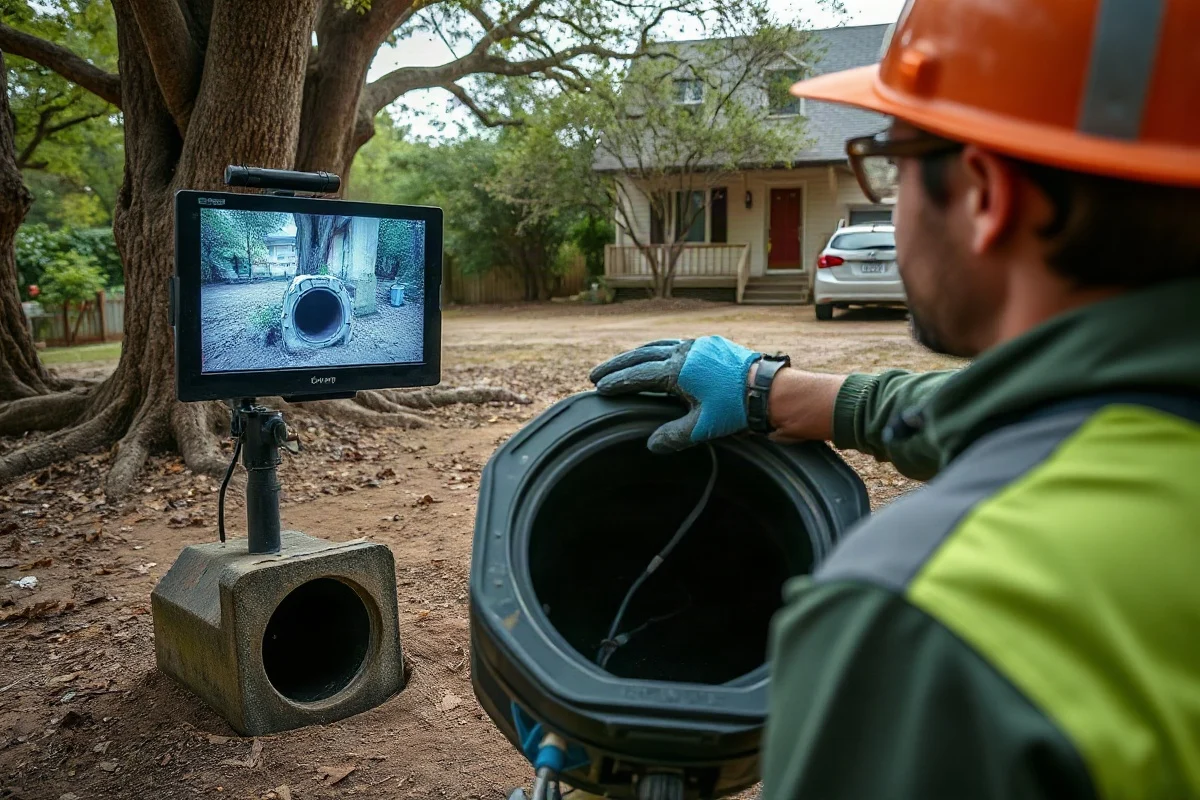
A camera inspection of a 1950s sewer line may reveal root intrusion, cracked or shifted clay pipe, heavy buildup, a belly that holds wastewater, or a damaged connection near the home. The camera does not repair the problem, but it shows where the defect is, how serious it appears, and whether cleaning, spot repair, lining, or replacement should be considered. Because sewer work involves wastewater and buried piping, a qualified local plumbing professional should interpret the recording and recommend the next step.
Why a 1950s sewer line deserves closer attention
Many homes built in the 1950s still have their original building sewer or lateral, although portions may have been repaired or replaced over the years. The exact material varies by region and property. Older lines may include clay, cast iron, vitrified clay, or other materials, and the connection between the house and the public sewer can contain more than one type of pipe.
Age alone does not prove that a sewer line needs replacement. A well-maintained older line may continue to work for years. However, original piping has had more time to experience soil movement, tree-root growth, corrosion, repeated drain cleaning, and changes in the surrounding landscape. A camera inspection is useful because the most important defects are underground and cannot be confirmed by looking at an indoor drain.
What the camera found
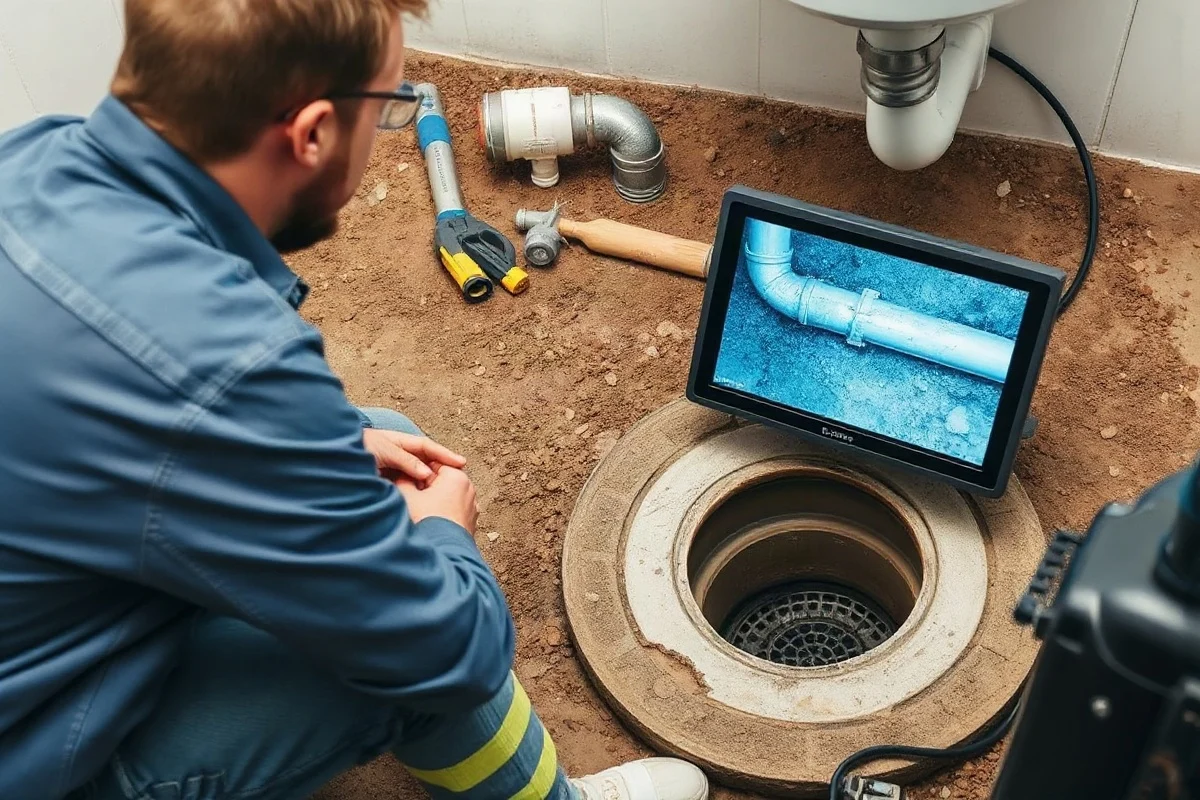
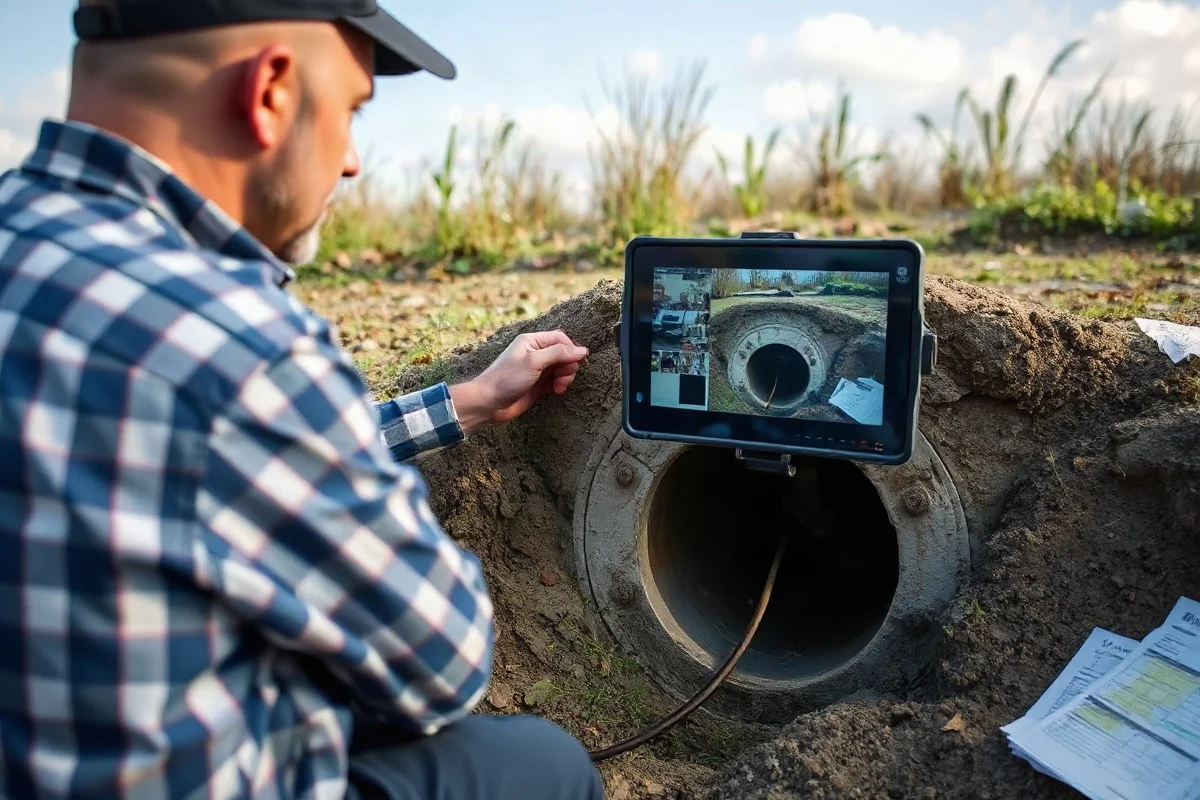
In a typical inspection of an older sewer line, the technician begins at a cleanout or another accessible opening and advances a small camera through the pipe. The camera sends video to a monitor and often includes a locating transmitter. As the inspection proceeds, the technician may record the distance to a defect and mark its approximate position above ground.
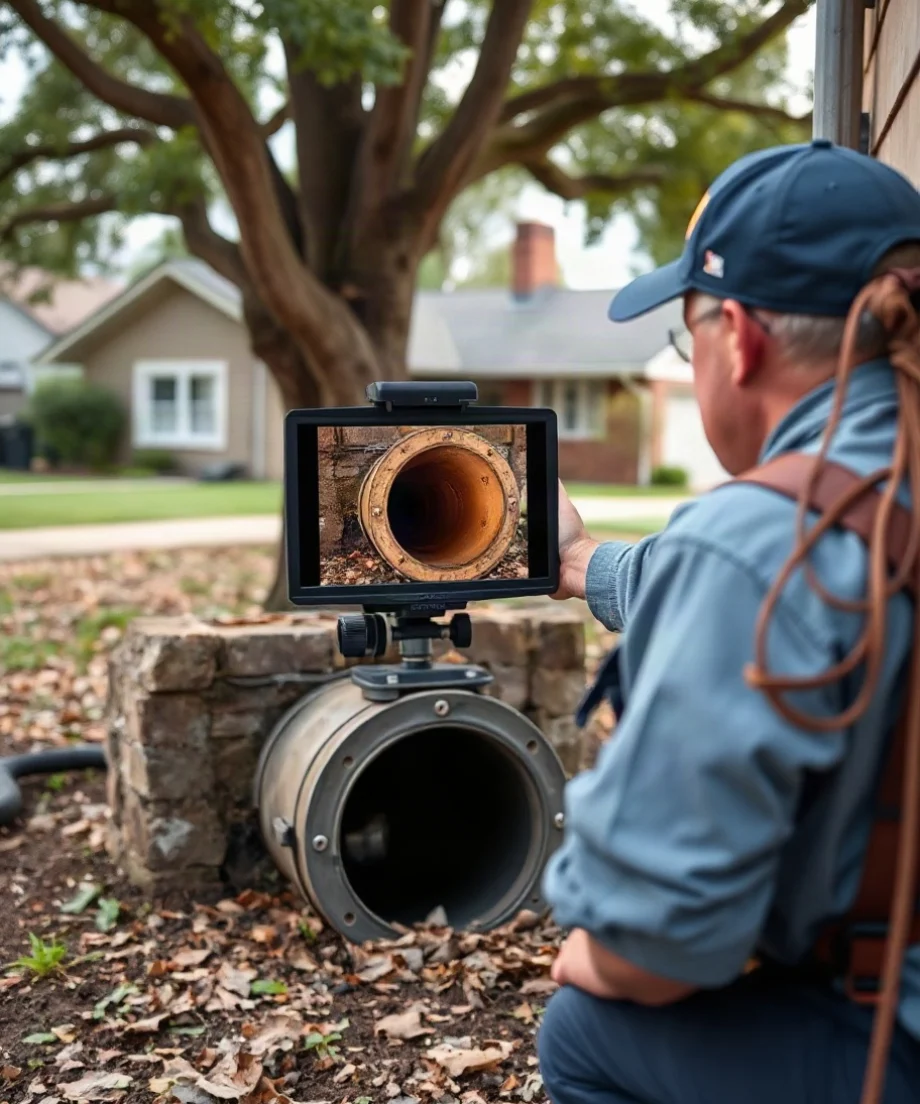
The most important findings are usually not a single dark spot or a little debris. They are changes in the pipe's shape, continuity, and ability to carry wastewater.
Tree-root intrusion
Roots can enter through joints, small cracks, or weakened sections. They may appear as thin strands at first, then form a dense mat that catches paper, grease, and other waste. Root intrusion often explains recurring backups after a line has already been snaked or cleaned.
Roots do not necessarily mean that the entire sewer line has failed. A professional may recommend cleaning and monitoring when the pipe is otherwise intact. If roots return quickly, the joint is open, or the surrounding pipe is cracked or displaced, a more lasting repair may be appropriate.
Cracks, fractures, and missing sections
An older clay or other rigid pipe can crack as the soil shifts or as nearby roots grow. A camera may show a hairline crack, a larger fracture, or a section with missing material. The severity depends on the size and location of the defect, whether the pipe is still aligned, and whether soil or groundwater is entering.
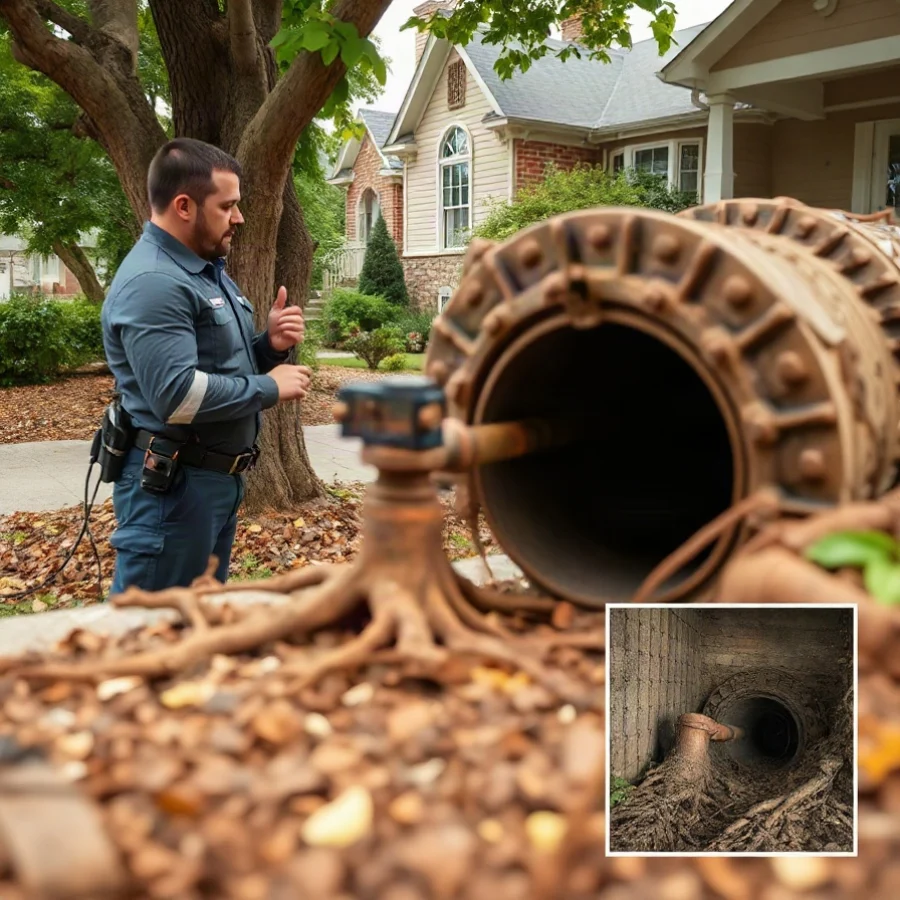
A broken section can collect solids, allow roots to enter, or permit wastewater to escape into the surrounding soil. A video image alone may not show every consequence, so the technician should explain the finding in relation to the home's symptoms and the line's depth and location.
Offset or separated joints
An offset occurs when two pipe sections no longer meet evenly. One section may be higher, lower, or angled relative to the next. Even a modest offset can create a ledge that catches waste. A larger separation may allow soil to enter or create a pathway for roots.
Offsets are often associated with settlement, ground movement, or deterioration at the joint. Cleaning can remove the immediate obstruction, but it does not realign buried pipe. The repair decision depends on the extent of the offset and whether it is causing recurring problems.
Heavy scale, grease, or sediment
Some camera inspections find a pipe that is structurally intact but narrowed by deposits. Scale can build inside older metal piping, while grease and sediment may accumulate in lines serving kitchens or homes with a history of slow drainage. In this situation, the initial repair may involve professional drain cleaning rather than excavation.
Cleaning methods are not interchangeable. A technician should choose a method suitable for the pipe's material and condition. Aggressive cleaning of a fragile or severely damaged line can expose weaknesses, which is another reason to review the camera image before authorizing work.
A belly or low spot
A belly is a section of pipe that has settled and holds water after normal flow stops. The camera may appear to travel through standing water even when the line is not fully blocked. A low spot can repeatedly collect sediment and contribute to slow drains or backups.
Not every small area of standing water proves that replacement is necessary. The technician should identify whether the low spot is confirmed, estimate its extent, and explain whether it is causing symptoms. Correcting a buried low section can be more involved than removing a simple clog.
Symptoms that match these findings
A sewer camera inspection is often recommended after symptoms point to a problem beyond one fixture. Warning signs can include multiple slow drains, sewage backing up through a basement floor drain, toilets that gurgle when a sink or washing machine drains, repeated blockages, or backups that return soon after cleaning.
A single clogged sink does not automatically indicate a damaged sewer lateral. Hair, soap residue, food waste, or a localized branch-line obstruction may be responsible. However, when several fixtures are affected at the same time, the main building sewer becomes more likely as a source of trouble. Sewage exposure is a health hazard; keep people and pets away from contaminated water and arrange qualified local help.
Safe homeowner checks before calling
Homeowners can gather useful information without opening buried sewer piping or handling wastewater. First, note which fixtures are slow, when the problem occurs, and whether flushing one toilet affects another fixture. Check whether the issue is limited to one bathroom or appears throughout the home.
- Look for an accessible cleanout, but do not remove a cap if wastewater may be under pressure or standing behind it.
- Ask household members whether wipes, paper towels, grease, or other non-flushable products have entered the system.
- Check whether a recent storm, landscaping project, tree removal, or construction preceded the symptoms.
- Keep records of previous drain cleanings, backup locations, and any available inspection videos or repair invoices.
- Reduce water use if wastewater is backing up, especially by avoiding laundry, showers, and repeated toilet flushing.
Do not enter a sewer excavation, cut into a pipe, use unfamiliar chemical drain products before an inspection, or attempt to handle sewage without appropriate protection. If a cleanout is overflowing, leave it closed and contact a qualified professional.
Repair or replacement: how the decision is made
The correct response depends on more than the pipe's age. A professional should consider the material, number and size of defects, frequency of backups, pipe location, access, soil conditions, and the condition of nearby sections.
Cleaning may be reasonable when the pipe is intact
If the camera shows roots or deposits in a pipe that remains aligned and structurally sound, professional cleaning may restore flow. Cleaning is a maintenance or obstruction-removal step, not proof that the underlying cause has been permanently eliminated. Roots can return, and deposits may build again.
Spot repair may address a limited defect
A short cracked or separated section may be a candidate for a targeted repair. This approach can make sense when the remainder of the line is in acceptable condition and the defect can be reached safely. The technician should explain whether other vulnerable joints or sections remain.
Replacement may be appropriate for widespread damage
Replacement becomes more likely when the line has multiple fractures, severe offsets, repeated root intrusion, extensive collapse, or a long section that no longer carries wastewater reliably. Options may include excavation or a trenchless method when suitable. Trenchless work is not appropriate for every pipe, layout, or defect, so the inspection findings and site conditions matter.
Do not approve a major replacement based only on a verbal statement that the pipe is old. Request the camera recording or clear still images, the approximate locations of defects, and an explanation of why the recommended method fits the problem. A second opinion can be valuable when the proposed work is extensive.
What affects sewer repair cost
Sewer pricing varies by property and project, so a reliable estimate requires more information than the inspection alone. Factors can include the length and depth of the affected section, pipe material, access for equipment, excavation conditions, landscape or hardscape restoration, disposal, traffic or site limitations, and whether the work is inside the property or near a public connection.
The inspection itself may be priced separately from cleaning, locating, repair, or replacement. Ask what the quoted service includes and whether follow-up video documentation is provided. You can review general factors on our plumbing costs guide, but local estimates should come from professionals who have evaluated the actual line.
How to choose the right plumber
Look for a company that regularly handles sewer line diagnosis and repair, not only routine fixture clogs. Ask whether the technician will provide a recording, identify defect locations, and explain both immediate and longer-term options. A dependable estimate should separate inspection, cleaning, repair, restoration, and any uncertain site work rather than combining everything into one vague total.
Before work begins, confirm the scope in writing and ask what happens if the camera cannot pass a blockage. For excavation, public-sewer connections, sewage exposure, or work that may involve local requirements, use a qualified local professional who understands the applicable rules. The homeowner should not assume that a drain cleaning visit includes structural repair or replacement.
A camera inspection is most useful when it turns a vague backup into specific evidence. The recording can show whether the 1950s sewer line is merely dirty, locally damaged, or failing across a larger section. Save the video and written findings for future reference, especially if the recommended work is substantial. For more information about the inspection process, see our guide to drain camera inspections and our overview of sewer line problems.
Comments
0No comments yet. Be the first to share a helpful note or question.
Leave a Comment
Your email address will not be published. Comments are reviewed before appearing on the site.