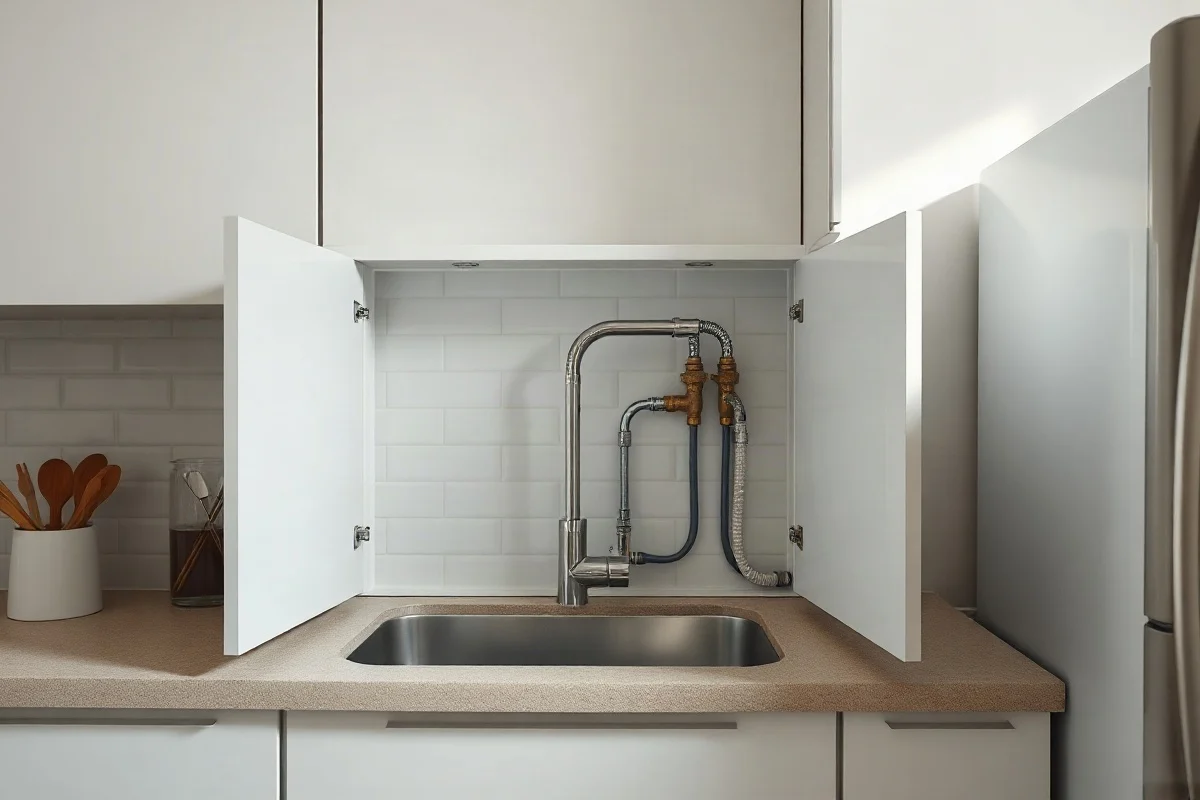
A kitchen typically needs hot and cold water supply lines, a drain connected to the building’s drainage system, proper venting, and fixture connections for the sink and any appliances that use water. Depending on the layout, this may also include plumbing for a dishwasher, garbage disposal, refrigerator ice maker, water filtration system, or a pot filler. The exact arrangement depends on the kitchen’s location, the existing pipe layout, the appliances selected, and applicable local requirements.
Some kitchen plumbing checks are reasonable for a homeowner, such as looking for visible leaks, checking whether a shutoff valve works, or cleaning a removable faucet aerator. Installing or relocating supply pipes, modifying drain lines, connecting gas appliances, opening walls, and correcting hidden leaks should be handled by a qualified local professional.
Core plumbing components in a kitchen
Hot and cold water supply lines
The kitchen sink normally has separate hot and cold water supplies. These lines connect to the faucet through shutoff valves, which allow the water to be turned off for maintenance without shutting down the entire home. A dishwasher may receive its water supply from the hot-water side, depending on the appliance installation and local requirements. A refrigerator with an ice maker or water dispenser needs a dedicated small supply line.
Supply lines may run through cabinets, walls, floors, or the basement or crawl space below the kitchen. When a kitchen is remodeled, the existing lines may be reused if they are accessible, compatible with the new fixtures, and in suitable condition. Old, corroded, damaged, or poorly supported piping may need professional evaluation before new fixtures are connected.
Kitchen sink drain
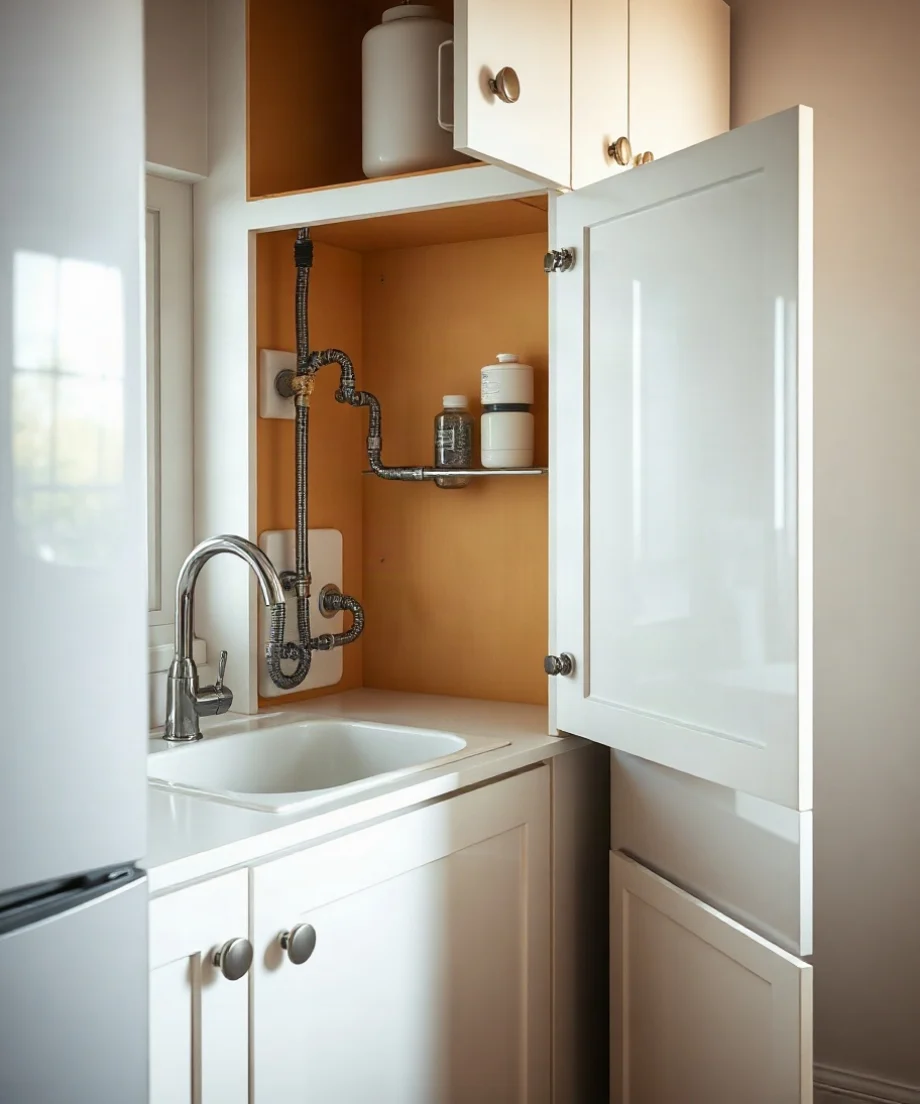
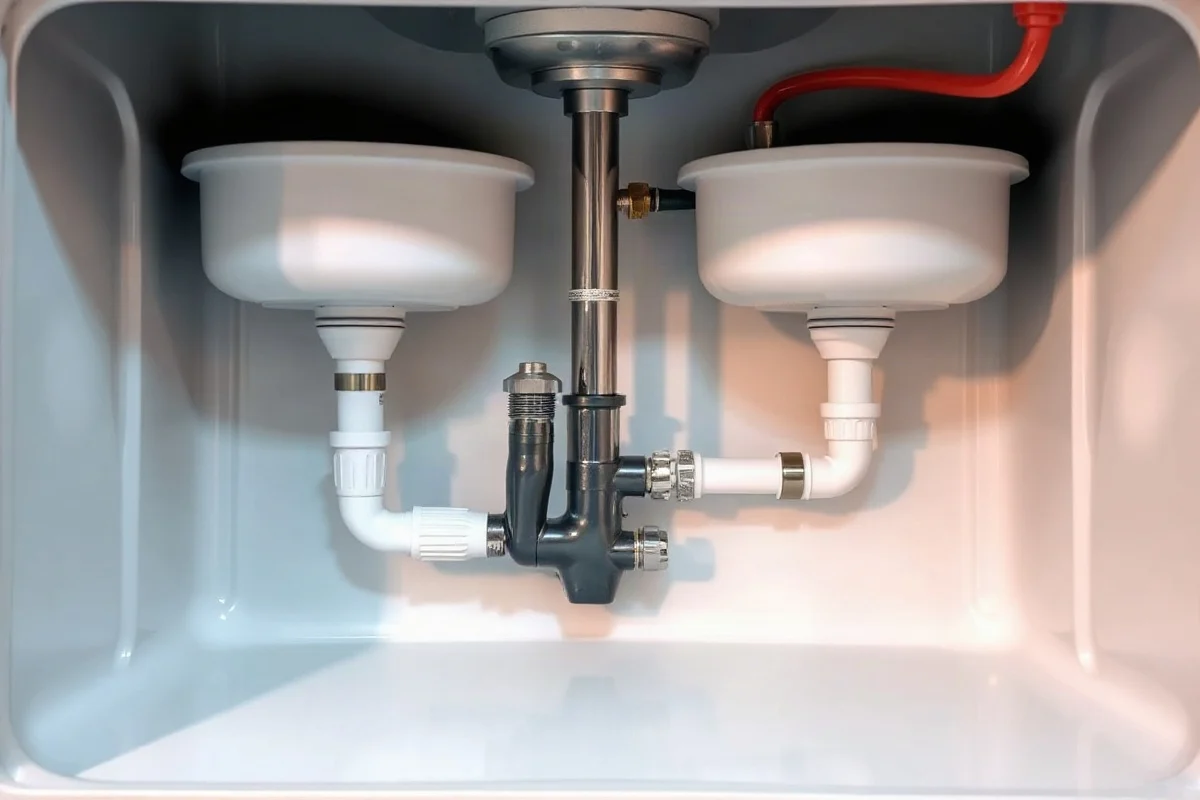
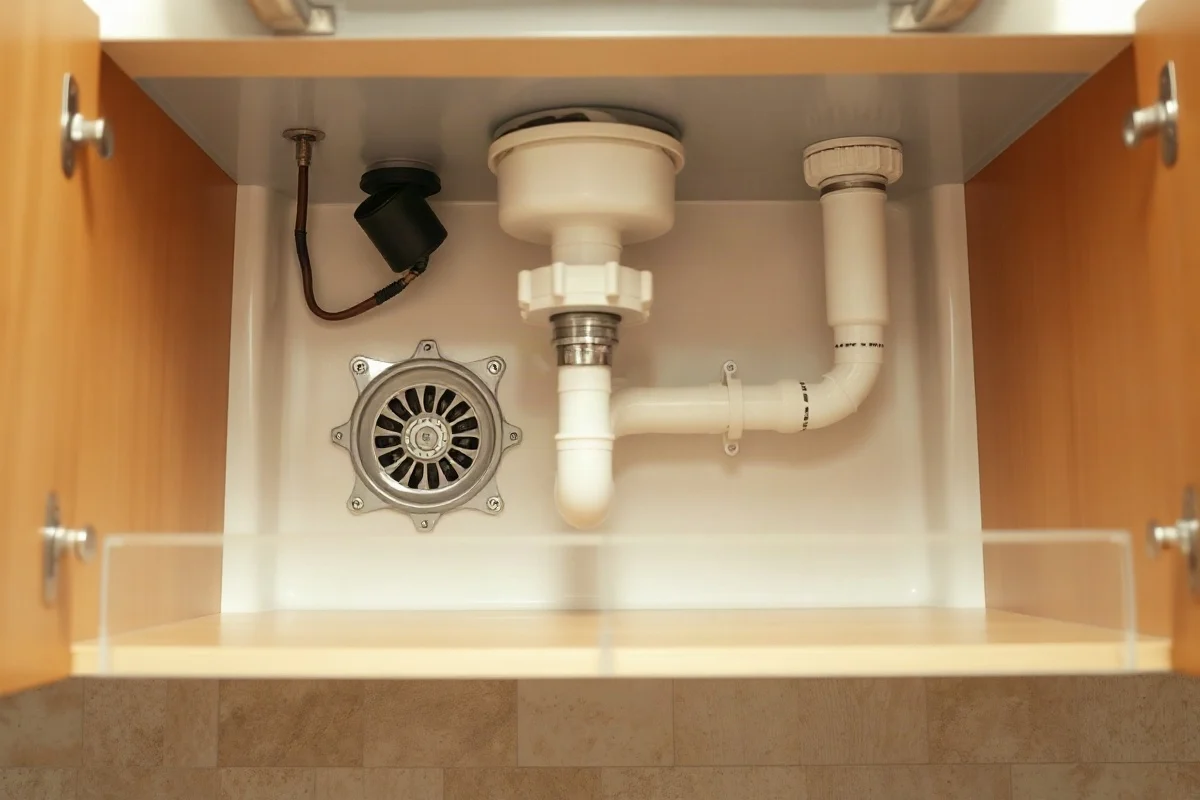
Water from the sink flows through a strainer and trap before entering the branch drain. The trap holds water that helps block sewer gases from entering the room. Under-sink drain components must be assembled correctly and supported so that joints do not loosen or leak when the cabinet is used.
A double-bowl sink may use a shared drain arrangement, while a sink with a garbage disposal has the disposal connected to one side of the drain. The disposal must be installed so wastewater can flow freely and so that the dishwasher drain connection, if present, is routed correctly. Improvised hoses, incorrect fittings, and poorly positioned drain connections can lead to recurring clogs or cabinet damage.
Drain venting
A kitchen drain needs a venting arrangement that allows air into the drainage system and helps wastewater flow without pulling water out of the trap. Vent piping may connect to the home’s existing vent system, but the route is not always visible. In some situations, a remodeling project requires changes inside a wall or ceiling.
Because venting is concealed and its installation can affect the whole drainage system, it is not a good project for guesswork. If a sink gurgles, drains slowly despite cleaning, or repeatedly loses water from its trap, a qualified plumber can determine whether the problem is a local blockage, a venting issue, or a larger drain defect.
Optional plumbing for kitchen appliances
Dishwasher connection
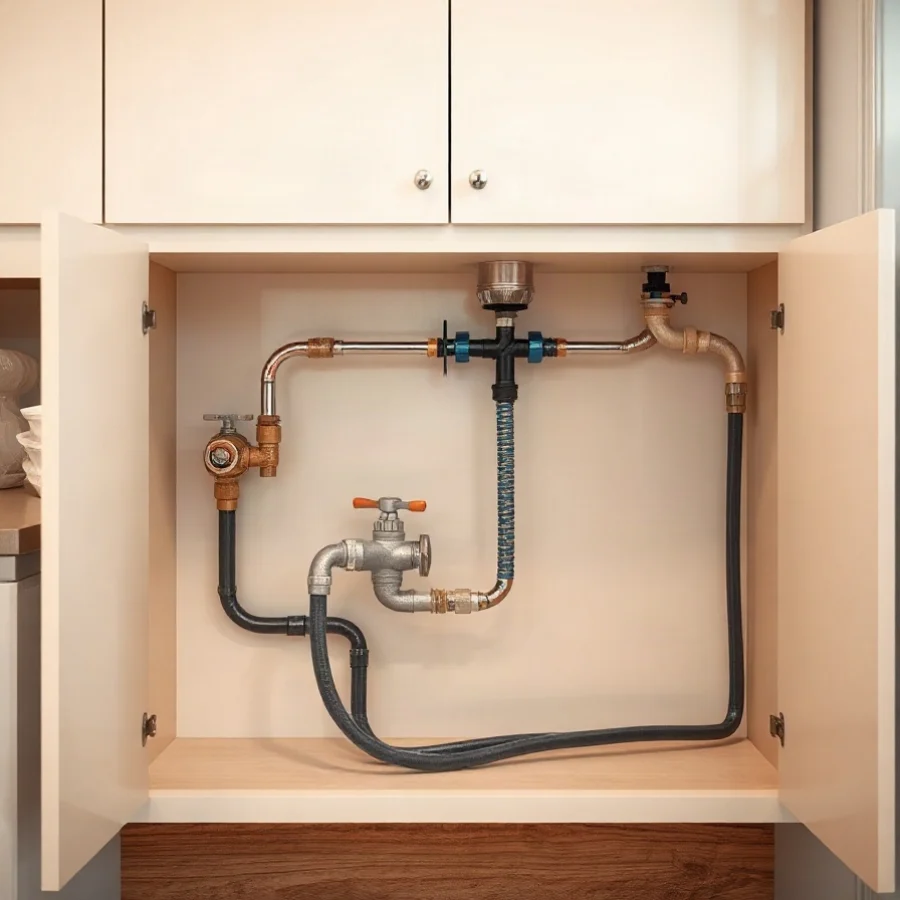
A dishwasher generally needs a water supply connection, a drain connection, and a safe electrical connection. The water and drain components are usually located in the cabinet beside the sink, while the appliance’s electrical requirements depend on its design and the home’s wiring.
Homeowners can inspect the visible hose and connections for moisture, but electrical work should be left to a qualified professional. If water is present beneath the dishwasher, stop using it, close the nearby water shutoff if accessible, and arrange an inspection. Do not continue running the appliance to see whether the leak disappears.
Garbage disposal
A garbage disposal needs a compatible sink opening, a drain connection, and an electrical connection. If a dishwasher drains through the disposal, the dishwasher hose must be connected correctly. A disposal that hums, leaks, or trips a breaker may have a jam, a worn seal, a drainage problem, or an electrical fault.
Turn off the disposal and avoid placing your hand inside it. Never reach into the grinding chamber, even when the switch appears to be off. If the unit has an electrical problem, leaks from its body, or remains jammed after safe manufacturer-recommended checks, use a qualified repair professional. You can learn more about common options through this garbage disposal plumbing guide.
Refrigerator water line
A refrigerator ice maker or water dispenser needs a small cold-water supply line and an accessible shutoff. The line should be routed so it is not sharply bent, crushed behind the appliance, or exposed to avoidable damage. A slow leak may remain hidden under or behind the refrigerator and can damage flooring or cabinetry over time.
Check the visible connection occasionally for dampness, mineral buildup, or a musty smell. If you find water under the appliance, close the shutoff if you can do so safely and move the refrigerator only if doing so will not damage the floor or strain the line. A concealed or persistent leak should be evaluated by a qualified professional.
Water filtration and instant hot-water systems
Under-sink filters, drinking-water systems, and instant hot-water dispensers add supply tubing, fittings, and sometimes a dedicated faucet. Each extra connection creates another possible leak point. Filters should be replaced according to the product instructions, and the tubing should be inspected after installation and whenever the filter is changed.
Any system that uses electricity, heats water, or requires changes to the existing supply and drain arrangement deserves careful installation. If you are unsure which shutoff controls the system or notice a leak inside the cabinet, stop using it and arrange professional help.
Common signs of a kitchen plumbing problem
Kitchen plumbing problems do not always begin with a dramatic burst pipe. Watch for these warning signs:
- A faucet drips after the handle is fully closed.
- The sink drains slowly, gurgles, or backs up when another fixture is used.
- Water appears inside the sink cabinet or on the floor.
- The disposal leaks, hums, jams, or fails to start.
- The dishwasher leaves water on the floor or does not drain properly.
- A refrigerator water line creates dampness behind the appliance.
- There is a musty odor, swollen cabinet material, peeling flooring, or staining near a pipe.
- Hot water arrives slowly or loses temperature unexpectedly.
Several causes can produce the same symptom. A slow sink may have food debris near the drain, a blockage deeper in the branch line, or a venting issue. Water under the sink may come from a faucet connection, supply valve, strainer, trap, disposal, or dishwasher hose. Finding the source matters before replacing a part. For recurring backups, see the guidance on kitchen drain cleaning.
Safe homeowner checks
Before calling for service, you can perform a few low-risk checks:
- Use a flashlight to look for active drips, damp cabinet surfaces, and water trails.
- Dry the area completely, then place a paper towel beneath visible connections to help identify a new leak.
- Confirm that the sink’s shutoff valves are accessible and identify which valve controls each supply.
- Clean a removable faucet aerator if the flow is weak and the faucet manufacturer’s instructions allow it.
- Remove and clean a sink stopper or strainer if the blockage is clearly near the opening.
- Check whether the dishwasher or refrigerator supply hose is visibly kinked or disconnected.
- Stop using a leaking appliance or fixture until the source is identified.
Do not use excessive force on old shutoff valves, disassemble a connection that is under pressure, or use repeated chemical drain cleaners. Chemical products can damage some plumbing components, create splash hazards, and make later service more dangerous. Never mix drain chemicals.
When a professional is needed
Call a qualified local plumber when you need to install or relocate supply lines, change a drain route, add or modify vent piping, replace corroded piping, repair a concealed leak, or connect new fixtures during a remodel. Professional help is also appropriate when a clog returns after basic cleaning, several fixtures drain slowly, or wastewater backs up into the sink.
Use qualified professionals for gas connections, electrical work, sewage exposure, major flooding, structural water damage, and any condition that may involve local code requirements. If a pipe bursts, water is spreading quickly, or you cannot locate the shutoff, turn off the home’s main water supply if it is safe to do so and seek urgent local assistance. This emergency plumber resource can help you identify situations that should not wait.
Repair or replacement: how to decide
Repair is often reasonable when the problem is limited to a replaceable washer, cartridge, supply hose, trap, shutoff valve, or other accessible component. Replacement may make more sense when a fixture is heavily corroded, repeatedly fails, has damaged connection points, or no longer meets the household’s needs.
For a disposal, faucet, dishwasher, or refrigerator line, compare the condition of the surrounding connections rather than focusing only on the failed part. Installing a new fixture while leaving a brittle shutoff valve or damaged drain connection in place can create another leak. A plumber can inspect the complete connection and explain which work is essential, which is recommended, and which can wait.
What affects kitchen plumbing costs?
The total cost depends on the work required, not simply the fixture being installed. Important factors include:
- Whether existing water and drain lines can be reused.
- How easy it is to access pipes in cabinets, walls, floors, a crawl space, or a basement.
- Whether the project requires new venting or a longer drain route.
- The number and type of fixtures being connected.
- Condition of shutoff valves, supply lines, traps, and surrounding piping.
- Whether water damage, mold-like growth, or cabinet and flooring repairs are also needed.
- Whether electrical, gas, structural, or other qualified trades are involved.
- The time required to diagnose an intermittent or concealed problem.
Ask for a written description of the work, the parts included, any diagnostic or service charges, and what is excluded. Local prices vary widely by region, access, materials, urgency, and project complexity, so a reliable estimate requires details about the actual kitchen. You can also review general plumbing cost factors before requesting quotes.
How to choose the right kitchen plumber
Look for a plumbing professional with experience in the specific work you need, whether that is a faucet replacement, drain diagnosis, appliance connection, pipe repair, or full kitchen remodel. Ask how the plumber will protect cabinets and flooring, locate the leak or blockage, test the completed work, and handle any necessary coordination with other trades.
Before work begins, confirm the scope in writing and ask who will perform the work. Avoid choosing based only on the lowest initial price. A clear explanation, careful diagnosis, appropriate qualifications, and professional communication are more useful indicators than a vague estimate or a promise to solve every problem immediately.
A well-planned kitchen plumbing system should deliver water reliably, drain without recurring backups, keep traps filled, and provide safe connections for every water-using appliance. Regularly checking visible connections and addressing small leaks early can help limit damage, while concealed, hazardous, or code-related work belongs with a qualified local professional.
Comments
0No comments yet. Be the first to share a helpful note or question.
Leave a Comment
Your email address will not be published. Comments are reviewed before appearing on the site.