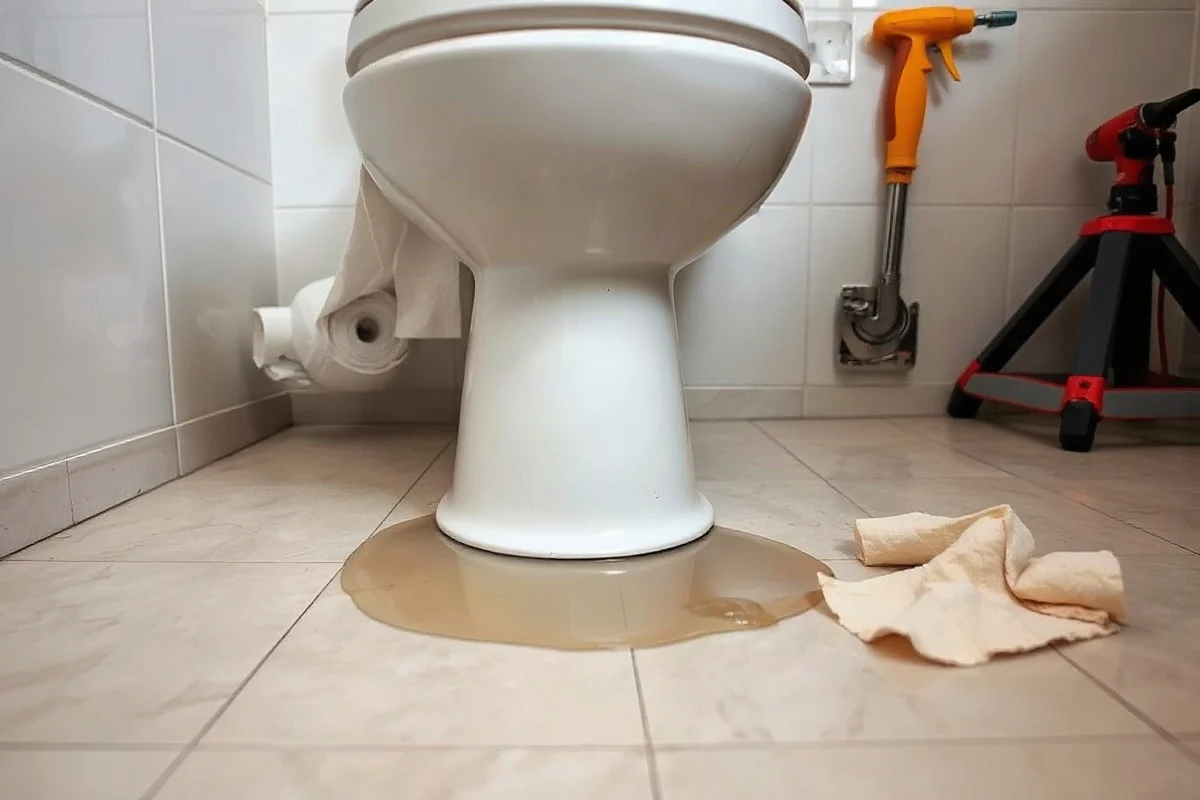
If your toilet is leaking around the base, the most common cause is a failed seal between the toilet and the drain opening, often called a wax ring or toilet seal. However, water can also come from loose tank bolts, a supply-line connection, a cracked toilet, condensation, or a drain problem. Stop using the toilet until you identify the source, dry the area, and check whether the leak returns after flushing. A small-looking leak can damage flooring, the subfloor, or the ceiling below.
What a Leak Around the Toilet Base Usually Means
The toilet sits over a drain opening in the floor. A seal between the toilet outlet and that opening is designed to keep flush water and sewer gases contained. When the seal fails, water may appear at the base only when you flush. The toilet may also rock slightly if its mounting hardware is loose or the flooring beneath it has been damaged.
Not every puddle at the base is a failed seal. Water can run down from the tank, bowl, shutoff valve, or supply line and collect around the bottom. Tracing the water upward before taking the toilet apart can prevent an unnecessary repair.
Common Causes of Water Around the Base
Failed toilet seal
A worn, compressed, shifted, or improperly installed seal is one of the most common explanations for a toilet leaking at the floor. The leak may occur only during a flush because water is moving through the toilet outlet and drain connection. You might see a thin line of water, damp flooring, or staining around one side of the base.
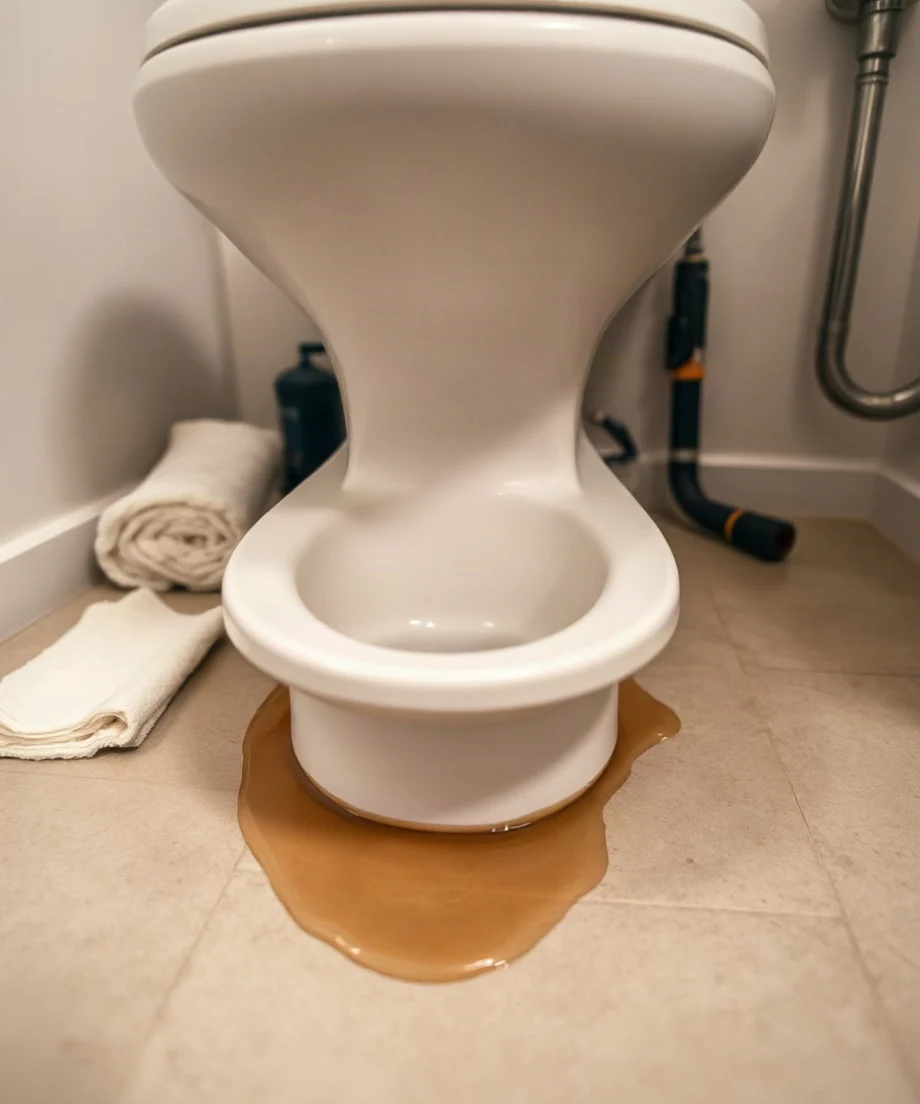
A failed seal can also allow sewer gases to escape. If you notice a persistent sewage odor, do not ignore it. Keep the bathroom ventilated, limit use of the toilet, and arrange for a qualified local plumber to inspect the connection.
Loose or damaged toilet mounting hardware
Toilets are secured to the floor with mounting bolts. If the hardware loosens, the toilet may rock and place stress on the seal. Overtightening the bolts can crack the porcelain, so tightening them is not a matter of applying as much force as possible. If the toilet moves, the base is cracked, or the bolts are difficult to access, professional service is the safer choice.
Loose tank bolts or a tank-to-bowl gasket
Water may leak from the connection between the tank and bowl and then run downward until it appears to come from the base. Check the underside of the tank and the area where it meets the bowl. A damp tank bolt, washer, or gasket can point to an upper leak rather than a failed floor seal.
Leaking supply line or shutoff valve
The flexible supply line connects the wall shutoff valve to the toilet tank. Its connections can drip slowly, especially after flushing or when the tank refills. Water can travel along the floor or behind the toilet, making the source difficult to see. Look for moisture at both ends of the supply line and around the valve.
Cracked porcelain or damaged flooring
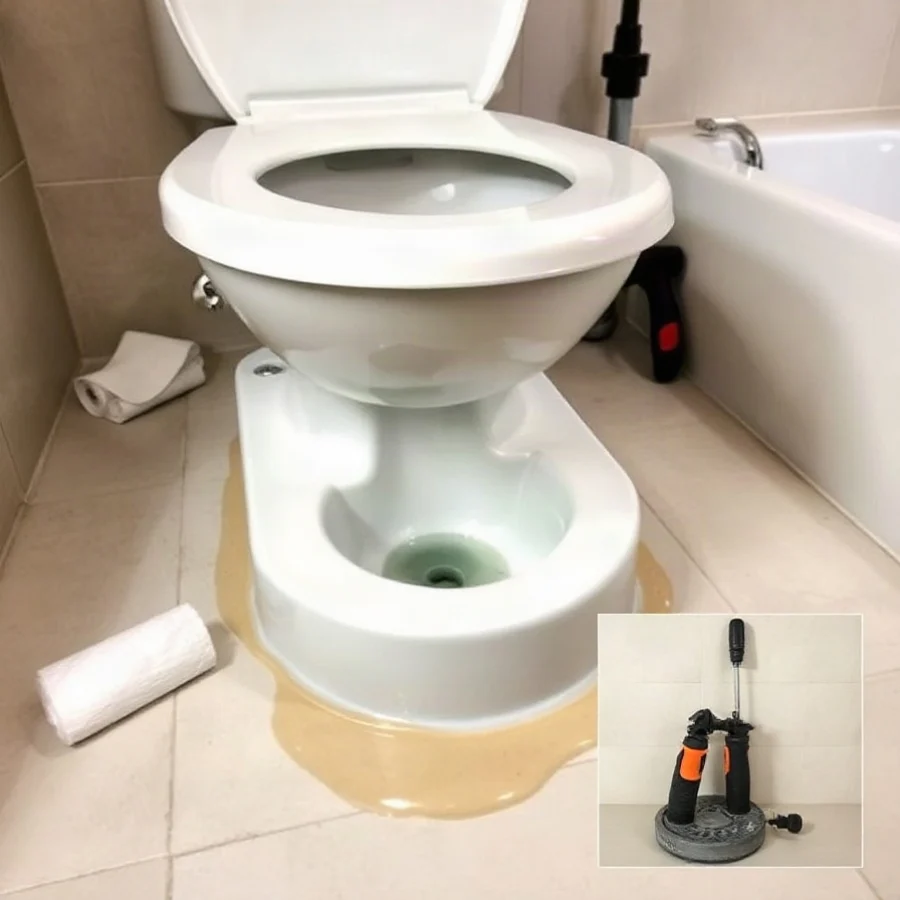
A crack in the toilet tank or bowl can release water and may worsen without warning. A crack in the floor, damaged subfloor, or deteriorated flange can also prevent the toilet from sitting securely and keeping a seal. Do not use a toilet with visible porcelain damage or significant movement. Turn off its water supply and call a qualified professional.
Condensation mistaken for a leak
In a humid bathroom, cool water inside the tank can cause moisture to collect on the outside. That water may drip down and pool around the toilet base. Wipe the tank and surrounding surfaces completely dry, then observe whether moisture returns without flushing. Condensation usually affects the tank or nearby surfaces, while a failed base seal often produces water during or shortly after a flush.
Safe Checks You Can Do Yourself
Homeowners can perform a few low-risk observations without removing the toilet or entering concealed plumbing spaces:
- Stop flushing the toilet and wipe the floor, bowl, tank, supply line, and shutoff valve completely dry.
- Place dry paper towels around the base, behind the toilet, and under the supply connection.
- Check whether the towels become wet after the tank refills or after one carefully observed flush.
- Look for water dripping from the tank, the tank-to-bowl connection, the supply line, or the shutoff valve.
- Notice whether the toilet rocks when you gently place a hand on it. Do not force it from side to side.
- Check for a sewage odor, soft flooring, discoloration, or water appearing from below the floor or ceiling.
Keep the toilet's shutoff valve accessible. If water is actively leaking, turn the valve clockwise by hand if it moves normally. Do not force a stuck or corroded valve, because it may break or begin leaking. If the leak continues after the supply is shut off, water may be trapped in the tank or bowl, or the source may be elsewhere in the plumbing system.
When to Stop Checking and Call a Plumber
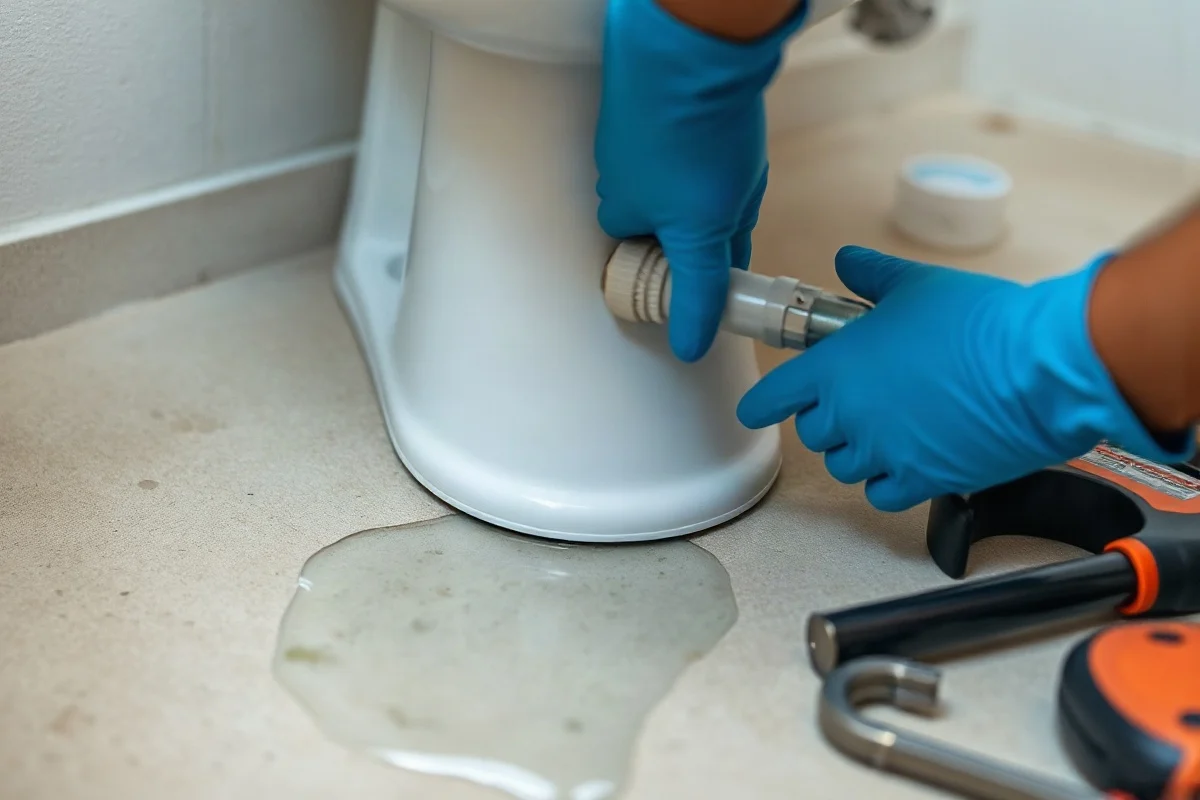
Call a qualified local plumber if water appears only during flushing, the toilet rocks, the floor feels soft, the flange may be damaged, or the source cannot be identified. Replacing a toilet seal usually requires shutting off and disconnecting the toilet, removing it from the floor, inspecting the drain connection and flange, installing a new seal, and resetting the fixture. The toilet must sit level and securely without damaging the porcelain or the new seal.
Professional help is especially important when sewage has reached the floor, water is entering a ceiling below, the leak is spreading into walls, or the bathroom has sustained major flooding. Avoid contact with contaminated water and keep children and pets away from the area. If electrical equipment or outlets may have been exposed to water, stay clear and contact an appropriate qualified professional.
For related repair guidance, see this toilet repair resource or the broader leak repair guide.
Repair or Replace the Toilet?
A toilet seal, supply line, or mounting component can often be repaired when the porcelain is intact and the floor and drain connection are sound. A plumber may remove the toilet to inspect the flange, check for movement, evaluate the flooring, and install the appropriate replacement seal. If the toilet has been reset before, the old seal should not simply be reused.
Replacement may make more sense when the toilet has a cracked bowl or tank, repeated seal failures, severe mineral damage, unstable mounting, or damage that cannot be corrected without replacing the fixture. A plumber can explain whether the problem is limited to the toilet or whether the floor, flange, drain connection, or nearby piping also needs attention.
Do not try to conceal movement by applying a large bead of caulk around the base. Caulk may hide a continuing leak and make it harder to notice water damage. It does not repair a failed seal, a loose toilet, a broken flange, or damaged flooring.
What Affects the Repair Cost?
The total cost depends on the actual source and the amount of access and repair work required. Factors may include:
- Whether the problem is a supply-line drip, tank gasket, mounting issue, or floor seal.
- Whether the toilet must be removed and reset.
- The condition of the flange, drain connection, subfloor, and surrounding flooring.
- Whether the toilet itself is cracked or needs replacement.
- Access to the plumbing, including damage that extends below the bathroom.
- Whether water damage requires drying, flooring work, or other specialists.
- The plumber's service structure, such as diagnostic, labor, material, or after-hours charges.
Ask for a clear explanation of the suspected source, the proposed repair, materials, and any additional work that could be needed if hidden damage is found. Avoid choosing a provider based only on the lowest initial estimate when the cause of the leak has not yet been confirmed. More information about evaluating service expenses is available in this plumbing costs guide.
How to Choose the Right Plumber
Look for a plumber who regularly handles toilet leaks, fixture resets, drain connections, and water-damage concerns. Before work begins, ask how the plumber will distinguish a failed base seal from an upper leak, whether the toilet will be checked for movement, and how the surrounding floor and flange will be inspected.
Use a qualified local professional for concealed leaks, sewage exposure, structural water damage, major flooding, or any work that may involve local code requirements. Ask for written details about the scope of work and confirm who is responsible for related water-damage repairs if the floor or subfloor is affected. You can find more general guidance in this resource on hiring a plumber.
Preventing Another Toilet Base Leak
Respond to rocking, slow drips, stains, and sewage odors promptly. Keep the area around the toilet dry enough to notice new moisture, avoid using harsh methods that could damage porcelain or seals, and do not overtighten hardware. If the toilet is removed for another repair, the seal and mounting condition should be evaluated before it is reset.
The key is to identify where the water begins, not merely where it ends up. Dry the area, observe one controlled flush only if there is no active or contaminated leak, and stop using the toilet if water returns from the base. When the seal, flange, floor, or toilet itself may be involved, a qualified local plumber can make the repair while reducing the risk of hidden water damage.
Comments
0No comments yet. Be the first to share a helpful note or question.
Leave a Comment
Your email address will not be published. Comments are reviewed before appearing on the site.