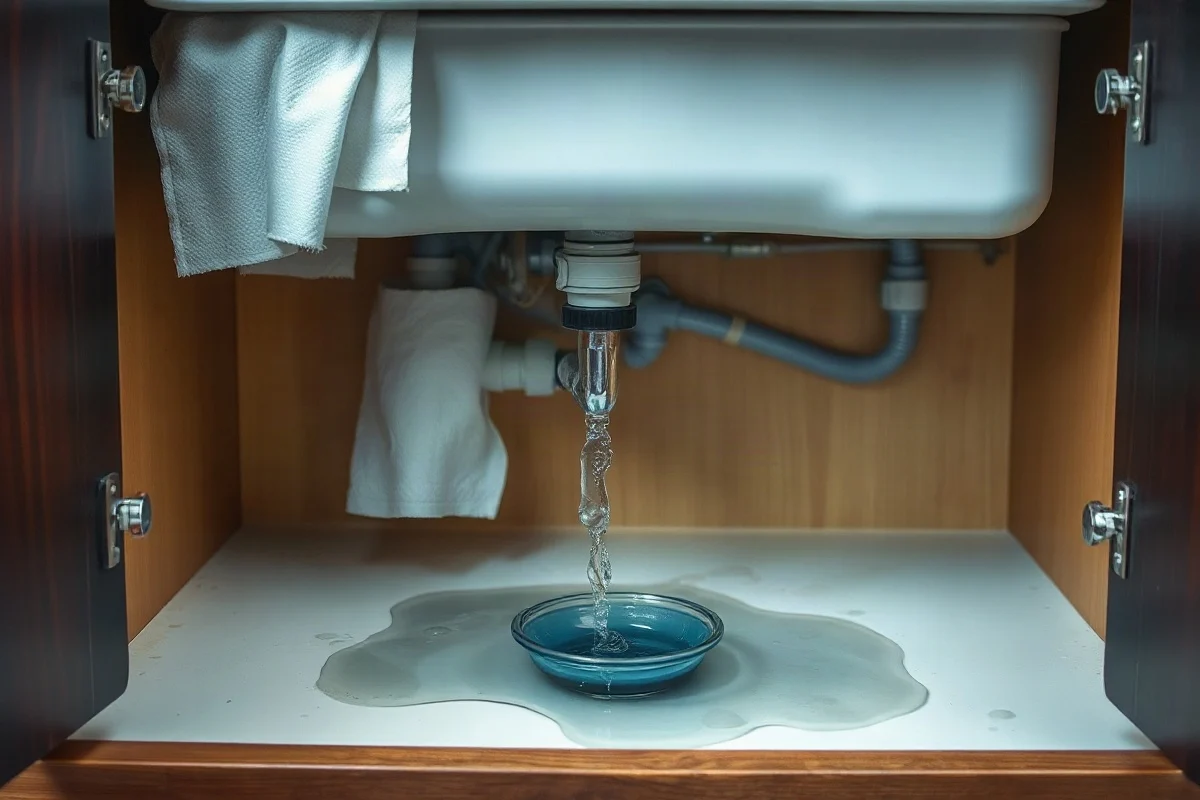
Water pooling under your kitchen sink usually means a drain connection, supply line, faucet component, garbage disposal, or dishwasher hose is leaking. The safest first steps are to remove everything from the cabinet, dry the area, place a bowl or towel under the plumbing, and identify when the water returns. You can inspect and tighten some accessible connections by hand, but leaks involving electrical components, concealed pipes, sewage-contaminated water, or significant flooding should be handled by a qualified local plumber.
First, stop the water and protect the cabinet
Take out cleaning products, stored items, and anything sitting on the cabinet floor. Water can damage particleboard, flooring, and nearby walls even when the leak appears small. Wipe the plumbing and cabinet completely dry, then place a shallow pan or several dry paper towels beneath the suspected source.
If water is actively spraying from a supply connection, turn the small shutoff valve on the affected line clockwise. Kitchen faucets commonly have separate hot- and cold-water shutoff valves beneath the sink. If you cannot stop the flow, the valve does not work, or the leak is flooding the cabinet, turn off the home’s main water supply if you can do so safely and contact a plumber.
Do not reach into standing water near an outlet, disposal cord, power strip, or other electrical equipment. If water has contacted an electrical connection, avoid touching the equipment and seek qualified help. A garbage disposal should be disconnected from power before anyone works near it, and electrical repairs should be performed by an appropriately qualified professional.
How to find where the water is coming from
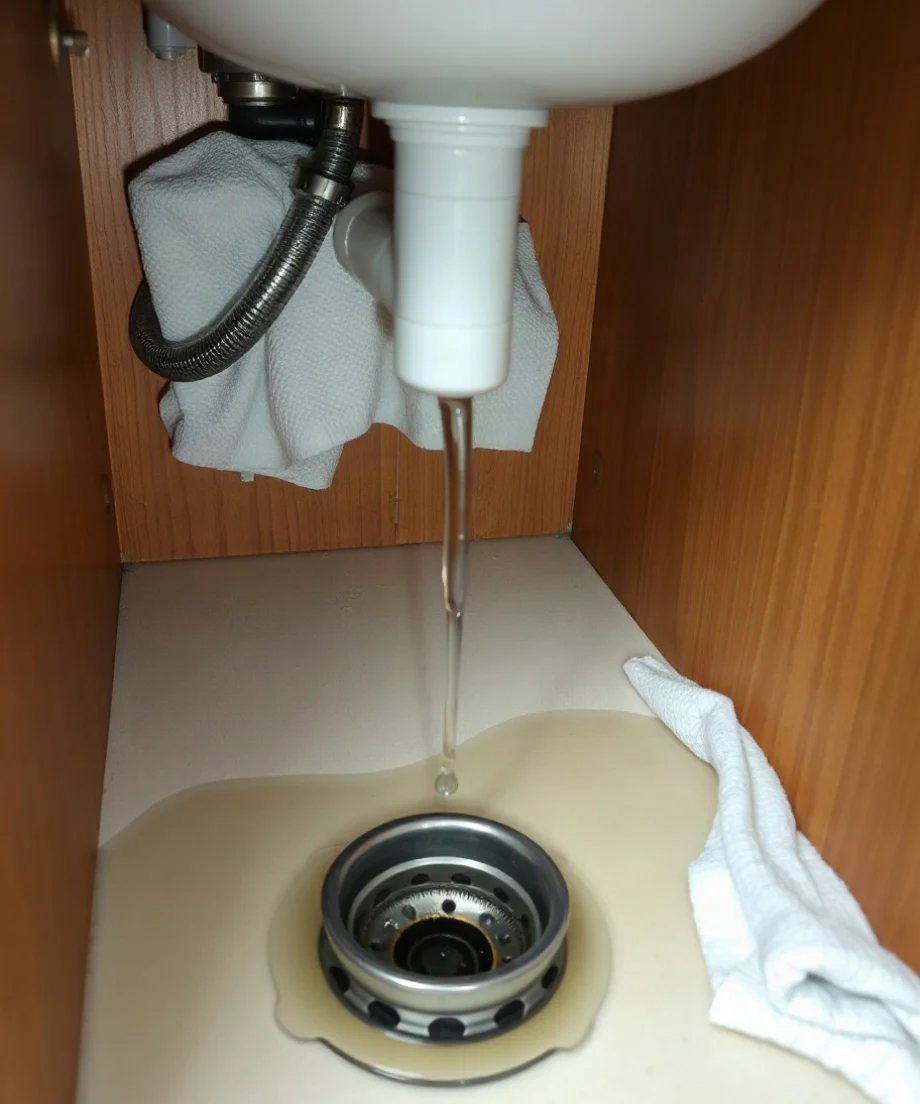
Water often travels along the bottom of a pipe or cabinet before it drips, so the puddle may not be directly below the actual leak. With the area dry, use a paper towel to touch one connection at a time. A damp ring on the towel can reveal the source more accurately than looking at the puddle.
Test the faucet and supply lines
Run cold water, then hot water, while watching the faucet base, the flexible supply lines, and the shutoff valves. Water around the faucet base may indicate a worn faucet seal or a problem with the faucet body. Moisture at a threaded supply connection may point to a loose connection, a damaged hose, or a failing valve.
Do not use excessive force on plastic fittings or old shutoff valves. If a valve begins turning, will not close, or leaks when you touch it, stop and arrange professional service. Forcing an aged valve can create a larger leak.
Test the drain system
Fill the sink partway and release the water while watching the drain opening, strainer, trap, and horizontal drain connections. If water appears only while the sink is draining, the problem is more likely in the drain assembly than in the pressurized supply lines.
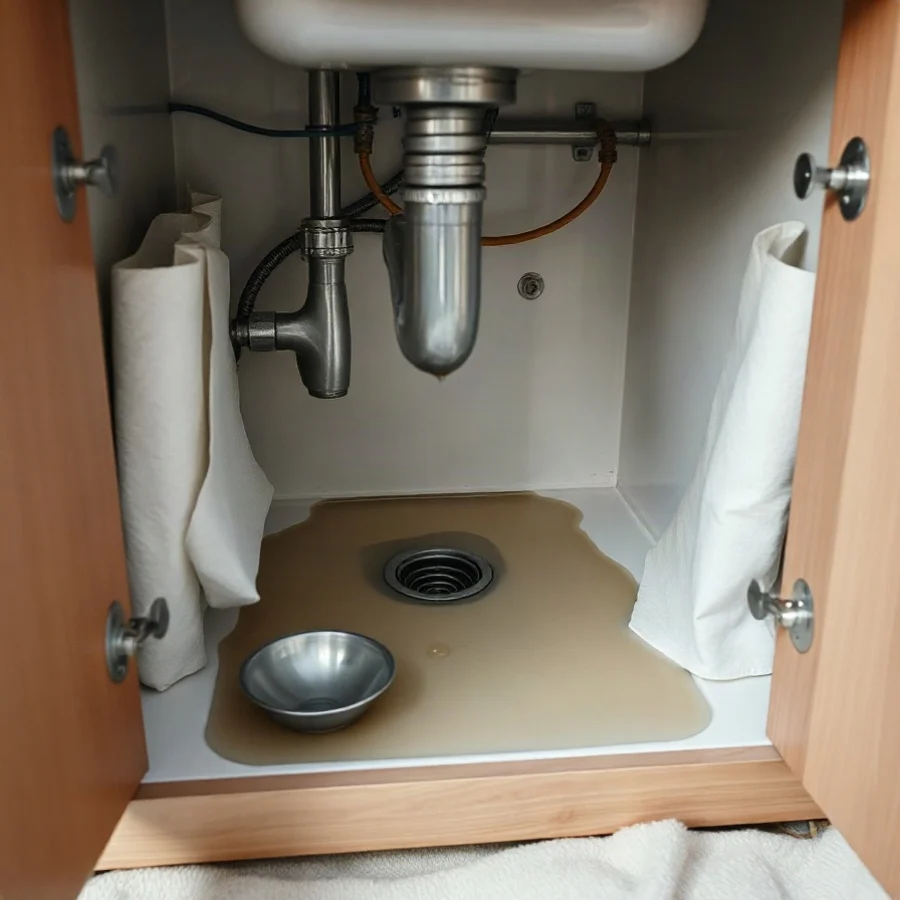
Look for moisture around the sink strainer, the curved trap, slip-joint nuts, and the connection where the drain enters the wall. A loose nut or displaced washer can allow water to escape. However, cracked plastic, corroded metal, a damaged wall connection, or a leak inside the cabinet wall requires more than simple tightening.
Check the garbage disposal
If your sink has a garbage disposal, inspect the upper flange, the lower body, the discharge tube, and the dishwasher inlet connection. Run a small amount of water through the sink without placing your hands inside the disposal. Then check whether water appears from the disposal body or its connections.
A leak from the disposal’s housing can mean the unit’s internal seal or body is damaged. That generally calls for replacement rather than an external patch. Never put your hand into a disposal, even when it appears switched off. If the unit is jammed, damaged, or wet around its electrical connection, use a qualified professional.
Inspect the dishwasher hose
Water can travel from a dishwasher connection into the cabinet and appear to be a sink leak. Check the hose where it connects to the disposal or drain branch and where it enters the dishwasher. Look for wet clamps, splits, kinks, or water that appears only while the dishwasher is running.
If the leak occurs during a cycle, stop using the dishwasher until the connection is evaluated. Water may also be coming from the dishwasher door or underneath the appliance, which is a separate appliance repair issue rather than a sink-plumbing problem.
Common causes of water under a kitchen sink
- Loose drain connection: A slip-joint nut or washer may have shifted, especially after items stored in the cabinet bump the piping.
- Worn or damaged washer: Rubber and plastic washers can flatten, crack, or lose their seal over time.
- Cracked trap or drain pipe: Plastic can split, while older metal piping may corrode and develop pinholes.
- Leaking faucet supply line: Flexible hoses and shutoff connections can leak under pressure.
- Faucet-base leak: Water can run beneath the faucet and drip into the cabinet during use.
- Sink strainer leak: A deteriorated seal around the drain opening can allow water into the cabinet.
- Garbage disposal leak: The flange, discharge connection, dishwasher inlet, or disposal body may be involved.
- Dishwasher drain problem: A loose hose, failed clamp, or appliance leak can send water into the cabinet.
- Hidden supply or drain leak: Water may be entering from behind the cabinet or inside the wall.
Low-risk checks you may be able to perform
Homeowners can usually perform a visual inspection, dry the area, identify whether the leak occurs during filling or draining, and gently hand-tighten an accessible slip-joint connection if the plumbing is in good condition. Afterward, run a small amount of water and check the joint again.
Do not rely on tape, putty, or sealant as a permanent solution for a cracked pipe or failed fitting. Do not overtighten connections, since excessive force can damage threads, washers, or plastic parts. If a connection continues to leak after a careful adjustment, turn off the related water supply and arrange repair.
For general background on safe homeowner tasks, see our guide to DIY plumbing. When the source is unclear or the leak returns, a professional leak inspection is a better choice than repeatedly tightening fittings.
When repair or replacement is the better choice
A loose nut, worn washer, or damaged hose may be repairable. Replacement is often more practical when a drain section is cracked, a metal trap is heavily corroded, a disposal housing leaks, or a shutoff valve no longer operates reliably. The correct choice depends on the part’s condition, accessibility, compatibility with the existing plumbing, and whether other components are near the end of their service life.
A plumber may need to remove the sink strainer, disposal, or cabinet backing to reach the leak. If water has damaged the cabinet floor, wall, or flooring, drying and repairing those materials is also important. Persistent dampness can lead to odors, swelling, staining, and mold growth.
If the water is dirty, has a sewage odor, or may have come from a backed-up drain, avoid contact and keep children and pets away from the area. Sewage exposure requires appropriate protective measures and qualified local help. A broader backup affecting multiple fixtures may indicate a drain or sewer-line problem rather than a small sink leak; our drain cleaning and sewer line resources explain when those issues need professional attention.
Cost factors for a kitchen sink leak
The cost of fixing water under a sink depends on the failed component and the amount of labor required. Important factors include whether the leak is visible, how accessible the connection is, the condition of the existing piping, whether a disposal or dishwasher must be disconnected, and whether cabinet or flooring damage needs attention.
A simple accessible washer or hose replacement is generally less involved than repairing a concealed pipe, replacing corroded drain piping, or correcting a leak at the wall connection. Service charges can also vary by location, scheduling, materials, and the complexity of diagnosis. Ask the plumber to explain the suspected source, recommended repair, parts included, and any separate charges before authorizing work. For broader planning information, review our plumbing costs guide.
When to call a plumber right away
Arrange prompt professional help if water is flowing continuously, the shutoff valve will not stop it, the leak is inside a wall or floor, the cabinet is filling quickly, or water has reached electrical equipment. Call a qualified local professional for sewage exposure, major flooding, damaged supply piping, corroded valves, concealed leaks, or any repair that may involve code-related work.
You should also seek help when the cause cannot be identified after drying and testing the area. Continuing to use a sink with an unknown leak can cause hidden structural damage. If the situation is actively flooding the home, consult our emergency plumber resource while taking safe steps to limit the water.
How to choose the right plumber
Choose a local plumbing professional with experience diagnosing kitchen sink leaks, drain connections, faucets, disposals, and dishwasher plumbing. Before work begins, describe when the water appears and which tests you have already performed. Ask for a clear explanation of the source, repair options, expected materials, and what is included in the service.
Verify the provider’s qualifications and insurance as appropriate for your area, and ask whether they handle the specific problem you found. Be cautious of anyone who recommends replacing multiple components without identifying the leak or who cannot explain why a repair is needed. A good diagnosis should distinguish a pressurized supply leak from a drain leak and should account for water that may be traveling from another fixture.
Once the repair is complete, run the faucet, drain the sink, and operate the dishwasher only as recommended by the professional. Check the cabinet again after several minutes and later the same day. Keeping the cabinet dry and avoiding heavy items pressing against plumbing connections can help you notice future problems early.
Comments
0No comments yet. Be the first to share a helpful note or question.
Leave a Comment
Your email address will not be published. Comments are reviewed before appearing on the site.